MindMap Gallery 00277 Administrative Management ——Chapter 10 Administrative Management Standards
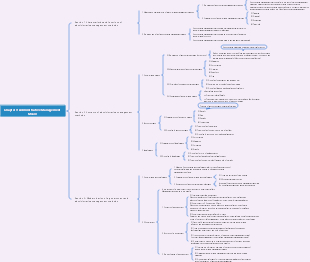
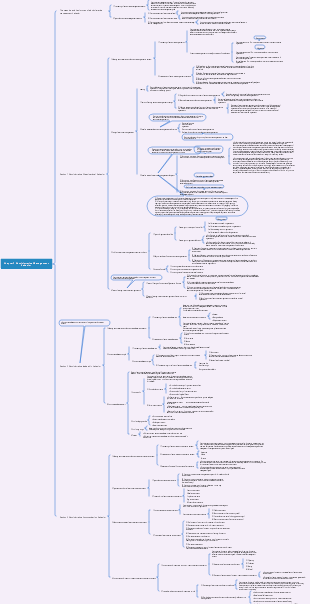
00277 Administrative Management - Chapter 10 Administrative Management Standards (Section 1 The meaning and type of administrative management standards, Section 2 The content composition and basic functions of administrative management standards, Section 3 Administrative according to law and moral administration and their mutual relationship .)
Edited at 2025-01-10 14:44:28Rumi: 10 dimensions of spiritual awakening. When you stop looking for yourself, you will find the entire universe because what you are looking for is also looking for you. Anything you do persevere every day can open a door to the depths of your spirit. In silence, I slipped into the secret realm, and I enjoyed everything to observe the magic around me, and didn't make any noise. Why do you like to crawl when you are born with wings? The soul has its own ears and can hear things that the mind cannot understand. Seek inward for the answer to everything, everything in the universe is in you. Lovers do not end up meeting somewhere, and there is no parting in this world. A wound is where light enters your heart.
Chronic heart failure is not just a problem of the speed of heart rate! It is caused by the decrease in myocardial contraction and diastolic function, which leads to insufficient cardiac output, which in turn causes congestion in the pulmonary circulation and congestion in the systemic circulation. From causes, inducement to compensation mechanisms, the pathophysiological processes of heart failure are complex and diverse. By controlling edema, reducing the heart's front and afterload, improving cardiac comfort function, and preventing and treating basic causes, we can effectively respond to this challenge. Only by understanding the mechanisms and clinical manifestations of heart failure and mastering prevention and treatment strategies can we better protect heart health.
Ischemia-reperfusion injury is a phenomenon that cellular function and metabolic disorders and structural damage will worsen after organs or tissues restore blood supply. Its main mechanisms include increased free radical generation, calcium overload, and the role of microvascular and leukocytes. The heart and brain are common damaged organs, manifested as changes in myocardial metabolism and ultrastructural changes, decreased cardiac function, etc. Prevention and control measures include removing free radicals, reducing calcium overload, improving metabolism and controlling reperfusion conditions, such as low sodium, low temperature, low pressure, etc. Understanding these mechanisms can help develop effective treatment options and alleviate ischemic injury.
Rumi: 10 dimensions of spiritual awakening. When you stop looking for yourself, you will find the entire universe because what you are looking for is also looking for you. Anything you do persevere every day can open a door to the depths of your spirit. In silence, I slipped into the secret realm, and I enjoyed everything to observe the magic around me, and didn't make any noise. Why do you like to crawl when you are born with wings? The soul has its own ears and can hear things that the mind cannot understand. Seek inward for the answer to everything, everything in the universe is in you. Lovers do not end up meeting somewhere, and there is no parting in this world. A wound is where light enters your heart.
Chronic heart failure is not just a problem of the speed of heart rate! It is caused by the decrease in myocardial contraction and diastolic function, which leads to insufficient cardiac output, which in turn causes congestion in the pulmonary circulation and congestion in the systemic circulation. From causes, inducement to compensation mechanisms, the pathophysiological processes of heart failure are complex and diverse. By controlling edema, reducing the heart's front and afterload, improving cardiac comfort function, and preventing and treating basic causes, we can effectively respond to this challenge. Only by understanding the mechanisms and clinical manifestations of heart failure and mastering prevention and treatment strategies can we better protect heart health.
Ischemia-reperfusion injury is a phenomenon that cellular function and metabolic disorders and structural damage will worsen after organs or tissues restore blood supply. Its main mechanisms include increased free radical generation, calcium overload, and the role of microvascular and leukocytes. The heart and brain are common damaged organs, manifested as changes in myocardial metabolism and ultrastructural changes, decreased cardiac function, etc. Prevention and control measures include removing free radicals, reducing calcium overload, improving metabolism and controlling reperfusion conditions, such as low sodium, low temperature, low pressure, etc. Understanding these mechanisms can help develop effective treatment options and alleviate ischemic injury.
Chapter 10 Administrative Management Standards
Section 1 Meaning and Types of Administrative Management Specifications
1. Types of administrative regulations
1. Administrative Legal Specifications
(1) The meaning of administrative legal norms
The so-called administrative legal norms refer to the general term for various legal norms related to administrative management formulated by various state organs and guaranteed by the state's coercive force.
(2) Characteristics of administrative legal norms
To formulate the specificity of the subject;
The specificity of the adjustment object; (The adjustment object of administrative legal norms is administrative legal relations.)
Authoritative, compulsory and universal applicability in effectiveness;
Diversity and hierarchy in the types of administrative legal norms;
Relative stability of administrative legal norms.
2. Administrative ethics code
(1) The meaning of administrative ethics
The so-called administrative ethics norms or administrative ethics refer to the administrative adjustment of administrative profession that state administrative organs and their staff should follow in the process of exercising state administrative powers, managing social public affairs, internal affairs of administrative organs, and providing public services. A general term for moral codes and moral norms that manage various relationships between subject and object and between administrative subjects.
(2) Basic characteristics of administrative ethics
①Political
Serve the people wholeheartedly constitute the highest moral code of administrative ethics in modern democratic countries; be loyal to the government, loyal to the will and interests of the country and the people, and work diligently for the people, which constitutes the core content and the most basic moral code of administrative ethics. .
②Self-discipline
Self-discipline is one of the commonalities between administrative morality and general morality, and it is also the most basic attribute that distinguishes administrative moral norms from administrative legal norms.
③Relative stability
The stability of administrative legal norms can only be relative and dynamic stability.
Section 2 Content composition and basic functions of administrative management specifications
1. Content composition and basic functions of administrative legal norms
1. Content composition of administrative legal norms
(1) Constitution
It is the fundamental law of the country and the most basic basis for all public power acts.
(2) Legal
Here, law specifically refers to the sum of various legal norms related to administrative management formulated by the state legislature.
(3) Administrative Regulations and Administrative Regulations
The Constitution grants the State Council the power to formulate administrative regulations, and grants the State Council the power to formulate administrative regulations. The so-called administrative regulations are defined in a narrow sense, which refers to the legal norms formulated by the central administrative organs; while administrative regulations refer to the legal norms formulated by the functional departments of the central government.
(4) Local regulations, rules, autonomous regulations and single regulations
In our country, in accordance with the provisions of the Constitution and the Organization Law of the People's Congresses at all levels and the People's Governments at all levels, the People's Congresses of provinces (autonomous regions, municipalities directly under the Central Government) and the municipalities where the people's governments of provinces (autonomous regions) are located and approved by the State Council The People's Congress and its Standing Committee of a larger city have the right to formulate local regulations; the municipalities where the people's governments of provinces (autonomous regions, municipalities directly under the Central Government) and provincial (autonomous regions) are located and the people's governments of larger cities approved by the State Council may formulate Local regulations; the people's congresses of ethnic autonomous areas have the right to formulate autonomous regulations and separate regulations.
(5) Legal interpretation and international treaties
Legal interpretation refers to the legally binding legislative interpretation and explanation made by relevant state organs that have legal power to interpret the above-mentioned administrative legal norms. International treaties signed, acceded or recognized by a government, many of which involve the administrative powers of the state and their operation, such as various tariff management agreements, international conventions on administrative jurisdiction and administrative public relations, etc., which are within the borders of the country It also has the function of legal norms, so it has become an integral part of a country's administrative legal norms.
2. Basic functions of administrative legal norms
(1) Specification and control functions. It is the most basic function of administrative legal norms.
(2) Organization and regulation functions. It is the institutional premise and guarantee for the formation of a clear, reasonable and standardized professional division of labor and cooperation system between various components of the administrative system.
(3) Reform and stabilization functions. As the institutionalized embodiment of the state will, the administrative legal norm system must adjust its own responsibilities, powers and operating principles at any time, and implement administrative reforms that are compatible with the social environment and the transformation of the state will; Although the administrative system and administrative management process face the needs and necessity of reform at any time, as a state power system, whether it is its organizational structure or its operating principles and processes, it needs to maintain a necessary degree of continuity and stability.
2. Content composition and basic functions of administrative ethics
1. Content composition of administrative ethics
(1) Administrative Ethics Code
Administrative moral codes are the highest level of moral codes or fundamental codes in the administrative moral system; they are the soul of the administrative moral system, which runs through all levels and operation processes of the entire administrative moral system.
(2) Specific norms of administrative ethics
Diligence (this is the core norm of administrative professional ethics and the most basic norm requirement of serving the people.)
Integrity
Abide by laws and regulations, and administer according to law
Seek truth from facts and scientific administration
Be warm and coordinate with administration
2. Basic functions of administrative ethics
(1) Guide and constraint functions
(2) Self-regulation function
(3) Demonstration and motivation functions
3. The most basic principle of my country's administrative moral system is "serving the people".
Section 3 Administration according to law and administration with morality and their mutual relations
1. Administrative according to law and its significance
1. The meaning of administration according to law
Administrative law or administrative rule of law is a public administration principle and social management model gradually formed after the emergence of public administration awareness in modern democratic countries and public administration awareness. It is also the basic value model or direction of the development of administrative management in my country in recent years.
Administration according to law is also known as legalization of administrative management or administrative rule of law. It can be understood from the following aspects:
Administration according to law is a democratic constitutional principle.
Administration according to law is an administrative management model.
The normative or binding role of legal norms is always the essence of administration according to law.
2. Basic contents of administration according to law
(1) Legalization of administrative management awareness
The legalization of administrative management awareness actually requires the establishment of an administrative cultural environment and administrative organizational atmosphere that is compatible with the administrative model according to law.
(2) Legalization of administrative powers
The legalization of administrative powers means that the scope of functions, size of authority and relationships of administrative agencies and their staff must have clear grants and regulations on legal norms.
(3) Legalization of administrative staffing
The legalization of administrative staffing means that the establishment of administrative agencies, organizational scale, personnel quota and other contents should have clear legal provisions.
(4) Legalization of administrative procedures
Administrative procedures are a collection of time-connected behavioral steps, methods and processes followed by administrative agencies and administrative personnel in the process of exercising administrative powers and performing administrative management functions.
(5) Legalization of administrative responsibilities
The administrative model according to law requires that the principle of consistency of rights and responsibilities is clearly reflected in legal norms, that is, through various administrative legal norms, the administrative and legal responsibilities that administrative agencies and their staff should bear due to failure to perform their statutory duties and obligations. Regulations, this is the so-called legalization of administrative responsibilities.
3. The role and significance of administration according to law
(1) Administration according to law is the premise and guarantee for the development of modern national democracy, especially administrative management.
(2) Administration according to law is an objective requirement and guarantee for the development of the market economy.
(3) Administrative according to law is an inevitable choice to control the expansion trend of administrative power.
(4) Administration according to law is an effective way to promote and deepen administrative management reform.
2. Administration with virtue and its significance
1. The meaning of administration with virtue
Administration with morality is an administration that in the process of exercising administrative power and performing administrative management functions, its thoughts and behaviors must be subject to administrative ethics norms and administrative ethics in accordance with administrative ethics norms and civilized administration in accordance with administrative ethics norms and specific administrative ethics norms. Management mode.
2. Contents of administration with virtue
(1) Administrative organs and administrative personnel should cultivate themselves with virtue.
(2) Administrative organs and administrative personnel should convince the public with their morality.
(3) Administrative organs and administrative personnel should administer with virtue and govern with morality.
(4) Establish and form a good social and moral environment.
3. The importance of administration with virtue
(1) Moral administration helps to standardize and rationalize administrative management activities
(2) Administration with morality helps to enhance the sense of responsibility of administrative managers.
(3) Administration with morality helps optimize social atmosphere
3. The mutual relationship between administration according to law and administration with morality
1. The difference between administration according to law and administration with morality is mainly reflected in:
2. The mutual connection between administration according to law and administration with morality:
(1) The normative or binding effect on administrative power and administrative actions is the common essence of administration according to law and administration with morality.
(2) Realizing responsible administration is the common goal of administration according to law and administration with morality.
(3) Administrative according to law and administration with morality have some common basic functions.
(4) Administration according to law is the cornerstone of administrative management, and administration with morality is a supplement to administration according to law.