MindMap Gallery 00277 Administrative Management ——Chapter 7 Administrative Management Behavior
00277 Administrative Management - Chapter 7 Administrative Management Behavior (Section 1 Administrative Organization Behavior, Section 2 Administrative Leadership Behavior, Section 3 Administrative Communication Behavior).
Edited at 2025-01-08 16:31:36Rumi: 10 dimensions of spiritual awakening. When you stop looking for yourself, you will find the entire universe because what you are looking for is also looking for you. Anything you do persevere every day can open a door to the depths of your spirit. In silence, I slipped into the secret realm, and I enjoyed everything to observe the magic around me, and didn't make any noise. Why do you like to crawl when you are born with wings? The soul has its own ears and can hear things that the mind cannot understand. Seek inward for the answer to everything, everything in the universe is in you. Lovers do not end up meeting somewhere, and there is no parting in this world. A wound is where light enters your heart.
Chronic heart failure is not just a problem of the speed of heart rate! It is caused by the decrease in myocardial contraction and diastolic function, which leads to insufficient cardiac output, which in turn causes congestion in the pulmonary circulation and congestion in the systemic circulation. From causes, inducement to compensation mechanisms, the pathophysiological processes of heart failure are complex and diverse. By controlling edema, reducing the heart's front and afterload, improving cardiac comfort function, and preventing and treating basic causes, we can effectively respond to this challenge. Only by understanding the mechanisms and clinical manifestations of heart failure and mastering prevention and treatment strategies can we better protect heart health.
Ischemia-reperfusion injury is a phenomenon that cellular function and metabolic disorders and structural damage will worsen after organs or tissues restore blood supply. Its main mechanisms include increased free radical generation, calcium overload, and the role of microvascular and leukocytes. The heart and brain are common damaged organs, manifested as changes in myocardial metabolism and ultrastructural changes, decreased cardiac function, etc. Prevention and control measures include removing free radicals, reducing calcium overload, improving metabolism and controlling reperfusion conditions, such as low sodium, low temperature, low pressure, etc. Understanding these mechanisms can help develop effective treatment options and alleviate ischemic injury.
Rumi: 10 dimensions of spiritual awakening. When you stop looking for yourself, you will find the entire universe because what you are looking for is also looking for you. Anything you do persevere every day can open a door to the depths of your spirit. In silence, I slipped into the secret realm, and I enjoyed everything to observe the magic around me, and didn't make any noise. Why do you like to crawl when you are born with wings? The soul has its own ears and can hear things that the mind cannot understand. Seek inward for the answer to everything, everything in the universe is in you. Lovers do not end up meeting somewhere, and there is no parting in this world. A wound is where light enters your heart.
Chronic heart failure is not just a problem of the speed of heart rate! It is caused by the decrease in myocardial contraction and diastolic function, which leads to insufficient cardiac output, which in turn causes congestion in the pulmonary circulation and congestion in the systemic circulation. From causes, inducement to compensation mechanisms, the pathophysiological processes of heart failure are complex and diverse. By controlling edema, reducing the heart's front and afterload, improving cardiac comfort function, and preventing and treating basic causes, we can effectively respond to this challenge. Only by understanding the mechanisms and clinical manifestations of heart failure and mastering prevention and treatment strategies can we better protect heart health.
Ischemia-reperfusion injury is a phenomenon that cellular function and metabolic disorders and structural damage will worsen after organs or tissues restore blood supply. Its main mechanisms include increased free radical generation, calcium overload, and the role of microvascular and leukocytes. The heart and brain are common damaged organs, manifested as changes in myocardial metabolism and ultrastructural changes, decreased cardiac function, etc. Prevention and control measures include removing free radicals, reducing calcium overload, improving metabolism and controlling reperfusion conditions, such as low sodium, low temperature, low pressure, etc. Understanding these mechanisms can help develop effective treatment options and alleviate ischemic injury.
Chapter 7 Administrative Management Behavior
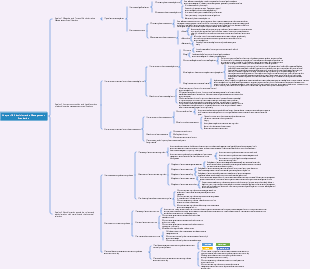
The meaning and basic types of administrative management behavior
1. The meaning of administrative management behavior
Administrative management behavior: The sum of a series of organization, leadership, communication, command, coordination and other administrative activities carried out by administrative managers in order to mobilize the work enthusiasm of their subordinates and make them work hard to effectively achieve administrative management goals.
2. Types of administrative management behaviors
(1) From the perspective of administrative level
It is divided into administrative management behavior of the central government and administrative management behavior of the local government
(2) From the perspective of administrative process
It is divided into administrative decision-making behavior, administrative execution behavior, and administrative supervision behavior
(3) From the perspective of the relationship between the administrative manager and the managed person
It is divided into administrative organizational behavior, administrative leadership behavior and administrative communication behavior
Section 1 Administrative Organizational Behavior
1. Meaning and characteristics of administrative organization behavior
1. The meaning of administrative organization
Administrative organizational behavior, that is, dynamic administrative organizational activities and processes, refer to the organizational activities and operation process carried out by the government to manage social public affairs and exercise state administrative powers.
An administrative organization is usually composed of four elements:
Administrative position. This is the most basic component in an administrative organization.
The most basic
Administrative personnel. This is the most active factor in administrative organizations.
Most active
Administrative system. The administrative system determines the operation of administrative organizations.
Spiritual elements. This is the subjective factor that constitutes an administrative organization.
2. Characteristics of administrative organization behavior
(1) Political nature - Administrative organizational behavior is a concrete manifestation of the ruling class's efforts to safeguard the interests of the class, consolidate its political status, and implement political rule.
(2) Legality-The design and change of administrative organizations must be based on the Constitution and the law and in accordance with legal procedures.
(3) Continuity-Administrative organizational behavior is a continuous process, not a static activity
(4) System relevance- Every change made by an administrative organization must be systematically analyzed in combination with the internal and external environment of the administrative organization.
2. Design of administrative organization
meaning
The so-called design of an administrative organization is the process of the state power organization or the government planning and establishing the administrative organization structure and its operating system.
1. Factors influencing administrative organization design
(1) The goals, functions and environment of administrative organizations
The goal is the basis for the survival of administrative organizations and the basis for the legitimacy of administrative organizations.
(2) Technical characteristics of administrative organizations
The technical characteristics of administrative organizations include the structure, scale, power allocation, operating mechanism, etc. of administrative organizations.
(3) Matching between the goals and functions of administrative organizations with the environment and technical characteristics of administrative organizations
The design of administrative organization should be based on the full consideration of factors such as historical, cultural and realistic environment, organizational goals, and organizational functions, and should pay as much attention to the matching of administrative organizational goals, functions with the environment and technical characteristics of administrative organization.
2. Establish a reasonable administrative organizational structure
The structure of an administrative organization refers to the arrangement of the rights and responsibilities relationships formed between departments and levels in an administrative organization.
The vertical structure of administrative organization.
The horizontal structure of administrative organizations.
The linear-functional structure of administrative organizations.
The structural system of my country's administrative organization is a linear-functional structure.
3. Establish a scientific administrative organizational system
The administrative organization system refers to the institutionalized manifestation of administrative relations between various levels and departments in the administrative organization structure.
(1) The administrative head responsibility system implemented by our administrative organs not only takes into account the advantages of the head system, but also absorbs the strengths of the committee system. (2) In terms of system design, the administrative head not only has the right to convene and preside over the executive meetings and plenary meetings of the administrative organization at the same level, but also makes decisions on relevant issues, on the basis of fully organizing collective discussions, the administrative heads are finally concentrated by the administrative heads on the basis of fully engaging in collective discussions. Everyone’s correct opinions form organizational decisions. (3) In terms of operating procedures, it is first democracy, and then centralization, so the administrative chief responsibility system is essentially a form of democratic centralism. The State Council of my country implements the State Council’s discussion system and the Standing Committee discussion system; local governments at all levels implement the government meeting system. Major issues generally need to be discussed collectively by these meetings before they are finally decided by the executive head.
(1) According to the number of administrative decisions and administrative responsibilities, it is divided into the head system and the committee system.
Our country is the responsibility system of the executive head, while Switzerland is the commission system.
①Chief system: also known as the single system and the one-rank system. It refers to an organizational system in which the statutory highest decision-making power and management power of an administrative organization are exercised and responsible by the administrative head. The advantages of the chief system are: administrative organizations are concentrated in power, clear responsibilities, quick decision-making and action, sensitive and powerful commands, avoid mutual ruling, reduce unnecessary friction and losses, and easy to keep confidentiality. The disadvantage is that the administrative chief has limited knowledge, experience, energy and wisdom, and decision-making issues may be inappropriate. If the administrative chief takes over the power alone, it is easy to form arbitrary behavior.
② Committee system: also known as collegial system. It refers to an organizational system in which the decision-making and management power of administrative organizations is jointly exercised by a committee composed of several persons, collectively decided and jointly responsible according to the principle of minority obeying the majority or consensus. The advantages of the committee system are: decision-making can brainstorm, consider issues more thoroughly, accommodate opinions from all parties, and reflect interests and requirements from all parties. It can effectively prevent individual arbitrary behavior. The disadvantages are: unclear rights and responsibilities, easy to argue with each other, nominally, collective responsibility but in fact no one is responsible; slow action, difficult to unify opinions, easy to lead to slow reactions and low administrative efficiency.
(2) According to the different distribution of administrative power between superiors and subordinates, it is divided into centralized system and decentralized system.
Centralized and decentralized
(3) According to the number of command and control of superiors by each administrative organization at the same level, it is divided into a complete system and a separate system.
The United States is a typical country with a separation system.
3. Conflicts in administrative organizations and their solutions
1. Types of organizational conflicts:
Depending on the subject of the conflict
Conflict between individuals in organizations
Most common
Conflict between individuals and groups in organizations
Conflicts between groups in organizations
Conflict between formal and informal organizations
Depending on organizational function
① Conflicts with normal functions refer to those that support the goals of administrative organizations and can improve the work performance of administrative organizations.
②Dysfunctional conflict refers to those conflicts that hinder the realization of administrative organization's performance. This conflict is destructive and ultimately leads to a reduction in administrative organization's performance.
2. Ways to resolve conflicts in administrative organizations:
01 Negotiation. Negotiation is a negotiation process that does not involve a third party intervention, and two or more decisions represent a resolution of mutual existence or future and foreseeable negotiation and communication.
02 Mediation. Mediation is a process in which mediators help the disputed parties to resolve their differences on the premise that the parties to the conflict voluntarily participate.
03 Obey authority. Obeying authority means obeying the arrangements of administrative leaders or resolutions made by superior administrative organizations. This is a common way to resolve conflicts between superior and subordinate administrative organizations.
3. Incentive Principle
1. Combining material motivation and spiritual motivation
2. Combining positive motivation and negative motivation
3. Combining internal motivation and external motivation
4. Trends of change in administrative organizations
Administrative organizational change refers to the change and innovation process of administrative organization.
1. Trends of Change in Administrative Organization Structure
(1) In terms of horizontal structure, on the one hand, the status between functional departments moves from imbalance to balance. On the other hand, with the adjustment of government functions, the corresponding departments have decreased and increased.
(2) At the vertical level, the administrative organizational structure has developed from a spire-shaped structure to a flat structure.
(3) In order to overcome the shortcomings of excessive levels of administrative organizations, teamwork in administrative organizations is also an important trend in the development of administrative organizations in recent years.
2. Trends of change in administrative organization's power distribution relationship
(1) Within the administrative organizational system, there is a trend of horizontal decentralization and a trend of vertical decentralization.
(2) Part of the power of administrative organizations is transferred to social organizations.
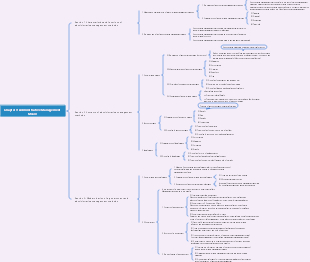
Section 2 Administrative leadership behavior
▲Administrative leadership is the core part of the government's operation process.
1. Meaning and characteristics of administrative leadership behavior
1. The meaning of administrative leadership
Leadership is an influential and guiding management behavior or command behavior, and it is a kind of management behavior that has existed in human society since ancient times. A universal and indispensable phenomenon.
Leadership has three main components:
① Leader;
② Being the leader;
③Objective environment
Administrative leadership behavior refers to the administrative leader’s actions in a certain environment, through demonstration, persuasion, order and other means. The behavioral process of being directed and guided by leaders to achieve administrative organizational goals.
2. Characteristics of administrative leadership
(1) Unity: Administrative leadership is the core of the government's operation process
(2) Authoritative
(3) Service
(4) Comprehensive
2. Administrative leadership style
1. The meaning of administrative leadership
Administrative leadership methods refer to the relatively stable leadership model that administrative leaders follow during their activities.
2. Administrative leadership type
(1) Divide according to different ways or procedures in which administrative leaders use administrative power:
(1) Appointment
(2) Democratic style---my country's administrative leadership method is a democratic and centralized leadership method
(3) Laissez-faire (the task is unclear)
(2) Divided according to the focus of administrative leadership:
Heavy man-like
Important things
Strong personnel and affairs
III. Administrative leadership art
The art of administrative leadership is a skill and skill formed by administrative leaders in order to achieve certain leadership goals in leadership activities.
1. Authorized Art
Authorization refers to the authorization of the administrative leader granting the leader certain power directly to the leader, so that he enjoys the autonomy of handling affairs within his or her duties under the guidance and supervision of the leader.
(1) Principle of authorization
① Principle of consistency of rights and responsibilities
② Principle of deafness authorization
③ The principle of unity of trust and supervision
④ The principle of single affiliation
(2) Authorization method
① Full authorization----Subordinates have strong abilities, so you can delegate your power with confidence
②Inadequate authorization----- subordinates have weak abilities, partial authorization
③Flexible authorization---the subordinate's capabilities are uncertain, and the authorization space needs to be retained to adjust at any time
④Restriction Authorization---Authorize to more than two subordinates to allow each other to check and balance and supervise
2. Art of employing people
① Know others and responsibilities
②Appoint people based on their talents
③Employment director
④Dare to use newcomers
3. Art of doing things
Leaders should do things in an orderly manner, and should make decisions immediately when dealing with things, and should not hesitate.
4. Time art
①On the one hand, administrative leaders must plan their own time.
②On the other hand, administrative leaders should not waste other people’s precious time.
Section 3 Administrative Communication Behavior
1. Meaning and characteristics of administrative communication behavior
1. The meaning of administrative communication behavior
Administrative communication behavior is to communicate and convey policy information, ideas and opinions within the government system and between the government system and other social systems through certain media, so as to achieve mutual understanding, collaborative cooperation, and ultimately achieve government management. A management activity and process of goals
2. Characteristics of administrative communication behavior
Interactive
Media
Purpose
3. Reasons and Purposes of Administrative Communication
① Administrative communication is very necessary for any administrative organization and its operation. The administrative system often shows various inconsistencies. There are many reasons for this inconsistency, but one of the important reasons is poor administrative communication.
② The purpose of administrative communication is to achieve mutual understanding and collaborative cooperation to jointly achieve administrative management goals.
2. Types and basic forms of administrative communication
1. Types of administrative communication
01. According to the administrative organization system, for formal and informal communication
02. According to the communication direction, upward communication, downward communication (most common) and parallel communication (improve efficiency)
03. According to whether the information is feedback, it is one-way communication and two-way communication.
2. The basic form of administrative communication
Chain communication
Wheel communication
Y-style communication
Ring communication
Full channel communication
3. Methods and processes of administrative communication
1. Administrative communication methods
Communication is the process of information being passed and exchanged in two or more individuals or organizations.
Administrative communication methods
(1) Oral communication
(2) Text communication (text, pictures, symbols)
(3) Nonverbal communication (clothing, gestures, signs)
(4) Electronic communication (fax, computer network)
2. The process of administrative communication
(1) The formation of the intention of the sender of the information;
(2) The sender chooses the medium for information transmission;
(3) The sender compiles the information into symbols that the recipient can understand;
(4) Determine the time, method and method of sending information;
(5) The recipient accepts the information;
(6) The recipient recompiles the information into information with specific meanings, that is, re-understanding of the information;
(7) The recipient takes action;
(8) The sender understands through information feedback that the information transmitted is accepted and accurate.
4. Administrative information in the administrative communication process
1. Administrative information and its position in administrative communication
Administrative information refers to a general term for various information, documents, instructions, predictions, intelligence, data, suggestions, etc. that reflect various activities, tasks and goals in the administrative management process.
(1) Characteristics of administrative information
(1) Objectivity
(2) Timeliness
(3) Sharing
(4) Political
(2) The status of administrative information in administrative communication
① Administrative information is the material basis of administrative communication
② The quality of administrative information is the basis and guarantee for efficient and smooth administrative communication.
2. The disclosure of administrative information and its role
(1) The meaning of administrative information disclosure
Administrative information disclosure refers to the administrative communication behavior in which the government publishes administrative information that is not covered by the confidentiality scope to the society in accordance with the law so that administrative information can be widely known and fully utilized by the society. It is a form of one-way communication and is also the government. A form of information communication to the society.
(2) The role of administrative information disclosure is mainly reflected in the following aspects:
① Helps promote the development of democratic administration
② Benefits people's lives and work
③It is conducive to preventing corruption in administrative power
④It helps to promote the improvement of administrative efficiency
⑤ It will help our government better adapt to the requirements of the WTO.