MindMap Gallery Real Social Construction
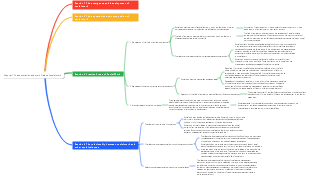
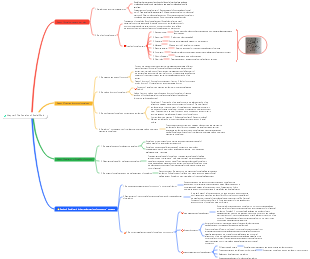
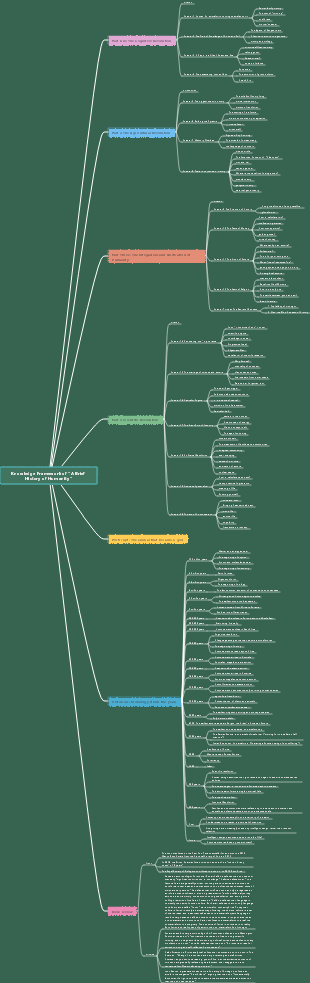
This is a mind map about "The Social Construction of Reality", which mainly includes: Conclusion: Outlook on Knowledge Sociology, Chapter 5: Dynamic Process of Social Construction, Chapter 4: Construction of Language and Reality, Third Chapter: Distribution and Control of Social Knowledge, Chapter 2: Subjectization of Social Reality, Chapter 1: Society as an objective reality, Introduction: Problems of Knowledge Sociology.
Edited at 2025-01-09 15:37:37Rumi: 10 dimensions of spiritual awakening. When you stop looking for yourself, you will find the entire universe because what you are looking for is also looking for you. Anything you do persevere every day can open a door to the depths of your spirit. In silence, I slipped into the secret realm, and I enjoyed everything to observe the magic around me, and didn't make any noise. Why do you like to crawl when you are born with wings? The soul has its own ears and can hear things that the mind cannot understand. Seek inward for the answer to everything, everything in the universe is in you. Lovers do not end up meeting somewhere, and there is no parting in this world. A wound is where light enters your heart.
Chronic heart failure is not just a problem of the speed of heart rate! It is caused by the decrease in myocardial contraction and diastolic function, which leads to insufficient cardiac output, which in turn causes congestion in the pulmonary circulation and congestion in the systemic circulation. From causes, inducement to compensation mechanisms, the pathophysiological processes of heart failure are complex and diverse. By controlling edema, reducing the heart's front and afterload, improving cardiac comfort function, and preventing and treating basic causes, we can effectively respond to this challenge. Only by understanding the mechanisms and clinical manifestations of heart failure and mastering prevention and treatment strategies can we better protect heart health.
Ischemia-reperfusion injury is a phenomenon that cellular function and metabolic disorders and structural damage will worsen after organs or tissues restore blood supply. Its main mechanisms include increased free radical generation, calcium overload, and the role of microvascular and leukocytes. The heart and brain are common damaged organs, manifested as changes in myocardial metabolism and ultrastructural changes, decreased cardiac function, etc. Prevention and control measures include removing free radicals, reducing calcium overload, improving metabolism and controlling reperfusion conditions, such as low sodium, low temperature, low pressure, etc. Understanding these mechanisms can help develop effective treatment options and alleviate ischemic injury.
Rumi: 10 dimensions of spiritual awakening. When you stop looking for yourself, you will find the entire universe because what you are looking for is also looking for you. Anything you do persevere every day can open a door to the depths of your spirit. In silence, I slipped into the secret realm, and I enjoyed everything to observe the magic around me, and didn't make any noise. Why do you like to crawl when you are born with wings? The soul has its own ears and can hear things that the mind cannot understand. Seek inward for the answer to everything, everything in the universe is in you. Lovers do not end up meeting somewhere, and there is no parting in this world. A wound is where light enters your heart.
Chronic heart failure is not just a problem of the speed of heart rate! It is caused by the decrease in myocardial contraction and diastolic function, which leads to insufficient cardiac output, which in turn causes congestion in the pulmonary circulation and congestion in the systemic circulation. From causes, inducement to compensation mechanisms, the pathophysiological processes of heart failure are complex and diverse. By controlling edema, reducing the heart's front and afterload, improving cardiac comfort function, and preventing and treating basic causes, we can effectively respond to this challenge. Only by understanding the mechanisms and clinical manifestations of heart failure and mastering prevention and treatment strategies can we better protect heart health.
Ischemia-reperfusion injury is a phenomenon that cellular function and metabolic disorders and structural damage will worsen after organs or tissues restore blood supply. Its main mechanisms include increased free radical generation, calcium overload, and the role of microvascular and leukocytes. The heart and brain are common damaged organs, manifested as changes in myocardial metabolism and ultrastructural changes, decreased cardiac function, etc. Prevention and control measures include removing free radicals, reducing calcium overload, improving metabolism and controlling reperfusion conditions, such as low sodium, low temperature, low pressure, etc. Understanding these mechanisms can help develop effective treatment options and alleviate ischemic injury.
"Real Social Construction"
Introduction: Sociology of Knowledge
The core position of knowledge sociology: It is clear that knowledge is not an isolated existence beyond society, but is closely based on social processes. From the survival wisdom of primitive tribes to the cutting-edge technological cognition of modern society, all of them are the products of a specific social environment. Many factors such as cultural atmosphere, power structure, and economic model in society, are like complex silk threads, jointly weave the "real" knowledge system that people recognize.
"Reality" Connotation: It is not just pointing to the objective material world, but more importantly, people gradually build a cognitive edifice of the world based on each other's consensus and understanding in the long social interaction. For example, different cultures have very different cognitions of time, space and beauty, which is a vivid manifestation of the reality of social construction.
"Knowledge" category: far exceeds the narrow boundaries of scientific knowledge, and covers all generally recognized concepts, beliefs, customs and behavioral norms in society. Like the Feng Shui concepts circulating among the people and the knowledge behind the sacrificial rituals of different ethnic groups, they all belong to this category.
Chapter 1: Society as an objective reality
Organisms and Activities
The uniqueness of human activities: Humans rely on their consciousness and thinking to carry out purposeful and planned activities to transform the natural and social environment. Compared with animals' foraging and nesting behaviors based solely on instinct, human activities such as building skyscrapers and exploring the universe demonstrate a distinct uniqueness.
The basis of social formation: repetitive and regular human activities, such as daily commodity trading and weekly religious gatherings, gradually settle into a stable behavioral model, build a solid foundation for the construction of social order, and become the formation and maintenance of society. cornerstone.
The origin of institutionalization
Demand-driven: In order to meet the basic needs of survival and reproduction, reasonable allocation of resources, the human population has given birth to corresponding systems. For example, in order to ensure food supply, an agricultural production and distribution system was born; in order to maintain group safety, a military defense and public security system was established.
The role of habits and traditions: In the process of dealing with problems, some effective behaviors have been repeatedly practiced and become habits that group members follow together, and are passed on across generations through word of mouth, demonstration imitation, etc. Evolved into a formal, binding system.
Sedimentation and tradition
Cultural sedimentation: Systems, concepts, skills, etc. are constantly accumulating in the long historical process, forming a profound cultural heritage and becoming a collective memory treasure house of society. For example, the Confucianism and etiquette system that have been preserved in China's five thousand years of history have profoundly influenced later generations.
Continuation of tradition: With the help of the words and deeds of family elders, the systematic teaching of school education, the solemn interpretation of religious rituals, and the vivid narration of folk stories, traditions have been successively passed from generation to generation to ensure that the basic social order and core values continue.
Institutional scope and model
Diverse fields: comprehensively cover all levels of social life such as economy, politics, religion, education, etc. The market economic system in the economic field, the democratic election system in the political field, the liturgy system in the religious field, the degree awarding system in the education field, etc. The systems in various fields are intertwined and interacted with each other.
Diverse models: The institutional models of different social forms and different historical stages of development vary greatly. The centralized system of ancient feudal dynasties was completely different from the separation of powers in modern democratic countries. This was deeply restricted by various factors such as regional culture, level of productivity development, and social class structure.
Chapter 2: Subjectization of social reality
The internalization process
Key stages of socialization: From an ignorant childhood to a gradually mature adult, individuals gradually accept the established norms, values and other social environments through frequent interactions with parents, teachers, peers, etc. in diverse environments such as family, school, and society. Knowledge system. For example, children learn basic polite words and behavioral norms in their families.
Cognitive and emotional shaping: Individuals not only understand the content of social rules at the rational cognitive level, but also develop deep recognition at the emotional level, internalizing these rules into behavioral codes that they consciously follow. For example, people's identification with patriotism will drive them to safeguard national dignity in their daily lives.
Identity and role
Identity formation: an individual builds a unique self-identity awareness based on his or her position in the social network, the profession he or she engages in, and the cultural group he or she belongs to. For example, a doctor has a mission of saving lives and helping the wounded in a professional dimension, and may belong to the middle class in the social class. This diverse identity has jointly shaped his self-awareness.
Role Responsibility: In different social scenarios, individuals flexibly adjust their behavior and attitudes according to the expectations of their roles. As children in the family, you must be filial to your parents; as employees at work, you must be dedicated and responsible.
Knowledge and awareness
Knowledge shapes thinking: The knowledge that an individual touches, learns and masters is like wearing a specific pair of "glasses" for his thinking, which determines his unique perspective and way of observing the world and analyzing problems. For example, physicists use physical knowledge as tools to understand the world from the perspective of material structure and motion laws; writers rely on their literary literacy to perceive the world from the perspective of emotions and human nature.
The social roots of consciousness: Individual consciousness does not arise in isolation, but is deeply imprinted with a distinct imprint of social culture and group concepts. In a society with a strong collectivist culture, individual consciousness tends to put collective interests first; while in a society where individualism is prevalent, individual consciousness emphasizes self-realization.
Chapter 3: Distribution and Control of Social Knowledge
Social distribution of knowledge
Class Differences: There is a significant gap in the opportunities, types and depth of knowledge acquisition in different social classes. The high-income class can provide children with high-quality educational resources and access to cutting-edge academic knowledge; while the low-income class may have many difficulties in obtaining knowledge due to economic restrictions, which seriously affects the future development of individuals and the mobility of social classes.
Group differentiation: Social groups divided based on age, gender, occupation, etc. have their own characteristics in knowledge reserves and dissemination. The youth group has a high acceptance of emerging technology knowledge; the female group is relatively good at certain emotional and communication knowledge; different professional groups such as lawyers, engineers, and artists each have professional knowledge in their fields and spread them within the group.
Control of knowledge
Power and Knowledge: Groups that hold social power, such as governments, corporate giants, religious leaders, etc., can often control the source of knowledge production, dissemination channels and screening standards, thereby maintaining their vested interests and dominance. Historically, the church has reviewed scientific knowledge and limited the dissemination of scientific theories that are not conducive to the dissemination of its doctrines.
Review and screening mechanism: Strictly control knowledge through laws and regulations, moral norms, social public opinion and other means. Knowledge that does not conform to mainstream values, such as promoting violence and discrimination, will be subject to legal sanctions and public condemnation to ensure that knowledge dissemination is in line with the overall interests and development needs of society.
Education and knowledge inheritance
Formal education system: As the core place for knowledge inheritance, schools formulate systematic teaching plans based on social development needs, impart knowledge and skills step by step, and cultivate talents with specific qualities. From basic subject education in primary schools to further study in professional fields in universities, it is a process of providing qualified talents to society.
Informal education methods: life experiences told by family elders, cultural activities organized by the community, and master-apprentice inheritance in the workplace, etc. are all important ways to inherit knowledge. In the family, children learn handicraft skills inherited by the family; in the community, residents learn about local historical and cultural knowledge.
Chapter 4: The Construction of Language and Reality
Language functions
Communication: As the most important information transmission tool for human beings, language enables individuals to share life experiences, exchange ideas and opinions, and express their emotions and thoughts. Whether it is daily chatting, business negotiations, and academic seminars, it is inseparable from the bridge of language.
Meaning: Give specific meaning to all things and various phenomena in the world, and build a symbolic system for humans to understand the world. For example, "red" is given different meanings such as auspiciousness, danger, and enthusiasm in different cultures, which are all the results given by language.
Language and knowledge
Knowledge expression: Knowledge needs to be accurately expressed and widely disseminated by language. The richness and accuracy of language directly affect the quality and effectiveness of knowledge inheritance. The invention of professional terms allows complex scientific knowledge to be accurately conveyed; the use of literary language makes ideological and emotional knowledge more infectious.
Knowledge creation: The continuous emergence of new vocabulary and new concepts is like adding bricks and tiling to the knowledge building, promoting the continuous expansion of knowledge boundaries. Words such as "cloud computing" and "big data" that were born in the Internet era have led to the vigorous development of knowledge in related fields.
Language and social structure
Reflects social relations: the details of titles, grammatical structures and other details in language, and clearly reflects the differences and relationships in social class, gender, age, etc. In ancient China, different titles were used for people of different identities and statuses to highlight hierarchical differences; there were different expressions for men and women in some languages, reflecting gender differences.
Strengthening social order: Following specific language norms and expression methods will help maintain social order and cultural identity. The use of standardized language in formal occasions reflects respect for the occasion and maintaining order; the use of dialects strengthens the identity of regional cultural groups.
Chapter 5: The dynamic process of social construction
Social changes and reality construction
Factors of social change: technological innovation, such as the emergence of the Internet, has completely changed people's lives and social patterns; economic development has led to changes in social class structure; political movements have promoted social system changes; cultural exchanges have brought new ideas and lifestyles, and these factors are shared. Promote social changes and promote the continuous reconstruction of social reality.
Conceptual change: Social changes have triggered profound changes in people's perceptions and values of the world. With the increase of environmental awareness, people's cognition of the relationship between man and nature has changed, and the establishment of environmental protection systems and behavioral norms has been promoted.
Conflict and consultation
The root cause of social conflict: Different interest groups have conflicts caused by uneven resource allocation, fierce power struggles, and sharp confrontation of values. For example, the working class has conflicts with capitalists in order to fight for reasonable labor rights; different religious groups have conflicts due to belief differences, which have impacted the existing social construction.
Consultation and compromise: Resolve conflicts through peaceful negotiations, democratic consultations, etc., and all parties reach consensus through mutual compromise to promote the adjustment and evolution of social reality. For example, the labor and capital parties determine reasonable salary and working conditions through consultation, promote harmony in labor relations, and reshape the social reality of the workplace.
Interaction between individuals and society
Individual initiative: Individuals are not passively accepting the "puppet" of social construction, but relying on their own innovative thinking, active actions and brave resistance to influence the trajectory of social development. For example, Martin Luther King promoted the development of the American civil rights movement and changed social and racial relations through the non-violent resistance movement.
The impact of society on individuals: factors such as social structure and cultural environment are like invisible giant hands, restricting individual behavioral choices and shaping individual thinking patterns and values. In the social culture that advocates innovation, individuals have a more innovative spirit and risk-taking sense.
Conclusion: Prospects of knowledge sociology
Continuous research direction: At the moment of globalization and the explosion of information technology, we will deeply explore the new forms and new characteristics of social construction. For example, how virtual social networks can build new social relationships and real cognition.
Interdisciplinary integration: Actively cooperate in in-depth with sociology, psychology, anthropology, linguistics and other disciplines, integrate research methods and achievements in various disciplines, and expand the horizons of sociology in knowledge. For example, in combination with psychology, the cognitive psychological mechanism of individuals in social construction is studied.
Practical application: widely apply the research results of knowledge sociology in areas such as education reform, cultural heritage, and public policy formulation to promote the development of society in a more fair, harmonious and progressive direction. For example, optimize the allocation of educational resources based on the research results of knowledge allocation.