MindMap Gallery Chemical
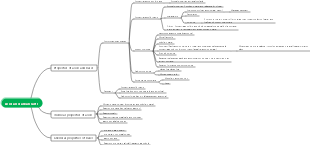
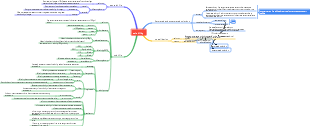
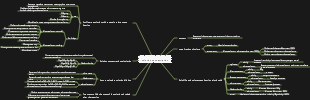
This is a mind map about chemistry, with the main contents including: air; oxygen; carbon dioxide, candle burning, purification of coarse salt, basic operations and precautions, naming of instruments, elemental materials and compounds, general chemical language, chemistry.
Edited at 2025-02-15 14:59:16Rumi: 10 dimensions of spiritual awakening. When you stop looking for yourself, you will find the entire universe because what you are looking for is also looking for you. Anything you do persevere every day can open a door to the depths of your spirit. In silence, I slipped into the secret realm, and I enjoyed everything to observe the magic around me, and didn't make any noise. Why do you like to crawl when you are born with wings? The soul has its own ears and can hear things that the mind cannot understand. Seek inward for the answer to everything, everything in the universe is in you. Lovers do not end up meeting somewhere, and there is no parting in this world. A wound is where light enters your heart.
Chronic heart failure is not just a problem of the speed of heart rate! It is caused by the decrease in myocardial contraction and diastolic function, which leads to insufficient cardiac output, which in turn causes congestion in the pulmonary circulation and congestion in the systemic circulation. From causes, inducement to compensation mechanisms, the pathophysiological processes of heart failure are complex and diverse. By controlling edema, reducing the heart's front and afterload, improving cardiac comfort function, and preventing and treating basic causes, we can effectively respond to this challenge. Only by understanding the mechanisms and clinical manifestations of heart failure and mastering prevention and treatment strategies can we better protect heart health.
Ischemia-reperfusion injury is a phenomenon that cellular function and metabolic disorders and structural damage will worsen after organs or tissues restore blood supply. Its main mechanisms include increased free radical generation, calcium overload, and the role of microvascular and leukocytes. The heart and brain are common damaged organs, manifested as changes in myocardial metabolism and ultrastructural changes, decreased cardiac function, etc. Prevention and control measures include removing free radicals, reducing calcium overload, improving metabolism and controlling reperfusion conditions, such as low sodium, low temperature, low pressure, etc. Understanding these mechanisms can help develop effective treatment options and alleviate ischemic injury.
Rumi: 10 dimensions of spiritual awakening. When you stop looking for yourself, you will find the entire universe because what you are looking for is also looking for you. Anything you do persevere every day can open a door to the depths of your spirit. In silence, I slipped into the secret realm, and I enjoyed everything to observe the magic around me, and didn't make any noise. Why do you like to crawl when you are born with wings? The soul has its own ears and can hear things that the mind cannot understand. Seek inward for the answer to everything, everything in the universe is in you. Lovers do not end up meeting somewhere, and there is no parting in this world. A wound is where light enters your heart.
Chronic heart failure is not just a problem of the speed of heart rate! It is caused by the decrease in myocardial contraction and diastolic function, which leads to insufficient cardiac output, which in turn causes congestion in the pulmonary circulation and congestion in the systemic circulation. From causes, inducement to compensation mechanisms, the pathophysiological processes of heart failure are complex and diverse. By controlling edema, reducing the heart's front and afterload, improving cardiac comfort function, and preventing and treating basic causes, we can effectively respond to this challenge. Only by understanding the mechanisms and clinical manifestations of heart failure and mastering prevention and treatment strategies can we better protect heart health.
Ischemia-reperfusion injury is a phenomenon that cellular function and metabolic disorders and structural damage will worsen after organs or tissues restore blood supply. Its main mechanisms include increased free radical generation, calcium overload, and the role of microvascular and leukocytes. The heart and brain are common damaged organs, manifested as changes in myocardial metabolism and ultrastructural changes, decreased cardiac function, etc. Prevention and control measures include removing free radicals, reducing calcium overload, improving metabolism and controlling reperfusion conditions, such as low sodium, low temperature, low pressure, etc. Understanding these mechanisms can help develop effective treatment options and alleviate ischemic injury.
Chemical
Chemical
Chemistry: The science of studying the composition, structure, properties, changes and energy transformations associated with the process of material change
1. Chemical changes: There are changes in the generation of new substances (chemical changes must be accompanied by physical changes)
Features: luminescence, exothermic color change, gas generation, precipitation generation.
Accompanied by changes in energy
2. Physical changes: There is no change in the generation of new matter (physical changes must be no chemical changes)
Characteristics: The appearance, state, etc. of the matter have changed.
Observe experimental phenomena:
(1). Add effervescent tablets to the water
Phenomenon: The solid gradually dissolves, and the solution changes from colorless to yellow.
A large number of bubbles were generated, and there was no obvious change on the glass sheet
(2) Blow air into the clear lime water
Phenomenon: becomes turbid.
(3) Magnesium belt combustion
Silver-white magnesium strip, soft texture
Phenomenon: emits dazzling white light, generating white matter
Text: Mg O2 → MgO
1. Chemical properties: properties that need to be manifested through chemical changes
Examples: Flammability, (un)stability, acid-base, oxidative, rotten, toxicity, activeness, etc.
2. Physical properties: properties that can be reflected without chemical changes
Examples: color, state, odor, density, hardness, melting point, boiling point, conductivity, thermal conductivity, volatility, ductility, solubility, adsorption, etc.
Distinguish between changes and properties
(1) Properties are attributes, and changes are processes
(2) The nature of the word "can", "can", difficult, "easy", "can" and other words.
(3). Change. Commonly used words such as "in", "le" and other words
Common chemistry language
1. 118 types of element, including 24 artificially synthesized and 94 in nature.
2. Alternative elements of elements
3. Element writing: one big and two small
4. The content and importance of elements
(1) Universe: H, He
(2) The top three digits in the earth's crust: O, Si, Al
(3) The top three in the human body; O, C, H
Osteoporosis: Ca calcium deficiency
Iron deficiency anemia: Fe deficiency
Goiter: Iodine deficiency.
5. (1) Integrative substance: pure substance composed of the same elements. (2) Compounds: Pure substances composed of different elements
Nomenclature of elements and compounds
Instant
The element composed of the element of the word "qi" is called a certain qi
The single member name composed of the remaining elements is consistent with the element symbol.
Metals
It is composed of two elements that are non-metallic elements.
instrument
test tube
Use: used for the reaction of small amounts of substances
Pay attention to when using:
(1) Can be heated directly
(2) When heating the liquid, the test tube must be inclined. 45°, and the liquid shall not exceed 1/3 of the test tube.
(3) When heating the solid, the test tube mouth slightly invades downward.
(4) Do not cool down after heating to prevent explosion
(5) The pipe port cannot be facing the direction of someone during heating
(6) When pouring liquid into the test tube, the test tube mouth close to the reagent bottle mouth
Evaporation dish
Use: for evaporation and concentration of solution
Pay attention when using
(3) Use a glass rod to stir continuously during heating to make the stress even and prevent splashing
(2) The amount of liquid in the evaporation dish shall not exceed 2/3 of its volume
(3) It cannot be cooled down after heating, nor can it be placed directly on the experimental table. It should be placed on the asbestos net (cigarette net) to avoid burning the experimental table
Burning spoon
Use: Used for combustion reactions in gases.
Pay attention when using
(1) Can be heated directly
Beaker
Uses: (1) A container for reaction of large amounts of substances; (2) Used to dissolve substances and prepare solutions
Pay attention to when using:
(1) When heating, you should place a clay net, so that the bottom of the beaker is heated evenly and prevents cracking
(2) When used for dissolution of substances, stir gently with a glass rod to speed up the dissolution rate. .
Conical bottle
Use (1) Used as a reaction vessel between a large number of liquids; (2) Reaction vessel for producing gas
Pay attention to when using:
(1) When heating, you should place a clay net to make it heat evenly.
Wide mouth bottle
Used to store solid medicines
Fine mouth bottle
Used to store liquid medicines
Gas collection bottle
Use: Collect or store gas
Note When the density is greater than the air, the gas collector is being placed
When the density is less than air, the gas collector cylinder is placed inverted
Drop bottle
Uses: (1) Drop bottle is used to hold a small amount of liquid agent. (2) Glue-head dropper is used to absorb and add a small amount of liquid.
Pay attention to when using:
(1) The dropper on the dropper is specially used, without rinsing
(2) The rubber head dropper should be washed immediately after use and then absorb other medicines.
Ordinary funnel
Purpose: It is an indispensable instrument in filtration experiments
Pay attention to when using:
(1) Wet the filter paper with water and make it close to the inner wall of the funnel (to speed up the filtration speed
(2) Make the edge of the filter paper slightly lower than the edge of the funnel (to prevent liquid from spilling)
(3) The liquid level in the funnel should be lower than the edge of the filter paper (to prevent unclear filtration)
(4) Use a glass rod to drain the flow during filtration (prevent splashing and prevent the filter paper from being damaged)
Long neck funnel
Use: Used to add medicines at any time when solids and liquids react in conical flasks
Note when using: The lower end of the long-neck funnel should be extended below the liquid level to form a liquid seal to prevent gas from being produced and escape from the long-neck funnel.
Benefits: Add at any time.
Separation funnel
Use: An instrument used to control the dropping amount (or speed) of liquid in a gas-making device.
Note when using: There is a piston on the neck of the separating funnel, which is the key to distinguish it from the long-neck funnel. The liquid separation funnel can control the speed of the liquid added
Advantages: (1) Add (2) Adjust the piston to control the drop acceleration to obtain a stable air flow
Electronic balance
Use: Used to weigh the mass of substance (accuracy 0.1~0.01g)
Use steps: ① Turn on the power supply ② Turn on the machine ③ Put weighing paper (or small beaker) ④ Peel (or zeroing) ③ Add medicine to a certain quality
Measuring cylinder
Purpose: Only used to measure liquid volume
Pay attention to when using:
(1) Cannot be used as a reaction vessel
(2) Liquids that cannot be heated and do not take heat without energy
(3) The solution cannot be prepared in the measuring cylinder (
4) When measuring liquid, place the measuring cylinder flat, keep the line of sight and the lowest point of the concave liquid level in the measuring cylinder to read out the liquid volume.
Iron frame table
Use: Used to fix and clamp various instruments, the iron ring fixed on the iron frame table can be used as a funnel frame
Note when using: the direction of the iron ring and the iron clamp should be the same as the iron frame platform.
tweezers
Use: Used to clamp block or granular solids when using: first place the test tube horizontally, use tweezers to place the block solids into the test tube mouth, slowly raise the test tube, so that the medicine can slowly slide down the wall of the test tube (to avoid Break the test tube)
Test tube stand
Use: Used to clamp the test tube and heat the test tube. Note: (1) The test tube clamp must be clamped up from the bottom of the test tube and must be clamped away from the mouth of the test tube. (Reagent to prevent impurities from entering the tube and contaminate the tube) (convenient to observe and experiment Wire,
Crucible pliers
Use: Used to hold an evaporating dish or crucible
Notes on use: (1) Clamping magnesium strips (2) When moving high-temperature evaporation dishes, you must put them on the clay net.
Alcohol lamp
Use: Heating heat source used during experiments
Notes on use:
No other alcohol lamp is allowed to be used to light another alcohol lamp
The flame of the alcohol lamp is divided into three parts: the core of flame, the inner flame and the outer flame. The outer flame has the highest temperature and is heated at this location.
Alcohol lamps are caught in fire, and should be covered immediately with a wet rag/fine sand.
Use alcohol blowing lamp when high temperatures are needed
Stirring rod
Use: for stirring, dip in a small amount of liquid, etc.
Note: Rinse after use
Medicine spoon
Use: Use powdered or granular solid powder (small spoons at both ends).
Notes on use: (1) Use a tablespoon when taking more medicines, and use a teaspoon when handing in less food (2) Wipe it clean with paper immediately after using the spoon for next use.
Clay Net
Use: Used to pad between heat source and beaker or conical flask
Note: To prevent glass instruments with large bottom area from breaking due to uneven heat.
Surface dish
Use: Used to hold pH and other test strips.
Note: Only use at room temperature, no heating
Test tube brush
Use: used to scrub test tubes and other glass instruments
Notes on use: (1) It cannot be used to brush the measuring cylinder (2) When washing test tubes and other glass instruments, do not use too much force (to avoid damaging the container)
Basic operations and precautions
1. Three principles for taking medicines
(1) Safety principle: Do not touch the medicine with your hands, do not put your nostrils into the mouth of the container to smell the smell of the medicine (especially gas), and do not taste the taste of any medicine.
(2) Principle of saving: Take medicines strictly according to the dosage specified in the experiment. If the dosage is not specified, generally take the minimum amount: take 1~2ml of liquid and cover the bottom of the test tube with solid.
(3) The principle of using leftover medicines: Do not put them back into the original bottle, and do not discard them at will, and do not take them out of the laboratory.
2. Use of liquid medicines
(1) A large amount————Dump directly
(1). Open the bottle plug and place it upside down on the desktop
(2). Label to palm (prevent reagents from rotten food label)
(3) The bottle mouth is close to the test tube mouth, pour it slowly (4) After pouring, cover the bottle cap and put the reagent bottle label outwards and return it to its original place
(2) A small amount——add it directly.
(1) Drop vertically directly above the instrument, the lower end of the dropper cannot be extended into the container
(2) Do not touch the beaker and other instrument walls
(3) Do not place the rubber head dropper flat or upside down, keep the rubber nipple on top (to prevent the rubber head from corroding) and do not place it on the laboratory bench or other places
(4) Do not use an uncleaned dropper to absorb other reagents
(3) A certain amount—————————————————————————————————————————————————————————————————————————————————————————————————————————————————————————
3. Heating of substances
Instruments that can be heated directly: test tubes, evaporation dishes, combustion spoons
Instruments that must be placed on clay nets: beakers, conical bottles, etc.
(1) When heating, there must be no water on the outer wall of the glass instrument, and the wick at the bottom of the test tube cannot be contacted. The test tube that is burned very hot cannot be contacted with cold water immediately or rinsed with cold water (to prevent explosion)
(2) Solid heating: The mouth of the test tube is slightly oblique to the lower jaw, and the medicine should be flat at the bottom of the test tube. To prevent condensate water from refluxing and bursting the test tube)
When heating the solid in the test tube, you should first move the alcohol lamp to heat evenly at the bottom of the test tube, and then fix the alcohol lamp to heat it in a concentrated area with medicine. (Prevent the test tube from exploded)
4. Cleaning of instruments
(1) Washing instrument: test tube brush
(2) Standard: The water attached to the surface of the washed glass instrument does not accumulate into water droplets or become glued.
(3) Place: Place the washed test tubes inverted on the test tube rack and dry
5. Check the airtightness of the device
Use a rubber plug with a catheter to tighten the test tube, place the catheter into a beaker containing water and hold the test tube tightly below the water surface; if there are bubbles on the catheter, the device will not leak air; if there is no such phenomenon, the device will leak air.
6. Laboratory safety
(1) Inadvertently dip the acid solution on the skin, rinse it immediately with more water (if it is agricultural sulfuric acid, it must be quickly used for the cloth to absorb it, and then rinse it with a lot of water), and then apply 3%~% hydrogen carbonate Sodium solution.
(2) Inadvertently dip the alkali solution on the skin, rinse with more water, and then apply 2% spoon of boric acid solution.
(3) Once the acid or alkali solution is splashed into the eyes, rinse it with distilled water immediately (and do not rub your eyes with your hands). Blink your eyes frequently when washing. If necessary, ask a doctor to check and rinse it.
Purification of coarse salt
1. Weighing (electronic balance spoon, measuring cylinder, rubber head dropper)
2. Dissolve (beaker). glass rod accelerates dissolution))
①There is too little water and NaCl cannot completely dissolve
② If there is too much water, the filtration and evaporation time will be long, and resources will be wasted.
3. Filtration (iron stand, beaker, funnel, glass rod [drainage])
① Filter paper is tightly attached to the funnel (accelerate the filtration speed).
②The edge of the filter paper is lower than the edge of the funnel (prevent liquid from spilling)
③ The liquid level is lower than the edge of the filter paper (to prevent unclear filtration).
④The lower end of the funnel is close to the inner wall of the beaker (to speed up the filtration speed and prevent splashing).
⑤The glass rod is lightly against the three-layer filter paper (to prevent the filter paper from being damaged and the filtrate is not clean)
⑥ The tip of the beaker that holds the filtrate. Close to the glass rod (drain to prevent spilling)
4. Evaporation (iron stand, alcohol lamp, evaporation dish, glass rod)
① Use a glass rod to heat it evenly to prevent splashing
*At the end, when a large amount of solids precipitate, they are evaporated to dryness using waste heat.
5. Weighing
1. Weighing: ① No peeling was removed when weighing coarse salt
2. Dissolution: ① The amount of water is too low, resulting in the incomplete dissolution of NaCl
② The dissolution time is short, resulting in the incomplete dissolution of NaCl
③Beaker, filter residue, glass rod not washed during filtration
④ Evaporation begins before filtration
4. Evaporation: ①. Liquid splashes during evaporation.
5. Weighing: ① When transferring objects, there are solid residues in the evaporation dish and glass rod.
Candle burns
1. Discover the problem: the product of candle burning
2. Check the information: Paraffin is mainly composed of C. H and O
3. Propose hypothesis: the products that candles are filled with combustion are CO₂ and water vapor
4. Design the experimental plan: According to the experimental principle
5. Experimental verification
6. Draw a conclusion.
Experimental phenomenon:
1. The flame of the candle changes from small to large
2. The degree of light and darkness of the flame is different
3. There is water mist on the inner wall of the conical bottle
4. The ignited wooden strips stick into the conical bottle containing the candle product and immediately extinguish.
5. Pour the lime water into the conical bottle containing the candle product and becomes turbid.
Writing an experimental report
Experiment name: Exploring the burning products of candles
1. Experimental purpose: Explore what the candle burning product is
2. Experimental principle:
① Paraffin, oxygen ignites water, carbon dioxide
② Water vapor is liquefied when cooled
③Clarify that lime water becomes turbid when it encounters CO₂.
④CO₂ is non-flammable and does not aid combustion.
3. Experimental supplies: candles, matches, clarified lime water, wooden strips, conical bottles, rubber plugs
4. Experimental steps and phenomena
5. Experimental conclusion: The candle burning products are CO₂ and H₂O.
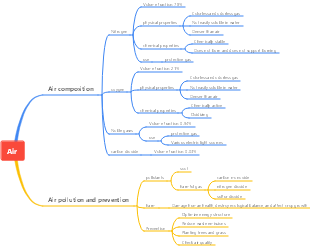
Air; Oxygen; Carbon dioxide
Ingredients of air:
Nitrogen
oxygen
Rare gases
1. Source of air pollution:
2. Determination of oxygen gas volume fraction in air
3. Conditions for successful experiments
①Full amount of red phosphorus
②The device has good airtightness.
③Isotherm before and after the reaction.
4. Experimental phenomenon
5. Experimental principle
6. Experimental conclusion
O₂ accounts for about 1/5 of the air volume.
7. Error analysis
O₂ content is greater than 1/5
① The lit red scales slowly penetrate into the gas collecting cylinder, causing the gas in the bottle to escape
②The spring clip is not clamped when the red phosphorus is burning
O₂ content is less than 1/5
① Turn on the water stop clamp before cooling to room temperature
② Small amount of red phosphorus
③ Device leaks
④There is water residue in the catheter