MindMap Gallery Salesperson Negotiation Training One Negotiation Starting Strategy
What you do at the beginning of the negotiation is to make a quasi-start strategy for a win-win outcome, use it in the early stages of your contact with the buyer, ensuring a good foundation for a successful outcome. This is crucial because, during the negotiation process, you will find that every step forward depends on the atmosphere created at the beginning. The requests you make and the attitude you show must be part of your careful planning, which contains all the factors of negotiation. A starting strategy based on a careful evaluation of buyers, markets, and buyers’ companies determines whether you win or lose in the end.
Edited at 2025-02-27 11:09:27Rumi: 10 dimensions of spiritual awakening. When you stop looking for yourself, you will find the entire universe because what you are looking for is also looking for you. Anything you do persevere every day can open a door to the depths of your spirit. In silence, I slipped into the secret realm, and I enjoyed everything to observe the magic around me, and didn't make any noise. Why do you like to crawl when you are born with wings? The soul has its own ears and can hear things that the mind cannot understand. Seek inward for the answer to everything, everything in the universe is in you. Lovers do not end up meeting somewhere, and there is no parting in this world. A wound is where light enters your heart.
Chronic heart failure is not just a problem of the speed of heart rate! It is caused by the decrease in myocardial contraction and diastolic function, which leads to insufficient cardiac output, which in turn causes congestion in the pulmonary circulation and congestion in the systemic circulation. From causes, inducement to compensation mechanisms, the pathophysiological processes of heart failure are complex and diverse. By controlling edema, reducing the heart's front and afterload, improving cardiac comfort function, and preventing and treating basic causes, we can effectively respond to this challenge. Only by understanding the mechanisms and clinical manifestations of heart failure and mastering prevention and treatment strategies can we better protect heart health.
Ischemia-reperfusion injury is a phenomenon that cellular function and metabolic disorders and structural damage will worsen after organs or tissues restore blood supply. Its main mechanisms include increased free radical generation, calcium overload, and the role of microvascular and leukocytes. The heart and brain are common damaged organs, manifested as changes in myocardial metabolism and ultrastructural changes, decreased cardiac function, etc. Prevention and control measures include removing free radicals, reducing calcium overload, improving metabolism and controlling reperfusion conditions, such as low sodium, low temperature, low pressure, etc. Understanding these mechanisms can help develop effective treatment options and alleviate ischemic injury.
Rumi: 10 dimensions of spiritual awakening. When you stop looking for yourself, you will find the entire universe because what you are looking for is also looking for you. Anything you do persevere every day can open a door to the depths of your spirit. In silence, I slipped into the secret realm, and I enjoyed everything to observe the magic around me, and didn't make any noise. Why do you like to crawl when you are born with wings? The soul has its own ears and can hear things that the mind cannot understand. Seek inward for the answer to everything, everything in the universe is in you. Lovers do not end up meeting somewhere, and there is no parting in this world. A wound is where light enters your heart.
Chronic heart failure is not just a problem of the speed of heart rate! It is caused by the decrease in myocardial contraction and diastolic function, which leads to insufficient cardiac output, which in turn causes congestion in the pulmonary circulation and congestion in the systemic circulation. From causes, inducement to compensation mechanisms, the pathophysiological processes of heart failure are complex and diverse. By controlling edema, reducing the heart's front and afterload, improving cardiac comfort function, and preventing and treating basic causes, we can effectively respond to this challenge. Only by understanding the mechanisms and clinical manifestations of heart failure and mastering prevention and treatment strategies can we better protect heart health.
Ischemia-reperfusion injury is a phenomenon that cellular function and metabolic disorders and structural damage will worsen after organs or tissues restore blood supply. Its main mechanisms include increased free radical generation, calcium overload, and the role of microvascular and leukocytes. The heart and brain are common damaged organs, manifested as changes in myocardial metabolism and ultrastructural changes, decreased cardiac function, etc. Prevention and control measures include removing free radicals, reducing calcium overload, improving metabolism and controlling reperfusion conditions, such as low sodium, low temperature, low pressure, etc. Understanding these mechanisms can help develop effective treatment options and alleviate ischemic injury.
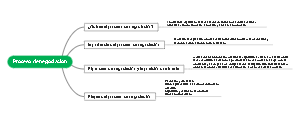
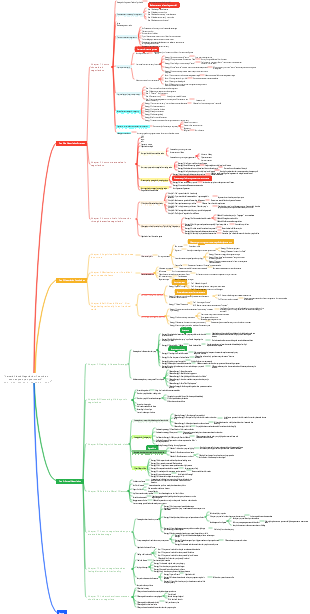
Salesperson Negotiation Training One: Negotiation Starting Strategy
Negotiation strategy
Starting strategy allows the game to develop according to your intention: use it in the early stages of contact with the buyer, laying a good foundation for a successful ending.
Medium-term strategy allows the game to continue to follow your command:
The situation became complicated at this stage, and both sides were nervously dealing with each other and had their own intentions. You will learn how to deal with these pressures and control the situation.
The late strategy is for you to use when you are ready to die or to reach a negotiated deal.
Get what you want, and then make a deal, while making the other party feel that he has won too.
Negotiation start strategy
The price you offer to the buyer must be higher than you actually want
"My buyers are not fools. If I want more, they will see it immediately." When you think about this, you must remember the above principles in particular. Because even if your idea is right, this strategy is still a clever negotiation strategy.
Why is the offer price higher than the actual price you want?
reason
① It leaves you with a certain amount of negotiation space. You can always cut prices, but you can never raise prices. What you should ask is what your maximum credible price is, because this is the highest price you want, but be sure to let the buyer see the possibility of bargaining.
The less you know about the other person, the higher your offer should be – for two reasons: First, your judgment may be wrong. If you don’t know much about the other party and his needs, he may be willing to pay a higher price than you think. Second, if you just made a connection, if you make greater concessions, it can show that you have greater sincerity in cooperation. ——The more you understand the buyer and its needs, the more you should reconsider your position. On the contrary, if the other party doesn't understand you, their initial request may also be unacceptable to you.
If the price you ask for is much more than your maximum credible price, it means there is some scalability. Don’t be tough on your attitude: If your offer is unacceptable to the buyer, and your attitude is "buy if you want to buy, and don’t buy people away", the negotiations cannot even begin. The buyer's attitude may be "Then we have nothing to talk about." Elasticity hint: If you imply some elasticity, you simply offer an unacceptable price. You may say: "If we understand your needs more accurately, we may make adjustments, but we must set it based on... Our minimum price may be...." - Although the buyer finds it difficult to accept, he will also be willing to continue talking because there is room for negotiation.
② You may be able to make a deal at the high price!
③High prices will increase the external value of your products or services.
High prices will make buyers subconsciously believe that the product or service has higher value, especially when presented through formal forms such as price lists, which makes this psychological hint stronger.
This reason does not need to be proven, it only needs to implant a "high price = high value" association into the buyer's consciousness.
Don’t lower your quotation just because your competitors are low. Through reasonable words and reasons, high prices can strengthen buyers' perception of the value of products or services, thereby improving transaction possibilities and profit margins. High prices are an effective means to increase external value, so you must dare to open high prices
④ Avoid deadlock caused by the self-esteem of both parties to the negotiation.
Negotiation is not only a game of interests, but also involves the self-esteem of both parties. If one party feels impaired in self-esteem, it may adopt a confrontational attitude, causing the negotiations to stalemate.
When you face a buyer, because you don’t have the courage to open a higher price, it will inadvertently create a deadlock.
⑤ Create an atmosphere where the opponent wins.
If you give the buyer the best price at once, then the buyer will have nothing to negotiate with you and will not feel like he has won.
Countermeasure: When the buyer asks you for more than he actually does, you should see through this strategy, arouse his sense of fairness, and use the strategy of asking for advice from superiors or black-faced/white-faced strategies.
This seems to be a very simple truth, but it is a principle that you can effectively utilize in negotiations. Among the thousands of experiments and tens of thousands of facts, this is something that has been repeatedly proved. The more you want, the more you get
Your goal is to increase your maximum credible price.
You should say, "Of course, you can make any requests when the negotiations begin, and I will give you the same unacceptable opinion, but none of us get the benefits. Why don't you tell me the highest price you can accept? I'll go back and discuss with our people and see what to do. Is this fair?"
If your initial opinion is extreme, it means some scalability, which will encourage buyers to negotiate with you.
The less you know about the other person, the more you should want. Strangers may feel more unexpected to you, and you can express your good wishes through greater concessions.
segmentation
If you want more than you actually want, how much more? The answer is: You want to divide your goals
The difference between the initial offer and your actual goal should be equal to the difference between their bid and your actual goal.
For example: The price of each item of goods by the buyer is 1.60 yuan, and what you can accept is 1.70 yuan. The division skills tell you that your asking price should be 1.80 yuan. If you win, you will still achieve your goal.
Suppose you trade at a mid-price, you take a compromise position. If you take a closer look, you will be surprised to find that this is often the case—small or big.
Prerequisite for segmentation strategy: You can let the other party express his opinion first. If the buyer asks you to offer a price first, they can split it up, so if you make a compromise, the buyer can get what they want. This is a basic rule of negotiation.
After the buyer offers a price, you can divide it according to your own highest goal.
Don’t be like the other party as if you are going to offer a price first. If you have the advantage and are not under pressure at the moment, you should boldly say to the other party: “You came to us, we are very happy. If you want to do this business, please offer a price first.
Countermeasure: You can ask the buyer to bid first to prevent the buyer from dividing you. Only by asking the buyer to offer the price first can you divide it. Even if you are close to your goal, continue to split.
Never accept the first offer or counter-offer
If you accept the first bid, the buyer will naturally have two thoughts in his mind. :
1. I could have done better. A sophisticated buyer won't tell you he lost in the negotiation. But he would remember it deeply in his heart, and he thought, "I have to be cruel to meet this guy the second time. I can't let him save some money next time.
2. Something must have happened.
Countermeasure: The best strategy to not rush to accept the first bid is to use superior leaders as cover. (Request for instructions from leaders)
Pretending to be surprised
Negotiators always show a shocked look—that is, they are shocked by the buyer's bid. Because most people believe more about what they see than what they hear. For many people, vision is better than hearing.
The buyer will not consider whether you accept their request again and again, but if you are not surprised, he will naturally think: "We must hold on and be cruel, maybe we can succeed."
Countermeasure: If a person is surprised in front of you first, your best choice is to smile and expose his strategy: "You are pretending to be surprised! Where did you learn this strategy?" Even if you are not negotiating face-to-face with the buyer, you should pause and express shock, because the surprise on the phone works very well.
Play as a reluctant seller and guard against unwilling buyers
Squeeze the buyer's negotiation range before the negotiation begins.
If you are the buyer's agent, how do you ask the seller to give you the lowest price?
Ask the seller all the questions I can think of, and when I can’t think of anything at the end, I will say, “I really thank you for spending so much time, obviously you have put in a lot of thought in this document, and unfortunately, this is not what we want. But I still want to wish you good luck. The seller may ask you the lowest price you can accept.
The seller's first offer is definitely not the real bottom line
In addition, there is a rejection price at which the seller will not or cannot sell. Buyers have to try to use some strategies to figure out the seller's rejection price. The reality is that when the buyer's agent acts reluctantly, the seller usually gives up half of the negotiation.
Countermeasure: When you meet a buyer who pretends to be reluctant, you say, "I don't think the price is elastic, but you have to tell me how much you can offer (let the other party bid first), and I will go back and discuss with our people (please ask the leader - the medium-term negotiation strategy I will talk about later). I will see how to fight for you (blackface/white-face strategy - the strategy for ending negotiation)."
Summarize: As a seller: always play the role of a reluctant seller. As a buyer: Beware of sellers who pretend to be reluctant.
Focus on problems ——In the beginning, you should focus on the problem and not distract yourself from the behavior of other negotiators.
If the buyer shows dissatisfaction with you, you should focus on the problem rather than the personality of others. You should always be thinking: "Where are we talking about now compared to the same hour ago, yesterday or last week?"
Countermeasures to prevent emotional acts: Treat any emotional expression as a buyer's negotiation strategy. You should calmly think: "This is the negotiation trap he used. He is not really angry. He wants to get something from me. What he wants, how should I react?"
Vise strategy: "You have to add more."
When the other party proposes a price or condition, respond in a simple sentence: "You have to add more points" or "You should give a more suitable price." ——In this way, force the other party to reevaluate their conditions and may make concessions.
Strategy implementation steps:
① Listen to the other party’s conditions: Let the other party propose their prices or conditions first; even if the other party expresses satisfaction with the existing supplier, keep calm because you have already aroused their interest.
② Use the vise strategy to respond: respond calmly: "You should pay a more suitable price."; avoid giving specific numbers directly to maintain ambiguity.
③ Stay silent: After saying this, shut up and say nothing. Silence will put psychological pressure on the other party, forcing them to reconsider the conditions and even take the initiative to make concessions. Silence will make the other person feel uneasy and think that you may be dissatisfied with their conditions, so you will take the initiative to propose better conditions. This is a psychological game, which makes the other party concessions by creating pressure.
④ Avoid making statements too early: If you take the initiative to make concessions or propose new conditions before the other party responds, you may expose your bottom line and lose the initiative in negotiations.
Consider the value of your time.
Assessing the value of time: Time in negotiation is valuable, and you need to evaluate whether the time spent on negotiation is worth it. For example, if you earn $100,000 a year, it is equivalent to earning $50 an hour. If you spend half an hour talking about a $10 project, even if you win all $10, your time value is well below $50/hour.
Calculate the cost of concessions - the amplification effect of concessions: The $1 concession in negotiations is not $1 in total sales, but $1 in profit.
Priority to high-value negotiations: devote more time to high-value negotiations rather than wasting on low-value projects
Adhere to the bottom line: In negotiations, avoid making concessions easily, especially when the concessions are costly.
Countermeasure: When the buyer uses the vise strategy, you will naturally answer: "Why is that more appropriate?" This is to squeeze the buyer into a specific position. Unless you make a specific bargaining statement from the other party, you can never make concessions to the buyer. Use the vise strategy to respond to the other party’s bid or counter-offer: “You should give a more suitable price.”