MindMap Gallery Marketing planning ability
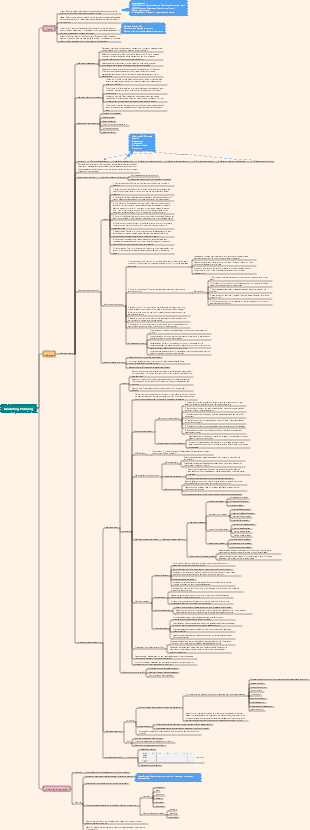
This is a mind map about marketing planning capabilities, and its main contents include: marketing portfolio, marketing strategy, marketing environment, and marketing foundation. Specific steps of marketing planning: scenario analysis, goals, strategy, tactics, budget, and control.
Edited at 2025-03-03 19:55:41Rumi: 10 dimensions of spiritual awakening. When you stop looking for yourself, you will find the entire universe because what you are looking for is also looking for you. Anything you do persevere every day can open a door to the depths of your spirit. In silence, I slipped into the secret realm, and I enjoyed everything to observe the magic around me, and didn't make any noise. Why do you like to crawl when you are born with wings? The soul has its own ears and can hear things that the mind cannot understand. Seek inward for the answer to everything, everything in the universe is in you. Lovers do not end up meeting somewhere, and there is no parting in this world. A wound is where light enters your heart.
Chronic heart failure is not just a problem of the speed of heart rate! It is caused by the decrease in myocardial contraction and diastolic function, which leads to insufficient cardiac output, which in turn causes congestion in the pulmonary circulation and congestion in the systemic circulation. From causes, inducement to compensation mechanisms, the pathophysiological processes of heart failure are complex and diverse. By controlling edema, reducing the heart's front and afterload, improving cardiac comfort function, and preventing and treating basic causes, we can effectively respond to this challenge. Only by understanding the mechanisms and clinical manifestations of heart failure and mastering prevention and treatment strategies can we better protect heart health.
Ischemia-reperfusion injury is a phenomenon that cellular function and metabolic disorders and structural damage will worsen after organs or tissues restore blood supply. Its main mechanisms include increased free radical generation, calcium overload, and the role of microvascular and leukocytes. The heart and brain are common damaged organs, manifested as changes in myocardial metabolism and ultrastructural changes, decreased cardiac function, etc. Prevention and control measures include removing free radicals, reducing calcium overload, improving metabolism and controlling reperfusion conditions, such as low sodium, low temperature, low pressure, etc. Understanding these mechanisms can help develop effective treatment options and alleviate ischemic injury.
Rumi: 10 dimensions of spiritual awakening. When you stop looking for yourself, you will find the entire universe because what you are looking for is also looking for you. Anything you do persevere every day can open a door to the depths of your spirit. In silence, I slipped into the secret realm, and I enjoyed everything to observe the magic around me, and didn't make any noise. Why do you like to crawl when you are born with wings? The soul has its own ears and can hear things that the mind cannot understand. Seek inward for the answer to everything, everything in the universe is in you. Lovers do not end up meeting somewhere, and there is no parting in this world. A wound is where light enters your heart.
Chronic heart failure is not just a problem of the speed of heart rate! It is caused by the decrease in myocardial contraction and diastolic function, which leads to insufficient cardiac output, which in turn causes congestion in the pulmonary circulation and congestion in the systemic circulation. From causes, inducement to compensation mechanisms, the pathophysiological processes of heart failure are complex and diverse. By controlling edema, reducing the heart's front and afterload, improving cardiac comfort function, and preventing and treating basic causes, we can effectively respond to this challenge. Only by understanding the mechanisms and clinical manifestations of heart failure and mastering prevention and treatment strategies can we better protect heart health.
Ischemia-reperfusion injury is a phenomenon that cellular function and metabolic disorders and structural damage will worsen after organs or tissues restore blood supply. Its main mechanisms include increased free radical generation, calcium overload, and the role of microvascular and leukocytes. The heart and brain are common damaged organs, manifested as changes in myocardial metabolism and ultrastructural changes, decreased cardiac function, etc. Prevention and control measures include removing free radicals, reducing calcium overload, improving metabolism and controlling reperfusion conditions, such as low sodium, low temperature, low pressure, etc. Understanding these mechanisms can help develop effective treatment options and alleviate ischemic injury.
Marketing planning ability
Marketing Basics
Marketing planning basics
Basic content of marketing planning
1 Plan Overview 2 Marketing Status Analysis 3 Opportunities and Risk Analysis 4 Drawing Marketing Objectives 5 Marketing Strategy 6 Action Plan 7 Marketing Budget 8 Marketing Control
Principles and methods of marketing planning
1 Principle: Integration principle, human-centered principle, difference principle, benefit principle, linkage principle, interaction principle, effect principle 2 Methods: Theme method, momentum method, creative method, procedural method, model method, case method
Marketing planning steps
Specific steps of marketing planning
Scenario analysis, goals, strategies, tactics, budgets, controls
Marketing environment
Marketing macro environment analysis
Population environment, economic environment, political and legal environment, social and cultural environment, scientific and technological environment, natural environment
Marketing micro-environment analysis
The company itself, suppliers, marketing intermediaries, customers faced by the company, competitors, the public, etc.
Marketing environment analysis method
1. SWOT analysis method: an enterprise system considers its internal conditions and external environment and determines a logical or theoretical framework for the enterprise feasibility plan. 2. PEST analysis method: a method used by strategic consultants to help companies review their external macro environment. P: Politics and Law; E economy; S social culture; T technology. 3 Opportunity Threat Matrix Method
Marketing Strategy
Target marketing strategy
market segmentation
1 Concept: Market segmentation is a process of dividing the source market into several components based on different standards to select the market segment from them. 2 Functions: 1) It is conducive to selecting target markets and formulating marketing strategies and strategies 2) It is conducive to discovering market opportunities and opening up new markets. 3) It is conducive to formulating the best marketing plan and improving the economic benefits of the company. 4) It is conducive to the company's concentrated advantages and conducting market competition. 3 principles: difference, measurability, accessibility, profitability, and relative stability. 4 standards: geography, population, psychology, behavior. 5 Basic models: homogeneous preference, decentralized preference, cluster preference. 6 Specific methods: single factor method, comprehensive factor method, and series factor method.
Target market selection
1 Concept: Target market selection is based on market segmentation, which are segmented markets that can create the highest customer value for the company and maintain it for a period of time. 2 Target market selection strategy: market centralization strategy, product specialization strategy, selective specialization strategy, market specialization strategy, and comprehensive coverage strategy. 3 strategies: differentiated marketing strategies, non-differentiated marketing strategies, and centralized marketing strategies.
Market positioning
1 Concept: The arrangement made by an enterprise to make the product occupy a clear, special and ideal position in the minds of the target consumers compared with the competitive products. 2 steps: 1) Identify potential competitive advantages 2) Positioning the core competitive advantages of the enterprise 3) Formulate a strategy to give full play to its core competitive advantages. 3 methods: avoid strength positioning, head-on positioning, repositioning, and attaching positioning. 4 Methods: 1) Positioning according to product attributes 2) Positioning according to product price and quality 3) Positioning according to specific use occasions and uses 4) Positioning according to the benefits obtained by customers 5) Positioning according to the user type.
Corporate Development Strategy
Divide business units and determine investment portfolios
1 Common methods for formulating business plans: 1) Boston matrix (market share, market growth rate) 2) General Electric model (market attractiveness, business capability) (ideal business area, intermediate area, disappointment business area) 2 Methods for determining portfolios: GE matrix, McKinsey matrix, multi-factor portfolio matrix
Planning new business methods
1 Intensive growth: market penetration, market development, product development. 2 Integrated growth: backward integration, forward integration, and horizontal integration. 3Diveristic growth: concentric diversification, horizontal diversification, and group diversification.
Make a plan
Clarify the company's target market and development strategy
1. Select the target market 2. Target marketing strategy
Formulate specific marketing strategy plans
1 Discover, analyze and evaluate market opportunities 2 Segmenting markets and selecting target markets 3 Market positioning 4 Marketing strategy combination.
Marketing portfolio
Marketing portfolio strategy
Product portfolio planning and product life cycle planning
1. Enterprise product portfolio planning can be analyzed from four dimensions: width, length, depth and breadth. (Width of product portfolio: number of product lines. Length of product portfolio: how many product items are. Depth of product portfolio: how many patterns, varieties and specifications are there in each product project. Relevance of product portfolio: the close correlation of each major product category in an enterprise in terms of final use, production conditions, distribution channels, etc.) 2 Select product portfolio strategy: product line reduction strategy, product line diffusion strategy, product line modernization strategy. 3 Product life cycle: introduction period, growth period, maturity period, and recession period.
Price planning overview, procedures and new product launch price planning
1 Overview of price planning: Price planning is an activity in which an enterprise coordinates and handles various price relationships in order to achieve certain marketing goals. 2 Price planning procedures: select pricing targets; calculate product costs; investigate and predict competitors' reactions; choose pricing methods; determine pricing strategies; determine final prices. 3 Pricing method planning: cost-oriented pricing method, competition-oriented pricing method, demand-oriented pricing method. 4 New product launch price planning: skimming pricing strategy, penetration pricing strategy, and intermediate pricing strategy.
Design, management and planning of distribution channels
1 Distribution channel type: direct distribution channel (manufacturer-consumer), indirect distribution channel (producer-agent-wholesaler-retailer-consumer) 2 Distribution channel design: 1) Determine the distribution channel construction goals 2) Planning the distribution channel structure 3) Channel member management and control planning. 3 Distribution channel management: After the enterprise managers design the channel, they must also select, incentivize, evaluate and adjust individual intermediaries. 4 Distribution types: intensive distribution, selective distribution, exclusive dumping.
Advertising and public relations planning
1 Advertising objectives: improve the visibility and awareness of products; strengthen the public's impression of the brand; strengthen consumers' purchase rate of brands; and expand market share. 2 Advertising planning steps: drafting an advertising agency power of attorney; advertising design, advertising communication channel selection, advertising implementation, and advertising effect evaluation. 3 Contents and procedures of PR planning: 1) Analyze the current status of public relations 2) Determine public relations goals 3) Select and analyze target audience 4) Design of PR activity plan 5) Effective evaluation
Develop a plan
1. Analyze the corporate marketing environment: Analyze the macro environment and micro environment 2. Determine the corporate marketing strategy: Strategy is to stick to the use of one's strengths and do the best. 3. Determine the corporate marketing portfolio: design from four aspects: product, price, channel, and promotion. 4 Write marketing planning plans: outline, environmental analysis, SWOT analysis, market selection and positioning, corporate strategy and goals, marketing strategy, organization and implementation plan, expense budget, control and response strategies.