MindMap Gallery Guidelines for Business Analysis Methodology and Practice
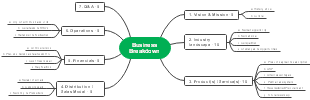
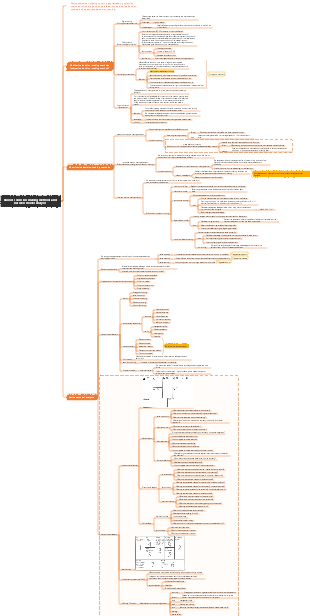
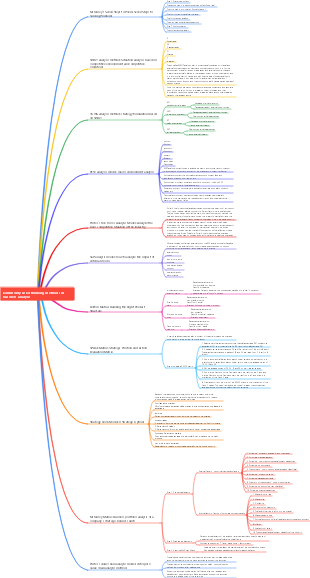
This is a mind map about the "Guidelines for Business Analysis Methodology and Practice", which mainly includes: business analyst literacy, practical cases, industry applications, business analysis methods, and business analysis foundations.
Edited at 2025-02-19 22:17:33This template shows the structure and function of the reproductive system in the form of a mind map. It introduces the various components of the internal and external genitals, and sorts out the knowledge clearly to help you become familiar with the key points of knowledge.
This is a mind map about the interpretation and summary of the relationship field e-book, Main content: Overview of the essence interpretation and overview of the relationship field e-book. "Relationship field" refers to the complex interpersonal network in which an individual influences others through specific behaviors and attitudes.
This is a mind map about accounting books and accounting records. The main contents include: the focus of this chapter, reflecting the business results process of the enterprise, the loan and credit accounting method, and the original book of the person.
This template shows the structure and function of the reproductive system in the form of a mind map. It introduces the various components of the internal and external genitals, and sorts out the knowledge clearly to help you become familiar with the key points of knowledge.
This is a mind map about the interpretation and summary of the relationship field e-book, Main content: Overview of the essence interpretation and overview of the relationship field e-book. "Relationship field" refers to the complex interpersonal network in which an individual influences others through specific behaviors and attitudes.
This is a mind map about accounting books and accounting records. The main contents include: the focus of this chapter, reflecting the business results process of the enterprise, the loan and credit accounting method, and the original book of the person.
"Guidelines for Business Analysis Methodology and Practice"
Business Analysis Basics
Business analysis definition
Concept explanation
In-depth analysis: Business analysis is a bridge that closely connects corporate business and information technology. It is not only a simple data processing, but also starts from a strategic perspective. Through comprehensive data collection, rigorous sorting and in-depth analysis, it accurately mines the information hidden behind the data, providing a solid and reliable basis for decision-making at all levels of the enterprise, and thus promoting the enterprise to achieve strategic goals efficiently.
Comparative and differentiating: Compared with traditional data analysis, business analysis focuses more on the integration of business scenarios and aims to solve actual business problems, while traditional data analysis focuses more on the statistical description of data.
Key role
Market insight: Help companies to keenly capture market dynamics, understand the changing trends of consumer demand, make arrangements in advance, and seize market opportunities.
Operational optimization: In-depth analysis of the internal operation processes of the enterprise, discover potential efficiency improvement points and cost savings, and improve operational efficiency.
Improve competitiveness: Through analysis of competitors, we can find our own advantages and shortcomings, formulate differentiated competitive strategies, and enhance the competitiveness of enterprises in the market.
Business Analysis Process
1. Demand confirmation
Communication skills: Use effective communication skills to conduct in-depth communication with stakeholders in different departments within the company, including face-to-face interviews, questionnaires, brainstorming, etc., to ensure a comprehensive understanding of business issues.
Clear goal: Transform fuzzy business problems into specific, measurable, achievable, highly relevant, time-bound (SMART) analytical goals, and clarify the scope and focus of the analysis.
2. Data collection
Internal channels: Obtain data from internal systems such as the enterprise's customer relationship management system (CRM), enterprise resource planning system (ERP), and financial systems, covering customer information, sales data, financial statements, etc.
External channels: Collect data through external channels such as market research companies, industry reports, government public data, social media data, etc. to understand market trends, competitor dynamics, macroeconomic environment and other information.
3. Data Analysis
Data cleaning: Identify and process missing values, outliers, and duplicate values in the data to ensure the accuracy and completeness of the data.
Analytical technology: Use methods such as mean, median, and standard deviation calculations in statistical analysis, cluster analysis, association rule mining in data mining, regression analysis, classification algorithms and other technologies in machine learning to conduct in-depth analysis of data.
Model construction: Based on the analysis goals and data characteristics, select appropriate data analysis models, such as time series models to predict sales trends, and decision tree models to be used for customer segmentation.
4. Results are presented
Visualization tools: Use common charts such as bar charts, line charts, pie charts, scatter charts, and professional data visualization tools to convert complex data into intuitive and easy-to-understand graphics.
Report writing: Write a detailed analysis report, including analytical background, goals, methods, results, conclusions and suggestions, to ensure that the report is clear and concise in language.
Business analysis tools
1. Excel
Data processing: Use pivot table to quickly summarize and analyze a large amount of data, and use function formulas to calculate and convert data.
Statistical analysis: Use descriptive statistical analysis tools to calculate statistical indicators such as mean and standard deviation, and use regression analysis tools to perform simple data analysis.
Chart production: Create a variety of charts such as bar charts, line charts, pie charts, etc. to intuitively display data characteristics and trends.
2. SQL
Data query: Use SELECT statement to query the required data from the database and perform conditional filtering through the WHERE clause.
Data update: Use INSERT, UPDATE, and DELETE statements to insert, update and delete data in the database.
Data connection: Enable data association and integration between multiple data tables through JOIN operation.
3. Python/R
Data processing: Use Python's pandas library or R's dplyr package for data reading, cleaning, conversion and reshaping.
Data analysis: Use Python's numpy library for numerical calculations and use the basic statistical function of R for data analysis.
Machine learning: Use Python's scikit-lease library or R's caret package to build, train and evaluate machine learning models.
4. Professional BI Tools
Tableau: Create interactive reports and dashboards with simple drag and drop operations, supporting real-time data connections and big data analytics.
PowerBI: Integrates closely with Microsoft's office software, uses visualization capabilities to create rich reports and supports natural language queries.
Business analysis method
Descriptive analysis
1. Concept and use
Detailed explanation of the principle: By summarizing the data and calculating basic statistical indicators, such as mean, median, mode, variance, etc., we can intuitively describe the centralized trend, degree of dispersion and distribution characteristics of the data, helping enterprises quickly understand the current situation and basic situation of the business.
Value manifestation: Provides a foundation for subsequent in-depth analysis, so that enterprises can have a comprehensive and preliminary understanding of business data.
2. Application scenarios
Sales performance analysis: Calculate indicators such as monthly sales, quarterly sales volume, annual customer unit price, etc., evaluate sales performance in different time periods, and understand the overall level of sales business.
Customer behavior analysis: count the customer's purchase frequency, average purchase amount, regional distribution and other information, and outline the customer's basic behavior portrait.
Diagnostic analysis
1. Concept and use
Analysis logic: By deeply digging into the internal correlation between data, using correlation analysis, causal analysis and other methods, we can find out the key factors affecting business results, and diagnose the root causes of business problems.
Goal orientation: Provide a basis for enterprises to formulate targeted solutions to help enterprises fundamentally solve business problems.
2. Application scenarios
Analysis of sales performance decline: Analyze sales changes of different products from the product dimension, study market share and competitor dynamics from the market dimension, examine customer churn from the customer dimension, and comprehensively judge the reasons for the performance decline.
Analysis of customer satisfaction decline: analyze the relationship between factors such as product quality, service level, price strategy and customer satisfaction, and find out the key factors that lead to a decline in satisfaction.
Predictive analysis
1. Concept and use
Technical principle: Based on historical data, use time series analysis, regression analysis, prediction algorithms in machine learning and other technologies to establish prediction models and predict future business trends.
Decision support: Help enterprises plan resource allocation in advance, formulate production plans, optimize marketing strategies, and reduce risks brought about by uncertainty.
2. Application scenarios
Sales forecast: Based on historical sales data, market trends, promotional activities and other factors, predict product sales in the future, providing reference for production and inventory management.
Market demand forecast: Combining macroeconomic data, industry development trends, consumer research and other information, we predict the market's demand for new products or services.
Normative analysis
1. Concept and use
Decision-making process: Based on descriptive, diagnostic and predictive analysis, optimization algorithms, simulation analysis and other methods are used to provide specific action suggestions for enterprises and help enterprises choose the best decisions among multiple feasible solutions.
Value creation: Through scientific decision-making support, improve the decision-making efficiency and quality of the enterprise and maximize the enterprise value.
2. Application scenarios
Decisions on the market for new products: comprehensively consider factors such as market demand, competition situation, cost-effectiveness, etc., and formulate new products pricing strategies, time to market, promotion channels, etc.
Investment decision-making: Analyze the risks and returns of different investment projects, and use indicators such as net present value (NPV), internal rate of return (IRR) to provide a basis for the company's investment decisions.
Industry applications
Retail industry
1. Sales Data Analysis
Product portfolio optimization: analyze sales data of different products, use correlation rule mining algorithms to find the combination of best-selling products and unsold products, and optimize product display and procurement plans.
Pricing strategy adjustment: By analyzing price elasticity, understanding the impact of price changes on sales volume, formulating a reasonable price strategy, and increasing sales and profits.
Promotion effect evaluation: Compare sales data before and after the promotion, evaluate the effectiveness of the promotion, optimize the promotion plan, and improve the return on investment of the promotion.
2. Inventory Management
Demand forecasting: Use time series analysis and machine learning algorithms, combined with historical sales data, seasonal factors, market trends, etc. to predict the demand of goods and reasonably arrange inventory levels.
Inventory optimization: Use economic order quantity (EOQ) model, ABC classification method and other methods to optimize the inventory structure, reduce inventory costs, and increase inventory turnover.
3. Customer Analysis
Customer portrait construction: Integrate customer basic information, purchasing behavior, preference and other data to build customer portraits and achieve accurate segmentation of customers.
Precise marketing: Push personalized marketing information to different customer groups based on customer portraits to improve marketing effectiveness and customer loyalty.
Financial Industry
1. risk assessment
Credit risk assessment: Use the credit scoring model to analyze the customer's credit history, income level, liabilities and other factors, evaluate the customer's credit risks, and formulate reasonable credit policies.
Market risk assessment: Through the analysis of financial market data, such as stock prices, interest rates, exchange rates, etc., use value-of-risk (VaR) models, stress testing and other methods to evaluate market risks and formulate risk management strategies.
2. Customer segmentation
Customer value assessment: Calculate the customer's lifetime value (LTV), analyze the customer's asset size, transaction frequency, profitability and other factors, and layer the customer's value.
Personalized service: Provide personalized financial products and services to different customers based on their risk preferences, investment goals and other characteristics.
3. Investment decisions
Industry analysis: Analyze the industry's development trend, competitive landscape, policy environment and other factors to screen out industries with investment potential.
Portfolio Optimization: Use modern portfolio theory (MPT) to combine the expected returns, risks and correlation of assets to build an optimal portfolio to achieve risk diversification and maximize returns.
Internet industry
1. User behavior analysis
User path analysis: By analyzing users' browsing, clicking, purchasing and other behavior data on the website or APP, drawing a user path map, optimizing product interface and functional layout, and improving user experience.
User retention analysis: Use cohort analysis method to analyze user retention rates obtained in different time periods, find out the key factors affecting user retention, and formulate targeted user retention strategies.
2. Marketing effectiveness evaluation
Channel effect evaluation: Analyze traffic, conversion rate, cost and other data of different marketing channels, evaluate the marketing effects of each channel, and optimize the marketing channel combination.
Activity effect evaluation: Compare indicators such as user growth, activity, and payment rates before and after the marketing campaign, evaluate the effectiveness of the marketing campaign, summarize experience and lessons, and optimize subsequent activity plans.
3. Competitive product analysis
Function comparison: Analyze the functional characteristics, advantages and shortcomings of competitor products, find differentiated competition points, and optimize the functions of your own products.
Market share analysis: Through market research and data analysis, we can understand competitors' market share, user groups, marketing strategies and other information, and formulate corresponding competitive strategies.
Practical cases
Analysis of success case
1. Case background introduction
Company profile: introduces the company's industry status, business scope, organizational structure and other basic information.
Problem explanation: Describe in detail the specific business problems faced by the company, such as declining market share, excessive costs, and loss of users, and analyze the background and reasons for the problems.
2. Analysis process display
Data collection and organization: explain the data source, collection method and organization process, including data cleaning, data conversion and other operations.
Analysis methods and tools: introduce the commercial analysis methods used, such as predictive analysis, diagnostic analysis, etc., as well as the analysis tools used, such as Python, Excel, Tableau, etc.
Model construction and verification: Display the built data analysis models, such as regression models, clustering models, etc., explain the training and verification process of the model, and evaluate the accuracy and reliability of the model.
3. Results and Inspiration
Business improvement results: Explain the specific business improvements brought to the enterprise through business analysis, such as sales growth, cost reduction, and customer satisfaction improvement.
Experience summary: Summarize the reference experience in successful cases, including analytical ideas, method application, team collaboration, etc., to provide reference for other companies.
Reflection on failed cases
1. Analysis of case problems
Data quality issues: The impact of inaccurate, incomplete, inconsistent analysis data on analysis results, such as model deviations caused by missing data, and incorrect data leading to decision-making errors.
Improper analysis method: Discuss the selected analysis method is not suitable for business problems, unreasonable model assumptions, such as using a simple linear regression model to analyze complex nonlinear relationships.
Poor communication and collaboration: Poor communication between the analysis team and business departments, information asymmetry and other problems, resulting in the inability to effectively apply the analysis results to business decisions.
2. Proposals for improvement
Data quality management: Establish a data quality management system, strengthen quality control in data collection, storage, processing and other links, and ensure the accuracy and completeness of data.
Method selection optimization: Select appropriate analysis methods and models based on the characteristics of business problems and data characteristics, and conduct sufficient model verification and evaluation.
Communication and collaboration optimization: Strengthen communication and collaboration between the analysis team and business departments, establish regular communication mechanisms, and ensure that the analysis results can be effectively converted into business actions.
Business analyst literacy
Skill requirements
1. Data analysis skills
Tool mastery: Proficient in the use of data analysis tools such as Excel, SQL, Python/R, and professional BI tools, and be able to select the right tools for data processing and analysis according to business needs.
Technical application: Deeply understand the principles and application scenarios of data analysis technologies such as statistical analysis, data mining, and machine learning, and be able to use these technologies to solve practical business problems.
2. Business understanding ability
Industry knowledge: Understand the development trends, market trends, competitive landscapes and other knowledge of the industry, and grasp the industry's development direction.
Business Process: Be familiar with the internal business processes of the enterprise, including procurement, production, sales, finance and other links, and be able to propose analysis problems and solutions from a business perspective.
3. Communication skills
Internal communication: Effective communication with personnel from different departments in the enterprise, including business departments, technical departments, management, etc., to accurately convey the analysis results and suggestions.
External communication: communicate with external stakeholders such as suppliers, customers, partners, etc., understand market demand and industry information, and provide reference for corporate decision-making.
Career development path
1. Junior Business Analyst
Work content: Responsible for basic data collection, sorting and simple data analysis, such as making data reports, conducting descriptive statistical analysis, etc.
Skill improvement: Learn data analysis tools and methods, accumulate business knowledge, and improve data processing and analysis capabilities.
2. Intermediate Business Analyst
Work content: independently complete complex analytical projects, such as sales forecasting, customer segmentation, etc., to provide strong support for business decisions.
Capability expansion: Deeply master data analysis technology, improve business understanding capabilities, be able to work with cross-departmental teams to promote the application of analysis results.
3. Senior Business Analyst
Work content: Participate in the strategic planning of the company, provide data-driven suggestions for high-level decisions of the company, lead the team to carry out analysis work, and guide the growth of junior and intermediate analysts.
Strategic thinking: Have strategic thinking ability, be able to analyze the company's development direction and business layout from a macro perspective, and create greater value for the company.