MindMap Gallery Generalized connective tissue
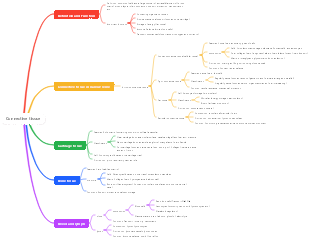
This is a mind map about general connective tissue. General connective tissue is a general term covering a variety of tissues and organ categories, and its main contents include: blood, bone tissue, cartilage tissue, and inherent connective tissue.
Edited at 2025-02-25 19:09:29This template shows the structure and function of the reproductive system in the form of a mind map. It introduces the various components of the internal and external genitals, and sorts out the knowledge clearly to help you become familiar with the key points of knowledge.
This is a mind map about the interpretation and summary of the relationship field e-book, Main content: Overview of the essence interpretation and overview of the relationship field e-book. "Relationship field" refers to the complex interpersonal network in which an individual influences others through specific behaviors and attitudes.
This is a mind map about accounting books and accounting records. The main contents include: the focus of this chapter, reflecting the business results process of the enterprise, the loan and credit accounting method, and the original book of the person.
This template shows the structure and function of the reproductive system in the form of a mind map. It introduces the various components of the internal and external genitals, and sorts out the knowledge clearly to help you become familiar with the key points of knowledge.
This is a mind map about the interpretation and summary of the relationship field e-book, Main content: Overview of the essence interpretation and overview of the relationship field e-book. "Relationship field" refers to the complex interpersonal network in which an individual influences others through specific behaviors and attitudes.
This is a mind map about accounting books and accounting records. The main contents include: the focus of this chapter, reflecting the business results process of the enterprise, the loan and credit accounting method, and the original book of the person.
Generalized connective tissue
Intrinsic connective tissue
Loosen connective tissue
Cells: fibroblasts (synthetic fibers and matrix), macrophages (phagocytosis defense), plasma cells (secreting antibodies), mast cells (involving in allergies), etc.
Fiber: collagen fibers (strong and tough, containing collagen), elastic fibers (giving elasticity), and mesh fibers (supporting, mostly distributed in organs such as hematopoiesis).
Matrix: proteoglycans, fibronectin, etc., constitute the tissue liquid microenvironment.
Tight connective tissue
Regular dense connective tissue: a large number of collagen fibers arranged in parallel, such as tendons, have strong tensile resistance and few cells, mainly tensocytes.
Irregular dense connective tissue: collagen fibers interwoven into a web, such as the dermis, adapt to multi-directional stress, containing fibroblasts, etc.
Fat tissue
White adipose tissue: monovesicular adipocytes accumulate, store energy, keep heat and buffer, and are widely distributed in the subcutaneous and around the internal organs.
Brown adipose tissue: polyvesicular adipocytes, rich in mitochondria, produce heat, and are more common in neonates and hibernating animals.
Mesh tissue
Reticular cells: Multiple protrusions, producing reticular fibers that attach to them.
Reticular fibers: interwoven into a net, providing stents for hematopoietic and lymphatic organs, such as bone marrow and lymph nodes.
Cartilage tissue
Clear cartilage
Features: The matrix contains a lot of moisture and is translucent. The fibers are collagenic fibers, which are fine and difficult to distinguish.
Distribution: articular surface, rib cartilage, respiratory cartilage, etc., which plays a supporting and reduce friction.
Cells: Chondrocytes are located in the cartilage fossa, and the peripheral cells are naive and mature in the center.
Elastic cartilage
Fiber: contains a large amount of elastic fibers and has strong elasticity.
Distribution: auricle, epiglottis, etc., to adapt to deformation while maintaining the shape.
Fibrous cartilage
Fiber: A large number of collagen fiber bundles, arranged in parallel or interlaced, with strong toughness.
Distribution: intervertebral discs, articular discs, etc., withstand pressure and buffer shock.
Bone tissue
Bone matrix
Organic ingredients: collagen fibers (accounting for 90%, providing toughness), non-collagens such as osteocalcin (involving in calcium salt deposition, etc.).
Inorganic components: hydroxyapatite crystallizes, making the bones hard, and calcium and phosphorus are the main elements.
Osteocytes
Osteoprogenitor cells: Stem cells that can differentiate into osteoblasts.
Osteoblasts: Synthesize and secrete bone matrix, which promotes the deposition of calcium salts and forms bone.
Osteocytes: Cells in mature bone tissue have slender protrusions to maintain bone metabolism balance.
Osteoclasts: multinucleated giant cells, dissolve and absorb bones, and reshape bones.
Bone-secret
Annular bone plate: The outer ring bone plate is thick, the inner ring bone plate is thin, and has a through-pipe tube connecting the inside and outside, which can nourish and transport substances.
Bone unit (Havers system): Bone plates arranged in the central tube and the surrounding multi-layer concentric circles are the basic structural units of the backbone.
Interbone plate: Remaining of old bone units, filled between bone units.
Bone Cancer
Trabecula: needle-shaped or sheet-shaped, composed of bone plates and bone cells, interwoven into a net, with a bone marrow cavity between them, which produces hematopoiesis and reduces bone weight.
blood
plasma
Water: accounts for more than 90%, and the solvent acts.
Plasma protein: albumin (maintaining colloidal osmotic pressure), globulin (immunity, transportation, etc.), fibrinogen (coagulation), etc.
Electrolytes, nutrients, metabolites, hormones, etc.: Maintain internal environmental steady state and material transportation.
Blood cells
Red blood cells: double concave disc-shaped, containing hemoglobin, transports oxygen and carbon dioxide, and has no nucleus and organelles.
leukocyte:
Neutrophils: Leaf nucleus, contains a variety of enzymes, phagocytosis, the largest number, and the key cells to react to acute inflammation.
Lymphocytes: divided into subtypes such as T and B, participate in the immune response, and mediate specific immunity.
Monocytes: Large in size, enter tissues and differentiate into macrophages, phagocytosis and antigen presentation.
Eosinophils: anti-allergic, anti-parasitic, and contain special particles.
Barophilic granulocytes: Release histamine, etc., participate in allergic reactions, and are similar to mast cells.
Platelets: No nucleus, containing organelles, participate in coagulation, stop bleeding, and repair vascular endothelium.