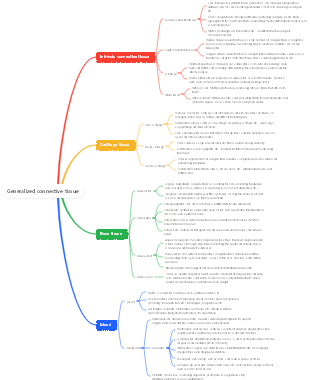
MindMap Gallery Epithelial tissue, connective tissue, cartilage, bone tissue, blood
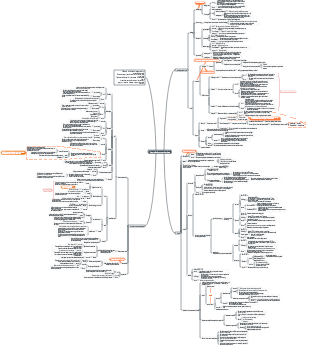
It includes epithelial tissue, connective tissue, cartilage, bone tissue, and blood. The key points have been marked. It is useful for final review and the content is rich. I hope it will be helpful to you!
Edited at 2023-11-09 21:17:50This is a mind map about bacteria, and its main contents include: overview, morphology, types, structure, reproduction, distribution, application, and expansion. The summary is comprehensive and meticulous, suitable as review materials.

This is a mind map about plant asexual reproduction, and its main contents include: concept, spore reproduction, vegetative reproduction, tissue culture, and buds. The summary is comprehensive and meticulous, suitable as review materials.
This is a mind map about the reproductive development of animals, and its main contents include: insects, frogs, birds, sexual reproduction, and asexual reproduction. The summary is comprehensive and meticulous, suitable as review materials.
This is a mind map about bacteria, and its main contents include: overview, morphology, types, structure, reproduction, distribution, application, and expansion. The summary is comprehensive and meticulous, suitable as review materials.
This is a mind map about plant asexual reproduction, and its main contents include: concept, spore reproduction, vegetative reproduction, tissue culture, and buds. The summary is comprehensive and meticulous, suitable as review materials.
This is a mind map about the reproductive development of animals, and its main contents include: insects, frogs, birds, sexual reproduction, and asexual reproduction. The summary is comprehensive and meticulous, suitable as review materials.
Epithelial tissue, connective tissue, cartilage, bone tissue, blood
epithelial tissue
Composed of a large number of tightly packed cells and a very small amount of extracellular matrix
Features
Many cells, tightly arranged, little intercellular substance
Polar: divided into free surface and basal surface
basal surface basement membrane
Generally does not contain blood vessels
rich in nerve endings
Classification
Covering epithelium
single layer squamous epithelium
Endothelium is a single layer of flat epithelium that lines the lumen of cardiovascular and lymphatic vessels.
Mesothelium is a single layer of flat epithelium found in the pleura, peritoneum, and pericardium.
single layer cuboidal epithelium
Distribution Renal tubules and thyroid follicles
Microvilli are tiny finger-like protrusions extending from the cell membrane and cytoplasm toward the free surface. Commonly found in renal tubular epithelium and small intestinal epithelium, with large cell surface area
simple columnar epithelium
Distribution: Stomach, intestine, gallbladder and uterus and other cavities
pseudostratified ciliated columnar epithelium
Distribution Respiratory mucosa
Pseudostratified ciliated columnar epithelium is mainly distributed in the respiratory mucosa
Stratified squamous epithelium
composition
Basal layer: a layer of cuboidal or short columnar cells (strong ability to divide)
Middle layer: several layers of polygonal cells
Surface layer: several layers of spindle or flat cells
The connection with the deep tissue is uneven (conducive to material exchange)
protection, friction resistance
metastatic epithelium
Distribution: Renal pelvis, renal calyces, ureter and luminal surface of bladder
glandular epithelium
sensory epithelium
connective tissue
intrinsic connective tissue
loose connective tissue
cell
Fibroblasts (main cells)
Macrophages
Plasma cell
Mast cells
Function: Release heparin, histamine, triethrin, and eosinophil chemoattractant
fat cells
undifferentiated mesenchymal cells
leukocyte
interstitium
Collagen fibers
spandex
mesh fiber
dense connective tissue
Adipose tissue
reticular tissue
cartilage tissue
General structure of cartilage tissue
Types of cartilage
hyaline cartilage
Structural features Strong pressure resistance
Distribution respiratory tract, articular surfaces and costal cartilage
elastic cartilage
Structural features: good toughness
Distribution Intervertebral discs, articular discs and pubic symphysis
Fibrocartilage
Structural features: Flexible
Distribution auricle, epiglottis
bone
bone tissue
bone cells
osteoprogenitor cells
differentiate into osteoblasts
osteoblast
Produce bone and secrete cytokines
bone cells
It has certain osteolytic and osteogenic functions and is involved in regulating calcium and phosphorus balance.
basic process of osteogenesis
Osteoclasts
Osteolytic, phagocytic and digestive abilities
Bone quality
Element
organic ingredients
Collagen fibers
matrix
Inorganic components
bone salt
Classification
bone plate
bone mineral density
ring bone plate
outer ring bone plate
inner ring bone plate
bone unit
interosseous plate
Cancellous bone (distributed within the bone)
periosteum
endosteum
Thin layers of connective tissue, also containing osteoprogenitor cells
Epiosseous membrane
Outer layer
Dense, thick fibers, painful penetration, fibrous
inner layer
Loose, nutrient-rich blood vessels, nerves and osteoprogenitor cells
marrow
red bone marrow
yellow bone marrow
blood vessels, nerves
blood
Serum, a light yellow transparent liquid that is separated out after blood coagulation
blood cells
red blood cells
structure
Biconcave disc shape, thin in the center and thick around the periphery, with dumbbell-like tubes on the sides, without nuclei and organelles
Function
Transport oxygen and carbon dioxide
normal value
leukocyte
Granulocytes
neutrophils
50~70%
Function
Deformation movement, chemotactic movement, phagocytosis function
structure
It is spherical in shape, with darkly colored nuclei, mostly lobulated, usually with 2 to 5 leaves. The cytoplasm is light red and contains special granules and azurophilic granules.
eosinophils
0.5~3%
structure
The core is often two-lobed, with orange-red acidophilic granules.
Function
In allergic diseases or parasitic infections, the number increases
basophils
0~0.1%
structure
The nucleus is lobulated or S-shaped or irregular, and is often covered with granules. There are purple-blue basophilic granules of varying sizes and uneven distribution in the cytoplasm.
No granulocytes
Lymphocytes
20~30%
structure
less cytoplasm
monocytes
3~8%
structure
Largest in size, kidney-shaped or horseshoe-shaped nuclei
platelets
structure
No nucleus
Function
Hemostasis and coagulation
normal value
plasma
Water, plasma proteins, etc.