MindMap Gallery Chapter 4_Cartilage and Bone
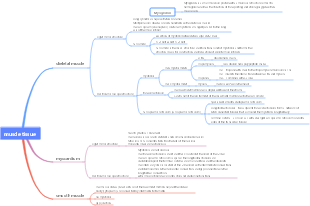
The key contents of the Histome_Cartilage and Bone chapter summarizes the compact bone, Cancellous bone, hyaline cartilage, elastic cartilage, Fibrocartilage etc.
Edited at 2024-01-24 08:30:32Avatar 3 centers on the Sully family, showcasing the internal rift caused by the sacrifice of their eldest son, and their alliance with other tribes on Pandora against the external conflict of the Ashbringers, who adhere to the philosophy of fire and are allied with humans. It explores the grand themes of family, faith, and survival.

This article discusses the Easter eggs and homages in Zootopia 2 that you may have discovered. The main content includes: character and archetype Easter eggs, cinematic universe crossover Easter eggs, animal ecology and behavior references, symbol and metaphor Easter eggs, social satire and brand allusions, and emotional storylines and sequel foreshadowing.
[Zootopia Character Relationship Chart] The idealistic rabbit police officer Judy and the cynical fox conman Nick form a charmingly contrasting duo, rising from street hustlers to become Zootopia police officers!
Avatar 3 centers on the Sully family, showcasing the internal rift caused by the sacrifice of their eldest son, and their alliance with other tribes on Pandora against the external conflict of the Ashbringers, who adhere to the philosophy of fire and are allied with humans. It explores the grand themes of family, faith, and survival.
This article discusses the Easter eggs and homages in Zootopia 2 that you may have discovered. The main content includes: character and archetype Easter eggs, cinematic universe crossover Easter eggs, animal ecology and behavior references, symbol and metaphor Easter eggs, social satire and brand allusions, and emotional storylines and sequel foreshadowing.
[Zootopia Character Relationship Chart] The idealistic rabbit police officer Judy and the cynical fox conman Nick form a charmingly contrasting duo, rising from street hustlers to become Zootopia police officers!
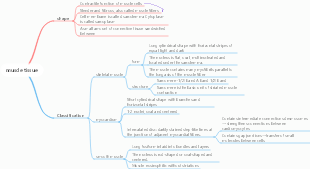
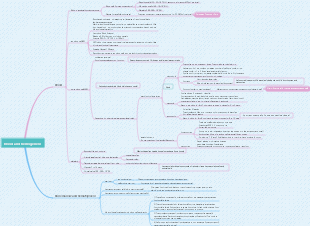
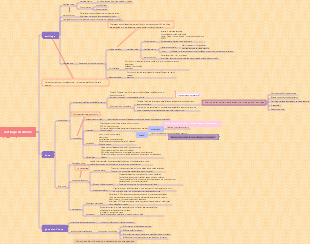
cartilage and bone
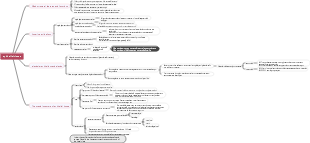
cartilage
structure
cartilage tissue
Chondrocytes
Homologous cell group: a group of cells derived from the division and proliferation of immature cartilage cells.
cartilage matrix
The small cavities within the cartilage matrix are called cartilage lacunae, and chondrocytes are located in these lacunae.
The thin layer of cartilage matrix surrounding chondrocytes is called the pericellular matrix (PCM) or cartilage capsule.
perichondrium
(1) Hyaline cartilage
Distribution: adult costal cartilage, articular cartilage, respiratory tract wall cartilage The temporary skeleton of the early embryo is also hyaline cartilage
cartilage tissue
No blood vessels, lymph, nerves
Cartilage matrix: collagen fibrils (type 2 collagen) and amorphous matrix (containing 3 types of glycosaminoglycans: polyhyaluronic acid, chondroitin sulfate and keratan sulfate, as well as a variety of glycoproteins)
Chondrocytes: rich rough endoplasmic reticulum and well-developed Golgi apparatus. Under the electron microscope, many protrusions and wrinkles can be seen on the surface. There are many glycogen and lipid droplets. They mainly obtain energy through glycolysis.
perichondrium
Except for articular cartilage and retroosseous cartilage, hyaline cartilage is surrounded by a thin layer of dense connective tissue called perichondrium.
Outer layer: dense collagen fibers, protective effect Inner layer: chondroblasts, which can proliferate and differentiate into chondrocytes
articular cartilage
The surface is smooth, with synovial fluid attached, and is elastic, which can reduce friction during joint movement. Osteoarthritis: Decreased type 2 collagen, proteoglycans, and water in articular cartilage, while increased matrix metalloproteinases
(2) Elastic cartilage
Distribution: auricle, external auditory canal, Eustachian tube, epiglottis, etc.
The structure is similar to hyaline cartilage. The main feature is that the cartilage matrix contains a large number of elastic fibers intertwined into a network and less collagen fibrils. Therefore, elastic cartilage is opaque yellow when fresh and has strong elasticity.
(3) Fibrocartilage
Distribution: Intervertebral discs, articular discs, pubic symphysis, and parts where certain tendons and ligaments attach to bones, etc.
It is milky white when fresh, and generally has no perichondrium. The chemical composition of the collagen fiber bundles arranged in parallel or intertwined in the matrix is type 1 collagen, and also contains varying amounts of type 2 collagen. It has strong stretchability, absorbs oscillations, is resistant to pressure, and has toughness. good
(4) The occurrence, growth and regeneration of cartilage
mesoderm→mesenchyme→cartilage perichondrium
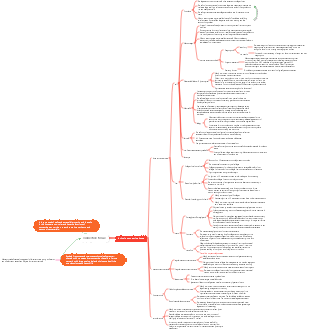
bone
(1) Bone tissue
tubes with blood vessels running through them
Bone matrix (calcification, mineralization)
Organic matter: a large amount of collagen fibers (type 1 collagen) and a small amount of amorphous matrix, containing macromolecular proteoglycans and various glycoproteins
Inorganic matter: bone salts (calcium, magnesium, phosphorus, etc.), mainly in the form of hydroxyapatite crystals
In the bone matrix of lamellar bone, collagen fibers are thin, regularly arranged in layers, and closely combined with bone salt crystals and matrix to form bone plates. The fibers of two adjacent bone plates are perpendicular to each other.
bone cells
Osteoprogenitor cells: differentiated from mesenchymal cells, actively divide and differentiate into osteoblasts when bone tissue grows and remodels or when fractures heal.
Osteoblasts: Active secretion function, synthesize and secrete collagen fibers and organic matrix, form unmineralized extracellular matrix called osteoid, also secrete some growth factors and cytokines, regulate bone formation, absorption, metabolism
Osteocytes (embedded in the bone matrix, others located on the surface of the bone tissue): individually dispersed between or within the bone plates, gap junctions, have osteogenesis and osteolysis, play an important role in Ca2 balance, and are sensitive to growth hormone
bone covering cells
Osteoclasts: located in resorption pits, multinucleated eosinophils, microfilaments, ruffled edges, lysosomes, capable of dissolving and absorbing bone matrix, participating in bone reconstruction and maintaining blood calcium balance, sensitive to calcitonin and parathyroid hormone
(2) Periosteum
(3) Bone marrow
long bone
(1) Compact bone
Also known as bone compaction, it is distributed in the backbone and back bone of long bones. Backbone: inner and outer ring bone plates
Arrangement
ring bone plate
Outer ring bone plate, thicker and smooth
Inner ring bone plate, thin and rough
The perforating canal (and the longitudinally running central canal, both blood vessels and nerves channel, containing tissue fluid)
bone unit
Also known as the Haversian system, the main structural unit of dense bone, with a layer on the surface Adhesive substance is a bone matrix that contains more bone salts and less collagen fibers. The stronger refraction on the bone grinding film of the cross section is called the bonding line.
The bone canaliculi of bone units are interconnected, forming a pathway for the exchange of nutrients and gases between the vascular system and bone cells in the bone unit. They generally do not communicate with the bone canaliculi of adjacent bone units.
interosseous plate
Sector or irregular shape, no vascular channels
(2) Cancellous bone
Several layers of irregular bone plates form trabeculae, which are intertwined to form cancellous bone.
(3) Periosteum
In addition to the articular surface, there is an epiosseous membrane, and the inner surface has an endosteal membrane. The outer layer of the periosteal membrane is composed of collagen fiber bundles, and the inner layer has a loose structure with few fibers and contains osteoprogenitor cells, small blood vessels, nerves, etc.
Main function: protect and nourish bone tissue and provide new osteoblasts for bone growth or repair
Supports soft tissues, constitutes joints, participates in body movements, and protects certain important organs, etc. More than 99% of calcium and 85% of phosphorus in the body are stored in bone cells.
A chondrocyte or homologous cell population and its surrounding pericellular matrix Form a cartilaginous unit.