MindMap Gallery cartilage and bone
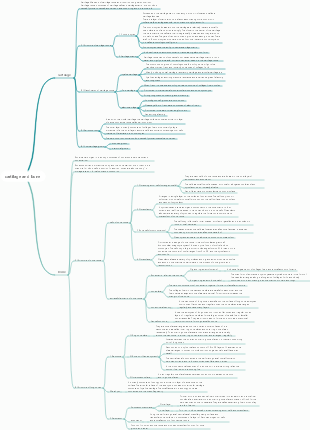
This is a mind map about cartilage and bone. Cartilage and bone are important tissues that constitute the human skeletal system and jointly maintain the body's shape and movement functions.
Edited at 2024-02-05 18:17:51Avatar 3 centers on the Sully family, showcasing the internal rift caused by the sacrifice of their eldest son, and their alliance with other tribes on Pandora against the external conflict of the Ashbringers, who adhere to the philosophy of fire and are allied with humans. It explores the grand themes of family, faith, and survival.

This article discusses the Easter eggs and homages in Zootopia 2 that you may have discovered. The main content includes: character and archetype Easter eggs, cinematic universe crossover Easter eggs, animal ecology and behavior references, symbol and metaphor Easter eggs, social satire and brand allusions, and emotional storylines and sequel foreshadowing.
[Zootopia Character Relationship Chart] The idealistic rabbit police officer Judy and the cynical fox conman Nick form a charmingly contrasting duo, rising from street hustlers to become Zootopia police officers!
Avatar 3 centers on the Sully family, showcasing the internal rift caused by the sacrifice of their eldest son, and their alliance with other tribes on Pandora against the external conflict of the Ashbringers, who adhere to the philosophy of fire and are allied with humans. It explores the grand themes of family, faith, and survival.
This article discusses the Easter eggs and homages in Zootopia 2 that you may have discovered. The main content includes: character and archetype Easter eggs, cinematic universe crossover Easter eggs, animal ecology and behavior references, symbol and metaphor Easter eggs, social satire and brand allusions, and emotional storylines and sequel foreshadowing.
[Zootopia Character Relationship Chart] The idealistic rabbit police officer Judy and the cynical fox conman Nick form a charmingly contrasting duo, rising from street hustlers to become Zootopia police officers!
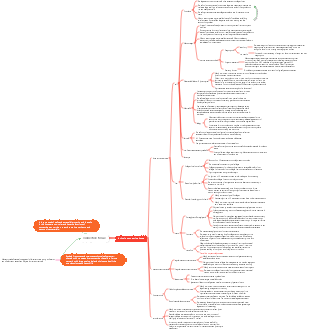
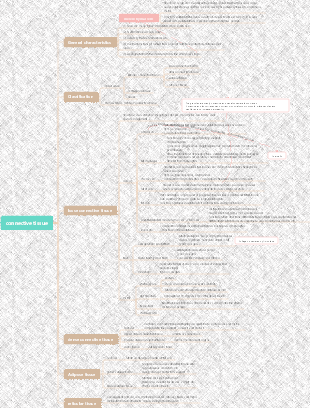
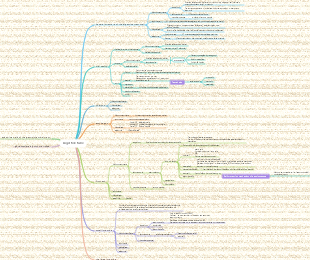
cartilage and bone
cartilage
Derived from embryonic mesenchyme, it is the main scaffold of the early embryo
cartilage tissue
cartilage matrix
No blood vessels, lymphatic vessels or nerves
Chondrocytes
chondroblasts
Chondrocytes
perichondrium
Outer layer: many collagen fibers, protective effect Inner layer: more spindle osteoprogenitor cells
Cartilage function: buffer pressure, support body weight, reduce friction, etc.
cartilage type
Depending on the fiber content
hyaline cartilage
The reason why collagen fibers are difficult to distinguish under LM: the fibers are extremely thin; the refractive index is similar to that of the matrix
cartilage tissue
Chondrocytes
located in cartilage lacunae Circumference: small, oval, single Center: Large, round, grouped - homologous cell group RER,GC Synthesize and secrete fibers and matrix
cartilage matrix
amorphous matrix
Main ingredients: Proteoglycan cartilage lacunae, cartilage capsule
fiber
Collagen fibrils composed of type II collagen, without obvious periodic striations
perichondrium
Outer layer: fiber-rich – protection Inner layer: less fibers, more cells and blood vessels, osteoprogenitor cells
Fibrocartilage
Distribution: intervertebral disc, articular disc, pubic symphysis, tendon attachment collagen fiber bundles toughness
elastic cartilage
Distribution: auricle, external auditory canal, Eustachian region spandex elasticity
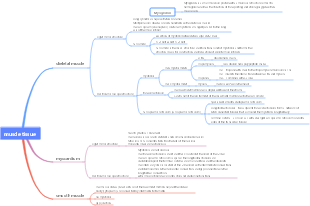
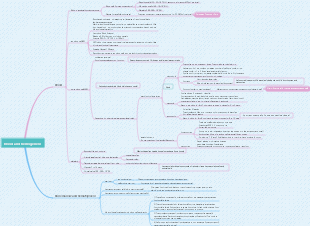
bone
bone tissue
bone matrix: calcified extracellular matrix
Organic: Collagen fibers of primarily type I collagen, (small amounts of amorphous matrix) Inorganic: bone salt - hydroxyapatite crystal
Adult organic:inorganic=3:7
Structural form: bone plate
Collagen fibers are arranged in parallel layers and adhere to bone salt and amorphous matrix
The fibers in the same layer of bone plates are parallel to each other, and the fibers of adjacent bone plates are perpendicular to each other.
bone cells
Only osteoclasts are eosinophilic
osteoprogenitor cells
Stem cells, periosteum of adjacent bone tissue, derived from mesenchymal cells
osteoblast
The surface of bone tissue, a layer with protrusions RER, GC, free ribosomes Containing calcium sulfate dense granules and matrix vesicles Produce osteoid
bone cells
within or within bone plate gap junction bone lacunae, bone canaliculus Osteolysis and osteogenesis, Ca and P balance Produce osteoid
Osteoclasts
Large multinucleated cells derived from monocytes LM: striated border-like, foamy cytoplasm EM: ruffled edge, lysosome, bright area (containing microfilaments) Osteolytic microenvironment; dissolve and absorb bone matrix; increase blood calcium
long bone
Cancellous bone
Needle-like or lamellar bone trabeculae (composed of bone plates and bone cells) are connected, porous network structure, red bone marrow
bone mineral density
No trabeculae
ring bone plate
The outer ring has many layers of bone plates and is neatly arranged. The inner ring bone plate has few layers and is uneven
Bone unit (Havers system)
Located between the inner and outer ring bone plates Central tube and concentrically arranged bone unit plates The bony canaliculi of a bone unit are connected, and the innermost bony canaliculi open into the central canal. There is a bonding line on the outermost surface
interosseous plate
Irregular, without a central canal, it is the remnant of the original bone unit or the inner and outer ring bone plates that have been absorbed.
periosteum
Epiosseous membrane
Outer layer: DCT is a dense connective tissue with thick and dense collagen fibers that penetrate the outer ring bone plate and are penetrating fibers or Sarby fibers to fix the periosteum and ligaments. Inner layer: LCT loose connective tissue, containing osteoprogenitor cells, small blood vessels and nerves
endosteum
Bone marrow cavity surface, trabecular bone surface, Haversian canal inner surface, perforating canal inner surface thin layer of connective tissue Small blood vessels, single layer of osteoprogenitor cells
genesis of bone
intramembranous osteogenesis
Common in flat bones, irregular bones, etc.
endochondral osteogenesis
Limb bones, trunk bones
(1) Formation of cartilage prototype
(2) Bone collar formation
(3) Primary ossification center and medullary cavity formation
(4) Secondary ossification center and epiphysis formation
osteoid
Newly formed bone without bone salt deposits
bone matrix
Calcified cytoplasmic matrix
Before osteoid is calcified, bone cells cannot move freely.
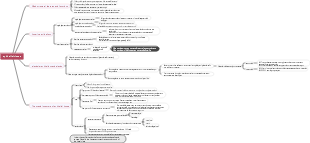
The structural similarities between the three types of cartilage
A contains cells of the same type
B has a homologous cell population
C all have cartilage lacunae and cartilage capsules
D avascular
E all contain fiber
The bone collar is formed by intramembranous osteogenesis
Osteoprogenitor cells—>Osteoblasts—>Osteocytes