MindMap Gallery Stream of Consciousness Explained
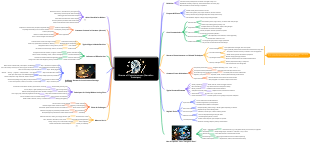
Discover the captivating technique of stream of consciousness, a narrative style that immerses readers in the unfiltered thoughts of characters. This method emphasizes the immediacy of experience, revealing inner lives through associative logic, non-linear structures, and heightened sensory details. Key characteristics include fragmentation, idiosyncratic voice, and minimal authorial mediation. Distinct from related techniques like interior monologue and free indirect discourse, stream of consciousness prioritizes raw, uninterrupted mental flow. Writers employ this style to depict intense emotions, fragmented consciousness, and challenge traditional narrative forms. Learn practical steps to craft your own stream of consciousness writing, from establishing sensory-rich moments to balancing clarity with rawness. Engage deeply with the psyche and transform your storytelling.
Edited at 2026-03-20 01:45:30Discover the fascinating rise of Venice, a powerful maritime republic that dominated Mediterranean trade. This overview explores Venice's strategic geographic location, leveraging its position in the Adriatic Sea and lagoon environment to create a thriving maritime economy. Learn about the city's early trade advantages, shipbuilding capabilities, and commercial networks that established it as a key trade hub. Delve into how diplomatic treaties, the Fourth Crusade, and competitive strategies against rivals like Genoa shaped its influence. Finally, uncover the political system that supported Venice's trade dominance, featuring the role of the Doge and the merchant elite in maintaining stability and prosperity. Join us in exploring the remarkable journey of Venice as a beacon of commerce and maritime power.
Explore the intricate relationship between land tenure and taxation in the Ottoman Empire through our analysis of the Timar system and tax farming (Iltizam). This discussion will delve into key research questions, examining how these systems shaped social hierarchies and state power. We will define essential concepts such as miri land, timar, and iltizam, and explore the goals and mechanisms of the Ottoman land-tax system. Additionally, we will compare the operational dynamics of timar and iltizam, highlighting their differing incentives, impacts on local society, and military implications. Join us to uncover the complexities of Ottoman fiscal policies and their lasting influence.
Explore the tumultuous history of the Thirty Years' War and its profound impact on Europe! This mind map outlines the complex causes of the conflict, including the fragmented Holy Roman Empire and the deep-rooted religious tensions that escalated into a political war. It delves into the various phases of the war, from the Bohemian revolt to the international power struggles involving major players like France and Sweden. Additionally, discover the devastating consequences for civilians and the political landscape. Finally, learn about the Peace of Westphalia in 1648, which marked a turning point in diplomatic negotiations and reshaped Europe's future. Join us in understanding this pivotal moment in history!
Discover the fascinating rise of Venice, a powerful maritime republic that dominated Mediterranean trade. This overview explores Venice's strategic geographic location, leveraging its position in the Adriatic Sea and lagoon environment to create a thriving maritime economy. Learn about the city's early trade advantages, shipbuilding capabilities, and commercial networks that established it as a key trade hub. Delve into how diplomatic treaties, the Fourth Crusade, and competitive strategies against rivals like Genoa shaped its influence. Finally, uncover the political system that supported Venice's trade dominance, featuring the role of the Doge and the merchant elite in maintaining stability and prosperity. Join us in exploring the remarkable journey of Venice as a beacon of commerce and maritime power.
Explore the intricate relationship between land tenure and taxation in the Ottoman Empire through our analysis of the Timar system and tax farming (Iltizam). This discussion will delve into key research questions, examining how these systems shaped social hierarchies and state power. We will define essential concepts such as miri land, timar, and iltizam, and explore the goals and mechanisms of the Ottoman land-tax system. Additionally, we will compare the operational dynamics of timar and iltizam, highlighting their differing incentives, impacts on local society, and military implications. Join us to uncover the complexities of Ottoman fiscal policies and their lasting influence.
Explore the tumultuous history of the Thirty Years' War and its profound impact on Europe! This mind map outlines the complex causes of the conflict, including the fragmented Holy Roman Empire and the deep-rooted religious tensions that escalated into a political war. It delves into the various phases of the war, from the Bohemian revolt to the international power struggles involving major players like France and Sweden. Additionally, discover the devastating consequences for civilians and the political landscape. Finally, learn about the Peace of Westphalia in 1648, which marked a turning point in diplomatic negotiations and reshaped Europe's future. Join us in understanding this pivotal moment in history!
Stream of Consciousness Explained
Definition
A narrative/writing technique that presents a character’s thoughts as they occur
Emphasizes immediacy and interiority over orderly explanation
Mimics mental flow: associations, interruptions, sensory triggers, and emotional shifts
Core Purpose & Effects
Reveal inner life directly (thoughts, feelings, perceptions)
Create intimacy between reader and character
Portray subjectivity: how reality is filtered through the mind
Convey psychological depth (confusion, obsession, anxiety, desire)
Depict time as experienced (elastic, non-linear) rather than clock time
Key Characteristics
Associative logic
Ideas linked by memory, emotion, sound, images, or sensory cues
Sudden topic shifts without explicit transitions
Nonlinear structure
Present moment blends with flashbacks, anticipations, fantasies
Time jumps occur mid-sentence or mid-paragraph
Fragmentation and interruption
Incomplete sentences, ellipses, dashes, run-ons
Parentheticals and asides
Heightened sensory detail
Smell, sound, touch can trigger thought chains
Micro-observations and bodily awareness
Idiosyncratic voice
Individual diction, slang, private references
Repetition of key words/phrases reflecting fixation
Reduced authorial mediation
Less explanation “about” the character; more direct access to mind
Limited external description unless noticed by the character
Stream of Consciousness vs. Related Techniques
Interior monologue
Similar: focuses on inner speech
Difference: can be more structured and grammatical
Free indirect discourse
Blends narrator voice with character perspective
More controlled than stream of consciousness; often clearer syntax
First-person narration
Can be reflective and organized
Stream of consciousness prioritizes immediacy over retrospective shaping
Psychological realism
Broad tradition of depicting mental life
Stream of consciousness is a specific stylistic method within it
Stream of consciousness is the least mediated and most associative; related modes retain more narrator control and structure.
Common Stylistic Devices
Syntax manipulation
Run-on sentences to mimic uninterrupted thinking
Sentence fragments for fleeting impressions
Parataxis (clauses side-by-side without hierarchy)
Punctuation choices
Minimal punctuation to sustain flow
Dashes/semicolons to show leaps and interruptions
Parentheses to layer secondary thoughts
Repetition and motifs
Echoed phrases, obsessive loops, recurring images
Juxtaposition
External stimuli placed beside internal reactions without explanation
Sound and rhythm
Alliteration, internal rhyme, cadence resembling thought patterns
Typical Content Elements Inside the “Flow”
Immediate perceptions
What the character sees/hears/feels right now
Self-talk and evaluation
Doubts, rationalizations, moral judgments
Memory intrusions
Sudden recall of childhood, trauma, past conversations
Anticipation and scenario-building
Imagined future outcomes, rehearsed dialogue
Emotional undercurrents
Unnamed feelings expressed via images and bodily sensations
Symbolic associations
Objects triggering metaphorical meaning (e.g., weather mirroring mood)
When and Why Writers Use It
To show a mind under stress or intensity
Grief, love, fear, anger, exhaustion, intoxication
To represent fragmented or overwhelmed consciousness
Anxiety spirals, intrusive thoughts, dissociation
To challenge conventional narrative order
Emphasize experience over plot mechanics
To create stylistic experimentation and voice originality
How to Write Stream of Consciousness (Practical Steps)
Choose the consciousness source
Decide whose mind (single character vs. multiple)
Fix the vantage point (moment-to-moment vs. drifting reflection)
Establish a trigger-rich present moment
Place character in a scene with sensory stimuli
Let objects/sounds act as “switches” to memories and associations
Write in associative chains
Follow connections as the mind makes them (image → memory → fear → plan)
Allow interruptions and detours before returning (or not) to the initial point
Control clarity through “anchors”
Periodically reintroduce a concrete sensory detail (a cup, a streetlight, a ringtone)
Use recurring motifs to orient the reader
Balance rawness with readability
Decide how much grammar to keep
Use punctuation strategically to avoid total opacity
Maintain voice consistency
Keep diction true to character’s background, age, education, mood
Let private references appear naturally; avoid over-explaining
Revise for intentionality
Identify the emotional arc within the flow
Cut randomness that doesn’t reveal character or theme
Ensure the “messiness” has purpose (pattern, escalation, contrast)
Techniques for Reader Orientation (Without Breaking the Flow)
Repeated physical markers
The character’s hands, breathing, steps, a persistent sound
Temporal signposts embedded in thought
“Still,” “again,” “not yet,” “already,” “before that summer”
Subtle scene reminders
A waiter speaking, traffic noise, a phone vibrating
Thematic threads
A problem the mind keeps circling: guilt, desire, decision, loss
Common Pitfalls & How to Avoid Them
Pitfall: incoherence without payoff
Fix: ensure each leap reveals character, tension, or theme
Pitfall: monotone rambling
Fix: vary rhythm, intensity, sentence length, sensory focus
Pitfall: overusing fragments/run-ons
Fix: mix in occasional clean sentences as “rest points”
Pitfall: losing the scene entirely
Fix: re-anchor with sensory details and external interruptions
Pitfall: confusing perspective shifts
Fix: keep a stable point of view; if shifting, signal via new section breaks/voice changes
Typical Applications Across Genres
Literary fiction
Deep psychological portraits, experimental structure
Modern and contemporary fiction
Trauma narratives, identity exploration, urban immediacy
Short stories and flash fiction
High-intensity snapshots of a mind in motion
Poetry
Associative imagery, internal music, rapid pivots
Screenwriting/film (adapted form)
Voice-over, visual metaphors, sound design to mimic inner flow
Notable Associations (General Reference)
Often linked to modernist experimentation
Focus on consciousness, fractured time, subjective reality
Commonly associated with writers such as
James Joyce, Virginia Woolf, William Faulkner
Mini-Template (To Practice)
Present sensory cue
“The smell of ____”
Immediate thought
“I should ____”
Association to memory
“That reminds me of ____”
Emotional spike
“Why does it always ____”
Attempt at control
“No, focus—____”
Return to present
“The ____ is still there, ____”
Checklist for a Successful Stream of Consciousness Passage
Feels like real-time cognition (with believable jumps)
Voice is distinct and character-specific
Sensory triggers and associations are purposeful
Reader can find occasional anchors (place, body, repeated motif)
Emotional movement is detectable (escalation, shift, release)
Style serves character and theme, not just experimentation