MindMap Gallery Hengli Group Market Segmentation, Targeting and Positioning Analysis
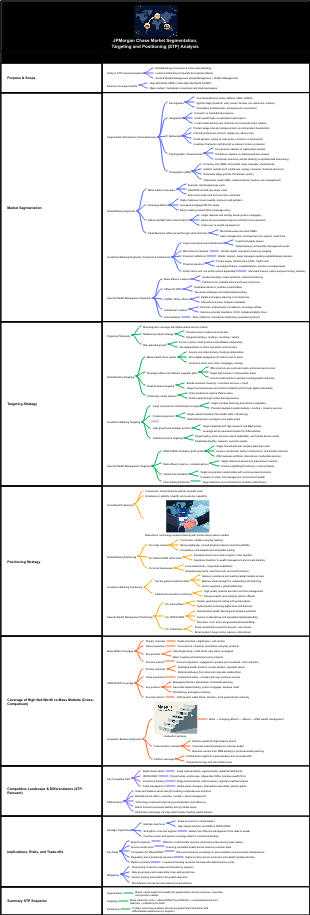
This mind map, titled Hengli Group Market Segmentation, Targeting and Positioning (STP) Analysis, provides a structured overview of Hengli Group’s segmentation logic and target selection framework in the B2B industrial goods market as a fully integrated petrochemical enterprise. The mind map begins with business domains covered: the petrochemical value chain (refining, aromatics, olefins and derivatives, polymer/resin intermediates, high-performance polymers, functional films and fibers, specialty chemicals, composite-related materials) and advanced materials—B2B-heavy with selective B2C exposure via downstream textile/consumer brands. Assumptions segment by customer industry (end-use vertical): polyester/textiles and apparel supply chain, packaging (rigid/flexible), automotive and mobility, construction and infrastructure, electronics and appliances, consumer goods and FMCG, energy and industrial (lubricants, solvents, process chemicals). By application/product family, segmentation covers the aromatics chain (PX/PTA for polyester, benzene derivatives), the olefins chain (PE/PP for packaging, MEG/EO derivatives for PET, antifreeze, surfactants), and fuels and feedstocks (low-sulfur fuels, naphtha/LPG). By purchase criteria (needs-based), segments include cost leadership (lowest delivered cost), supply assurance (long-term contracts), quality consistency (spec control), logistics responsiveness (lead time), and sustainability requirements (recycled content, lower carbon footprint). Customer types range from large integrated converters, tier-1 consumers and resin distributors, regional SMEs and processors, to traders/commodity aggregators. Designed for petrochemical industry analysts, corporate strategy researchers, business school students, and industrial marketing professionals, this template offers a clear conceptual framework for understanding segmentation and targeting in a multi-product, B2B-heavy industrial context.
Edited at 2026-03-25 02:11:27マンダラチャート:キャリア発展プランは、ビジネスパーソンのキャリア成長を体系的に計画・管理するための専門的な可視化ツールで、EdrawMind の強力なマンダラチャート作成機能を活用して開発されました。本テンプレートは、「キャリア発展(コア)」を中心に、人脈・昇進・効率・スキル・財務・健康・ブランド・学習という 8 つのコアキーワードを展開し、さらに各分野ごとに具体的な行動目標をマトリクス状に細分化することで、キャリア成長の全側面を可視化・体系化します。人脈構築・昇進戦略・業務効率化・スキルアップ・資産管理・健康維持・個人ブランディング・継続学習という 8 つの次元で、日次・週次・月次の具体的なアクションを明確に定義し、バランスの取れたキャリア成長を実現し、「偏り」を防ぎます。EdrawMind の柔軟なカスタマイズ機能により、目標の追加・修正・進捗管理が容易に行え、キャリア計画・自己管理・成長戦略立案など、あらゆる場面で活用できます。キャリア発展の可視化と体系化を実現し、持続的な成長をサポートする最適なツールです。

マンダラチャート:キャリア発展プランは、個人のキャリア成長を体系的に計画・管理するための専門的な可視化ツールで、EdrawMind の強力なマンダラチャート作成機能を活用して開発されました。本テンプレートは、キャリア発展の 8 つのコアキーワード(人脈・昇進・効率・スキル・財務・健康・ブランド・学習)を中心に、各分野ごとに具体的な行動目標をマトリクス状に展開し、キャリア成長の全側面を可視化・体系化します。人脈構築・昇進戦略・業務効率化・スキルアップ・資産管理・健康維持・個人ブランディング・継続学習という 8 つの次元で、月次・週次・日次の具体的なアクションを明確に定義し、バランスの取れたキャリア成長を実現し、「偏り」を防ぎます。EdrawMind の柔軟なカスタマイズ機能により、目標の追加・修正・進捗管理が容易に行え、ビジネスパーソンのキャリア計画・自己管理・成長戦略立案など、あらゆる場面で活用できます。キャリア発展の可視化と体系化を実現し、持続的な成長をサポートする最適なツールです。
これは、専門家、起業家、キャリアプランナー向けに設計された、再利用可能な「マンダラチャートキャリア開発プラン」テンプレートです。このテンプレートは「キャリア開発」を中心とし、8つの主要な成長分野へと展開していきます。視覚的かつ体系的なデザインにより、抽象的なキャリア目標を具体的な行動計画へと落とし込みます。テンプレートは明確な構造を持ち、読みやすく快適なピンクとブルーの配色を採用しています。中心領域は黒い四角で「キャリア開発」のテーマを強調し、周囲の青い四角は8つの成長方向を示しています。これは、個人の能力開発計画や業界育成戦略の策定に役立ちます。中心テーマと枝のラベルを置き換えるだけで、ニーズに合わせたキャリアプランマップを素早く作成でき、断片化された目標を体系的なキャリア開発の道筋へと統合するのに役立ちます。これは単なるキャリアプランニングの「ナビゲーションマップ」ではなく、断片化された目標を体系的なキャリア開発の道筋へと統合する、継続的に改善していく成長ツールです。
マンダラチャート:キャリア発展プランは、ビジネスパーソンのキャリア成長を体系的に計画・管理するための専門的な可視化ツールで、EdrawMind の強力なマンダラチャート作成機能を活用して開発されました。本テンプレートは、「キャリア発展(コア)」を中心に、人脈・昇進・効率・スキル・財務・健康・ブランド・学習という 8 つのコアキーワードを展開し、さらに各分野ごとに具体的な行動目標をマトリクス状に細分化することで、キャリア成長の全側面を可視化・体系化します。人脈構築・昇進戦略・業務効率化・スキルアップ・資産管理・健康維持・個人ブランディング・継続学習という 8 つの次元で、日次・週次・月次の具体的なアクションを明確に定義し、バランスの取れたキャリア成長を実現し、「偏り」を防ぎます。EdrawMind の柔軟なカスタマイズ機能により、目標の追加・修正・進捗管理が容易に行え、キャリア計画・自己管理・成長戦略立案など、あらゆる場面で活用できます。キャリア発展の可視化と体系化を実現し、持続的な成長をサポートする最適なツールです。
マンダラチャート:キャリア発展プランは、個人のキャリア成長を体系的に計画・管理するための専門的な可視化ツールで、EdrawMind の強力なマンダラチャート作成機能を活用して開発されました。本テンプレートは、キャリア発展の 8 つのコアキーワード(人脈・昇進・効率・スキル・財務・健康・ブランド・学習)を中心に、各分野ごとに具体的な行動目標をマトリクス状に展開し、キャリア成長の全側面を可視化・体系化します。人脈構築・昇進戦略・業務効率化・スキルアップ・資産管理・健康維持・個人ブランディング・継続学習という 8 つの次元で、月次・週次・日次の具体的なアクションを明確に定義し、バランスの取れたキャリア成長を実現し、「偏り」を防ぎます。EdrawMind の柔軟なカスタマイズ機能により、目標の追加・修正・進捗管理が容易に行え、ビジネスパーソンのキャリア計画・自己管理・成長戦略立案など、あらゆる場面で活用できます。キャリア発展の可視化と体系化を実現し、持続的な成長をサポートする最適なツールです。
これは、専門家、起業家、キャリアプランナー向けに設計された、再利用可能な「マンダラチャートキャリア開発プラン」テンプレートです。このテンプレートは「キャリア開発」を中心とし、8つの主要な成長分野へと展開していきます。視覚的かつ体系的なデザインにより、抽象的なキャリア目標を具体的な行動計画へと落とし込みます。テンプレートは明確な構造を持ち、読みやすく快適なピンクとブルーの配色を採用しています。中心領域は黒い四角で「キャリア開発」のテーマを強調し、周囲の青い四角は8つの成長方向を示しています。これは、個人の能力開発計画や業界育成戦略の策定に役立ちます。中心テーマと枝のラベルを置き換えるだけで、ニーズに合わせたキャリアプランマップを素早く作成でき、断片化された目標を体系的なキャリア開発の道筋へと統合するのに役立ちます。これは単なるキャリアプランニングの「ナビゲーションマップ」ではなく、断片化された目標を体系的なキャリア開発の道筋へと統合する、継続的に改善していく成長ツールです。
Hengli Group Market Segmentation, Targeting and Positioning (STP) Analysis
Context & Scope
Business domains covered
Petrochemical value chain
Refining
Aromatics (e.g., PX/PTA chain)
Olefins & derivatives
Polymer/resin intermediates
Advanced materials
High-performance polymers
Functional films and fibers
Specialty chemicals/additives
Composite-related materials (where applicable)
Assumptions
B2B-heavy with selective B2C exposure via downstream textile/consumer brands
Mixed commodity + specialty portfolio requiring dual STP logic
Market Segmentation
Segmentation for Petrochemical Markets
By customer industry (end-use vertical)
Polyester/textiles and apparel supply chain
Packaging (rigid/flexible)
Automotive and mobility
Construction and infrastructure
Electronics and appliances
Consumer goods and FMCG
Energy and industrial (lubricants, solvents, process chemicals)
By application/product family
Aromatics chain
PX/PTA for polyester
Benzene derivatives for industrial applications
Olefins chain
PE/PP for packaging and consumer goods
MEG/EO derivatives for PET, antifreeze, surfactants
Fuels and feedstocks (where relevant)
Low-sulfur fuels
Naphtha/LPG as feedstock
By customer type
Large integrated converters (polyester producers, PET bottle manufacturers)
Tier-1 compounders and resin distributors
Regional SMEs and processors
Traders/commodity aggregators
By purchase criteria (needs-based)
Cost leadership / lowest delivered cost
Supply assurance / long-term contracts
Quality consistency / spec control
Logistics responsiveness / lead time
Sustainability requirements (recycled content, lower carbon footprint)
By geography
China
Coastal manufacturing clusters
Inland growth regions
Asia-Pacific ex-China
Southeast Asia (packaging, textiles)
India (polyester growth)
Northeast Asia (electronics, autos)
Europe (higher compliance, specialty demand)
Americas (packaging, automotive, specialty niches)
Middle East & Africa (trading hubs, emerging manufacturing)
By regulatory/compliance intensity
Standard commodity compliance
Enhanced EHS requirements (REACH, RoHS, food-contact)
Industry certifications and audits (automotive, electronics)
By value-chain position
Direct-to-major converters (contracted supply)
Channel-based distribution (regional reach)
Integrated captive consumption (internal downstream usage)
Petrochemical segmentation combines verticals, product chains, buyer types/needs, geography, compliance level, and route-to-market position to map volume demand vs risk/requirement profiles.
Segmentation for Advanced Materials Markets
By performance requirements
High heat resistance
Chemical resistance
Barrier properties (oxygen/moisture)
Mechanical strength/toughness
Electrical/thermal conductivity control
Optical clarity/functional coatings
By end-use industries
Electronics and semiconductors
EV and battery ecosystem
Automotive lightweighting
High-end packaging and food-contact
Medical and healthcare (where qualified)
Industrial filtration and protective textiles
Renewable energy (solar encapsulants, wind composites—where applicable)
By application clusters
Functional films
Packaging barrier films
Electronic/industrial protective films
Optical/decoration films
High-performance fibers/textiles
Industrial yarns, tire cord, reinforcement
Protective and technical textiles
Specialty polymers/resins
Engineering plastics (performance tiers)
Modified polymers/compounds
Additives and modifiers
Stabilizers, compatibilizers
Functional masterbatches
By customer sophistication
Co-development partners (OEMs, Tier-1s)
Spec-driven industrial customers
Price-driven buyers for “near-commodity” advanced grades
By qualification/relationship model
Long qualification cycles (automotive/electronics)
Joint labs/technical service dependence
Approved vendor lists and multi-sourcing
By sustainability and circularity
Recycled-content solutions (mechanical/chemical, where applicable)
Bio-based or mass-balance products
Low-carbon manufacturing and traceability
Design-for-recycling materials
By geography and cluster ecosystems
China innovation clusters
Northeast Asia electronics clusters
EU specialty and compliance-driven markets
North America high-value industrial niches
Advanced materials segmentation is driven by performance specs, application clusters, relationship/qualification depth, sustainability attributes, and innovation ecosystems rather than pure volume.
Targeting Strategy
Targeting Approach (portfolio-level)
Dual-lane targeting
Commodity petrochemicals: volume, cost, reliability, scale contracts
Advanced materials: margin, differentiation, co-innovation, sticky accounts
Balanced customer mix
Anchor customers for base-load utilization
Growth accounts in fast-expanding applications
Strategic accounts for technology pull-through
Priority Targets in Petrochemicals
Polyester and textiles value chain leaders
PTA/PX-linked customers seeking stable supply
Integrated polyester producers requiring continuous feedstock
Packaging resin converters and brand-linked supply chains
Food-contact compliant materials
High-volume film and bottle-grade demand
Automotive and appliance polymer users (where commodity grades fit)
Consistent properties and reliable delivery
High-growth geographic corridors
China coastal clusters (logistics advantage)
Southeast Asia and India expansion (polyester/packaging growth)
Contracting targets
Long-term offtake agreements
Framework contracts with indexed pricing
Integrated logistics solutions (terminal/warehouse-backed)
Priority Targets in Advanced Materials
Electronics/EV supply chain
Functional films and specialty polymers supporting miniaturization, insulation, protection
Battery-related materials requiring consistency and qualification support
High-end packaging and barrier applications
Premium barrier films and recyclable mono-material structures
Brand owners’ compliance and sustainability programs
Automotive lightweighting and under-the-hood applications
Engineering plastics/compounds with durability needs
Tier-1 co-development and validation projects
Industrial specialty segments
Filtration media, protective textiles, reinforcement fibers
Customers needing technical service and application engineering
Sustainability-driven strategic accounts
Customers committing to carbon reduction and traceability
Early adopters of recycled/mass-balance offerings
Targeting Criteria (how targets are chosen)
Market attractiveness
TAM growth rate
Margin pool potential
Competitive intensity and entry barriers
Strategic fit
Asset utilization and feedstock integration advantages
Technology capability match (R&D, application engineering)
Portfolio synergy (cross-sell along value chain)
Customer economics
Lifetime value and switching costs
Qualification/approval hurdles (stickiness)
Payment risk and contract quality
Operational feasibility
Logistics reach and lead times
Capacity flexibility and grade changeover constraints
Compliance and certification readiness
Positioning Strategy
Corporate/umbrella positioning
Integrated petrochemical-to-advanced-materials supplier with scale, reliability, and innovation
Core proof points
Backward/forward integration across key chains
Large-scale manufacturing and supply assurance
Process efficiency and cost competitiveness
Quality systems and consistent specs
Growing R&D and customer co-development capability
Positioning for Petrochemical Offerings (commodity and near-commodity)
Value proposition pillars
Lowest delivered cost through integration and logistics
Reliable supply and stable quality for continuous operations
Flexible contracting (spot + long-term)
Regional service and distribution coverage
Differentiators to emphasize
Supply security during volatility
Operational excellence (on-time-in-full, tight spec control)
Integrated chain advantages (feedstock-to-derivative continuity)
Messaging themes by segment
Textiles/polyester: stable upstream supply enabling predictable polyester operations
Packaging: consistent resin quality and compliant grades with dependable lead times
Industrial: robust specifications and responsive logistics support
Positioning for Advanced Materials (specialty, performance-driven)
Value proposition pillars
Performance materials engineered for demanding applications
Co-innovation and technical service (application labs, joint development)
Quality, traceability, and compliance readiness
Sustainability options (recycled/low-carbon pathways where offered)
Differentiators to emphasize
Faster time-to-qualification via strong technical support
Customization (formulations, compounds, film structures)
Reliable scaling from pilot to mass production
Messaging themes by segment
Electronics/EV: high-consistency materials enabling reliability and safety
High-end packaging: barrier + recyclability solutions aligned with brand commitments
Automotive: validated performance materials with robust supply assurance
Go-to-Market (GTM) Implications by Segment
Sales model
Petrochemicals
Key account + trading/distribution mix
Contract management and index-linked pricing expertise
Advanced materials
Solution selling with technical specialists
Program-based selling aligned to customer qualification cycles
Channel strategy
Direct sales to strategic and high-volume customers
Authorized distributors for regional reach and smaller accounts
Strategic logistics partners for cross-border and hub distribution
Pricing and contracting
Petrochemicals
Feedstock/index-based pricing, volume rebates, take-or-pay structures
Advanced materials
Value-based pricing tied to performance, service bundles, and customization
Service and support
Technical service teams (application engineering, troubleshooting)
Regulatory and compliance support (food-contact, REACH, OEM specs)
Sustainability documentation (LCA, chain-of-custody, recycled content proof)
Product portfolio management
Commodity grade optimization for utilization and cost
Specialty grade roadmap for differentiation and margin expansion
Stage-gate for new materials aligned to targeted segments
Competitive Positioning Landscape (segment-level)
Petrochemicals
Competitor archetypes
Global integrated majors (scale and feedstock advantage)
Regional refiners/petrochemical groups (local logistics advantage)
Pure traders (pricing agility, lower fixed assets)
Where Hengli aims to win
Integrated cost position + reliable supply + proximity to demand clusters
Advanced materials
Competitor archetypes
Specialty chemical leaders (deep IP and application know-how)
High-end regional champions (fast customization)
Commodity players moving up the value chain (cost-driven specialty)
Where Hengli aims to win
Scale-up capability, cost-competitive specialty offerings, and co-development speed
Risks, Constraints, and Mitigations (STP-relevant)
Commodity cycle volatility
Mitigation: mix shift toward specialties, long-term contracts, hedging approaches
Overcapacity and price competition
Mitigation: differentiation through quality consistency, logistics, customer lock-in
Qualification barriers in advanced materials
Mitigation: early engagement, joint testing, dedicated technical teams
Regulatory and ESG pressures
Mitigation: compliance systems, traceability, low-carbon product lines
Geopolitical and trade disruptions
Mitigation: diversified markets, regional hubs, flexible routing and inventory
KPIs to Validate STP Effectiveness
Petrochemicals
Utilization rate and base-load contract coverage
On-time-in-full (OTIF) and customer defect rate
Netback margin vs benchmark indices
Geographic sales mix and logistics cost per ton
Advanced materials
Qualification win rate and time-to-approval
Specialty revenue share and gross margin uplift
New product adoption rate by target segment
Customer retention and share-of-wallet in strategic accounts
Sustainability-linked
Low-carbon/recycled product sales penetration
Customer audit pass rate and compliance incidents
Product-level emissions intensity improvements
Segment-to-Positioning Summary (Quick Map)
Polyester/textiles (petrochemical chain)
Target: high-volume integrated producers
Positioning: supply assurance + cost-through-integration + consistent quality
Packaging (commodity + performance films)
Target: large converters and brand-linked chains
Positioning: compliant, consistent materials + advanced barrier/recyclable solutions
Electronics/EV (advanced materials)
Target: OEM/Tier-1 ecosystems needing qualification support
Positioning: high-reliability performance materials + co-development + traceability
Automotive/industrial (mixed)
Target: Tier-1s and industrial spec-driven buyers
Positioning: validated performance + stable supply + technical support