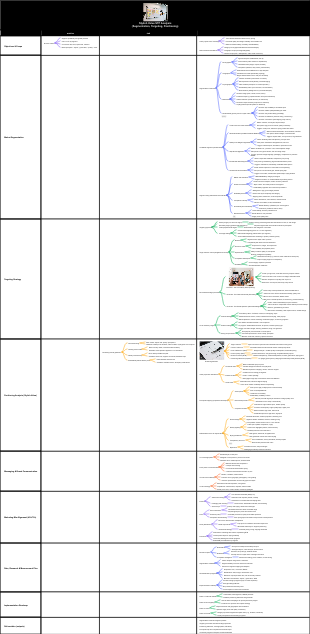
MindMap Gallery Target Marketing Mix Analysis
Unlock the potential of your marketing strategy with our comprehensive Target Marketing Mix Analysis! This guide outlines a structured approach to identify and prioritize target segments, design a tailored marketing mix, and enhance collaboration for better reach and conversion. The analysis covers key components such as market definition and segmentation methods, segment profiling, targeting strategies, and crafting a compelling positioning statement. We delve into the intricacies of the marketing mix (4Ps/7Ps), including product fit, pricing objectives, and differentiation levers. Each section provides actionable insights to ensure your marketing efforts resonate with your audience and drive sustainable growth. Join us in transforming your marketing approach!
Edited at 2026-03-25 15:05:51Discover how Aeon can navigate the competitive online landscape with a strategic SWOT analysis. This comprehensive overview highlights Aeon’s strengths, such as its strong brand recognition, omnichannel capabilities, and customer loyalty programs, alongside its weaknesses, including digital maturity gaps and cost structure challenges. Opportunities for growth include enhancing e-commerce competitiveness and leveraging data-driven strategies, while threats from online-first players and market dynamics require attention. Explore how Aeon can strengthen its market position through innovation and customer-centric approaches in the ever-evolving retail environment.
Discover how Aeon effectively tailors its offerings to meet the diverse needs of family-oriented consumers through a comprehensive Segmentation, Targeting, and Positioning (STP) analysis. Our approach begins with demographic segmentation, examining family life stages, household sizes, income levels, and parent age bands to identify distinct consumer groups. Geographic segmentation highlights store catchment types and community characteristics, while psychographic segmentation delves into family values and lifestyle orientations. Behavioral segmentation focuses on shopping missions, price sensitivity, and channel preferences. Finally, needs-based segmentation reveals core family needs related to value and budget considerations. Join us as we explore these insights to enhance family shopping experiences at Aeon.
Discover the dynamics of sneaker transactions with our Kream Sneaker Consumption Scene Analysis Template. This comprehensive framework aims to visualize the purchasing and consumption journeys of sneakers, identifying key demand drivers and obstacles. It covers user behavior within Kream and external influences, targeting various sneaker categories over specific timeframes and regions. The analysis defines user segments, including collectors, resellers, sneakerheads, casual trend followers, and gift purchasers, each with unique values and KPIs. It outlines the consumption journey from awareness to resale, highlighting critical touchpoints such as search, purchase, inspection, and sharing experiences. Key performance indicators are established to measure engagement and satisfaction throughout the process. Join us in exploring the intricate world of sneaker trading!
Discover how Aeon can navigate the competitive online landscape with a strategic SWOT analysis. This comprehensive overview highlights Aeon’s strengths, such as its strong brand recognition, omnichannel capabilities, and customer loyalty programs, alongside its weaknesses, including digital maturity gaps and cost structure challenges. Opportunities for growth include enhancing e-commerce competitiveness and leveraging data-driven strategies, while threats from online-first players and market dynamics require attention. Explore how Aeon can strengthen its market position through innovation and customer-centric approaches in the ever-evolving retail environment.
Discover how Aeon effectively tailors its offerings to meet the diverse needs of family-oriented consumers through a comprehensive Segmentation, Targeting, and Positioning (STP) analysis. Our approach begins with demographic segmentation, examining family life stages, household sizes, income levels, and parent age bands to identify distinct consumer groups. Geographic segmentation highlights store catchment types and community characteristics, while psychographic segmentation delves into family values and lifestyle orientations. Behavioral segmentation focuses on shopping missions, price sensitivity, and channel preferences. Finally, needs-based segmentation reveals core family needs related to value and budget considerations. Join us as we explore these insights to enhance family shopping experiences at Aeon.
Discover the dynamics of sneaker transactions with our Kream Sneaker Consumption Scene Analysis Template. This comprehensive framework aims to visualize the purchasing and consumption journeys of sneakers, identifying key demand drivers and obstacles. It covers user behavior within Kream and external influences, targeting various sneaker categories over specific timeframes and regions. The analysis defines user segments, including collectors, resellers, sneakerheads, casual trend followers, and gift purchasers, each with unique values and KPIs. It outlines the consumption journey from awareness to resale, highlighting critical touchpoints such as search, purchase, inspection, and sharing experiences. Key performance indicators are established to measure engagement and satisfaction throughout the process. Join us in exploring the intricate world of sneaker trading!
Target Marketing Mix Analysis
Overview
Purpose
Identify and prioritize target segments
Design a differentiated marketing mix (4Ps/7Ps) per segment
Align collaboration/partnership marketing to accelerate reach, trust, and conversion
Key outputs
Segment profiles and sizing
Positioning and value proposition per segment
Marketing mix plan (Product, Price, Place, Promotion; plus People, Process, Physical Evidence where relevant)
Collaboration marketing model (partners, roles, governance, measurement)
Target Market Analysis
Market definition
Category boundaries
Use cases and jobs-to-be-done
Adjacent categories and substitutes
Segmentation approach
Segmentation bases
Demographic/firmographic
Geographic
Psychographic
Behavioral (usage, loyalty, benefits sought)
Needs-based / JTBD
Segment discovery methods
Customer interviews and ethnography
Surveys and clustering
CRM and product analytics
Search/social listening
Partner/channel insights
Define the market, segment it with multiple bases, and validate segments with mixed research and data sources.
Segment profiling (per segment)
Core need and desired outcome
Pain points and barriers
Triggers and buying context
Decision makers and influencers
Buying process and evaluation criteria
Channel preferences and content formats
Price sensitivity and willingness-to-pay
Lifetime value potential and retention drivers
Targeting (selecting segments)
Attractiveness criteria
Segment size and growth
Profitability (margin, CAC, LTV)
Competitive intensity and differentiation potential
Access (channel reachability)
Risk (regulatory, churn, seasonality)
Company fit criteria
Capability fit (product, ops, support)
Brand fit and strategic alignment
Partner ecosystem fit
Targeting strategies
Undifferentiated (mass)
Differentiated (multi-segment)
Concentrated (niche)
Micromarketing (one-to-one/ABM)
Positioning & Value Proposition
Positioning statement
Target segment
Frame of reference (category)
Point of differentiation
Reason to believe (proof)
Value proposition architecture
Core promise (primary benefit)
Supporting benefits (functional, emotional, social)
Proof points (data, testimonials, certifications)
Objection handling (switching costs, risk)
Messaging hierarchy
Primary message pillars (3–5)
Feature-to-benefit translations
Segment-specific angles
Partner-co-branded messaging guardrails
Marketing Mix Analysis (4Ps / 7Ps)
Product
Product-market fit signals
Activation and engagement metrics
Retention cohorts and churn reasons
NPS/CSAT themes
Offer structure
Core product/service
Bundles and add-ons
Service levels (SLA, support tiers)
Guarantees and risk reducers
Differentiation levers
Unique features/capabilities
UX and onboarding
Integration ecosystem
Compliance, security, reliability
Lifecycle planning
New product introduction
Growth feature roadmap
Maturity optimization (cost, efficiency)
Sunsetting and migration
Price
Pricing objectives
Penetration vs skimming
Revenue maximization vs market share
Strategic parity vs premium
Pricing models
Subscription (tiered, usage-based)
Freemium with upgrade paths
Per-seat / per-transaction
Bundled partner pricing
Price architecture
Tier design and fences
Discount strategy (volume, annual, partner)
Promotions and time-bound offers
Contract terms (trial, cancellation)
Willingness-to-pay analysis
Van Westendorp / conjoint
Competitive benchmarking
Value-based pricing logic
Collaboration pricing considerations
Revenue share and referral fees
MDF (market development funds)
Joint bundles and co-funded offers
Channel conflict mitigation (price parity rules)
Place (Distribution)
Channel strategy
Direct (sales, website, app)
Indirect (resellers, marketplaces, affiliates)
Hybrid and channel rules of engagement
Channel selection criteria
Reach and segment access
Cost to serve and margins
Control of brand and experience
Data ownership and attribution
Route-to-market design
Lead routing and handoffs
Territory and partner coverage
Inventory/fulfillment (if physical)
Collaboration distribution plays
Co-selling motions
Marketplace listings and integrations
Partner-led implementation/support
Embedded distribution (OEM/white-label)
Promotion
Channel mix
Paid (search, social, display, sponsorships)
Owned (website, email, product messaging)
Earned (PR, reviews, word-of-mouth)
Partner (co-marketing, webinars, events)
Content strategy
TOFU/MOFU/BOFU assets
Segment-specific case studies
Comparison and objection content
Co-branded assets with partners
Campaign planning
Objectives (awareness, demand, pipeline, retention)
Targeting and creative testing
Budget allocation and pacing
Partner calendar alignment
Sales enablement (if applicable)
Pitch decks and battlecards
Demo scripts and proof kits
Partner enablement materials
Collaboration promotion tactics
Joint webinars and workshops
Partner newsletters and community posts
Influencer/creator partnerships
Co-sponsored events and booths
Cross-promotions and bundle announcements
People (7Ps, services)
Sales and support readiness
Training and certification
Partner-facing roles (PAM/Channel Manager)
Customer success model
Onboarding and adoption plans
QBRs and renewal playbooks
Partner-facing teams
Partner marketing manager
Solutions engineers / partner technical support
Process (7Ps, services)
Customer journey mapping
Awareness to advocacy touchpoints
Friction points and drop-offs
Operational processes
Lead qualification (MQL/SQL)
Partner lead registration and protection
Co-selling workflows and CRM hygiene
Governance processes
Joint planning and quarterly reviews
Issue escalation and dispute resolution
Physical Evidence (7Ps, services)
Trust and credibility signals
Certifications, badges, awards
Reviews and ratings
Security/compliance documentation
Partner credibility signals
Co-branded case studies
Joint solution briefs
Marketplace presence and verified listings
Build segment-specific offers by aligning product value, pricing logic, distribution access, and promotion—supported by people, process, and credibility signals.
Collaboration Marketing Model (Detailed)
Definition and goals
Definition
Structured cooperation with external entities to create, promote, distribute, or enhance an offering
Primary goals
Expand reach into target segments
Increase trust via partner credibility
Improve conversion via integrated solutions
Reduce CAC through shared resources
Increase retention via ecosystem value
Collaboration types (taxonomy)
Co-marketing
Joint content, webinars, events
Shared audiences and list swaps (compliant)
Co-selling
Joint pipeline generation and deal execution
Shared account plans (ABM-style)
Channel/Reseller
Partner sells and supports; margin-based model
Referral/Affiliate
Partner refers; fee-based model
Product/Integration partnerships
Technical integration, bundled workflows, marketplace apps
Strategic alliances
Joint ventures, long-term exclusives, category creation
Influencer/Community collaborations
Creators, industry communities, ambassadors
Embedded/OEM
Partner embeds solution into their product; white-label options
Partner selection framework
Strategic fit
Segment overlap with minimal competitive conflict
Complementary value proposition
Brand alignment and reputation
Operational fit
Capability to execute campaigns and sales motion
Technical feasibility (integration effort)
Geographic/industry coverage
Commercial fit
Economic model sustainability
Sales cycle compatibility
Support burden and cost-to-serve
Risk assessment
Compliance, privacy, and data-sharing constraints
IP and brand risk
Dependency and lock-in risk
Partner roles and responsibilities (RACI-style)
Brand (you)
Strategy, positioning, core messaging
Campaign assets, budget ownership, measurement
Product roadmap and integration support
Partner
Audience access and channel execution
Sales participation (co-sell/referral)
Co-created content and endorsements
Joint responsibilities
Quarterly planning and KPIs
Lead management and follow-up SLAs
Customer feedback and roadmap input
Collaboration operating model
Governance
Partnership charter (objectives, scope, term)
Executive sponsor alignment
Cadence: weekly working, monthly performance, quarterly business review
Workstreams
Marketing (campaigns, content, events)
Sales (pipeline, account mapping, enablement)
Product/Tech (integration, QA, roadmap)
Legal/Finance (contracts, payouts, compliance)
Customer Success (implementation, renewals)
Communication
Shared workspace and documentation
Escalation paths and decision rights
Enablement
Partner onboarding and training
Certification and playbooks
Demo environments and sandbox access
Collaboration lifecycle
Identify
Partner sourcing channels (marketplaces, communities, networks)
Shortlist scoring and outreach
Align
Joint value proposition and target accounts/segments
Commercial terms and success metrics
Launch
Co-branded announcements and initial campaign
Sales enablement and internal readiness
Scale
Replicable campaign templates
Expanded integrations and bundles
Broader territory/segment coverage
Optimize
Experimentation (offers, messaging, channels)
Funnel improvements and SLA tuning
Renew or exit
Performance review vs thresholds
Transition plans and customer communication
Co-marketing playbook
Joint planning
Audience definition and segment mapping
Offer selection (webinar, report, toolkit, trial)
Content calendar and ownership
Asset production
Co-branded landing pages and forms
Email sequences and nurture tracks
Social toolkits and UTM standards
Demand capture and nurturing
Lead scoring and routing rules
Shared follow-up SLAs
Consent management and compliance
Event execution
Speaker prep and rehearsal
Moderation and Q&A handling
Post-event replay and content repurposing
Measurement
Partner-sourced vs partner-influenced pipeline
CAC contribution and ROI by campaign
Co-selling playbook
Account mapping
ICP alignment and whitespace analysis
Mutual target account lists and prioritization
Deal collaboration
Lead registration and deal protection
Joint discovery and solution design
Proposal templates and pricing approvals
Sales motions
Partner-led vs vendor-led vs joint-led
SE support and demo responsibilities
Post-sale motion
Implementation roles
Expansion and renewal ownership
Integration/solution partnership model
Integration strategy
API readiness and documentation
Priority use cases and workflows
Marketplace packaging and listing
Joint solution design
Reference architectures
Security and compliance reviews
Support model (L1/L2/L3)
Adoption levers
In-product prompts and templates
Joint onboarding guides
Co-created tutorials and help center content
Commercial structures
Compensation models
Referral fee (fixed/percentage)
Revenue share (recurring/one-time)
Reseller margin
Performance bonuses (tiered)
Funding models
MDF allocation and rules
Co-op advertising
Joint sponsorship budgets
Contract essentials
Term, territory, exclusivity
Brand usage and approvals
Data sharing and privacy
SLAs, liability, and indemnification
Metrics & Measurement
Core funnel KPIs
Reach and awareness (impressions, share of voice)
Engagement (CTR, time on page, webinar attendance)
Conversion (CVR, demo requests, trials)
Pipeline (MQL→SQL, win rate, sales cycle)
Revenue (ARR/MRR, ACV, margin)
Retention (churn, expansion, NRR)
Collaboration-specific KPIs
Partner-sourced pipeline and revenue
Partner-influenced revenue
Cost per partner-sourced lead/opportunity
Activation of partners (enabled, active, producing)
Joint campaign ROI and payback period
Integration adoption (connected accounts, feature usage)
Attribution and data model
UTM and campaign taxonomy standards
Multi-touch attribution vs first/last touch
CRM partner source fields and lead registration
Data-sharing rules and dashboards
Competitive & Context Analysis
Competitor mapping
Direct competitors
Indirect/substitutes
Partner ecosystems of competitors
Differentiation assessment
Feature parity vs unique value
Channel advantage and partner exclusives
Switching costs and lock-in drivers
Environmental factors
Regulatory and compliance constraints
Economic cycles and budget sensitivity
Technology trends affecting channels and collaboration
Risks & Mitigations
Channel conflict
Clear rules of engagement and pricing parity
Deal registration and territory definitions
Brand misalignment
Partner vetting and brand guidelines
Approval workflows for co-branded assets
Data privacy and compliance
Consent management and DPA agreements
Minimal data sharing and secure transfer
Execution risk
Shared SLAs, cadence, and resourcing commitments
Pilot-first approach before scaling
Over-dependence on a single partner
Partner portfolio diversification
Exit clauses and contingency plans
Action Plan (Implementation Roadmap)
Phase 1: Foundations (0–4 weeks)
Segment selection and positioning finalization
Partner shortlist and outreach scripts
Tracking setup (UTMs, CRM fields, dashboards)
Draft collaboration charter templates
Phase 2: Pilot (4–10 weeks)
One co-marketing campaign + one co-selling motion
Enablement kits and joint training
Weekly performance review and optimization
Phase 3: Scale (10–24 weeks)
Replicate best-performing plays across partners
Add integrations/marketplace presence
Expand to new segments/regions
Phase 4: Optimize (ongoing)
Quarterly business reviews and KPI tuning
Pricing/bundling experiments
Portfolio management (renew, expand, exit)