MindMap Gallery Phosphorus removal from iron oxide scale
Iron oxide scale phosphorus removal thought map. Iron oxide scale is a layer of iron oxide formed due to a chemical reaction between the surface and oxygen during the heating process of steel. It is usually divided into three levels. The composition and properties of each level may be different, but they will have an overall impact on the quality of the steel.
Edited at 2024-12-08 00:59:54Phosphorus removal from iron oxide scale
1. What is iron oxide scale and what effect does it have on the steel surface?
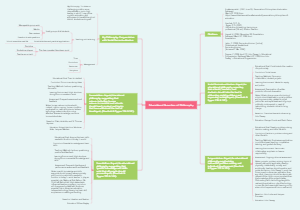
The oxide film on the metal surface is called iron oxide scale. There are three layers of iron oxide scale, as shown in the figure,
The outermost layer is F203, which accounts for about 2% of the entire iron oxide thickness;
The second layer is a mixture of Fe,03 and Fe0, usually called Fe,04, which accounts for about 18% of the entire iron oxide thickness;
The third layer is Fe0, which accounts for about 80% of the entire iron oxide thickness.
Severe iron oxide scale will increase the burning loss of the steel and make the surface of the steel rough. In severe cases, pitting and pit defects will occur, and the steel will crack during bending.
2. Why is it necessary to perform high-pressure water descaling on the billets?
High-pressure water descaling is to remove and clean the primary iron oxide scale (primary iron oxide scale) generated during heating and the secondary iron oxide scale formed during the rolling process, so as to avoid pressing into the surface of the steel plate to form surface defects (pitting, iron oxide scale pressing in) , improve the surface quality of steel plates
3. What is the principle of high pressure water descaling?
High-pressure water descaling uses a high-pressure pipeline system to spray high-pressure water through the nozzle in the descaling box and hits the high-temperature billet or rolled piece. First, the high-pressure water rapidly cools the surface of the billet or rolled piece, causing oxidation. iron sheet and The billet or rolled piece produces a strong temperature difference, which causes the iron oxide scale to shrink to a different extent than the billet or rolled piece, resulting in tangential shearing force, prompting the iron oxide scale to fall off the surface of the billet or rolled piece; second, under the continued impact of high-pressure water, the iron oxide scale from blank or The surface of the rolled piece falls off. At this time, the descaling effect is proportional to the high-pressure water pressure; thirdly, due to the uneven thickness and low density of the iron oxide scale, there are certain cracks and pores, and high-pressure water can enter the interior of the iron oxide scale and the iron oxide scale and the blank. or rolled parts In the almost closed space, the heat suddenly vaporizes and explodes, causing the iron oxide scale to loosen or fall off; then, under the continued impact of high-pressure water, the loose, broken and remaining iron oxide scale on the billet and rolled parts will washed away.
4. What are the advantages of high-pressure water descaling compared with other descaling methods?
Compared with other descaling methods, high-pressure water descaling has the advantages of lower equipment cost, good descaling effect, no damage to the surface of the steel billet, flexible and convenient use, and no pollutants. The high-pressure water descaling system has been widely used in modern China. Thick plate factory basically replaces other descaling methods.
5. High-pressure water descaling is generally divided into several stages. What is the purpose of each stage of descaling?
High-pressure water descaling is generally divided into two stages: coarse descaling and fine descaling. Coarse descaling is to remove the primary (primary) iron oxide scale generated during the heating process on the surface of the raw material before rolling. The rough descaling box is installed on the roller table between the heating furnace and the rough rolling mill or vertical roller mill.
Fine descaling is to remove the secondary iron oxide scale that appears on the surface of the rolled piece during the rolling process. Fine descaling has a great effect on further improving the surface quality of the steel plate and reducing the surface roughness.
The fine descaling box is installed at the entrance or exit of the rolling mill. Some are installed outside the frame, some are installed on the frame, some are installed at both the inlet and outlet, and some are installed only on one side of the frame.