MindMap Gallery Medical immunity - immune response and its regulation
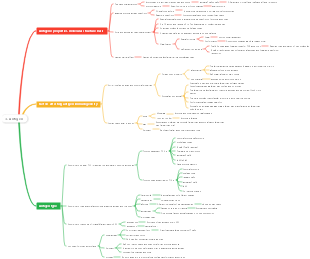
This is a mind map about immune response and its regulation, including innate immune response, T cell-mediated cellular immune response, B cell-mediated humoral immune response and other contents.
Edited at 2023-12-16 15:56:59This is a mind map about bacteria, and its main contents include: overview, morphology, types, structure, reproduction, distribution, application, and expansion. The summary is comprehensive and meticulous, suitable as review materials.

This is a mind map about plant asexual reproduction, and its main contents include: concept, spore reproduction, vegetative reproduction, tissue culture, and buds. The summary is comprehensive and meticulous, suitable as review materials.
This is a mind map about the reproductive development of animals, and its main contents include: insects, frogs, birds, sexual reproduction, and asexual reproduction. The summary is comprehensive and meticulous, suitable as review materials.
This is a mind map about bacteria, and its main contents include: overview, morphology, types, structure, reproduction, distribution, application, and expansion. The summary is comprehensive and meticulous, suitable as review materials.
This is a mind map about plant asexual reproduction, and its main contents include: concept, spore reproduction, vegetative reproduction, tissue culture, and buds. The summary is comprehensive and meticulous, suitable as review materials.
This is a mind map about the reproductive development of animals, and its main contents include: insects, frogs, birds, sexual reproduction, and asexual reproduction. The summary is comprehensive and meticulous, suitable as review materials.
Immune response and its regulation
innate immune response
The structure of the innate immune system
Innate immune cells and their functions
Pattern Recognition Receptor (PRR)
Found in innate immune cells or molecules, Can directly recognize receptors that bind to conserved components shared by pathogenic microorganisms or certain molecules released by damaged cells of the host Including Toll-like receptors, scavenger receptors, mannose receptors, etc.
Pathogen-Associated Molecular Patterns (PAMPs)
The host cell does not produce (the institutional mark that distinguishes "self" from "non-self") Common and highly conserved molecular structure on the surface of pathogenic microorganisms, ligand molecules bound by PRR
Damage-associated molecular patterns (DAMPs)
Certain endogenous molecules released by tissue damage caused by various reasons can also be recognized by PRR
Tissue barriers and functions
Skin and mucous membranes and their accessory components (the first line of defense against mechanical pathogens)
body barrier
Blood-brain barrier (infants develop central system infections due to incomplete development of the blood-brain barrier)
Placental barrier (no barrier to most viruses)
Innate immune molecules and their functions
complement system
Early activation through the bypass pathway and mannose-binding lectin pathway, exerting bacteriolytic and cytolytic effects
acute response phase protein
Antimicrobial peptides and lysozyme
Cytokines
Phases of action of the innate immune system
Adaptive immune response induction phase
After 96 hours, immature DC cells migrate to peripheral immune organs, gradually differentiate into mature DC, and present pMHC complexes to T cells.
transient innate immune response phase
Within 4 hours, neutrophils are the main effector cells against fungi and bacteria, and most bacterial infections end during this period
Early innate immune response stage
4-96 hours
The relationship between innate immune response and adaptive immune response
Innate immune response assists adaptive immune cells or molecules in functioning
Innate immune responses regulate types of adaptive immune responses
Adaptive immune cells or molecules enhance innate immune responses
Innate immune response initiates adaptive immune response
Characteristics of innate immune response
T cell mediated cellular immune response
Activation, proliferation and differentiation of T cells
T cell activation
Second signal of T cell activation
APC binds to multiple pairs of costimulatory molecules (B7/CD28, ICAM-1/LFA-1, LFA-3/CD2, etc.) on the surface of T cells to provide costimulatory signals. Lack of costimulatory signals leads to T cell anergy
The first signal of T cell activation
TCR specifically recognizes pMHC, CD4 or CD8 binds to MHC class II or class I molecules, and simultaneously triggers tyrosine phosphorylation of the intracellular segment of CD3
Cytokines involved in T cell activation
IL-2, IL-12, IL-1, IL-6, etc.
T cell proliferation and differentiation
Proliferation and differentiation of CD4⁺T cells, proliferation and differentiation of CD8⁺T cells
Antigen processing and presentation
MHC class I molecule antigen presentation pathway
Endogenous antigens are processed in nucleated cells, degraded by the proteasome and entered into the endoplasmic reticulum (ER), where they bind to MHC class I molecules and are presented to CD8⁺T cells for recognition. Some exogenous antigens can also be processed according to the endogenous presentation pathway
MHC class II molecule antigen presentation pathway
Exogenous antigens are taken up by APC, fuse with lysosomes to form endosomes/lysosomes, and combine with MHC class II molecules for recognition by CD4⁺T cells.
Other antigen presentation pathways
MHC molecules cross-present antigens CD1, molecular presentation pathway (certain lipid antigens)
T cell effects and their mechanisms
CTL-mediated cytotoxic effects
Effect-target cell binding and polarization
CTL specifically kills target cells
Perforin/granzyme pathway, TNF and FasL pathway
Th-mediated immune response
Treg: effector T cell immune incompetence Tfh: Promote B cell proliferation and differentiation and antibody formation Th17: activates neutrophils and triggers local inflammatory response Th22 is involved in autoimmune diseases
Th2 auxiliary humoral immune response and other effects
Th1-mediated delayed-type hypersensitivity
Recognition of antigens by T cells
TCR specifically recognizes antigen
CD4/CD8 are involved in recognizing antigens (increasing the affinity of TCR and pMHC complexes and enhancing the sensitivity of T cells to antigen stimulation)
The main role played by T cell-mediated immune responses
Anti-infection, anti-tumor, immune damage
B cell mediated humoral immune response
B cell response to TD antigen
Activation of atopic B cells
The first signal of B cell activation
The specific BCR directly recognizes the natural antigen B cell epitope, and the recognition signal is transmitted into the B cell via Igα/Lgβ. BCR co-receptor complex (CD21-CD19-CD81)
The role of cytokines
The participation of cytokines is a necessary condition for the full activation and proliferation of B cells. Polarization helps ensure the specificity of the interaction between Th cells and B cells
Second signal of B cell activation
Need T cell assistance to obtain co-stimulatory signals
Proliferation, differentiation and fate of B cells in germinal centers
Proliferation and differentiation of antigen-specific B cells
A portion of the proliferation is converted into plasma cells that produce IgM antibodies Part of it goes to the germinal center
The fate of B cells in germinal centers
plasma cells, memory B cells
B cell proliferation and differentiation in germinal centers
Antibody affinity maturation Antibody class switching
Recognition of TD antigen by B cells
General rules of humoral immune response
primary immune response
Incubation period, logarithmic phase, plateau phase, decline phase Mainly produces IgM class antibodies The total amount of antibodies and their affinity to the antigen are low
immune response again
Low antigen dosage can effectively initiate immune response again Memory B cells act as APCs to ingest and process antigens and present antigen peptides to memory Th cells. The response is rapid and durable, the response intensity is high, the antibody type is mainly IgG, and the antibody affinity produced is significantly higher than the initial response.
Effects of B cell responses
The main effector molecule is a specific antibody. Antibody molecules clear non-self antigens through a variety of mechanisms.
B cell response to TⅠ antigen
TI-Ag directly activates resting B cells without the help of Th cells
Immune response overview
Types and Focus of Immune Responses
innate immune response
Innate, stable inheritance Able to distinguish "self" from "non-self", limited specificity No typical immune memory Quickly exert immune effect
adaptive immune response
Produced after exposure to pathogens Highly specific Immune effects have a latency period Have immune memory and can form immune tolerance
Basic process of immune response
proliferation and differentiation stages
induction phase
Effect stage
Regulation of immune response
Immune tolerance
The specific immune response or low response shown by the body's immune system after being exposed to a certain antibody