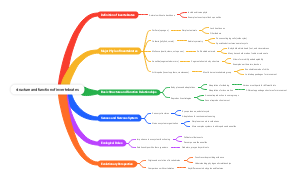
MindMap Gallery General Zoology-Protozoa Mind Map
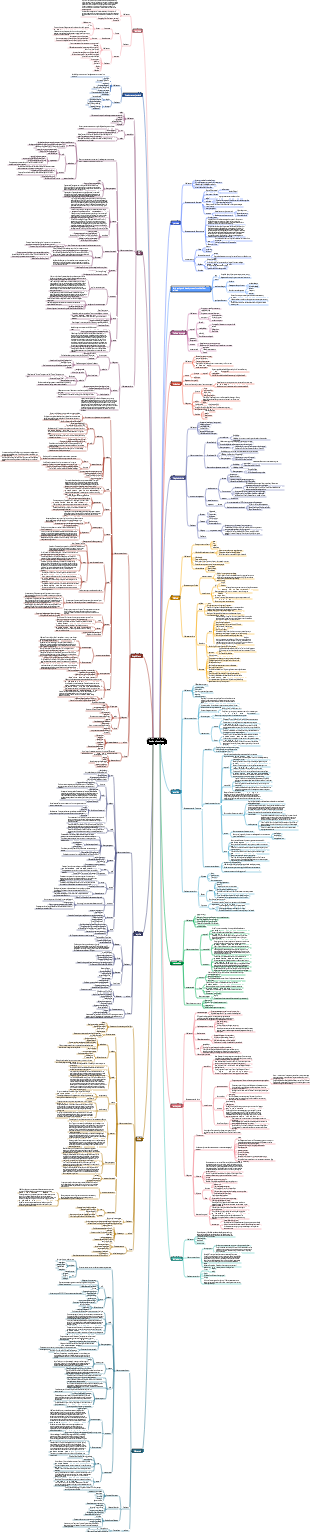
About general zoology - mind map of the phylum Protozoa, including Mollusca, Arthropoda, Tentacle Crowns, Echinodermata, etc. The review materials are for reference only. If there are any errors, please point them out.
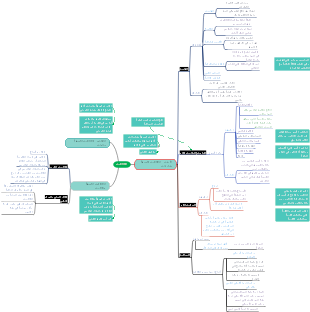
Edited at 2023-11-12 13:09:16This is a mind map about bacteria, and its main contents include: overview, morphology, types, structure, reproduction, distribution, application, and expansion. The summary is comprehensive and meticulous, suitable as review materials.

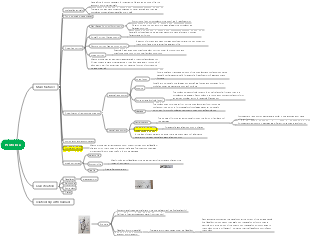
This is a mind map about plant asexual reproduction, and its main contents include: concept, spore reproduction, vegetative reproduction, tissue culture, and buds. The summary is comprehensive and meticulous, suitable as review materials.
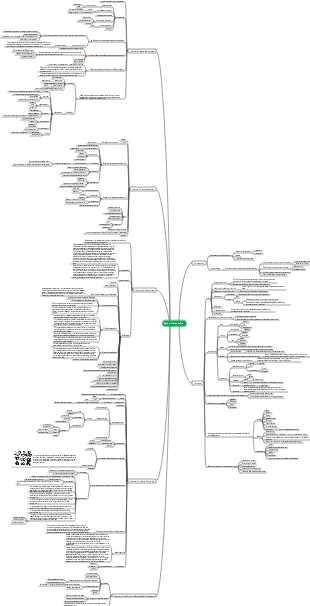
This is a mind map about the reproductive development of animals, and its main contents include: insects, frogs, birds, sexual reproduction, and asexual reproduction. The summary is comprehensive and meticulous, suitable as review materials.
This is a mind map about bacteria, and its main contents include: overview, morphology, types, structure, reproduction, distribution, application, and expansion. The summary is comprehensive and meticulous, suitable as review materials.
This is a mind map about plant asexual reproduction, and its main contents include: concept, spore reproduction, vegetative reproduction, tissue culture, and buds. The summary is comprehensive and meticulous, suitable as review materials.
This is a mind map about the reproductive development of animals, and its main contents include: insects, frogs, birds, sexual reproduction, and asexual reproduction. The summary is comprehensive and meticulous, suitable as review materials.
Invertebrates
Protozoa
Main features
basic form
cell structure
independent biological entity
sports
flagellar movement
Euglena
ciliary movement
Paramecium
deformation movement
amoeba
Nutrition
Animal nutrition (phagocytic nutrition)
Plant Nutrition (Photoautotrophic)
Saprophytic nutrition (osmotic nutrition)
Water regulation and excretion
Excretion: Diffusion removes carbon dioxide, water, nitrogen-containing waste and other soluble substances produced by metabolism from the cell surface (animal body surface or specialized organs).
Egestion: The process by which the organism eliminates the remaining indigestible waste after digesting and absorbing food through the mouth into digestive organs such as the stomach and small intestine.
Telescopic vesicles are the main organelles for water regulation and excretion in freshwater protozoa
reproduction
sexual reproduction
Gametogenesis
zygotic reproduction
asexual reproduction
bifid reproduction
budding
compound fission
Schizophrenia
Flagellates
represent animals
Euglena
Morphological structure and function
film
Epimembrane stripes are characteristic of the family Eugleniidae
Flagella and movement
Euglena move by the swing of their flagella
Phototaxis and nutrition
Euglena have phototaxis during movement
Eyespots and photoreceptors are common in viridanoflagellates
There are chloroplasts in the cytoplasm of Euglena
Euglena mainly uses chlorophyll to use light energy to perform photosynthesis under light conditions, and synthesize carbon dioxide and water into sugars.
The excess food produced by Euglena forms some translucent parastarch granules.
Parastarch granules are one of the characteristics of Euglena
Under lightless conditions, Euglena can also absorb organic matter dissolved in water through its body surface. This nutritional method is called osmotic nutrition.
Moisture regulation, excretion and respiration
cell mouth, storage vesicle, telescopic vesicle
Reproduction and cyst formation
Longitudinal binary fission, which is one of the characteristics of Giardia
Cyst formation is a good adaptability for Euglena to survive adverse environments, and many protozoa can form cysts
Significance of research
Conduct basic theoretical research
Biological indicators of environmental pollution by organic matter
Radioactive substances that purify water
Main features
motor organelle
flagellum
nutritional approach
Animal nutrition (phagocytic nutrition)
Plant Nutrition (Photoautotrophic)
Saprophytic nutrition (osmotic nutrition)
reproduction
wireless reproduction
vertical dichotomy
sexual reproduction
Gametogenesis
combined reproduction
Cysts can generally form under adverse environmental conditions
Phytophthora
Main features
Generally, they have chromatophores and can perform photosynthesis and make their own food. If they do not have chromatophores, their structures are not much different from similar chromatophore species. This is because they lost their chromatophores during the evolution process.
There are many species living freely in fresh water or sea water, with different shapes.
Discophyton, Volvox, Noctiluca, Euglena
effect
Analyze and understand the origin of multicellular animals
Natural food for fish
water pollution indicator organisms
harm
Red tide harms fisheries
produce neurotoxins
polluted water
Dynamoflagellate
Main features
No chromatophores, unable to produce their own food, nutrition is heterotrophic
Leishmania, Trypanosoma, Cryptowhips, Trichomonas, Choanoflagellates, Protozoa
Sarcopodia
represent animals
large amoeba
Morphological structure and function
Pseudopodia and movement
Pseudopodia are temporary locomotion devices of amoeba
deformation movement
Phagocytosis, pinocytosis and digestion
Pseudopodia have a feeding function
elimination phenomenon
pinocytosis
It must be induced by certain substances for it to happen
Telescopic bubbles and osmoregulation
subtopic
reproduction and cysts
binary fission reproduction
Significance of research
Research materials for life sciences
Main features
motor organelle
Pseudopodium
There is no tough membrane on the body surface, only a very thin cytoplasmic membrane.
Cells often differentiate into distinct ectoplasm and endoplasm. The endoplasm includes gelatin and sol.
Reproductive mode
binary fission reproduction
Some species have sexual reproduction
cyst
Rhizopoda
Pseudopodia are leaf-like, finger-like, filament-like or root-like
Entamoeba dysenteriae (Enamoeba histolytica)
Form (according to life process)
large trophozoite
small trophozoites
cyst
prevention
Eliminate the source of cysts
Prevent cysts from entering the body
watchworm
Foraminifera
There are many fossils and they evolve quickly in the strata.
The fossils of foraminifera can not only determine the geological age and sedimentary phases of the formation, but also reveal the underground structure, which plays an important guiding role in searching for sedimentary minerals, discovering oil, determining oil layers and planning the location of oil wells.
Actinopodia
It has axopodia, generally has a spherical body, and mostly lives a floating life.
sunworm, radiolaria
Spore class
represent animals
Plasmodium vivax
Life history (generational change phenomenon)
asexual generation
In the human body (carrying out schizophrenia)
Preerythrocytic stage
The period during which Plasmodium develops in liver cells before it invades red blood cells.
extraerythrocytic phase
Plasmodium parasites are already present in red blood cells at this time
Is the root cause of malaria recurrence
intraerythrocytic phase
Mature trophozoites almost occupy red blood cells, which further develop to form schizonts. After the schizont matures, many merozoites are formed, the red blood cells rupture, and the merozoites are scattered into the plasma, and then invade other red blood cells, and the schizophrenia is repeated. The time required for this cycle is different among various malaria parasites. This is also the time required for malaria attacks, that is, the time required for merozoites to enter red blood cells and develop therein does not cause malaria attacks. When the newly formed merozoites come out of the red blood cells, a large number of red blood cells are destroyed, and the merozoites and their metabolites are also released, which causes a series of physiological changes in the patient, leading to apparent symptoms such as colds and fever.
sexual generation
In Anopheles mosquitoes (for gametogenesis and sporulation)
Main features
Parasitic life, no moving organelles, or flagella or pseudopods as moving organs at a certain stage in the life history, and the nutritional mode is heterotrophic
Life history (generational change phenomenon)
asexual generation in vertebrates (or humans)
Sexual generation in invertebrates
Reproductive mode
asexual reproduction
schizophrenia
sporogeny
sexual reproduction
Gametogenesis
Coccidia
Parasitizes only one host; the oocysts must develop outside the host's body
Spores have thick walls
Mainly parasitic in animals such as sheep, rabbits, chickens, and fish
Haemosporidians
The schizophrenia stage is parasitic in vertebrates or humans (in the blood or blood cells), and gametogenesis and spore reproduction are in the bodies of blood-sucking arthropods (mosquitoes or ticks)
Spores without shell
Plasmodium and pyrozoites (extremely harmful to livestock)
Ciliates
represent animals
Paramecium
Morphological structure and function
Integument, kinefibrils and stinging vesicles
The stinging bubble has a defensive function
Feeding and Digestion
The large nucleus mainly regulates nutrition and metabolism
The small nucleus mainly controls reproduction and inheritance
Orbital cavity, endopharynx, food vesicle, anus
Telescopic foam and moisture regulation
Reproductive mode
asexual reproduction
horizontal split
sexual reproduction
zygotic reproduction
Significance of research
Generally used as representative animals
Good material for studying cell genetics
Main features
motor organelle
cilia
Reproductive mode
asexual reproduction
horizontal split
sexual reproduction
zygotic reproduction
lifestyle
There is freedom and there is parasitism
Some have cilia all over the body (belonging to holotrichae)
Some species have poorly developed cilia, which are limited to the ventral surface of the insect body (belonging to the gastric trichomes)
Protozoa and humans
Control bacterial numbers and biomass
Directly harmful to people
Directly related to the national economy
Materials for research on biological control of pests
polluting water sources
Animals as indicators of organic pollution
Natural food for fish
important raw material for forming petroleum
Signs for detecting oil deposits
Good materials for studying basic theories of life sciences
Porifera (Spongea)
Main features
Calcareous Sponges
Six Sponges
Sponges vulgaris
Coelenterata (Cnidaria)
Main features
Hydrozoa
Jellyfish
Coral class
Platyhelminthes
Main features
Planarians
Trematoda
Class Taenia
Nematoda
Main features
represent animals
Class Adenorenal (class without sensilla)
Tube Nephrology (Caudasensilla)
Rotifera
Main features
Monocystis
Diphenidae
Annelida
Main features
Polychaeta
Oligochaeta
Bleedes
Echinodermata
tentacle crown animal
Bryozoa (external animals)
Main features
By lip gang
Naudilipida
Brachiopods
Main features
no hinge
hinged
Broomworms
Arthropoda
Main features
Trilobites
Main features
Trilobites
Crustacea
Main features
Branchiopods
Gnathopods
Molonychia
Pentastomata
Chelicerina
Main features
Limestomata
Arachnida
Aranea
Polypodia
Main features
Chemipoda
Sepopoda
Comprehensive outline
Hexapodia
Main features
Endognathia
Collembola
Protozoa
Dipod
Insecta
Apterygium
Main features
Thysanoderma
Collembola
Ptera
Main features
Orthoptera
Blattales
Mantis order
Stick Insects
Isoptera
Liceales
Odonata
Hemiptera
Homoptera
Neuroptera
Lepidoptera
Coleoptera
Hymenoptera
Diptera
Mollusca
Main features
No outline
single plate
polyplate
Gastropoda
Digopodia
Bivalvia
Cephalopod