MindMap Gallery Plant tissue mind map
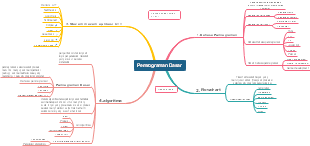
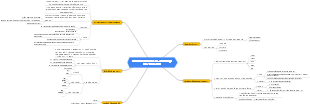
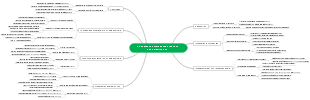
A mind map of university botany organization-related knowledge, which refers to a structural and functional unit composed of one or several types of cells that have the same origin, similar morphological structure, and perform specific physiological functions. Hope it helps you~~
Edited at 2023-10-30 19:51:35This is a mind map about bacteria, and its main contents include: overview, morphology, types, structure, reproduction, distribution, application, and expansion. The summary is comprehensive and meticulous, suitable as review materials.
This is a mind map about plant asexual reproduction, and its main contents include: concept, spore reproduction, vegetative reproduction, tissue culture, and buds. The summary is comprehensive and meticulous, suitable as review materials.
This is a mind map about the reproductive development of animals, and its main contents include: insects, frogs, birds, sexual reproduction, and asexual reproduction. The summary is comprehensive and meticulous, suitable as review materials.
This is a mind map about bacteria, and its main contents include: overview, morphology, types, structure, reproduction, distribution, application, and expansion. The summary is comprehensive and meticulous, suitable as review materials.
This is a mind map about plant asexual reproduction, and its main contents include: concept, spore reproduction, vegetative reproduction, tissue culture, and buds. The summary is comprehensive and meticulous, suitable as review materials.
This is a mind map about the reproductive development of animals, and its main contents include: insects, frogs, birds, sexual reproduction, and asexual reproduction. The summary is comprehensive and meticulous, suitable as review materials.
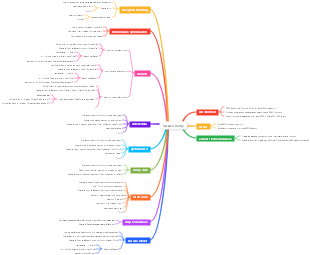
plant tissue
Concept: a structural and functional unit composed of one or several types of cells with the same origin, similar morphological structure, and performing specific physiological functions.
permanent organization
meristem
Concept: A group of cells located in a specific site that can divide continuously or periodically
Characteristics: strong metabolism, tight arrangement, thin cell walls, large nuclei, and dense cytoplasm
Classification
parts
apical meristem
lateral meristem
vascular cambium
cork cambium
cork layer
inner layer of plug
intermediary meristem
Function: Causes intermediate growth
Source and nature
primary meristem
Source: embryonic cells of embryo
primary meristem
original epidermis
procambium
basic meristem
secondary meristem
Source: Parenchyma cell dedifferentiation
typical
cork cambium
interfascicular cambium
mature organization
conservation organization
Function: Protection, prevent excessive transpiration of water, control gas exchange between plants and the environment, prevent mechanical damage and invasion by other organisms
epidermis
Composition: epidermal cells, guard cells and accessory cells, epidermal trichomes, glandular trichomes
Zhoupi
basic organization
Alias: parenchyma, nutrient tissue
Features: The cell wall is thin, composed of primary walls, with large gaps
Classification
absorbing tissue
Located in the root hair zone, including epidermal cells and root hairs
Function: absorb moisture and inorganic salts
assimilation organization
Features: Contains a large amount of chloroplasts, capable of photosynthesis, also known as green tissue. The cells are obviously vacuolated, forming developed gaps.
storage tissue
Function: Store nutrients, such as starch, sugar, protein and oil, tannin, calcium oxalate, etc.
Specialized into water storage tissue to enable plants to adapt to growth in arid environments
ventilatory tissue
Form a network of air cavities and airways
Accumulating large amounts of air facilitates respiration and gas exchange of cells in organs
transmitter cells
Features: Cell wall inner processes grow, forming many irregular protrusions, significantly expanding the surface area of the plasma membrane
Conducive to the absorption and transfer of substances by cells, and plays a role in short-distance transportation
mechanical organization
Strengthening and mechanical support
Classification
chlamydia
Characteristics: The cell wall is unevenly thickened and is of primary wall nature. It contains protoplasts and chloroplasts, has the potential to divide, and can participate in the formation of cork cambium.
sclerenchyma
It has a uniformly thickened secondary wall and is often lignified. It has no protoplasts after maturity and is a dead cell.
fiber
Bast fiber, wood fiber
stone cells
conducting tissue
Tubular structures for long-distance transportation
catheter
conduit molecules
The end wall dissolves to form perforations. The end wall with perforations is called a perforated plate.
single hole
Repreforation
Classification
Ring pattern, thread, ladder pattern, mesh pattern, hole pattern
Tracheid
The secondary wall thickens and becomes lignified, and the protoplasts disappear to form dead cells.
Sieve tubes and companion cells
Sieve tube
companion cell
Sieve cells
secretory structure
exocrine structure
Glandular trichomes, glandular scales, nectaries, salt glands, glandular epidermis, drains
endocrine structure
Secretory cells, secretory chambers or ducts, and milk ducts
Other supplements
Simple organization and compound organization
vascular tissue
vascular bundle
Can it be expanded
limited vascular bundle
Infinite vascular bundle
The relative position and arrangement of xylem and phloem
External toughness, double toughness, peripheral toughness, peripheral wood, radiating vascular bundle
Intruder: protruding into the conduit wall and growing, anti-corrosion, reinforcement, and water-resistant
There are chloroplasts, uneven thickening, and the Poaceae are dumbbell-shaped, forming stomata.