MindMap Gallery amine
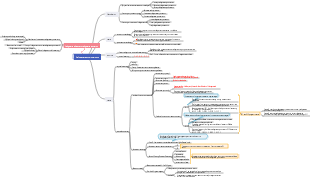
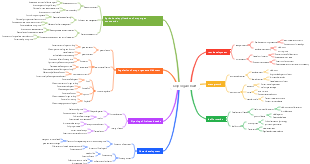
Important part of nitrogen-containing compounds in organic chemistry, the difference between amines and alcohols: Alcohols are determined by the number of carbon atoms attached to the hydroxyl group Amines are determined by the number of carbon atoms attached to the ammonia Tert-butanol is a tertiary alcohol, and tert-butylamine is a primary amine.
Edited at 2023-07-28 20:56:14This is a mind map about bacteria, and its main contents include: overview, morphology, types, structure, reproduction, distribution, application, and expansion. The summary is comprehensive and meticulous, suitable as review materials.

This is a mind map about plant asexual reproduction, and its main contents include: concept, spore reproduction, vegetative reproduction, tissue culture, and buds. The summary is comprehensive and meticulous, suitable as review materials.
This is a mind map about the reproductive development of animals, and its main contents include: insects, frogs, birds, sexual reproduction, and asexual reproduction. The summary is comprehensive and meticulous, suitable as review materials.
This is a mind map about bacteria, and its main contents include: overview, morphology, types, structure, reproduction, distribution, application, and expansion. The summary is comprehensive and meticulous, suitable as review materials.
This is a mind map about plant asexual reproduction, and its main contents include: concept, spore reproduction, vegetative reproduction, tissue culture, and buds. The summary is comprehensive and meticulous, suitable as review materials.
This is a mind map about the reproductive development of animals, and its main contents include: insects, frogs, birds, sexual reproduction, and asexual reproduction. The summary is comprehensive and meticulous, suitable as review materials.
amine
name
Classification of the number of substituted hydrogens in ammonia
One is replaced: primary amine
Two substituted: secondary amines
Three are substituted: tertiary amine
Depending on the type of hydroxyl group attached to the nitrogen
Fatty amines
Aromatic amines
The difference between amines and alcohols
Alcohols are determined by the number of carbon atoms attached to the hydroxyl group
Amines are determined by the number of carbon atoms attached to the ammonia
Tert-butanol is a tertiary alcohol, and tert-butylamine is a primary amine.
Ammonia, amine, ammonium (different pronunciations)
Indicates basic ammonia
Derivatives of ammonia NH3 are represented by amines
Quaternary ammonium ammonium
Quaternary ammonium base R4N OH-
Quaternary ammonium salt R4N Cl-
For aromatic secondary or tertiary amines, add "N" before the group to indicate that the group is attached to the nitrogen.
chemical properties
alkaline
Primary amine: The alkyl group donates electrons, and the electron cloud density on the nitrogen atom increases. The primary amine easily accepts protons and is basic.
Factors affecting the alkalinity of various amines in aqueous solutions
Hydrocarbyl
Electron donating group, enhance alkalinity
Steric
The greater the steric hindrance, the less favorable the binding of hydrogen ions, and the weaker the alkalinity.
Oxidation
Aromatic amines are easily oxidized in the air and appear yellow to red to black.
Alkylation
1. The reaction between alkyl halide R-X and ammonia NH3 produces primary ammonium R-NH2
2. Primary amines can continue to react with alkyl halides to form secondary amines R2-NH.
3. Secondary amine reacts with alkyl halide to form tertiary amine R3-N
4. Tertiary amines react with alkyl halides to form quaternary ammonium salts
extension
Hoffmann elimination reaction
Heating reaction of quaternary ammonium base with KI and AgO
Eliminate hydrogen from hydrogen-rich β-C atoms
The main products are alkenes with fewer substituents on the double-bonded carbon, which is the opposite of the elimination of halogenated hydrocarbons.
acylation reaction
Ammonia acts as a nucleophile and attacks the carbonyl group
It can be seen that the hydrogen on the nitrogen atom in the ammonium atom is replaced by an acyl group
Used to protect amino groups
xanthoylation
Hinsberg reaction
The hydrogen on the nitrogen atom of a primary or secondary amine can be replaced by a sulfonyl group to form a sulfonamide
Conditions: benzenesulfonyl chloride or p-toluenesulfonyl chloride; carried out in sodium hydroxide or potassium hydroxide solution
Used to separate primary, secondary and tertiary amines
Primary amine products are soluble in alkaline solution
Secondary amine generates sulfonamide and precipitates as solid
Tertiary amines do not react with benzenesulfonyl chloride
Reacts with nitrous acid
Primary amines
Fatty amines
Release nitrogen
Aromatic amines
Stable heavy ammonia salt is generated at low temperature 0-4℃; nitrogen is released when heated
Secondary amine
Fatty amines
Yellow oily liquid
Aromatic amines
yellow solid
Tertiary amine
Fatty amines
No reaction
Aromatic amines
Green solid (there must be a strong reactive group on the benzene ring)
Aromatic amine - electrophilic substitution on aromatic ring
Halogenated
Obtain 2,4,6-trihaloaniline
Converting aniline into acetanilide can reduce the activation of the amino group, perform halogenation to obtain a substituent, and hydrolyze to remove the acyl group.
Nitrification
Diazonium salt preparation and coupling
Diazonium salt preparation
Heavy ammonia salt can be obtained by reacting aniline with nitric acid or hydrochloric acid
The diazo group can be replaced by hydroxyl, halogen, cyano, or hydrogen atoms, releasing nitrogen and introducing other groups to the benzene ring.
coupling reaction
Electrophilic substitution reaction on aromatic ring
The diazo group is a weak electrophile, and there must be a strong electron-donating group on the aromatic ring of the compound for coupling reaction.
The coupling reaction preferentially occurs in the para position of the electron donating group. If the para position is occupied, it occurs in the ortho position.
No coupling occurs at the meta position
Azo group is a color-producing group (luminescent, can be used as a dye)
Urea
Biuret reaction occurs
Substances containing two or more amide bonds can occur
Biuret and alkaline copper sulfate solution - purple-red reaction