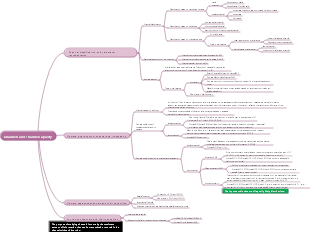
MindMap Gallery Access network interfaces and protocols
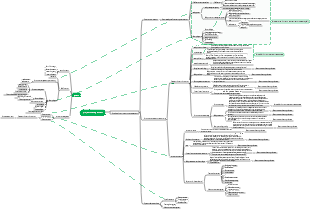
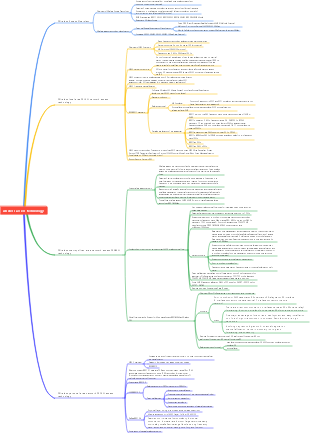
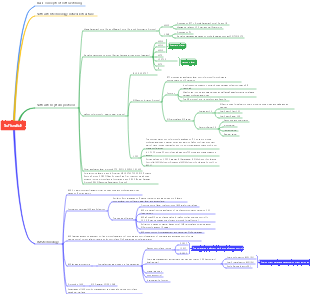
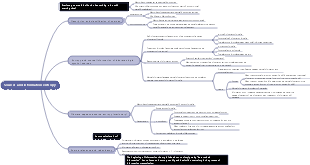
A mind map of access network interfaces and protocols. The types of interfaces include service node interface SNI, user network interface UNI, and maintenance management interface Q3. I hope this mind map will be helpful to you.
Edited at 2023-10-13 13:35:22This is a mind map about bacteria, and its main contents include: overview, morphology, types, structure, reproduction, distribution, application, and expansion. The summary is comprehensive and meticulous, suitable as review materials.

This is a mind map about plant asexual reproduction, and its main contents include: concept, spore reproduction, vegetative reproduction, tissue culture, and buds. The summary is comprehensive and meticulous, suitable as review materials.
This is a mind map about the reproductive development of animals, and its main contents include: insects, frogs, birds, sexual reproduction, and asexual reproduction. The summary is comprehensive and meticulous, suitable as review materials.
This is a mind map about bacteria, and its main contents include: overview, morphology, types, structure, reproduction, distribution, application, and expansion. The summary is comprehensive and meticulous, suitable as review materials.
This is a mind map about plant asexual reproduction, and its main contents include: concept, spore reproduction, vegetative reproduction, tissue culture, and buds. The summary is comprehensive and meticulous, suitable as review materials.
This is a mind map about the reproductive development of animals, and its main contents include: insects, frogs, birds, sexual reproduction, and asexual reproduction. The summary is comprehensive and meticulous, suitable as review materials.
Access network interfaces and protocols
Access network interface type
Interface type
Service node interface SNI
Single access SNI: analog Z interface; digital V interface where V1, 3, and 4 are only used for N-ISDN
Integrated and accessed SNI: V5 supports standardized interfaces for integrated access; VB5 supports integrated broadband access based on ATM
User network interface UNI
Digital user network interface U interface, analog telephone Z interface, ISDN basic rate interface, ISDN base group rate interface, E1 interface, Ethernet interface, ATM interface
Maintenance management interface Q3
Interface introduction
Z interface
Interface between switches and analog subscriber lines, carrying voice, voiceband data and multi-frequency signals
Function
U interface
Located between ISDN network terminal NT and switch line terminal LT
After the introduction of AN, the interface between AN and network terminal NT1
Digital V interface
V1: ISDN Basic Rate Interface (2B D)
V3: ISDN base rate interface (30B D)
V4: Provides access to multiple ISDNs (2B D)
V2: PCM frame structure provides connection between remote user equipment and the home office
V5: ISDN, PSTN comprehensive access
Telecom management network interface
Telecommunications management network concept: The purpose of proposing the TMN architecture is to support the planning, configuration, installation, operation and organization of telecommunications networks and telecommunications services.
Telecom management network business
Telecom management network functions: performance management, configuration management, accounting management, fault management, security management
TMN logical layered architecture LLA: transaction management layer, business management layer, network management layer, network element management layer
Telecom management network function module
Operating System Functions OSF
Network element function NEF
Mediation function MF
Data Communication Function DCF
Workstation function module WSF
V5 interface
V5 interface overview
The origin and function of V5 interface
produce
Function: Make access network configuration flexible and service provision fast and convenient; reduce costs; enhance network management capabilities and improve service quality
V5 interface definition
G.964 recommendation for V5.1 interface; G.965 recommendation for V5.2 interface
SNI between LE (local exchange) and AN
V5 interface diagram: LE--V5--AN--user terminal
V5 interface access model
V5.1 interface: a 2.048Mbps link; fixed time slot allocation; no line aggregation function for AN; used for small-scale AN connections
V5.2 interface: can support up to 16 2.048bps links; dynamically allocate time slots; has line aggregation function; has protection function (only protects c channel); used for large-scale AN connection
The relationship between V5.1 and V5.2: v5.1 is regarded as a subset of v5.2, and v5.1 can be upgraded to v5.2
Comparison between V5.1 and V5.2
Services supported by V5 interface
Services supported by both V5.1 and V5.2: single PTSN user access, PABX access; ISDN basic rate access; permanent line PL service; semi-permanent leased line service
Services not supported by V5.1 but supported by V5.2: ISDN base rate access
Functions of V5 interface
Bearing channel: My understanding is to transmit business signals
ISDN D path signaling
PSTN signaling information
timing
general control information
2048kbps link control
Bearer Channel Control BCC protocol
protection agreement
V5 interface path
Interface number: used to distinguish different interfaces
Physical c channel: a 64kb time slot channel used to transmit the v5 protocol, generally assigned to TS16 TS15 TS31 of the v5 link
Logical c path: refers to one or more combinations of different types of c paths
Active c-path: A physical c-path that is currently carrying a logical c-path
Alternate c-path: Opposite of active
Primary link: A 2048kbps link in the multi-link v5.2 interface; all functions must be implemented
Secondary link: A 2048kbps link in a multi-link v5.2 interface, a backup link; only runs one of many functions - the protection protocol
Ordinary link: transmits business signals
V5 interface protocol structure
V5 interface physical layer
V5 interface layer 2
The second layer is for C channel only, and the protocol used is called LAPV5
Encapsulation function sublayer LAPV5-EF: used to encapsulate information between AN and LE to achieve transparent transmission
Data link sublayer LAPV5-DL: defines the information exchange method between AN and LE peer entities
Frame Relay sublayer AN-FR: supports ISDN D channel information
V5 interface layer 3
Function: protocol processing
control protocol
PSTN signaling protocol
Bearer Channel Control BCC protocol
protection agreement
link control protocol
VB5 interface
It is a standardized interface for ATM services. It uses ATM-based cell methods to transmit information and achieve access to corresponding services.
The VB5 interface is divided into two types: VB5.1 and VB5.2. It supports B-ISDN and non-B-ISDN user access, supports V5 interface access, and supports LAN interconnection function access, etc.