 Wondershare EdrawMind
MindMap Gallery THE SERVICE DELIVERY PROCESS
- 18
THE SERVICE DELIVERY PROCESS
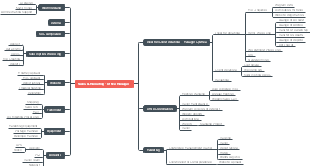
The service delivery process mind map delves into the artistry of blueprint design, including the importance of customer orientation and continuous improvement, as well as the practical steps of implementation. The operational competitiveness stages describe the process from market research to brand building, as well as strategies adopted at different stages, such as channel expansion and customer relationship management.
Edited at 2022-10-31 04:43:55
- CHAPTER 13-15
This mind map clearly illustrates the content of chapters 13-15, including personal selling, advertising, and social media, etc. In the personal selling section, it explains how to improve sales performance through personal selling skills; in the advertising section, it discusses how to develop effective advertising strategies; in the social media section, it details how to use social media for marketing promotion.
- THE SERVICE DELIVERY PROCESS
The service delivery process mind map delves into the artistry of blueprint design, including the importance of customer orientation and continuous improvement, as well as the practical steps of implementation. The operational competitiveness stages describe the process from market research to brand building, as well as strategies adopted at different stages, such as channel expansion and customer relationship management.
THE SERVICE DELIVERY PROCESS
- CHAPTER 13-15
This mind map clearly illustrates the content of chapters 13-15, including personal selling, advertising, and social media, etc. In the personal selling section, it explains how to improve sales performance through personal selling skills; in the advertising section, it discusses how to develop effective advertising strategies; in the social media section, it details how to use social media for marketing promotion.
- THE SERVICE DELIVERY PROCESS
The service delivery process mind map delves into the artistry of blueprint design, including the importance of customer orientation and continuous improvement, as well as the practical steps of implementation. The operational competitiveness stages describe the process from market research to brand building, as well as strategies adopted at different stages, such as channel expansion and customer relationship management.
- Recommended to you
- Outline



CHAPTER 5: THE SERVICE DELIVERY PROCESS
5-1 Introduction
Many service customers find themselves as inte-gral components of most service production processes
The customer’s participation in the process may be:
active
e.g., exercising at the local health club to become more physi-cally fit
passive
e.g., patrons viewing a theatrical production
Given the customer’s physical presence during the service encounter, it is clear that if the process within the service fac-tory (e.g., health club, theatre, restaurant) changes, consumer scripts that guide behavior will have to change as well
5-2 Stages of Operational Competitiveness
Service firms seeking to construct a service process to improve operational effective-ness can choose from a large range of operational options
The manner in which “operational competitiveness” is embraced by various service firms can be described by four stages:
Stage 1: Available for Service
Operations for a firm are viewed as a necessary evil
They are at best reactive to the needs of the rest of the organization and deliver the service as specified
The operations department mainly tries to avoid mistakes
A basic example
A person who sells local concert tickets online via their own website. Customers place orders, and the business simply ful-fills the customer orders as they are received
In this case, operations are reactive to cus-tomer requests, the major goal is to send the correct ticket to the correct person, and the complexity of the operation is kept to a minimum
Stage 2: Journeyman
The service firm may find that it is no longer enough just to have a basic operation that works
The firm must now seek feedback from its customers on the relative costs and perceived qualities of the service to seek improvements in the service delivery process
This stage is characterized by the introduction of technologically based systems for the primary purpose of cost savings
For example, the introduction of self checkout systems at grocery stores assists in reducing labor costs
Within the Journeyman stage of operational competitiveness, the emphasis shifts from controlling workers to managing processes
Stage 3: Distinctive Competence Achieved
Operations have reached a point where they continually excel, reinforced by the personnel management function and systems that support the customer focus
By this time, the firm has mastered the core service and understands the complexity of changing current operations
Technology is no longer seen as a source of cost efficiencies alone, but also as a way of enhancing the effectiveness of service to customers
Stage 3 of operational competitiveness encourages frontline management to listen to customers and become coaches and facilitators to frontline workers
Stage 4: World-Class Service Delivery
To sustain this level of performance, operations not only have to continually excel, but also have to become fast learners and adapt to competitive offerings and customers’ ever evolving needs
Technology is seen as a way to “break the mold”—to do things competitors cannot easily duplicate
For example, Amazon tracks consumer purchases and makes recommendations to its customers based on the purchase patterns of other buyers
When offering “world-class service delivery,” the workforce itself must be a source of innovators, not just robots following a standardized process
To achieve this, the frontline supervisors must go beyond coaching to mentoring
As mentors, they need to be ac-countable for the personal development of the workforce so that employees can develop the skills necessary for the service firm to evolve
Overall, as service firms transition through the four stages of operational competitive-ness, the transformation from “Available for Service” to “World-Class Service Delivery” highlights the fact that operations management problems in services are best solved through the joint efforts of marketing and operations personnel
5-3 Marketing and Operations: Balance is Critical
One way of viewing the relationship between marketing and operations in a service firm is to think of it as marrying the consumers’ needs with the technology and manufacturing capabilities of the firm
A successful union between operations and marketing will obviously involve compromises, since the consumers’ needs can seldom be met completely and economically
In a service firm, establishing a balance between marketing and operations is critical!
Significant aspects of the service operation are the product that creates the experience that delivers the bundle of benefits to the consumer
The physical environment and interactions with staff throughout the experience also greatly influence consumer perceptions of the quality of service delivered
Therefore, a successful compromise between operations effi-ciency and marketing effectiveness is much more difficult to achieve
The service experience is created by the firm’s operating system interacting with the customer
To be an effective services marketer, a knowledge of consumer behavior is not enough to produce economically successful products
Successful managers also need a keen understanding of operations and human resource concepts and strategies
It is possible for goods producers to separate the problems of manufacturing and marketing by the use of inventory
Marketing and operations are in a tug-of-war that should be resolved by compromise.
In the service sector, the possible areas of conflict or compromise are much broader because the operation itself is the service product
In the drive for competitive advantage in the marketplace, marketing goals and objectives may produce less operational efficiency
As the amount of customer contact increases, the likelihood that the service firm will op-erate efficiently decreases. In the end, service customers ultimately determine:
Type of demand
Cycle of demand
Length of the service experience
5-4 In a Perfect World, Service Firms Would Be Efficient
From an operations manager’s perspective, establishing processes that operate a service firm at peak efficiency would be the ideal situation
5-4a Thompson’s Perfect-World Model
Long ago Thompson introduced the idea of a technical core—the place within the organization where the pri-mary operations functions are conducted
In the service sector, the technical core consists of kitchens in restaurants, service bays in auto dealerships, and surgical rooms in a hospital
Thompson proposed in his perfect-world model that in order to operate efficiently, a firm must be able to operate “as if the market will absorb the single kind of product at a continuous rate and as if the inputs flowed continuously at a steady rate and with specified quality.”
In the ideal situation, the technical core can operate without uncertainty on both the input and output sides, thereby creating many advantages for management
The absence of uncertainty means that decisions within the core can become pro-grammed and that individual employee decision making can be replaced by rules
All in all, a system without uncertainty is easy to control and manage
Performance can be measured using objective standards
And since the system is not subject to distur-bances from the outside, the causes of any operations-related problems are also easy to diagnose
5-4b The Focused Factory Concept
Alternative model that more realistically reflect the true nature of goods and service businesses
The focused factory focuses on a particular job in a particular location; once this focus is achieved, the factory does a better job because repetition and concentration in one area allow the workforce and managers to become effective and experienced in the task required for success
For example
Consider a dry cleaning operation that collects soiled clothing at many small satellite sites conveniently located near customer homes and places of work
The satellite sites collect and distribute clothing and focus on the effectiveness of the operation; however, a separate focused factory is used to actually dry clean the clothes
This separate facility is insulated from customer contact on the input and output sides and can therefore focus on efficiency
The focused factory can meet the demands of the market better whether the demand is low cost through efficiency, high quality, or any other criterion
5-4c The Plant-Within-a-Plant Concept
The idea of a focused factory can be extended in another direction by introducing the plant-within-a-plant (PWP) concept
The strategy of breaking up large, unfocused plants into smaller units buffered from one another so that each can be focused separately
In goods manufacturing, the concept of buffering is a powerful one
Surrounding the technical core with input and output components to buffer environmental influences
A PWP can thus be operated in a manner close to Thompson’s perfect-world model if buffer inventories are created on the input and output sides.
On the input side, the components needed in a plant can be inventoried and their quality controlled before they are needed; in this way, it can appear to the PWP that the quality and flow of the inputs into the system are constant
In a similar way, the PWP can be separated from downstream plants or from the market by creating finished goods inven-tories
Automobile manufacturers are good examples
The alternatives proposed by Thompson to buffering are:
smoothing
Managing the environment to reduce fluctuations in supply and/or demand
anticipating
Mitigating the worst effects of supply and demand fluctuations by planning for them
rationing
Direct allocations of inputs and outputs when the demands placed on a system by the environment exceed the system’s ability to handle them
5-5 Applying Efficiency Models to Service Firms
The application of operations concepts to services is a bumpy road
5-5a Operations Solutions for Service Firms
Within the operations management and marketing literatures of the past decade, a growing list of strategies has emerged about overcoming some of the problems of service operations.
These strategies can be classified into five broad areas:
1. Isolating the technical core
Isolating the technical core proposes the clear separation of the servuction system (the part of the service operation where the customer is present), which is characterized by a high degree of customer contact, from the technical core
Once separation is achieved, let’s adopt the focused factor or plant-within-a-plant concept and divide the service firm into two distinct areas—high customer contact, and no/low customer contact—and operate each area differently
In high customer contact areas, management should focus on optimizing the experience for the consumer
Conversely, once the technical core (no/low contact area) has been isolated, it should be subjected to traditional production-lining approaches
Isolating the technical core argues for minimizing the amount of customer contact decoupling Disassociating the technical core from the servuction system. with the system. “Clients ... pose problems for organizations ... by disrupting their routines, ignoring their offers for service, failing to comply with their procedures, making exaggerated demands and so forth.”
Examples of decoupling the technical core from high-contact areas include
suggestions from operations experts such as handling only exceptions on a face-to-face basis, with routine transactions as much as possible being handled by telephone or, even better, by mail or email
2. Production-lining the whole system
The application of hard and soft technologies to a service operation in order to produce a standardized service product
Hard technologies involve hardware to facilitate the production of a standardized product
Similarly, soft technologies refer to rules, regulations, and procedures that should be followed to produce the same result
This kind of approach to increasing operational efficiency is becoming more common, and, indeed, ATMs, airport check-in kiosks, automated phone cues, and fast food firms provide classic examples in which customization is minimal, volume is large, and cus-tomer participation in the process is high
Generating any kind of operational efficiency in such high-contact systems implies a limited product line
3. Creating flexible capacity
The third method to effectively manage service opera-tions is used to minimize the effects of variable demand by creating flexible capacity (supply)
For example,
Consider how Verizon has increased the capacity for the UMass Memorial Healthcare system through the implementation of their SONET Services.
SONET Services provides the hospital with the ability to communicate with physicians and healthcare professionals without being in the same place at the same time
However, even in this area, strategies that start as common-sense operational solutions have far-reaching marketing implications as these new initiatives come face-to-face with the service firm’s customer base
For example, a few of the strategies to create flexible capacity mentioned in Chapter 3 included
(1) using part-time employees
(2) cross-training employees so that the majority of employee efforts focus on customer-contact jobs during peak hours
(3) sharing capacity with other firms
Although these strategies are fairly straightforward from an operational point of view, consider their marketing implications
part-time employees may deliver a lower-quality service than full-time workers; their dedication to quality may be less, as their training will probably be
focusing on customer contact jobs during peak demand presupposes that it is possible to identify the key part of the service from the customer’s point of view
the dangers of sharing capacity with other providers are numerous
4. Increasing customer participation
The essence of increasing customer participation is to replace the work done by the employees of the firm with work done by the customer
This approach primarily focuses on reducing the costs associated with providing the service to the customer
This strategy, too, has its trade-offs.
Increasing consumer participation in the service encounter requires a substantial modifi-cation of the consumer’s script
For example, the automatic teller machine (ATM) is seen by many operations personnel as a way of saving labor
5. Moving the time of demand
Finally, yet another strategy used to optimize the efficiency of service operations is the attempt to shift the time of demand to smooth the peaks and valleys associated with many services
the classic example of this problem
the mass transit system that needs to create capacity to deal with the rush hour and, as a consequence, has much of its fleet and labor idle during non-rush hours.
Smoothing demand is a useful strategy from an operations point of view; however, this strategy fails to recognize the change in consumer behavior needed to make the strategy effective
5-7 Blueprinting and New-Product Development: The Roles of Complexity and Divergence
Blueprints may also be used in new-product development
Once the process has been documented and a blueprint has been drawn, choices can be made that will produce “new” products.
New-product development within service firms can be implemented through the introduction of complexity and divergence.
Complexity is a measure of the number and intricacy of the steps and sequences that constitute the process—the more steps, the more complex the process
Divergence is defined as the degrees of freedom service per-sonnel are allowed when providing the service
In developing products in the service sector, the amount of manipulation of the operation’s complexity and divergence are the two key choices
Reducing divergence creates the uniformity that can reduce costs, but it does so at the expense of creativity and flexibility in the system
volume-oriented positioning strategy
A positioning strategy that reduces divergence to create product uniformity and reduce costs
For example, a builder of swimming pools who focuses on the installation of prefabricated vinyl pools has greatly reduced the divergence of his operations
niche positioning strategy
A positioning strategy that increases divergence in an operation to tailor the service experience to each customer
For example, our pool builder may increase the divergence of his operation by specializing in the design and construction of custom-ized pools and spas that can be built to resemble anything from a classical guitar to an ex-clamation point!
specialization positioning strategy
A positioning strategy that reduces complexity by unbundling the different services offered
Hence, our hypothetical pool builder may restrict himself to the installation of a single type of prefabricated pool and divest opera-tions that were focused on supplemental services, such as pool maintenance and repair as well as the design of pools and spas
The advantages associated with reduced complexity include improved control over the final product and improved distribution
penetration strategy
A positioning strategy that increases complexity by adding more services and/or enhancing current services to capture more of a market
Within this scenario, our pool builder would offer customized pools and spas and a wide variety of prefabricated vinyl pools
5-6 The Art of Blueprinting
One of the most common techniques used to analyze and manage complex production processes in pursuit of operational efficiency is flowcharting
Flowcharts identify:
Directions in which processes flow
Time it takes to move from one process to the next
Costs involved with each process step
Amount of inventory buildup at each step
Bottlenecks in the system
The flowcharting of a service operation, commonly referred to as blueprinting,is a useful tool not only for the operations manager but for the marketing manager as well
Because services are delivered by an interactive process involving the consumer, the marketing manager in a service firm needs to have a detailed knowledge of the operation
Blue-prints enable the marketing manager to understand which parts in the operating system are visible to the consumer and hence part of the servuction system—the fundamental building blocks of consumer perceptions
The heart of the service product is the experience that delivers the bundle of benefits to the customer
This “experience” can occur in a building or in an environment created by the service firm, such as the complex environments created at Disney World, Epcot Center, and Universal Studios
In other instances, such as lawn care, the service interac-tion takes place in a natural setting
The interactive process that is visible to consumers develops their perceptions of real-ity and defines the final service product
5-6a An Example of a Simple Blueprint
In this example, It represents the blueprint of a cafeteria-style restaurant and specifies the steps involved in getting a meal
each process activity is represented by a box. In contrast to a goods manufacturer, the “raw materials” flowing through the process are the customers
To calculate the service cost per meal, or the labor costs associated with providing the meal on a per-meal basis, the following calculations are made:
First, the process time is calculated by dividing the activity time (the time required to perform the activity) by the number of stations, or locations performing the activity
In our example, the process and activity times are the same because only one station is avail-able for each activity.
Second, the maximum output per hour for each location is calculated based on the process time.
Simply stated, the maximum output per hour is the number of people that can be served at each station in an hour’s time
For example, the process time at the salad counter is 30 seconds. This means that two people can be processed in a minute, or 120 people (two people 60 minutes) in an hour
Finally, to calculate the service cost per meal, total labor costs per hour of the entire system are divided by the maximum output per hour for the system (service cost per meal 1⁄4 total labor costs/maximum output per hour)
In our example, total labor cost per hour equals $50.00 ($8 + $8 + $8 + $8 + $8 + $10)
5-6b The Service Operations Manager’s Perspective
The first thing the blueprint does is provide a check on the logical flow of the whole process
At this point, we shall place a constraint on our example system that the cashier’s station is fixed and cannot be moved to another point in the process.
Once the different steps have been identified, it is relatively easy to identify the potential bottlenecks in the system
Bottlenecks represent points in the system where consumers wait the longest periods of time
the hot-food counter in the previous example is an obvious bottleneck since it represents the longest process time—the time to process one person through that stage
To solve this particular bottleneck problem, we could consider adding one extra sta-tion, in this case an extra counter, to the hot-food stage
The creative use of additional counters and staff may produce a model which combines certain activities and uses multiple stations
5-6c The Service Marketing Manager’s Perspective
A marketing manager dealing with the process has some of the same problems as the operations manager
The process as defined is designed to operate at certain production levels, and these are the service standards that customers should perceive
But if the process is capable of processing only 60 customers per hour, there may be a problem
The marketing manager should immediately recognize the benefits of changing the system to process customers more effectively
However, the blueprint also shows the change in consumer behavior that would be required in order for the new system to operate
The use of the blueprinting approach allows the marketing and operations personnel to analyze in detail the process that they are jointly trying to create and manage
It can easily highlight the types of conflicts between operations and marketing managers and provide a common framework for their discussion and a basis for the resolution of their problems
5-6d Using Service Blueprints to Identify the Servuction Process
Blueprints may also be used to identify the points of contact between the service firm and the customer
In assessing the quality of service received, according to the servuction model, the customer refers to the points of contact when developing perceptions about the value of service quality received
To illustrate, consider the customers to be proactive rather than reactive
Consider them as worried individuals looking for clues that they have made the right decision rather than as inanimate raw materials to which things are done
The points of contact are the clues that develop the servuction process
If the service is to be offered in a competitive marketplace, it may be necessary to set standards higher than those of services currently available
Once the standards have been set, however, the probability of achieving them must be assessed
Potential fail points, “F.” can also be highlighted
Fail points have three characteristics:
1. The potential for operations malfunction is high
2. The result of the malfunction is visible to consumers.
3. A system malfunction is regarded by consumers as particularly significant.
5-6e A Marketing or an Operations Blueprint?
Although the idea of a blueprint is attractive to both marketing and operations, it may well be that a marketing blueprint should be prepared in a different way
The blueprints we have discussed so far have an internal focus—although they identify clearly the tangi-ble points of contact with the client, they start from the organization and look outward
An alternative way to develop a blueprint would be to start from consumer scripts
Consumers, individually or in groups, would be asked to describe the process or steps they follow in using a service
The process as described by the consumer may differ greatly from that perceived by the firm
5-6f Constructing the Service Blueprint
The first step in the design of a service blueprint is to elicit scripts from both employees and consumers.
The primary objective of this task is to break down the service system into a sequence of events followed by both parties.
employee scripts are equally important in identifying those parts of the service system not observable to the consumer
Convergent scripts
those that are mutually agreeable, enhance the probability of customer satisfaction and the quality of the relationship between the customer and the service operation
Divergent scripts
point to areas that need to be examined and corrected because consumer and/or employee expectations are not being met and evaluations of service quality could decline
Obtaining consumer and employee scripts is a potentially powerful technique for analyzing the service encounter
Overall, scripts provide the basis for:
Planning service encounters
Setting goals and objectives
Developing behavioral routines that maximize the opportunities for a successful exchange
Evaluating the effectiveness of current service delivery systems
The procedure used to develop two-sided blueprints is to present employees and customers with a script-relevant situation, such as the steps taken to proceed through an air-line boarding experience
employees and consumers are asked to pay special attention to those contact activities that elicit strong positive or nega-tive reactions during the service encounter
Script norms are then constructed by group-ing together commonly mentioned events and ordering the events in their sequence of occurrence
To facilitate the process of identifying script norms, the blueprint designer can com-pare the frequency of specific events mentioned by each of the groups
The second step of the blueprint development process is to identify steps in the process at which the system can go awry
After the sequence of events/activities and potential fail points have been identified, the third step in the process involves specifying the time frame of service execution
The resulting blueprint allows the plan-ner to determine the profitability of the existing service delivery system as well as to spec-ulate on the effects on profitability when changing one or more system components.