MindMap Gallery Stress
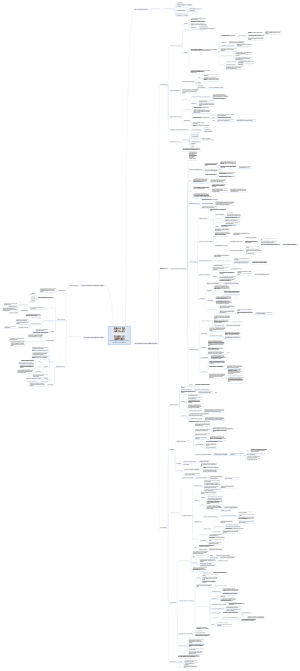
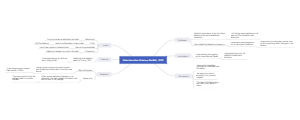
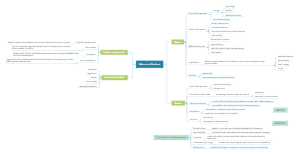
Stress is an inevitable part of life, which can be both a physical force and a psychological burden. Factors such as life, work, and health can all bring stress. Dealing with stress reasonably, maintaining a positive attitude, and alleviating stress through exercise, rest, socializing, and other means are crucial for physical and mental health. This is a mind map about Stress. The map is divided into three main branches, namely: Sources, Measures, and Managing. Each main branch has a detailed description of its sub branches. Suitable for people interested in Stress.
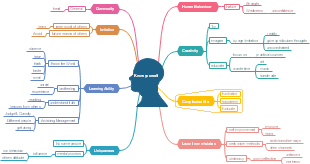
Edited at 2024-05-02 13:06:31This mind map thoroughly analyzes key concepts such as Kim K., social dilemmas, and related theories. The Kim K. section explores her influence in social media and business; the social dilemma part discusses psychological and moral challenges people face in social settings; the theories section covers psychological and sociological theories explaining these phenomena. Such analysis helps understand complex interactions between contemporary society and media.

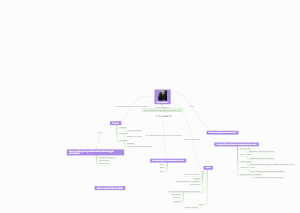
This mind map comprehensively introduces the theories and contributions of Henry Jenkins, David Gauntlett, Albert Bandura, and Clay Shirky. Each scholar's section describes in detail their research fields, main achievements, and how these results have impacted modern media and cultural theories. Understanding these scholars' ideas helps grasp contemporary trends in media communication and social interaction.
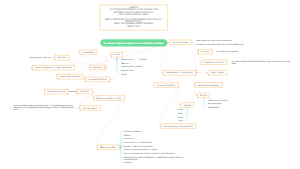
This mind map clearly presents a comprehensive analysis of measuring, managing, types, and theories of pain. Initially, it explains various methods and tools for measuring pain, including both quantitative and qualitative assessments. Next, it details diverse strategies for pain management, such as pharmacological, physical therapy, and psychological interventions. Lastly, the map also covers types and theoretical foundations of pain, like the differences between acute and chronic pain, and the physiological mechanisms of pain transmission. This information is crucial for healthcare professionals to understand and optimize pain treatment.
This mind map thoroughly analyzes key concepts such as Kim K., social dilemmas, and related theories. The Kim K. section explores her influence in social media and business; the social dilemma part discusses psychological and moral challenges people face in social settings; the theories section covers psychological and sociological theories explaining these phenomena. Such analysis helps understand complex interactions between contemporary society and media.
This mind map comprehensively introduces the theories and contributions of Henry Jenkins, David Gauntlett, Albert Bandura, and Clay Shirky. Each scholar's section describes in detail their research fields, main achievements, and how these results have impacted modern media and cultural theories. Understanding these scholars' ideas helps grasp contemporary trends in media communication and social interaction.
This mind map clearly presents a comprehensive analysis of measuring, managing, types, and theories of pain. Initially, it explains various methods and tools for measuring pain, including both quantitative and qualitative assessments. Next, it details diverse strategies for pain management, such as pharmacological, physical therapy, and psychological interventions. Lastly, the map also covers types and theoretical foundations of pain, like the differences between acute and chronic pain, and the physiological mechanisms of pain transmission. This information is crucial for healthcare professionals to understand and optimize pain treatment.
Stress
Sources
Pshysilogy of stress
GAS model Selye
Immediate responses to stressful events generate a high arousal level
GAS is a term describing the body’s short and long-term reactions and adaptations to stress to restore homeostasis
Alarm: prepares the body’s resources for the stressful response Resistance: the body adapts to the stressor and physiological arousal declines but is still above normal Exhaustion: the body’s energy reserves are depleted and the ability to resist can decline
Causes of Stress
Life Events ( Holmes and Rahe)
Investigated what makes a life event stressful
Using 394 participants, researchers were able to rank 43 events on their scale The events ranged from most stressful (death of spouse, n = 100) to least stressful (minor violations in law, n = 11)
Used case histories and interviews to study a large number of people who suffered extreme stress Developed a social readjustment scale from these case material
Chandola ( work stress)
Investigated which biological and behavioural factors link work stress to coronary heart disease (CHD)
10,308 civil servants from Whitehall, London, were recruited in this study
Data was gathered through questionnaires and assesments + follow up assesments of fatal and non fatal CHD
Results : high work stress can lead to CHD
Friedman and Rosenman
Believes that stress comes from the individual’s personality
Type A and B models are used to explain this theory These models were developed to explain why some people are prone to CHD People who seemed to be particularly susceptible to CHD tended to have certain similar personalities
TYPE A Competitive Works fast Strong desire to succeed Likes control Prone to stress TYPE B Non-competitive Works slowly Less desire to succeed Does not enjoy control Less prone to stress
3000 healthy men between age 39 and 59 were assessed to determine their personality type and then followed up for the next nine years
Results: Concluded that people who are of Type A are more susceptible to stress because of their behavioural traits
Measures
Biological measures
Wang et al
used an fMRI scanner and a technique called arterial spin-labelling perfusion MRI
32 participants were split into a stress condition (n = 25) and control condition (n = 7)
The results provided neuroimaging evidence that psychological stress induces negative emotion, and the ventral right prefrontal cortex plays a key role in stress response
psychologycal measures
Evans and Wener
Conducted research looking at how frequently personal space can be intruded upon and how this can be one of the key underlying factors that can underlie stress when travelling
A total of 139 adult commuters, commuting from New Jersey to Manhattan, New York City, were recruited
Looked at seat density and train density to see what affected their stress more. If there are a lot of ppl in the train or next to them
seating density near the passenger affected self-reported stress and cortisol levels in the participant’s saliva
Managing
Psychological
Budzynski et al.
Used biofeedback
a technique in which electromechanical device monitors physiological processes such as heart rate or muscle tension
The patient has electromyography (EMG) electrodes attached to the skin surface over a particular muscle The patient hears a tone with a pitch proportional to the electromyographic activity in a muscle group
The device reports the information The information enables the person to gain voluntary control over these processes through operant conditioning
wanted to assess the effect of biofeedback in reducing tension headaches
Two conditions of 15 ppl.
EMG condition + control ( where they were just told to relax their scalp)
Results: Biofeedback scored higher OBVY.
Bridge et al.
wanted to see if stress could be alleviated in patients being treated with radiotherapy for early breast cancer using randomized control trials (RCT) lasting for 6 weeks
Patients completed the Leeds General Scales Measure, which gives the severity of depressive and anxiety symptoms in patients who have not receive a primary diagnosis of an affective illness
Participants were randomly allocated into either three conditions, relaxation, relaxation plus imagery or a control condition