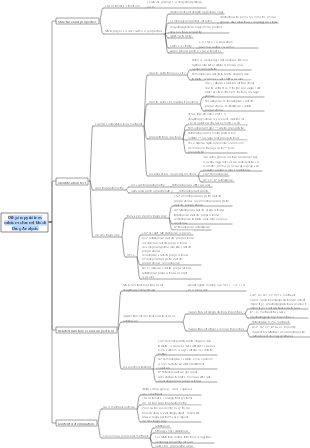
MindMap Gallery Chapter 3 Impurity Inspection
Drug analysis Impurity inspection Drug impurity analysis, impurity inspection in drug analysis is an important link to ensure drug quality and safety. It can ensure the quality and safety of drugs and protect patients’ medication safety.
Edited at 2024-04-06 15:35:15This article discusses the Easter eggs and homages in Zootopia 2 that you may have discovered. The main content includes: character and archetype Easter eggs, cinematic universe crossover Easter eggs, animal ecology and behavior references, symbol and metaphor Easter eggs, social satire and brand allusions, and emotional storylines and sequel foreshadowing.

[Zootopia Character Relationship Chart] The idealistic rabbit police officer Judy and the cynical fox conman Nick form a charmingly contrasting duo, rising from street hustlers to become Zootopia police officers!
This is a mind map about Deep Analysis of Character Relationships in Zootopia 2, Main content: 1、 Multi-layer network of relationships: interweaving of main lines, branch lines, and hidden interactions, 2、 Motivation for Character Behavior: Active Promoter and Hidden Intendant, 3、 Key points of interaction: logic of conflict, collaboration, and covert support, 4、 Fun Easter eggs: metaphorical details hidden in interactions.
This article discusses the Easter eggs and homages in Zootopia 2 that you may have discovered. The main content includes: character and archetype Easter eggs, cinematic universe crossover Easter eggs, animal ecology and behavior references, symbol and metaphor Easter eggs, social satire and brand allusions, and emotional storylines and sequel foreshadowing.
[Zootopia Character Relationship Chart] The idealistic rabbit police officer Judy and the cynical fox conman Nick form a charmingly contrasting duo, rising from street hustlers to become Zootopia police officers!
This is a mind map about Deep Analysis of Character Relationships in Zootopia 2, Main content: 1、 Multi-layer network of relationships: interweaving of main lines, branch lines, and hidden interactions, 2、 Motivation for Character Behavior: Active Promoter and Hidden Intendant, 3、 Key points of interaction: logic of conflict, collaboration, and covert support, 4、 Fun Easter eggs: metaphorical details hidden in interactions.
Impurity inspection
Drug impurities and limits
Impurities and Purity of Drugs
Purities
The purity of the drug
The purity of a drug needs to be comprehensively evaluated by considering the appearance, physical and chemical constants, impurity inspection and content determination of the drug.
Impurities
Substances that affect the purity of pharmaceutical products
Substances present in drugs that have no therapeutic effect or affect the stability and efficacy of the drug, or are even harmful to human health
Drug Purity and Reagent Purity
common ground
All stipulate the types and limits of impurities contained in
difference
Drug purity is considered from the aspects of drug safety, effectiveness and drug stability. There are only qualified products and unqualified products.
Reagent purity is stipulated from the impact of chemical changes that impurities may cause on use, as well as the scope and purpose of use of the reagent. It does not take into account the physiological effects and toxic side effects of impurities on organisms.
Chemical reagents are generally divided into four levels [benchmark reagents, superior pure or special reagents (spectrometrically pure, chromatographically pure, pesticide residue detection grade), analytical pure and chemically pure]
Chemical reagents cannot replace medicines
Sources and types of impurities
source
production process
During the synthesis process, the raw materials are impure or the reaction is incomplete, and the intermediates and by-products are not completely removed during refining.
Impurities contained in the raw materials and excipients introduced during the preparation process, as well as impurities produced by the interaction between the raw materials and excipients
Reagents, solvents, reducing agent residues
Isomers, polymorphs
Metal impurities introduced by metal utensils, devices, and tools used
storage process
Under the influence of external conditions such as temperature, humidity, sunlight, and air, or due to the action of microorganisms, the drug may undergo changes such as hydrolysis, oxidation, decomposition, isomerization, crystal transformation, polymerization, deliquescence, and mildew.
type
Sort by source
General impurities
Impurities are widely distributed in nature and are easily introduced during the production and storage of many drugs. Their content is closely related to the level of production technology.
Special impurities
Refers to impurities introduced during the production and storage of specific drugs, also known as related substances. These impurities vary from drug to drug
Process impurities, degradation impurities, extraneous impurities in reactants and reagents
Classification by toxicity
toxic impurities
signal impurities
Classification by chemical properties
Inorganic impurities
Most of them are general impurities
Organic impurities (specified and non-specific impurities)
i.e. related substances
Classification
Specific impurities
Impurities with clear limits specified and individually controlled
Such as free salicylic acid and related substances in aspirin examination
unspecified impurities
A series of impurities that are not listed separately and are controlled using only a common limit
Such as easy carbonization in aspirin test
organic volatile impurities
Limit Test of Impurities (Limit Test)
concept
Maximum allowable amount of impurities contained in drugs
Usually expressed in parts per million or parts per million (ppm)
Impurity limit control
limited inspection
control method
Take a certain amount of the detected impurity standard solution and a certain amount of the test solution, process them under the same conditions, and compare the reaction results to determine whether the impurity content exceeds the limit.
Pay attention to the principle of parallelism
That is, the test solution and the control solution should react under exactly the same conditions. For example, the added reagents, reaction temperature, and placement time should all be equal, so that the results will be comparable.
sensitivity method
Add a certain amount of reagent to the test solution and react under certain conditions. No positive reaction should occur.
comparative method
Take a certain amount of the test sample for inspection in accordance with the law and determine specific impurity parameters. Compared with the specified limit, it must not be greater
Quantitative assay
Impurity limit calculation method
Pay attention to the unity of units Pay attention to whether the test sample is diluted
example
Impurity inspection method
chemical method
color reaction test
Precipitation reaction test method
Examination of free hydrazine in hydralazine hydrochloride
Inspection method for generated gas
Generate ammonia gas
titration
Examination of high iron salts in ferrous sulfate
chromatographic methods
Overview
When the structure and properties of drug impurities are similar to those of the drug, chromatography can be used to separate and detect the impurities and the drug.
Chromatography is the preferred method for testing related substances
Classification
Thin layer chromatography (TLC) method
Features
Simple equipment
Easy to operate
Fast separation speed
Higher sensitivity and resolution
method
Impurity control method
Take the test solution and the impurity reference solution of a certain concentration and spread them out on the same thin layer plate to locate the spots. Corresponding comparison and judgment of impurity spots
Test solution self-dilution method
The test solution of a certain concentration is diluted and used as a control solution, and then compared with the test solution on the same plate.
example
Testing of related substances of phenylephrine hydrochloride
Impurity reference substance and test solution self-dilution comparison and usage
Controlled Medicines Act
Use the same drug as the test product as a control to compare spots and colors and perform comparative control.
High performance liquid chromatography (HPLC) method
Features
High separation efficiency
Strong specificity
High detection sensitivity
Accurately determine the peak area of each component
method
external standard method
Overview
Suitable for situations where there is an impurity reference substance and the injection volume can be accurately controlled
method
Prepare the impurity reference solution and the test solution, inject a certain amount into the chromatograph, measure the impurity peak response, and calculate the impurity concentration using the external standard method.
Features
Quantification is relatively accurate, but impurity reference standards are required
Principal component self-contrast method with correction factor
Overview
Suitable for control of known impurities. Using the main component as a control, use the impurity reference substance to determine the correction factor of the impurity
method
Correction factors and retention times are directly loaded into the quality standards of each variety
The correction factor for an impurity is used to correct the measured peak area for that impurity
Calculation and use of correction factors
Features
advantage
There is no need for impurity reference substances when measuring, and the different response factors of impurities and main components are taken into account, so the accuracy is good.
shortcoming
The relative retention time and correction factor of impurities relative to the drug also need to be loaded under each variety.
example
Principal component self-contrast method without correction factor
method
Dilute the test solution into a solution with equivalent impurity limits as a control solution. After adjusting the detection sensitivity, take the test solution and the reference solution and inject them respectively. The peak area and sum of each impurity peak in the test solution are compared with the control solution. Compare the peak areas of the main components of the liquid to control the amount of impurities in the test product
Features
The single impurity content is small and the impurity reference substance cannot be obtained, but the impurity structure is similar to the main component.
Theoretically, the response factors of impurities and principal components are required to be basically the same (0.9-1.1); when the response factor exceeds the range of 0.9-1.1, it is appropriate to use the principal component self-control method with a correction factor
example
Inspection of trihexyphenidyl related substances
Peak area normalization method
Overview
It is only suitable for a rough examination of the impurity content in the test product that has a similar structure, relatively high content, and a wide range of limits.
method
Measure the area of each impurity peak and the area of each chromatographic peak on the chromatogram except the solvent peak, calculate the percentage of each peak area to the total peak area, and roughly measure the content of impurities in the test product
Features
No need for reference materials, simple and easy
The time for recording the spectrum should be an integral multiple of the retention time of the main peak;
Usually the impurity content of the test product can only be roughly examined
Gas chromatography (GC) method
Suitable for detection of volatile impurities
Calculation method
Standard solution addition method
Capillary electrophoresis (CE) method
Enzyme impurities suitable for enzyme drugs
The inspection method is the same as that in HPLC
example
Examination of aprotinin-alanine-desglycine-aprotinin and desalanine-aprotinin
Spectral methods
Overview
Differences in light selective absorption properties of drugs and impurities
Classification
Visible-UV spectrophotometry
Overview
The difference in UV characteristic absorption of the drug and the impurity to be detected is used for inspection. Measured at the maximum absorption wavelength of the impurity
example
Testing for adrenaline in epinephrine
Infrared spectrophotometry
Overview
It is mainly used to check the ineffective or inefficient crystal forms of drugs. The principle is that due to the different crystal structures of polymorphic drugs, the bond lengths and bond angles of certain chemical bonds change to varying degrees, which can lead to changes in the infrared absorption spectrum. There are significant differences in the frequency, peak shape, and intensity of some characteristic bands.
Only for crystal form inspection and fingerprint area
example
Infrared Spectroscopy Study on the A/B Crystalline Forms of Cimetidine
Crystal form A has the best clinical efficacy
The IR spectrum of cimetidine A crystal form has 2 medium split peaks at 3150 cm-1, a strong absorption peak at 1205 cm-1, and a strong absorption peak at 1160 cm-1
Crystal form B has a shoulder peak at 3150~3350 cm-1 and a strong absorption peak at 1180 cm-1
Atomic absorption spectrophotometry
Overview
It has high sensitivity and is widely used in ultra-trace element analysis. In impurity inspection, it is mainly used to inspect metal impurities in drugs.
Utilizes the atomic vapor of the element to be measured contained in the drug to absorb the light of a specific wavelength of the element emitted from the light source, causing the electrons in the atoms to be excited and jump from a lower energy level to a higher energy level; measuring the radiation energy of the ground state atoms The degree of absorption to determine the content of the element to be measured in the test drug
method
standard addition method
Take the test sample to prepare the test solution, and the measurement reading is (b)
Control solution: an equal amount of the test sample and a limited amount of the element solution to be measured, with a reading of (a)
Requirement: (b) should be smaller than (a-b)
other
Thermal analysis
Overview
Determine the relationship between physical and chemical properties of substances as they change with temperature
Physical changes such as crystalline transformation, melting, evaporation, and dehydration of substances during the heating process; chemical changes such as thermal decomposition, oxidation, and reduction; and accompanying changes in weight, temperature, or energy
Classification
Thermogravimetric Analysis (TGA)
Thermal analysis technology that uses a thermal balance to measure changes in the mass of a substance with temperature under programmable temperature conditions
The percentage of mass loss of the sample within the corresponding temperature range can be calculated
For determination of adsorbed water
Differential Thermal Analysis (DTA)
Thermal analysis technology that measures the relationship between the temperature difference and temperature (or time) between the test sample and the inert reference material (commonly used quartz sand, calcined MgO) under program-controlled temperature
The test sample releases heat as a positive peak and absorbs heat as an inverted peak.
Differential Scanning Calorimetry (DSC)
Thermal analysis technology that measures the change of the energy difference (dQ/dT) required by the system to the test product or reference material as the temperature (or time) changes while maintaining the same temperature of the test product and the inert reference material.
Divided into two types: power compensation type and heat flow type
Compared with DTA, it is more suitable for measuring changes in enthalpy of substances during physical or chemical changes, and has better quantitative measurement accuracy and is more widely used.
The direction of the DSC peak shape is opposite to that of DTA. The test sample releases heat as an inverted peak and absorbs heat as a positive peak.
application
Melting point and decomposition point determination
The combination of DSC and TG can obtain melting point information and verify authenticity; it can also analyze melting stability and thermal decomposition characteristics.
Characterization of polymorphs and their transformations
Crystal form transformation is accompanied by thermal effects. DSC and DTA can be used to study the crystal form transformation or determine the crystal form.
Determination of drug purity
Application conditions
Sample purity is above 98.0%
Impurities do not react with the main component
Impurities do not form eutectic or solid solution with the main components
Impurities are chemically similar to the molten sample
Drugs are chemically stable during melting
If the drug has polymorphism, it must all be converted into a certain crystal form.
example
Study on the crystal form of cimetidine
pH check method
Overview
When checking for alkaline or acidic impurities in drugs, the acid-base difference between the drug and the impurities can be used to check using acid-base titration, indicator solution method or pH measurement method.
Classification
Acid-base titration
Under a certain indicator solution, use acid or alkali to titrate the alkaline or acidic impurities in the test solution, and use the acid or alkali consumption as the limit indicator.
indicator liquid method
The discoloration pH range of a certain amount of indicator solution is used as the limit indicator of acidic and alkaline impurities in the test solution.
pH measurement method
Use potentiometric method to measure the pH of the test solution to measure whether its acidic and alkaline impurities comply with the limit regulations.
Physical property inspection method
Overview
Inspection based on differences in properties of drugs and impurities
Classification
Odor and volatility differences
Impurities have special odors, such as the odor of anesthetic ether (fusel oil)
Impurities are non-volatile, drugs are volatile, such as non-volatile substances in camphor.
color difference
The drug itself is colorless, and colored related substances or decomposition products are introduced during production.
example
Color inspection of sulfadiazine API
The amine group on the sulfabenzene ring is oxidized to form a colored azobenzene compound
Differences in dissolution behavior
Based on differences in solubility of drugs and impurities
example
Examination of dextrin in glucose
Differences in optical rotation properties
The drug has optical rotation but the impurity does not
The specific rotation of progesterone in ethanol is 186~ 198
Impurities have optical rotation but drugs do not
Inspection of hyoscyamine in atropine sulfate, the 50mg/mL aqueous solution of the test sample must not exceed -0.4
Inspection of general impurities in drugs
Chloride test method
principle
Utilize chloride to react with silver nitrate under the acidic conditions of nitric acid to generate a silver chloride white turbid liquid. Compared with the turbidity of silver chloride produced by a certain amount of standard sodium chloride solution under the same conditions, the turbidity must not be greater.
Operation method (control method)
sample tube
control tube
Results observation method
Place in dark place for 5 minutes (to avoid decomposition of AgCl)
Top down view on black background
Precautions
Parallel test
The purpose of adding dilute nitric acid
Accelerate the generation of silver chloride turbidity, produce better opacification, and avoid the precipitation of silver carbonate, silver oxide, and silver phosphate. Generally, it is appropriate to use 50ml of test solution containing 10ml of dilute nitric acid. Too much will increase the solubility of silver chloride and reduce turbidity.
Optimal detection concentration range of chloride
50ml of the test solution contains 0.05~0.08mg of Cl-, which is equivalent to the standard sodium chloride solution (10µgCl-/ml). When 5.0~8.0ml, the turbidity gradient is obvious. Use the appropriate amount of test sample according to the limit, so that The concentration of chloride is within the appropriate range
What to do when the test solution is colored
internal achromatic method
external achromatic method
Add a certain reagent to the test solution to make the color of the solution fade before checking according to the law.
example
Inspection of chloride in potassium permanganate
Because the solution is purple, add an appropriate amount of ethanol to make the color disappear before checking again.
Methods for handling unclarified test solution
If the solution is not clear after the test product is dissolved, it should be filtered. The filter paper during filtration should first be washed with an aqueous solution containing nitric acid (1→100) to remove the chloride contained in the filter paper.
sulfate test
principle
Sulfate and barium chloride produce a white turbid liquid of barium sulfate in an acidic solution of hydrochloric acid, compared with the turbidity produced by a certain amount of standard potassium sulfate solution and barium chloride under the same conditions.
How to operate
Precautions
Standard potassium sulfate solution (100μg/mL) is an aqueous solution of potassium sulfate
It is appropriate to contain 2 mL of dilute hydrochloric acid in 50 mL of the test solution. Excessive amount can dissolve barium sulfate.
Concentration range: 0.1mg~0.5mg sulfate ion/50mL, equivalent to 1~5mL standard solution
The drug is not easily soluble in water. An appropriate amount of water-miscible organic solvent can be added to dissolve the drug and then be inspected in accordance with the law.
Iron salt test method
principle
Thiocyanate method
How to operate
Precautions
Standard iron solution
Ferric ammonium sulfate (containing sulfuric acid) concentration 10µgFe3/ml
Optimum colorimetric concentration
Instrument analysis linear range
5~90µg Fe3/50ml
Visual colorimetric concentration range
10~50µg Fe3/50ml
It is appropriate to contain 4 mL of dilute hydrochloric acid in 50 mL of the test solution to prevent the hydrolysis of Fe3
The role of ammonium persulfate
Oxidation of divalent iron in the test sample to ferric iron
Prevent light from reducing or decomposing iron thiocyanate and fading it
Nitric acid is used as an oxidant in glucose, but excess nitric acid must be removed by heating
When the color tone is inconsistent or the color is lighter, n-butanol must be added for extraction and concentration comparison.
Organic drugs with a cyclic structure do not dissolve under experimental conditions, but are destroyed by burning
Heavy metal inspection method
Overview
Heavy metal concept
Heavy metals refer to metals that can react with thioacetamide or sodium sulfide to produce color under experimental conditions. Such as: Ag, Pb Hg, Cu, Cd, Bi, Sb, Sn, As, Ni, Co, Zn, etc.
The presence of heavy metals affects the stability and safety of drugs
Heavy metal poisoning accumulates in the body, represented by lead
Inspection Method
thioacetamide method
Overview
Suitable for drugs soluble in water, dilute acids and ethanol
principle
Operation method (control method)
A tube
B tube
C pipe
Precautions
Standard lead solution concentration
Use lead nitrate to prepare a standard lead stock solution (add nitric acid to prevent Pb2 hydrolysis). The standard lead solution is diluted before use. The standard lead nitrate solution is 10µg Pb2 /ml.
The suitable colorimetric range is 10~20µg Pb2 in 27ml of solution, which is equivalent to 1~2mL of standard solution.
Thioacetamide test solution
solution pH
This method uses 2ml of acetate buffer pH3.5 to control the pH value of the solution to 3~3.5
If strong acid is used during treatment, add ammonia water to neutralize phenolphthalein before adding thioacetamide, and then add buffer solution
What to do when the test solution is colored
external achromatic method
Add dilute caramel solution or other non-interfering colored solution to the control tube until the color is the same
internal achromatic method
How to eliminate interference
If there is a trace amount of Fe3 in the test sample, it will oxidize hydrogen sulfide to form elemental sulfur, which will interfere with the colorimetry. Ascorbic acid or hydroxylamine hydrochloride 0.5~1.0g can be added to reduce Fe3 to Fe2 to eliminate interference.
If the test product is an iron salt, Fe3 will generate HFeCl in hydrochloric acid, and it will be extracted and removed with ether. The remaining trace iron will be in an ammonia alkaline solution, masked with KCN, and then checked by the third method.
ignition residue method
Overview
Suitable for organic drugs containing aromatic rings, heterocyclic rings and insoluble in water, dilute acid, ethanol and alkali
The residue after ignition at 500~600℃ shall be inspected according to the first method after treatment.
Organic drugs containing sodium and fluorine should use platinum crucibles, quartz crucibles or hard glass evaporating dishes (because they can corrode porcelain crucibles and bring in a large amount of heavy metals)
principle
Heavy metals may form strong valence bonds with aromatic rings and heterocyclic drugs containing strong coordination groups, affecting direct sample dissolution inspection; or the test sample may not dissolve and may contain heavy metals. At this time, it is necessary to first ignite the test sample into heavy metal oxide residues, then add hydrochloric acid to convert it, and check according to the first method.
How to operate
sodium sulfide method
Overview
Suitable for drugs that are soluble in alkali but not soluble in dilute acid or that precipitate in dilute acid. Such as sulfonamides, barbiturates
principle
Precautions
NaOH alkaline conditions
Sodium sulfide is used as the chromogen, which is newly prepared for immediate use.
Arsenic salt test method
Gutzeit method
principle
Metal zinc reacts with acid to produce new ecological hydrogen, which reacts with trace amounts of arsenic salts in drugs to form volatile arsenic hydrogen. When it encounters mercury bromide test paper, it produces yellow to brown arsenic spots, which are produced by a certain amount of standard arsenic solution under the same conditions. Compare arsenic plaques to determine the amount of arsenic salts
How to operate
Arsenic detection bottle: A Air tube: C With plug hole: DE
Install lead acetate cotton balls into the air tube C
Then place two pieces of mercury bromide test paper on the flat surface of cock D.
Place the sample and reference substance into arsenic detection bottles respectively, add 5ml of hydrochloric acid and 21ml of water, add 5ml of 2.5% potassium iodide test solution and 5 drops of 0.3% acidic stannous chloride test solution, and leave it at room temperature for 10 minutes.
Add 2g of zinc particles, immediately put the installed air tube C seal and bottle A in a 25-40 ℃ water bath, react for 45 minutes, take out the mercury bromide test paper, and compare the arsenic plaque
Precautions
Most standard arsenic plaques use 2ml of standard arsenic solution (1μg/ml)
The role of reagents
Potassium iodide test solution
reducing agent
As5 →As3
The reaction rate of pentavalent arsenic to generate AsH3 is slower than that of trivalent arsenic. Add KI to reduce pentavalent arsenic to trivalent arsenic and then react with active hydrogen to increase the rate of AsH3 generation.
I- coordinates with the zinc ions generated by the reaction to promote the reaction to generate arsine.
Acidic stannous chloride test solution
reducing agent
Reduce pentavalent arsenic to trivalent arsenic (As5 →As3)
The I2 generated by KI is oxidized and then reduced to I-
Lead acetate cotton ball
Eliminate the interference of sulfide (1mgS2-)
Elimination of interfering substances
The test products are sulfide, sulfite and thiosulfate
Cause of interference
Method of exclusion
Add concentrated nitric acid to treat
The test sample is iron salt (Fe3)
Cause of interference
Fe3 can consume reducing agents (KI, SnCl2) and oxidize arsine
Method of exclusion
First add acidic SnCl2 test solution to make Fe3 →Fe2
Covalently bonded arsenic compounds
Method of exclusion
carry out organic destruction
Acid destruction method (adding dilute sulfuric acid and potassium bromide) or alkali destruction method (calcium hydroxide is burned at 500-600℃ or anhydrous sodium carbonate is added to dissolve it)
Characteristics of ancient Cai’s method
advantage
High sensitivity (1µgAs)
shortcoming
Sb interference
For the inspection of arsenic salts in antimony-containing drugs, the ancient Chua's method cannot be used, and the method of Michio Shirata must be used.
Silver diethyldithiocarbamate method (Ag-DDC method)
Overview
This method is not only used for the limit inspection of arsenic salts, but also for the determination of trace amounts of arsenic salts.
DDC-Ag:
principle
Metal zinc reacts with acid to produce new ecological hydrogen, reacts to produce volatile arsine, and reduces DDC-Ag to produce red colloidal silver. Use colorimetry or measure the absorbance to compare with the standard control.
How to operate
Generate hydrogen arsine with the ancient Chua's method
Arsenide reduces Ag-DDC solution to produce red colloidal silver
Visual colorimetry or absorbance measurement at 510nm
Features
High sensitivity: 0.5 µgAs/30ml
It can be measured by instrument and can also quantify 1 µg~10µg/40ml.
Sb interferes little, 500µg antimony does not interfere
Michio Shirata method
principle
SnCl2 can reduce arsenic salts to brown colloidal arsenic in HCl. Compare it with a certain amount of standard arsenic solution treated in the same way to determine the limit of arsenic salts in the test product.
Features
advantage
Not interfered by Sb
shortcoming
Low sensitivity: 20µgAs2O3/10ml
Adding a small amount of HgCl2 increases the sensitivity to 2µgAs2O3 (1.5 µgAs)/10ml
Hypophosphorous acid method
principle
In the acidic solution of hydrochloric acid, hypophosphorous acid reduces the arsenic salt to brown free arsenic. Compare the color with the standard arsenic solution after treatment in the same way.
Features
Unaffected by sulfides, sulfites and Sb
Less sensitive than ancient Chua's method
Loss on drying method
Overview
Loss on drying refers to the weight loss of a drug after drying under specified conditions, mainly water, but also includes other volatile substances.
How to operate
ChP stipulates that the difference between the weight of the test sample after two consecutive dryings or irradiations is less than 0.3 mg to achieve constant weight.
test methods
Normal pressure and constant temperature drying method
Heat-stable medicine, heated at a constant temperature of 105°C
method
The test sample should be laid flat in a flat weighing bottle for drying, and the thickness should not exceed 5mm; if it is a loose substance, the thickness should not exceed 10mm.
Put it in an oven or desiccator for drying. The cap should be removed or half-opened.
The test sample placed in the oven for drying should be taken out after drying and placed in a desiccator to cool, and then weighed.
Vacuum pressure drying method and constant temperature and reduced pressure drying method
Drugs with low melting points or that are decomposed by heat should be carried out at room temperature or constant temperature in a desiccator.
Commonly used desiccants: phosphorus pentoxide, anhydrous calcium chloride, silica gel; commonly used desiccants in constant temperature and reduced pressure dryers: phosphorus pentoxide
Desiccant drying method
Drugs that are decomposed by heat or are easily sublimated should be processed in a dryer
thermal analysis
Calculation method
Moisture determination method
volumetric analysis
Fischer's micromoisture determination method
principle
How to operate
Precisely weigh an appropriate amount of the test sample (consuming approximately 1 to 5 ml of Fischer's test solution), add 2 to 5 ml of anhydrous methanol, and titrate with Fischer's test solution under constant stirring until the solution changes from light yellow to reddish brown, or with The permanent stop titration method indicates the end point; another blank test is performed
Calculation method
Moisture content in the test sample (%) = (A-B) F/W ×100%
A is the volume of Fischer's test solution consumed by the test product, ml
B is the volume of Fischer's test solution consumed by the blank, ml
F is the weight of water equivalent to 1 ml of Fisher's test solution, mg
W is the weight of the test article, mg
Precautions
Theoretically, water: iodine: sulfur dioxide: methanol: pyridine = 1:1:1:1:3 in Fisher's reagent. However, in order to complete the reaction and some reagents also serve as solvents, in fact only the molar ratio of iodine to water is 1: 1, while the ratio of iodine, sulfur dioxide, and pyridine reaches 1:3:5, and methanol is far too excessive.
It is impossible to distinguish the form of water in the drug, such as crystal water or adsorbed water, which can be identified by thermal analysis.
drying method
reduced pressure drying method
Toluene method
gas chromatography
Ignition residue inspection method
Overview
Check for inorganic impurities (metal oxides or inorganic salts) mixed in metal-free organic drugs or volatile inorganic drugs
Ignition residue refers to the sulfate ash of non-volatile inorganic impurities remaining after carbonization and ignition of organic drugs or volatile inorganic drugs in the presence of sulfuric acid.
principle
After carbonization, the sample is moistened with H2SO4 → ignited at 700~800°C to constant weight → ignition residue (sulfated ash), the limit is generally 0.1%~0.2%
How to operate
Calculation method
Precautions
The sampling volume of the test sample should be determined based on the ignition residue limit and weighing error.
Fluorine-containing drugs corrode porcelain crucibles, so platinum crucibles should be used.
If the residue needs to be kept for heavy metal inspection, ignite it at 500~600℃ until it reaches constant weight.
Sulfuric acid treatment converts impurities into stable sulfates and helps carbonize organic matter
Easy char inspection method
Overview
Check for trace organic impurities in drugs that are easily carbonized or oxidized and discolored when exposed to sulfuric acid.
method
Comparison between sulfuric acid carbonization and control solution
Color comparison: Place them in front of a white background and observe and compare them at a straight level.
Classification of control solutions for colorimetry
Standard colorimetric solution under "Solution Color Check"
A control solution prepared according to the prescribed method from a colorimetric cobalt chloride solution, a colorimetric potassium dichromate solution and a colorimetric copper sulfate solution.
Potassium permanganate solution
Residual solvent determination method
Common residual solvents
Category 1 (highly toxic, carcinogenic, harmful, avoid use)
benzene
carbon tetrachloride
1,2-Dichloroethane
1,1-dichloroethylene
1,1,1-Trichloroethane
Category II (somewhat toxic to humans, restricted use)
Acetonitrile
chlorobenzene
Chloroform
Methanol
Pyridine etc.
Category III (non-toxic to humans, recommended)
Acetic acid
acetone
n-butanol, etc.
Category 4 (solvents for which no toxicological data are available)
Petroleum ether
trichloroacetic acid
Isooctane etc.
test methods
gas chromatography
System suitability test
It is generally required that the theoretical plate number of packed columns is greater than 1,000; that of capillary columns is greater than 5,000
The separation between the peak to be measured and the adjacent peak is >1.5
Relative standard deviation internal standard method ≤ 5%; external standard method ≤ 10%
test methods
direct injection method
Take the standard solution and the test solution, and continuously inject 3 times of 2 μl each time, and measure the corresponding peak area. When using the internal standard method for quantification, calculate the ratio of the peak area of the test substance to the internal standard substance. The average peak area ratio obtained from the solution shall not be greater than the average peak area ratio obtained from the standard solution. When quantifying by the external standard method, the average area of the analyte peak obtained from the test solution shall not be greater than the average area of the analyte peak obtained from the standard solution.
headspace analysis
The test sample containing volatile impurities is placed in a pressure-resistant closed system. At a certain temperature and after sufficient time, the content of the volatile impurities in the gas phase or liquid phase reaches equilibrium and has a certain ratio. Take The gas in the gas phase is measured, and the result is proportional to the content in the liquid phase. This analysis method is also called liquid gas analysis method. It is often used in conjunction with gas chromatography and is called headspace gas chromatography.
The heating temperature of the headspace bottle is generally 70~85℃, and the heating time of the headspace bottle is 30~60 minutes.
Solution preparation
Water is usually used as the solvent; for non-water-soluble drugs, N,N-dimethylformamide or dimethyl sulfoxide can be used as the solvent.
Calculation method
Quantify by peak area ratio using internal standard method or peak area using external standard method
Solution color inspection method
Overview
Methods to control the limits of colored impurities in drugs
Inspection Method
visual colorimetry
That is, the method of comparing with the standard colorimetric solution
Preparation of standard colorimetric solution
6 colors: green-yellow, yellow-green, yellow, orange-yellow, orange-red, brown-red
Spectrophotometry
Single wavelength quantification
Prepare a test solution of a certain concentration and measure the absorbance at the specified wavelength. The absorbance must not exceed the specified value.
colorimeter method
Full wavelength range quantification
This method is a method of directly measuring the perspective tristimulus value of a solution through a colorimeter, and quantitatively expressing and analyzing its color. The color measuring instrument is generally a photoelectric integrating colorimeter.
Solution Clarity Checking Method
Overview
Check trace amounts of insoluble impurities in drugs. APIs used as injections should generally undergo this inspection.
Inspection Method
visual turbidimetry
How to operate
Configuration of Turbidity Standard Solution
The Chinese Pharmacopoeia stipulates the use of turbidity standard solution as the standard for clarity inspection
Methenamine hydrolyzes under acidic conditions to produce formaldehyde, which condenses with hydrazine to form formaldehyde hydrazone, which is insoluble in water and forms white turbidity. Mix equal parts of 1.00% hydrazine sulfate solution and 10% urotropine solution to prepare a turbidity standard stock solution, and then dilute in proportion.
judge
"Clarity" specified in the Pharmacopoeia means that the clarity of the test solution is the same as that of the solvent used, or does not exceed the No. 0.5 turbidity standard solution
Turbidimeter method
The turbidity of the test solution is measured with a turbidity meter. Particulate matter of different sizes and characteristics in the solution, including colored substances, can scatter the incident light. By measuring the intensity of the transmitted light or scattered light, the turbidity of the test solution can be checked. There are usually three types of instrument measurement modes: transmitted light, scattered light and transmitted light-scattered light comparison measurement mode
Inspection methods for special impurities
Research specifications for special impurities
New raw materials or new preparations have impurities with an apparent content of 0.1% or more, as well as impurities with strong biological effects or toxic impurities with an apparent content of less than 0.1%. Their structures are required to be characterized or confirmed.
Identification of special impurities
Synthetic Impurity Reference Standard
Preparation of Impurity Reference Standards by Chromatography