MindMap Gallery 7.3 Chain rule of composite functions and derivation of implicit functions
This is a mind map about the chain rule of 7.3 composite functions and the derivation of implicit functions. It is necessary to share the review materials for review and preview to improve learning efficiency. I hope it will be helpful to everyone in preparing for the exam.
Edited at 2024-04-10 09:25:34This article discusses the Easter eggs and homages in Zootopia 2 that you may have discovered. The main content includes: character and archetype Easter eggs, cinematic universe crossover Easter eggs, animal ecology and behavior references, symbol and metaphor Easter eggs, social satire and brand allusions, and emotional storylines and sequel foreshadowing.
[Zootopia Character Relationship Chart] The idealistic rabbit police officer Judy and the cynical fox conman Nick form a charmingly contrasting duo, rising from street hustlers to become Zootopia police officers!
This is a mind map about Deep Analysis of Character Relationships in Zootopia 2, Main content: 1、 Multi-layer network of relationships: interweaving of main lines, branch lines, and hidden interactions, 2、 Motivation for Character Behavior: Active Promoter and Hidden Intendant, 3、 Key points of interaction: logic of conflict, collaboration, and covert support, 4、 Fun Easter eggs: metaphorical details hidden in interactions.
This article discusses the Easter eggs and homages in Zootopia 2 that you may have discovered. The main content includes: character and archetype Easter eggs, cinematic universe crossover Easter eggs, animal ecology and behavior references, symbol and metaphor Easter eggs, social satire and brand allusions, and emotional storylines and sequel foreshadowing.
[Zootopia Character Relationship Chart] The idealistic rabbit police officer Judy and the cynical fox conman Nick form a charmingly contrasting duo, rising from street hustlers to become Zootopia police officers!
This is a mind map about Deep Analysis of Character Relationships in Zootopia 2, Main content: 1、 Multi-layer network of relationships: interweaving of main lines, branch lines, and hidden interactions, 2、 Motivation for Character Behavior: Active Promoter and Hidden Intendant, 3、 Key points of interaction: logic of conflict, collaboration, and covert support, 4、 Fun Easter eggs: metaphorical details hidden in interactions.
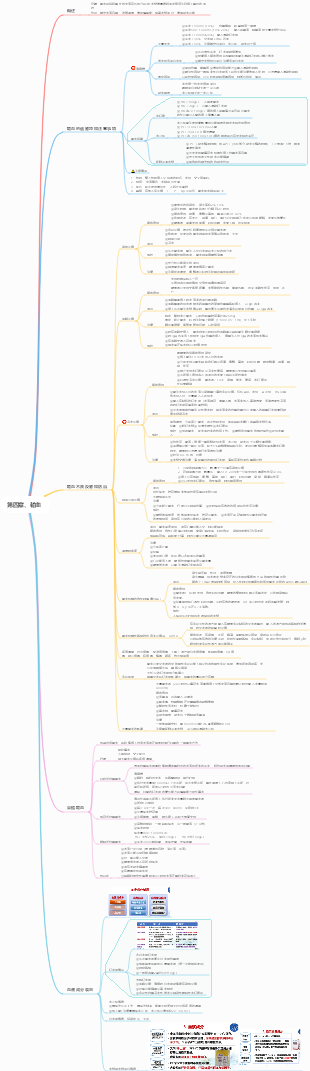
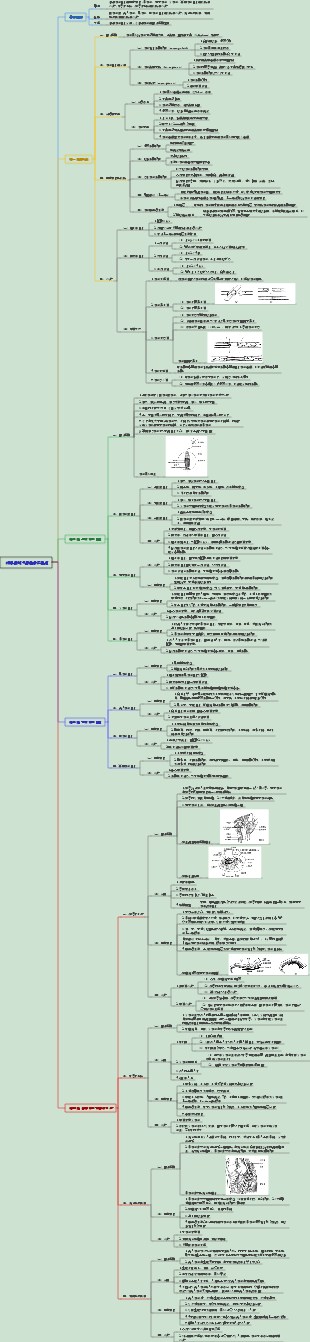
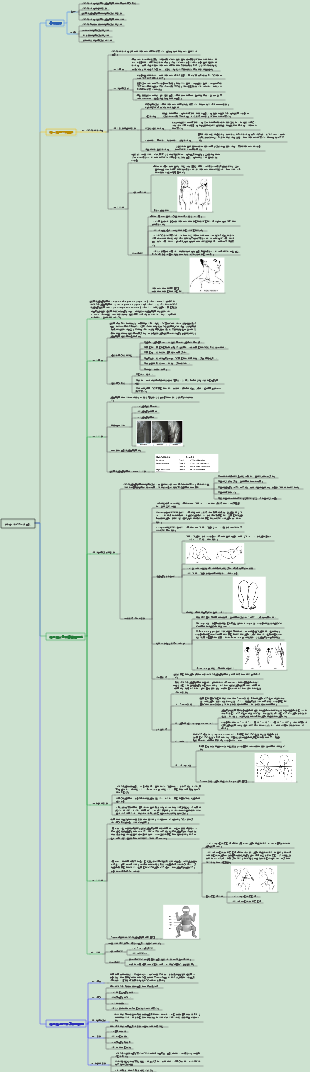
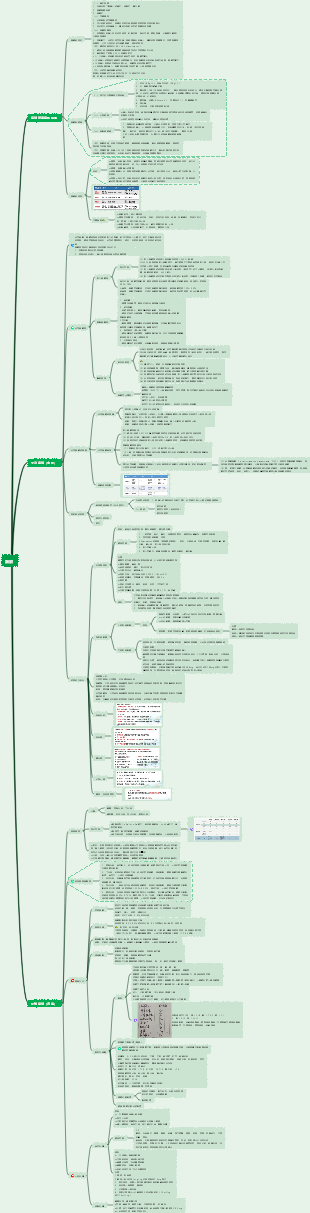
7.3 Chain rule of composite functions and derivation of implicit functions
Derivative Rules for Composite Functions
chain rule
Variations (essentially tree-like)
Changeable
many
constitute
one
total derivative without bifurcation
Features
are all functions of t
Increasing circumstances
More varied
many
many
One becomes more
one
many
Miscellaneous
This can be solved by drawing a tree diagram
example
Let each item go through the program of the previous step again, find u, y, and derive the derivative again. At the same time, it also satisfies the basic operation of the derivative.
The items in the yellow part are traversed again (x y z) and (xyz)
subtopic
But please note that the footer uses the traversal method
Total differential form invariance (differentiation method)
Suitable for composite binary functions
Differential method to find partial derivatives
First find the partial derivative of z with respect to u and v, and write dz (the essence of differential calculus)
Expand
d(xy)=ydxxdy
d(x y)=dx dy
get
According to the total differential definition, we get
Of course, you can also use the chain derivation rule to calculate
The method is to create a tree diagram
Derivation of implicit functions
F(x, y) = case of type 0 equation
First derivative (mainly for binary functions)
formula
Derivation Let y=f(x)
theorem
condition
has continuous partial derivatives
main body
in conclusion
Set a certain neighborhood
Derivative formula
If you want to find the second derivative, you need to find the derivative of Fx/Fy.
method
example
First use the implicit function theorem
Differentiate on both sides
In order to get dy/dx
formula method
Find the derivative of both sides
You can also proceed with the derivation to find the second derivative
There is an implicit function at (0, 0)
beg
F(x, y, z) = case of type 0 equation
theorem
condition
in conclusion
formula
example
Ask for dz
Fayi
Method 2
Differentiate on both sides
Fayi
Method 2
Differentiate on both sides
Mainly master the methods of differentials on both sides
x y z
dx dy dz
xyz
xydz yzdx xzdy
The case of the system of equations
Just do the math and you'll know
The denominator is the determinant composed of the coefficients before x and y on the left
To find x, replace the coefficient of the column of x with the column on the right side of the equation (c1, c2)
The solution is as above
F,G
Jacobian
example
Method 1
Find the partial derivatives of x on both sides, and then use the method of solving quadratic equations to find the first two
Required conditions
Just find the solution
Then use both sides to find the partial derivative of y, and use the same method as above to find
Method 2
Sometimes implicit functions may be converted into explicit functions, and these methods may not be used.
Find partial derivatives of explicit functions directly
Differentiate on both sides
Differentiate both sides
Obviously, the four things you are looking for can be seen in just one sentence.
shortcoming
Large amount of calculation
Solution
First, according to the deformation of the mother formula, express v and u as x and y, so direct differentiation is also possible.
advantage
Intuitive