MindMap Gallery Rupture discs for safety facilities [Regulations Summary]
As one of the important safety facilities, bursting discs have been found in actual work to have many improper selections, installation errors, and inadequate maintenance that affect their normal use. I have sorted out the relevant laws and regulations to meet legal compliance and Relevant requirements for daily use.
Edited at 2024-01-29 09:41:16Explore the intricate dynamics of morality and corporate influence in "The Boys" through our Character Alignment Map. This framework examines characters along two key axes: heroism versus anti-heroism and the degree of corporate influence from Vought. The map features four quadrants 1. Heroic + Low Corporate Influence: Independent protectors like Starlight and Hughie, who prioritize public safety. 2. Heroic + High Corporate Influence: Compromised heroes like Queen Maeve, torn between genuine instincts and corporate obligations. 3. Anti-heroic + High Corporate Influence: Figures like Homelander and A-Train, who embody corporate manipulation and coercion. 4. Anti-heroic + Low Corporate Influence: Rogue vigilantes who operate outside corporate control. Join us in analyzing how these characters' motives and actions are shaped by their moral intent and corporate ties.
Dive into the intricate world of "Homeland," where the lines between patriotism and betrayal blur across three gripping seasons. In Season 1, we follow Nicholas Brody's return from captivity, leading to Carrie Mathison's obsessive surveillance amidst rising domestic terror threats. Season 2 escalates the tension as Brody's political status shifts, prompting the CIA to disrupt evolving terror networks while facing public scrutiny. By Season 3, the agency grapples with a trust collapse and global deception, redefining friend and foe. Each season delves into the complexities of intelligence missions, political crises, and character evolution, highlighting the moral dilemmas and sacrifices inherent in the shadowy world of national security. Join the journey through deception, strategy, and the ever-present threat of chaos.
Discover the intricate web of mystery and intrigue in the "True Detective Case Map." This comprehensive overview delves into a complex case, examining key elements such as the case type, core themes of institutional corruption, and the haunting motifs of memory and trauma. Follow the detailed timeline, from pre-incident background and the day of discovery to the critical first 48 hours of investigation. Learn about the key players involved, including detectives, victims, witnesses, and suspects, as their stories intertwine. Explore breakthroughs, setbacks, and the ultimate resolution, revealing the challenges faced in uncovering the truth. Join us in unraveling a case where every detail matters and nothing is as it seems.
Explore the intricate dynamics of morality and corporate influence in "The Boys" through our Character Alignment Map. This framework examines characters along two key axes: heroism versus anti-heroism and the degree of corporate influence from Vought. The map features four quadrants 1. Heroic + Low Corporate Influence: Independent protectors like Starlight and Hughie, who prioritize public safety. 2. Heroic + High Corporate Influence: Compromised heroes like Queen Maeve, torn between genuine instincts and corporate obligations. 3. Anti-heroic + High Corporate Influence: Figures like Homelander and A-Train, who embody corporate manipulation and coercion. 4. Anti-heroic + Low Corporate Influence: Rogue vigilantes who operate outside corporate control. Join us in analyzing how these characters' motives and actions are shaped by their moral intent and corporate ties.
Dive into the intricate world of "Homeland," where the lines between patriotism and betrayal blur across three gripping seasons. In Season 1, we follow Nicholas Brody's return from captivity, leading to Carrie Mathison's obsessive surveillance amidst rising domestic terror threats. Season 2 escalates the tension as Brody's political status shifts, prompting the CIA to disrupt evolving terror networks while facing public scrutiny. By Season 3, the agency grapples with a trust collapse and global deception, redefining friend and foe. Each season delves into the complexities of intelligence missions, political crises, and character evolution, highlighting the moral dilemmas and sacrifices inherent in the shadowy world of national security. Join the journey through deception, strategy, and the ever-present threat of chaos.
Discover the intricate web of mystery and intrigue in the "True Detective Case Map." This comprehensive overview delves into a complex case, examining key elements such as the case type, core themes of institutional corruption, and the haunting motifs of memory and trauma. Follow the detailed timeline, from pre-incident background and the day of discovery to the critical first 48 hours of investigation. Learn about the key players involved, including detectives, victims, witnesses, and suspects, as their stories intertwine. Explore breakthroughs, setbacks, and the ultimate resolution, revealing the challenges faced in uncovering the truth. Join us in unraveling a case where every detail matters and nothing is as it seems.
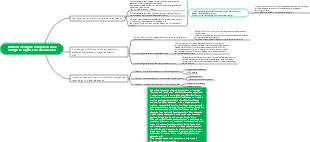
Explosive disc
Installation requirements
Precautions before installation
1. The technical parameters of the installed bursting disc safety device should be checked to ensure that they are consistent with the requirements of pressure-bearing equipment.
2. Read the installation instructions carefully, understand the installation requirements, and operate in strict accordance with the requirements of the installation instructions.
3. Before installation, the pipeline system should be cleaned to prevent solid objects from damaging the bursting disc. Sealing surfaces such as flanges and holders should be cleaned and wiped clean, and damage to the sealing surface should be avoided when wiping.
4. Unless otherwise agreed by the manufacturer, no component of the bursting disc safety device should be changed under any circumstances.
Installation points
Explosive disc
The body is intact
same direction
Holder
Performance intact
Model match
same direction
Flange and bolt system
Installation direction
Center aligned
The seal is effective
Fastening method
Symmetrical alternation
progressive loading
Torque wrench
Sign
Conspicuous area for easy identification
Equipment insulation and additional signs
Replacement cycle
"Bursting Disk Safety Devices Part 2: Application, Selection and Installation" (GB567.2-2012)
5.6.1 When selecting a bursting disc safety device, the replacement cycle of the bursting disc must be considered. The replacement cycle depends on factors such as the type, model, and material usage conditions of the bursting disc. The replacement cycle of the bursting disc can be determined by referring to the provisions of Appendix D.
5.6.2 In any of the following situations, the bursting disc should be replaced:
Rupture discs that exceed the minimum burst pressure but fail to burst
Rupture discs that have been inspected and disassembled during equipment maintenance should be replaced.
Bursting discs used under harsh conditions or important occasions should be replaced regularly every year.
TSGZF003—2011 Safety Technical Supervision Regulations for Rupture Disk Devices
B6.3.1 Bursting disc replacement
The replacement cycle of bursting discs should be reasonably determined based on specific influencing factors such as equipment usage conditions, medium properties, or the expected design service life. Generally, the replacement cycle of bursting disc devices is 2 to 3 years. The replacement cycle should be shortened for bursting disc devices used in corrosive, toxic media and harsh conditions.
The bursting disc device should be replaced immediately when the following conditions occur:
(1) There are problems described in (1)~(3) in B6.2;
B6.2 Regular inspection
The periodic inspection cycle of the bursting disc device can be stipulated according to the specific conditions of the user unit, but the periodic inspection period should include the following content. The maximum inspection period shall not exceed one year. Periodic inspection
(1) Check whether the installation direction of the bursting disc device is correct, and verify whether the bursting pressure and bursting temperature on the nameplate meet the operating requirements;
(2) Check whether the outer surface of the bursting disc is damaged and corroded, whether there is obvious deformation, whether there is foreign matter adhering to it, whether there is leakage, etc.;
inch, check the pressure indication between the bursting disc device and the safety valve (3) Use the bursting disc device and the safety valve in series, and confirm whether the bursting disc device and the safety valve are leaking.
(2) The minimum burst pressure exceeds the equipment operation but does not burst;
(3) The operating temperature during equipment operation exceeds the allowable operating temperature range of the bursting disc device material; (4) The equipment is disassembled during maintenance;
(5) After the equipment has been shut down for a long time (more than 6 months), it is put into use again
Use in combination
series connection
Add bursting disc in front of safety valve
Add bursting disc after safety valve
Leak detection and back pressure elimination
"Combination of Safety Valve and Bursting Disk Safety Device" (GB/T38599-2020) Article 4.9 The cavity between the bursting disc safety device and the safety valve should be equipped with an exhaust valve, pressure gauge or other alarm indicator. It is used to indicate whether the bursting disc is leaking or ruptured, and to promptly discharge the accumulated pressure in the cavity to avoid affecting the bursting pressure of the bursting disc due to back pressure.
in parallel
Selection requirements
Select level
TSG21-2016 Safety Technical Supervision Regulations for Fixed Pressure Vessels
Type, medium, volume
The media of pressure vessels are divided into the following two groups, including gases, liquefied gases, or liquids with a maximum operating temperature higher than or equal to the standard boiling point. (1) The first group of media: chemical media with extremely hazardous and highly hazardous toxicity levels, explosive media, and liquefied gases. (2) The second group of media: consists of media other than the first group, such as chemical media whose toxicity is below moderate harm, including water vapor, nitrogen, etc.
Select model
Explosive disc
gasket
Scope of application
Design fire protection standards for petrochemical enterprises (GB50160-2018) 5.51
5.5.9 A bursting disc should be installed in front of the safety valve of equipment with higher concentration of ethylene oxide. The inlet pipe of the bursting disc should be equipped with nitrogen seal, and the outlet pipe of the safety valve should be filled with nitrogen.
"Setting and Selection of Explosive Discs" HG/T20570.3-95
Any container that falls under any of the following conditions must be equipped with a bursting disc:
1. Situations where the pressure of the container may rise rapidly;
2 A larger relief area is required;
3. The discharge medium contains particles, is easy to precipitate, is easy to crystallize, and has a high viscosity;
4. The release medium is highly corrosive and the cost of using a safety valve is very high;
5. The working pressure is very low or very high, so it is difficult to manufacture a safety valve;
6. When the operating temperature is very low and affects the working characteristics of the safety valve;
7. In some cases, the process medium is very valuable or highly toxic, and no leakage is allowed during the working process. It should be used in series with the safety valve;
8. In order to increase the relief area under abnormal working conditions (such as fire, etc.), bursting discs can be used in parallel.
Not applicable
Places with frequent overpressure
Related legislation
(1) GB/T567.1 "Bursting Disk Safety Devices Part 1: Basic Requirements";
(2) GB/T567.2 "Bursting Disk Safety Devices Part 2: Application, Selection and Installation";
(3) GB/T567.3 "Bursting Disk Safety Devices Part 3: Classification and Installation Dimensions";
(4) GB/T567.4 "Bursting Disk Safety Devices Part 4: Type Test";
(5) GB/T16918 "Bursting Disk Safety Device for Gas Cylinders".