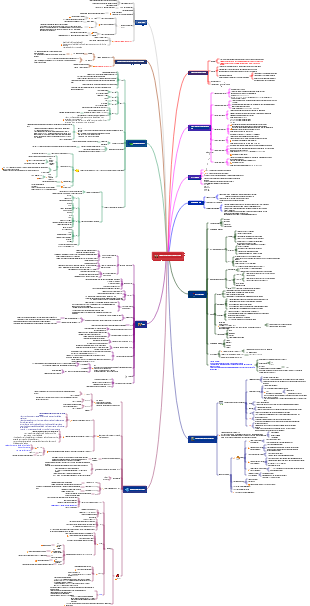
MindMap Gallery Safety facility safety valve [working principle version]
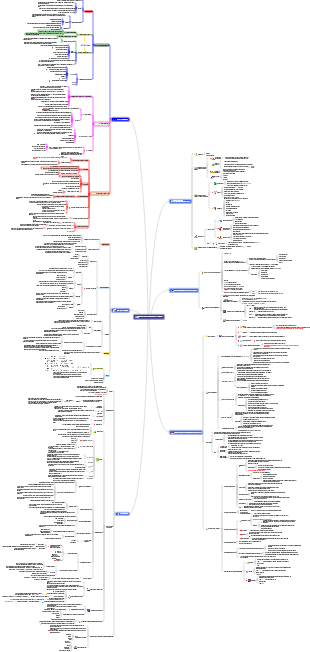
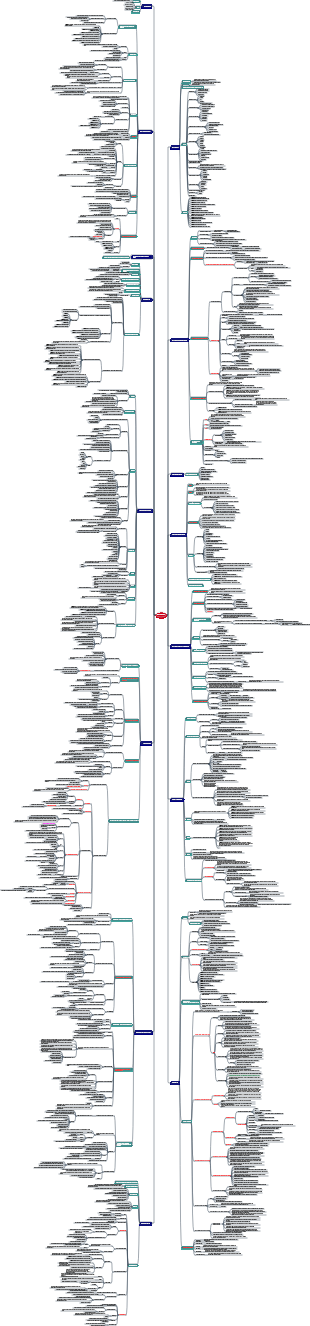
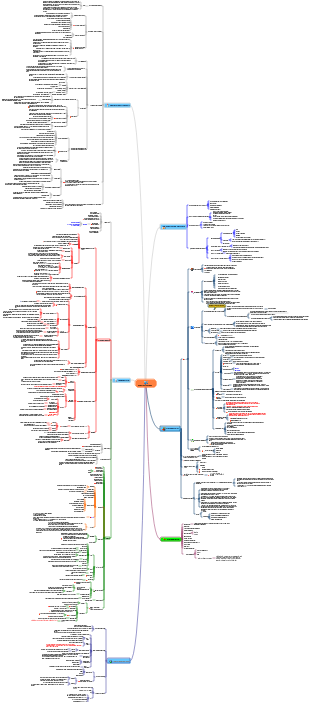
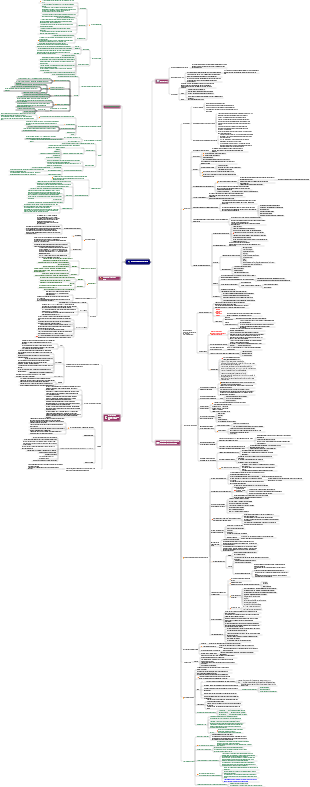
As a key control safety facility, safety valves play a huge role in preventing potential harm caused by excessive pressure. Understanding its working principles and being able to carry out correct selection, maintenance, inspection and troubleshooting are important steps to ensure that the company's internal equipment meets the four understanding and three meeting standards and ensures its normal operation.
Edited at 2024-01-29 08:22:02This infographic, created using EdrawMax, outlines the pivotal moments in African American history from 1619 to the present. It highlights significant events such as emancipation, key civil rights legislation, and notable achievements that have shaped the social and political landscape. The timeline serves as a visual representation of the struggle for equality and justice, emphasizing the resilience and contributions of African Americans throughout history.

This infographic, designed with EdrawMax, presents a detailed timeline of the evolution of voting rights and citizenship in the U.S. from 1870 to the present. It highlights key legislative milestones, court decisions, and societal changes that have expanded or challenged voting access. The timeline underscores the ongoing struggle for equality and the continuous efforts to secure voting rights for all citizens, reflecting the dynamic nature of democracy in America.
This infographic, created using EdrawMax, highlights the rich cultural heritage and outstanding contributions of African Americans. It covers key areas such as STEM innovations, literature and thought, global influence of music and arts, and historical preservation. The document showcases influential figures and institutions that have played pivotal roles in shaping science, medicine, literature, and public memory, underscoring the integral role of African American contributions to society.
This infographic, created using EdrawMax, outlines the pivotal moments in African American history from 1619 to the present. It highlights significant events such as emancipation, key civil rights legislation, and notable achievements that have shaped the social and political landscape. The timeline serves as a visual representation of the struggle for equality and justice, emphasizing the resilience and contributions of African Americans throughout history.
This infographic, designed with EdrawMax, presents a detailed timeline of the evolution of voting rights and citizenship in the U.S. from 1870 to the present. It highlights key legislative milestones, court decisions, and societal changes that have expanded or challenged voting access. The timeline underscores the ongoing struggle for equality and the continuous efforts to secure voting rights for all citizens, reflecting the dynamic nature of democracy in America.
This infographic, created using EdrawMax, highlights the rich cultural heritage and outstanding contributions of African Americans. It covers key areas such as STEM innovations, literature and thought, global influence of music and arts, and historical preservation. The document showcases influential figures and institutions that have played pivotal roles in shaping science, medicine, literature, and public memory, underscoring the integral role of African American contributions to society.
safety valve
4. Safety valve failure modes and countermeasures
01 Abnormal opening
It opens below the set pressure, that is, it opens below the set pressure.
(1) The setting pressure is inaccurate. Countermeasures: Readjust the compression of the spring;
(2) The elasticity of the spring decreases as it ages. Due to long-term use or medium corrosion, the spring ages and its elasticity decreases. Countermeasures: Tighten the adjusting screw appropriately or replace the spring.
(3) The operating temperature increases, resulting in a decrease in opening pressure. Countermeasures: When adjusting at normal temperature and using it at high temperature, the set pressure value at normal temperature should be slightly higher than the required opening pressure value.
(4) Due to leakage and other reasons, the operating environment of the safety valve is higher than the allowable working temperature of the spring, causing the spring elastic force to decrease. Countermeasures: Grind the sealing surface in time to eliminate leakage and replace with a new spring.
(5) The safety valve is tilted. The safety valve is tilted due to installation or contact and extrusion. Countermeasures: Safety valves, especially dead weight safety valves and lever safety valves, must be installed vertically and equipped with a solid protective ring.
The over-set pressure is turned on, that is, it is turned on only when the maximum allowable working pressure of the equipment is exceeded. This loses the overload protection function of the safety valve. The reasons for this situation and the countermeasures are as follows:
(1) The setting pressure is inaccurate and the setting pressure is adjusted too high. Countermeasures: Readjust the compression of the spring.
(2) The valve disc and valve seat are stuck. Because the safety valve has not operated for a long time and has not been regularly inspected and repaired, it has rusted, causing the valve disc to adhere to the valve seat. Countermeasures: Regularly perform manual deflation or water release tests on the safety valve, and pay attention to moisture-proofing during use.
(3) Internal foreign matter is stuck, and the valve disc cannot overcome the obstacle and rise, causing the opening pressure to increase or the valve to be unable to open. Countermeasures: Check and remove foreign matter.
(4) External foreign matter is blocked, the external weight of the static weight or lever type safety valve is artificially aggravated, or other reasons prevent the valve disc from opening normally. Countermeasures: Check and remove foreign matter.
(5) The operating temperature decreases, causing the opening pressure to increase. Countermeasures: When adjusting at normal temperature and using it at low temperature, the set pressure value at normal temperature should be slightly lower than the required opening pressure value.
02Safety valve leaks
Under the normal operating pressure of the equipment, leakage exceeding the allowable level occurs between the valve disc and the valve seat sealing surface.
(1) There are impurities between the valve disc and the valve seat sealing surface. Countermeasures: Use a lifting wrench to open the valve several times to flush out impurities or stolen goods;
(2) Damage to the sealing surface. Due to the material, hardness, assembly, etc. of the sealing surface, the sealing surface may be deformed or misaligned during the safety valve's take-off and return process, or the sealing surface may expand and deform due to temperature changes in the sealing medium, which may lead to medium leakage. Countermeasures: Select a safety valve of appropriate material based on the nature of the sealing medium, possible temperature changes, etc. Defects or damage to the sealing surface of the safety valve should be repaired by grinding, turning and then grinding depending on the situation. At the same time, pay attention to grinding. way to prevent grooves from appearing.
(3) Gasket damage. If the sealing gasket is damaged due to impurities or hard objects stuck, squeezed, or pressed, replace it with a qualified gasket. At the same time, pay attention to cleaning the installation location and installation objects first when placing the gasket;
(4) The valve stem is bent and tilted, causing the valve disc and valve seat to be misaligned. Countermeasures: Reassemble or replace;
(5) The elasticity of the spring is reduced or lost. Because the spring is corroded by the medium or the temperature of the medium increases, the spring becomes soft, the preload force is reduced, and leakage occurs. Countermeasures: Strengthen spring anti-corrosion and heat insulation measures, replace springs in time or readjust opening pressure.
(6) The spring is broken. Countermeasure: Replace the spring.
(7) Improper assembly or improper size of related parts. During the assembly process, the valve core and valve seat are not completely aligned or there is light transmission on the joint surface. The reason is that the sealing surface of the valve core and valve seat is too wide, which is not conducive to sealing. Countermeasures: Check the size and uniformity of the matching gap around the valve core, and ensure that the center hole of the valve core and the sealing surface are aligned; check that the clearance between each part is not allowed to lift the valve core; the drawing requires that the width of the sealing surface be appropriately reduced to achieve effective sealing.
(8) The joint surface of the valve body leaks, and the tightening force of the bolts on the joint surface is insufficient or biased, resulting in poor sealing of the joint surface; the sealing gasket on the joint surface of the valve body does not meet the standards. Countermeasures: Adjust the bolt tightening force. When tightening the bolts, be sure to tighten them diagonally. It is best to measure the gaps while tightening, tighten the bolts until they stop, and make the gaps consistent across the joint surface. Secondly, standard gaskets should be used.
(9) The contact between the valve stem and the valve disc is corroded, causing the valve disc to lose its self-seating ability. When the exposed valve stem is disturbed, the valve disc will deflect, causing sealing failure and leakage. Countermeasures: Regularly check the contact groove between the valve stem and the valve disc, and take reasonable anti-rust measures.
(10) The set pressure is too close to the equipment working pressure. Since the equipment working pressure fluctuation range is close to or exceeds the sealing pressure of the safety valve, leakage may occur. Countermeasures: Select an appropriate safety valve and set the safety valve setting pressure reasonably.
03 Safety valve disc is unstable
The valves jump or vibrate. Frequency hopping means that after the safety valve returns to its seat, when the pressure rises slightly, the safety valve will open again, repeated several times. This phenomenon is called the "frequency hopping" of the safety valve. The occurrence of frequency hopping is extremely detrimental to the sealing of the safety valve and can easily cause leakage on the sealing surface. The jitter phenomenon that occurs in the safety valve during the discharge process is called the flutter of the safety valve. The chatter phenomenon can easily cause metal fatigue, reduce the mechanical performance of the safety valve, and cause serious equipment hazards. Its instability is mainly due to:
(1) The spring stiffness is too large, the valve disc cannot rise to the opening height, the discharge volume is too small, and the pressure continues to rise after the safety valve is opened, causing it to reopen. The countermeasure is to use a spring with appropriate stiffness;
(2) The adjustment ring is improperly adjusted and the channel area is too large. After the safety valve is opened, the pressure drops sharply below the working pressure. The valve will close with the violent impact of the valve disc on the valve seat. Since the source of the pressure increase has not been eliminated, The valve flap opens again, causing a frequency jump. Countermeasures: Readjust the position of the adjustment ring.
(3) The resistance of the discharge pipeline is too large, and the momentum of the outflowing medium decreases sharply, resulting in excessive discharge back pressure. Countermeasures: Reduce the resistance of the discharge pipe and remove obstacles in the discharge pipe.
(4) The valve is used improperly and the valve discharge capacity is too large. Countermeasures: Make the rated displacement of the selected valve as close as possible to the necessary discharge of the equipment.
The safety valve returns abnormally after action.
The pressure continues to rise after exhausting. This is mainly:
(1) The displacement of the selected safety valve is smaller than the safety relief capacity of the equipment. After the safety valve is opened, there is no time to drain the overpressure medium, and the pressure of the pressure vessel continues to rise. Countermeasures: Re-select a suitable safety valve.
(2) The center line of the valve stem is incorrect or the spring is rusty, which prevents the valve disc from rising to the desired height, resulting in a reduction in the discharge volume of the safety valve. Countermeasures: Reassemble the valve stem or replace the spring, and pay attention to the anti-rust measures of the spring;
(3) The cross-section of the exhaust pipe is insufficient, causing the safety valve displacement to be less than the safe discharge volume of the equipment. Countermeasures: Use an exhaust pipe that meets the safe discharge area.
(4) The spring level does not meet the requirements. Because the stiffness is too small, the spring compression amount is too large during adjustment, resulting in insufficient opening height. Countermeasures: Replace the spring with the corresponding level, and the spring stiffness should be appropriate.
The valve disc does not return to its seat after discharge. This is mainly:
(1) The spring bends the valve stem and the valve disc is installed in an incorrect position or is stuck. Countermeasures: Reassemble, carefully inspect the moving parts for defects such as bruises, naps, rust or burrs, and remove them in time.
(2) The safety valve spring broke during use. After opening, the broken point was misplaced, causing the valve disc to fail to return to its seat normally. Countermeasures: Replace new springs in time.
3. Safety valve installation instructions
1. Installation requirements
① For highly toxic media, a safety valve type with good sealing performance should be selected.
② For corrosive media, the safety valve must be installed in combination with the bursting disc.
③ For important safety valves or safety valves that are susceptible to fire, sprinkler protection must be installed.
④ For high-temperature medium safety valves, high temperature has a greater impact on springs, so spring-type safety valves should be avoided.
⑤The safety valve should be equipped with an electrostatic jumper.
⑥In order to prevent the safety valve from opening and closing repeatedly, causing flutter and damaging the valve, it is necessary to reduce the pressure drop in the safety valve inlet pipe, that is, increase the inlet pipe diameter and shorten the inlet pipe section.
⑦ For safety valves used in spherical tanks, double safety valves must be installed, and the pressure relief capacity of any one of the safety valves can meet the safety pressure relief requirements of spherical tanks.
2. Installation position
①The installation location should be as close as possible to the protected equipment or pipeline.
②Install vertically upward.
③Install in a place that is easy to maintain and adjust, with enough space around it.
④ For containers and equipment containing flammable, toxic, and viscous media, a stop valve can be installed in front of the safety valve, but the flow area of the stop valve must not be less than the minimum flow area of the safety valve, and a lead seal must be installed to ensure that the stop valve In the fully open and normally open state.
⑤The safety valve of the pressure vessel should be installed in the gas phase space above the liquid level of the container body, or it can be installed on the pipe with the connection point located in the gas phase space of the pressure vessel.
⑥ For safety valves that may be blocked or corroded by materials, install a bursting disc in front of the inlet, install an inspection valve between the safety valve and the bursting disc, and adopt backpurge, heat tracing or insulation on the inlet pipeline. Anti-blocking measures.
⑦ The safety valve should be installed in the opposite direction to the stop valve to reduce the influence of the valve's own gravity and avoid stress fatigue and discharge vibration fatigue.
⑧The safety valve installed on the pipeline should be installed at a place where the fluid pressure is relatively stable and at a certain distance from the source of fluctuation. It cannot be installed in a dead corner of a horizontal pipeline.
⑨ For emergency air discharge, the nozzle should be flat, not sharp, and have no burrs to prevent electrostatic discharge.
⑩ For pipelines, heat exchangers or pressure vessels with liquid media, thermal expansion may occur when the valve is closed, causing the problem of high pressure. The safety valve can be installed horizontally to discharge the liquid directly downwards.
⑪The valve body of the safety valve must be supported stably.
⑫ The installation point of the safety valve should not cause the safety valve to withstand excessive back pressure and should be within the allowable range.
⑬ For containers whose media are extremely and highly hazardous or flammable and explosive media, the discharge port of the safety valve should be directed to a safe location and properly disposed of.
If two or more safety valves share a discharge pipe, the cross-sectional area of the discharge pipe should not be less than the sum of the outlet cross-sectional areas of all safety valves, but oxygen or flammable gases and other two gases that can chemically react with each other cannot share a discharge pipe. Root drain pipe.
2. Safety valve selection instructions
1. Determination of various parameters of safety valve
① Determine the nominal pressure of the safety valve
The nominal pressure is selected based on the operating temperature, valve material and maximum operating pressure.
② Determine the working pressure level of the safety valve
The working pressure level is selected according to the design temperature and design pressure of the pressure vessel. The working pressure level of the spring and the working pressure of the safety valve have different meanings. The working pressure level of a spring refers to the working pressure range that a certain spring is allowed to use. Within this pressure range, the opening pressure (that is, the set pressure) of the safety valve can be adjusted by changing the preload compression amount of the spring. The working pressure of the safety valve refers to the static pressure in front of the safety valve during normal operation, which is the same as the working pressure of the protected system or equipment. Safety valves with the same nominal pressure can be divided into many different working pressure levels according to spring design requirements. When selecting a safety valve, the working pressure level of the valve should be determined based on the required opening pressure value.
③Determine the discharge pressure Pd of the safety valve
The discharge pressure of the steam boiler safety valve is 1.03 times the set pressure, and the discharge pressure of the safety valve is generally 1.1 times the set pressure (opening pressure).
④Determination of material
When selecting the material of the safety valve, various factors such as the working temperature and working pressure of the medium, the performance of the medium, the processability of the material, and the economy should be considered.
⑤Determine the diameter of the safety valve
Determined based on the required discharge amount, the discharge capacity of the safety valve ≥ the necessary discharge amount. The necessary discharge amount of the protected system refers to the amount that must be discharged to prevent overpressure when abnormal overpressure occurs in the system. It is determined by the working conditions, capacity of the system or equipment, and factors that may cause overpressure.
2. Determination of the special structure of the safety valve
① For safety valves for steam with an opening pressure greater than 3MPa or safety valves for gases with a medium temperature exceeding 320°C, safety valves with radiators (fins) should be selected.
② Closed safety valves must be used for flammable, extremely toxic or highly hazardous media. If a lifting mechanism is required, a closed safety valve with a wrench should be used.
③ For safety valves that bear additional back pressure, and when the change in back pressure exceeds 10% of the set pressure, a bellows safety valve should be selected. In addition, for safety valves using corrosive media, in order to prevent the spring and guide mechanism from being corroded by the medium, bellows safety valves should also be used.
④Liquefaction tank (tank) trucks should use built-in safety valves.
⑤ For non-hazardous media such as air, hot water above 60℃ or steam, a safety valve with a wrench should be used.
⑥For fixed containers with low working pressure, static weight type (pressure cooker) or lever weight type safety valves can be used. Mobile equipment should use spring-loaded safety valves.
⑦ For working conditions with large discharge volume, the full-opening type should be selected; for working conditions with stable working pressure and small discharge volume, the micro-opening type should be selected; for vessels with a length exceeding 6m, two or more safety valves should be installed; For working conditions with high pressure and large discharge volume, indirect starting type, such as pulse type safety valve, should be used.
⑧For medium that is thick and easy to block, it is advisable to use a series combination relief device with a safety valve and a bursting disc.
1. Safety valve classification and characteristics
1. Classification according to overall structure and loading mechanism
①Heavy hammer lever safety valve
The heavy hammer lever safety valve uses a heavy hammer and a lever to balance the force acting on the valve disc. According to the lever principle, it can use a weight with a smaller mass to obtain a larger force through the increase of the lever, and adjust the opening pressure of the safety valve by moving the position of the weight (or changing the mass of the weight).
advantage
The heavy hammer lever type safety valve has a simple structure, is easy to adjust and is relatively accurate, and the added load will not increase greatly due to the rise of the valve disc. It is suitable for occasions with higher temperatures. It was more commonly used in the past, especially It is used in boilers and pressure vessels with higher temperatures.
shortcoming
However, the structure of the heavy hammer lever safety valve is relatively bulky, the loading mechanism is prone to vibration, and leakage often occurs due to vibration; its seat back pressure is low, and it is difficult to close and maintain tightness after opening.
picture
②Pulse safety valve
The pulse safety valve is composed of a main valve and an auxiliary valve. The pulse action of the auxiliary valve drives the action of the main valve. Its structure is complex and it is usually only suitable for boilers and pressure vessels with large safety relief volumes.
advantage:
The spring-type safety valve has a light and compact structure, relatively high sensitivity, unlimited installation position, and because it is less sensitive to vibration, it can be used on mobile pressure vessels.
shortcoming:
The applied load will change as the valve opens, that is, as the valve disc rises, the compression of the spring increases, and the force acting on the valve disc also increases. This is detrimental to the rapid opening of the safety valve. In addition, the spring on the valve will reduce its elasticity due to long-term exposure to high temperatures. When used on containers with higher temperatures, the thermal insulation or heat dissipation of the spring often has to be considered, making the structure complicated.
picture
③Spring type safety valve (more common)
Spring-type safety valves use the force of a compression spring to balance the force acting on the valve disc. The compression amount of the spiral coil spring can be adjusted by turning the adjusting nut on it. Using this structure, the opening (setting) pressure of the safety valve can be corrected as needed.
advantage:
The spring-type safety valve has a light and compact structure, relatively high sensitivity, unlimited installation position, and because it is less sensitive to vibration, it can be used on mobile pressure vessels.
shortcoming:
The applied load will change as the valve opens, that is, as the valve disc rises, the compression of the spring increases, and the force acting on the valve disc also increases. This is detrimental to the rapid opening of the safety valve. In addition, the spring on the valve will reduce its elasticity due to long-term exposure to high temperatures. When used on containers with higher temperatures, the thermal insulation or heat dissipation of the spring often has to be considered, making the structure complicated.
picture
2. Different classifications of media discharge methods
①Open safety valve
The valve cover of the open safety valve is open, allowing the spring chamber to communicate with the atmosphere, which is beneficial to reducing the temperature of the spring. It is mainly suitable for containers where the medium is steam and high-temperature gases that do not pollute the atmosphere.
② Semi-closed safety valve
Part of the gas discharged by the semi-closed safety valve passes through the exhaust pipe, and part of it leaks from the gap between the valve cover and the valve stem. It is mostly used in containers whose medium is gas that will not pollute the environment.
③Fully enclosed safety valve
When a fully enclosed safety valve is exhausted, all gas is discharged through the exhaust pipe, and the medium cannot leak to the outside. It is mainly used in containers with toxic and flammable gases as the medium.
3. Classified according to the ratio of the maximum height of the valve disc opening to the flow channel
① Full lift safety valve
The opening height of a full-open safety valve is greater than or equal to 1/4 of the flow channel diameter. The discharge area of a full lift safety valve is the minimum cross-sectional area of the valve seat throat. Its action process is a two-stage action type, and it must rely on a lift mechanism to achieve full opening. The full opening safety valve is mainly used in gas medium situations.
② Micro-lift safety valve
The opening height of the micro-lift safety valve is less than 1/4 of the flow channel diameter, usually 1/40 to 1/20 of the flow channel diameter. Its action process is proportional action, mainly used in liquid situations, and sometimes also in gas situations with very small emissions.
4. Classification according to principle of action
①Indirect acting safety valve
This type of safety valve can be divided into safety valves with power auxiliary devices and pilot-operated safety valves.
Safety valve with power assist device: With the help of a power assist device, the safety valve is forced to open when the pressure is lower than the normal opening pressure. It is suitable for occasions where the opening pressure is very close to the working pressure, or where the safety valve needs to be opened regularly for inspection or to blow out stuck or frozen media. At the same time, it also provides a means to force the safety valve to open in an emergency.
Pilot-operated safety valve: It is driven or controlled by the medium discharged from the pilot valve. The pilot valve itself is a direct-acting safety valve, and sometimes other forms of valves are also used. Suitable for high pressure and large diameter applications. The main valve of the pilot-operated safety valve can also be designed to rely on the working medium for sealing, or it can impose a much larger mechanical load on the valve disc than the direct-acting safety valve, so it has good sealing performance. At the same time, its action is rarely affected by back pressure. The disadvantage of this safety valve is that its reliability is related to the main valve and pilot valve, its action is not as fast and reliable as the direct-acting safety valve, and its structure is more complex.
②Direct acting safety valve
The direct-acting safety valve is opened under the direct action of the working medium, that is, it relies on the pressure of the working medium to overcome the mechanical load imposed on the valve disc by the loading mechanism to open the valve.