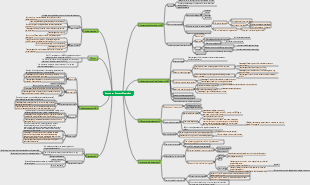
MindMap Gallery OS Chapter 1
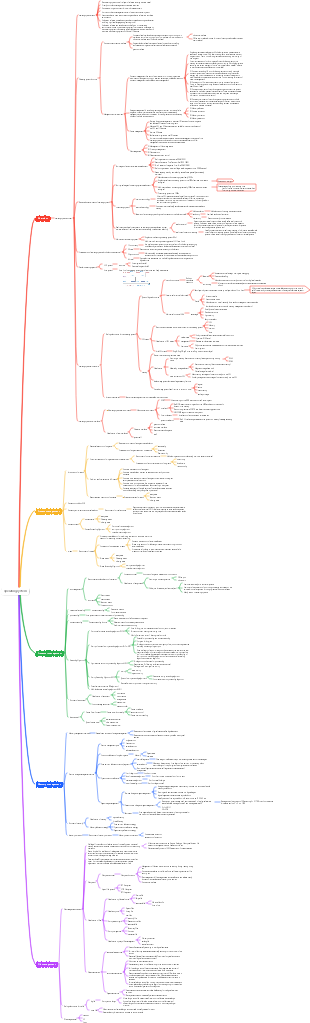
This is a mind map about the first chapter of OS, which introduces the basic concepts of OS, 0S development, 0S operating environment, etc.
Edited at 2024-01-28 14:25:36This strategic SWOT analysis explores how Aeon can navigate the competitive online landscape, highlighting strengths, weaknesses, opportunities, and threats. Strengths include strong brand recognition (trusted Japanese heritage, quality), omnichannel capabilities (stores + online + mall integration), customer loyalty programs (Aeon Card, points, member pricing), and physical footprint (extensive store network for pickup/returns). Weaknesses encompass digital maturity gaps (e-commerce penetration, app functionality, personalization vs. Amazon, Alibaba), cost structure challenges (store-heavy, real estate, labor), and supply chain complexity (fresh food, frozen logistics for online). Opportunities include enhancing e-commerce competitiveness (faster delivery, wider assortment, lower minimum order), leveraging data-driven strategies (purchase history, personalized offers, inventory optimization), expanding omnichannel integration (buy online pick up in store, ship from store), and private label growth (Topvalu, localized brands). Threats involve online-first players (Amazon, Alibaba, Sea Limited) with lower costs, wider selection, faster delivery, market dynamics (changing consumer behavior post-COVID, discount competitors), and regulatory risks (data privacy, cross-border e-commerce rules). Aeon can strengthen market position by investing in digital capabilities, leveraging store assets for omnichannel, and using customer data for personalization, while addressing cost structure and online competition.

This analysis explores how Aeon effectively tailors offerings to meet the diverse needs of family-oriented consumers through a comprehensive Segmentation, Targeting, and Positioning (STP) framework. Demographic segmentation examines family life stages (young families with babies, school-aged children, teenagers, empty nesters), household sizes (small vs. large), income levels (mass, premium), and parent age bands (millennials, Gen X). This identifies distinct consumer groups with different spending patterns. Geographic segmentation highlights store catchment types (urban, suburban, rural), community characteristics (density, income, competition), and local preferences (fresh food, halal, Japanese products). Psychographic segmentation delves into family values (health, safety, education, convenience), lifestyle orientations (busy professionals, home-centered, eco-conscious). Behavioral segmentation focuses on shopping missions (daily grocery, weekly stock-up, seasonal shopping), price sensitivity (value seekers, premium), channel preferences (in-store, online, pickup). Needs-based segmentation reveals core family needs related to value (good-better-best pricing), budget considerations (affordability, promotions, member pricing), safety (food quality, product recall), convenience (one-stop shopping, parking, store hours). Targeting prioritizes young families with school-aged children, budget-conscious households, and convenience-seeking shoppers. Positioning emphasizes Aeon as a family-friendly, value-for-money, one-stop destination with Japanese quality and local relevance. These insights enhance family shopping experiences through tailored assortments (kids’ products, school supplies), promotions (family bundles, weekend events), and services (nursing rooms, kids’ play areas).
This Kream Sneaker Consumption Scene Analysis Template aims to visualize purchasing and consumption journeys of sneakers, identifying key demand drivers and obstacles. User behavior within Kream includes searching, bidding, buying, selling, authentication, and community engagement. External influences include brand drops (Nike, Adidas), social media (Instagram, TikTok), influencer hype, and cultural trends. Target categories: limited editions, collaborations, retro releases, performance sneakers, and general releases. Timeframes: launch day, first week, first month, long-term (seasonal, yearly). Regions: North America, Europe, Asia (Korea, China, Japan). User segments: Collectors: value rarity, condition, completeness (box, accessories). KPIs: collection size, spend, authentication rate. Resellers: value profit margin, volume, turnover. KPIs: sell-through rate, average profit, listing frequency. Sneakerheads: value hype, trends, community validation. KPIs: purchase frequency, social engagement, wishlist adds. Casual trend followers: value style, convenience, price. KPIs: conversion rate, average order value, repeat purchases. Gift purchasers: value ease, presentation, brand trust. KPIs: gift message usage, return rate. Consumption journey: Awareness: social media, email, push notifications. Search: browse, filter, search by brand, model, size. Purchase: bid, buy now, payment, shipping. Authentication: inspection, verification, certification. Resale: list, price, sell, transfer. Sharing: review, unboxing, social post, community discussion. Key performance indicators: conversion rate, sell-through rate, average order value, customer lifetime value, authentication pass rate, return rate, Net Promoter Score. This framework helps understand sneaker trading dynamics, user motivations, and touchpoints for engagement and satisfaction.
This strategic SWOT analysis explores how Aeon can navigate the competitive online landscape, highlighting strengths, weaknesses, opportunities, and threats. Strengths include strong brand recognition (trusted Japanese heritage, quality), omnichannel capabilities (stores + online + mall integration), customer loyalty programs (Aeon Card, points, member pricing), and physical footprint (extensive store network for pickup/returns). Weaknesses encompass digital maturity gaps (e-commerce penetration, app functionality, personalization vs. Amazon, Alibaba), cost structure challenges (store-heavy, real estate, labor), and supply chain complexity (fresh food, frozen logistics for online). Opportunities include enhancing e-commerce competitiveness (faster delivery, wider assortment, lower minimum order), leveraging data-driven strategies (purchase history, personalized offers, inventory optimization), expanding omnichannel integration (buy online pick up in store, ship from store), and private label growth (Topvalu, localized brands). Threats involve online-first players (Amazon, Alibaba, Sea Limited) with lower costs, wider selection, faster delivery, market dynamics (changing consumer behavior post-COVID, discount competitors), and regulatory risks (data privacy, cross-border e-commerce rules). Aeon can strengthen market position by investing in digital capabilities, leveraging store assets for omnichannel, and using customer data for personalization, while addressing cost structure and online competition.
This analysis explores how Aeon effectively tailors offerings to meet the diverse needs of family-oriented consumers through a comprehensive Segmentation, Targeting, and Positioning (STP) framework. Demographic segmentation examines family life stages (young families with babies, school-aged children, teenagers, empty nesters), household sizes (small vs. large), income levels (mass, premium), and parent age bands (millennials, Gen X). This identifies distinct consumer groups with different spending patterns. Geographic segmentation highlights store catchment types (urban, suburban, rural), community characteristics (density, income, competition), and local preferences (fresh food, halal, Japanese products). Psychographic segmentation delves into family values (health, safety, education, convenience), lifestyle orientations (busy professionals, home-centered, eco-conscious). Behavioral segmentation focuses on shopping missions (daily grocery, weekly stock-up, seasonal shopping), price sensitivity (value seekers, premium), channel preferences (in-store, online, pickup). Needs-based segmentation reveals core family needs related to value (good-better-best pricing), budget considerations (affordability, promotions, member pricing), safety (food quality, product recall), convenience (one-stop shopping, parking, store hours). Targeting prioritizes young families with school-aged children, budget-conscious households, and convenience-seeking shoppers. Positioning emphasizes Aeon as a family-friendly, value-for-money, one-stop destination with Japanese quality and local relevance. These insights enhance family shopping experiences through tailored assortments (kids’ products, school supplies), promotions (family bundles, weekend events), and services (nursing rooms, kids’ play areas).
This Kream Sneaker Consumption Scene Analysis Template aims to visualize purchasing and consumption journeys of sneakers, identifying key demand drivers and obstacles. User behavior within Kream includes searching, bidding, buying, selling, authentication, and community engagement. External influences include brand drops (Nike, Adidas), social media (Instagram, TikTok), influencer hype, and cultural trends. Target categories: limited editions, collaborations, retro releases, performance sneakers, and general releases. Timeframes: launch day, first week, first month, long-term (seasonal, yearly). Regions: North America, Europe, Asia (Korea, China, Japan). User segments: Collectors: value rarity, condition, completeness (box, accessories). KPIs: collection size, spend, authentication rate. Resellers: value profit margin, volume, turnover. KPIs: sell-through rate, average profit, listing frequency. Sneakerheads: value hype, trends, community validation. KPIs: purchase frequency, social engagement, wishlist adds. Casual trend followers: value style, convenience, price. KPIs: conversion rate, average order value, repeat purchases. Gift purchasers: value ease, presentation, brand trust. KPIs: gift message usage, return rate. Consumption journey: Awareness: social media, email, push notifications. Search: browse, filter, search by brand, model, size. Purchase: bid, buy now, payment, shipping. Authentication: inspection, verification, certification. Resale: list, price, sell, transfer. Sharing: review, unboxing, social post, community discussion. Key performance indicators: conversion rate, sell-through rate, average order value, customer lifetime value, authentication pass rate, return rate, Net Promoter Score. This framework helps understand sneaker trading dynamics, user motivations, and touchpoints for engagement and satisfaction.
Operating System Chapter 1
1.1 Basic concepts of OS
What is OS
An operating system refers to a collection of programs that controls and manages the hardware and software resources of the entire computer system, rationally organizes and schedules the computer's work and resource allocation, and then provides convenient interfaces and environments for users and other software. The operating system is the most basic system software in the computer system. The operating system is the core of the software.
OS features
concurrent
Concurrency is the same time interval; it is achieved through time sharing; Parallelism is at the same time; it requires the support of related hardware, such as pipeline or multi-processor hardware environment
shared
Mutually exclusive sharing: critical resources, resources that only one process is allowed to access within a period of time, critical resources are required to be mutually exclusive shared; simultaneous access: disk devices;
virtual
Time division multiplexing technology-multiple CPU space division multiplexing technology-expanded memory
asynchronous
Processes move forward at unequal speeds
OS goals and functions
computer system resource manager
Process management: process control, process synchronization, process communication, deadlock handling, processor scheduling, etc.; Memory management: memory allocation and recycling, address mapping, memory protection and sharing, memory expansion; File management: management of file storage space, Directory management, file read and write management, file protection; IO management: buffer management, device allocation, device processing, virtual devices;
The interface between the user and the computer hardware system
command interface
Online control mode (interactive command interface)
Similar to cmd command window
Offline control mode (batch command interface)
Daily programming
Program interface (generalized instructions)
Such as GUI
Realized the expansion of computer resources
1.2 Development of OS
manual stage
The user monopolizes the entire machine, resulting in low resource utilization and insufficient CPU utilization;
Single lane batch processing system
In order to solve the contradiction between man and machine and the mismatch in the speed of CPU and IO equipment; Features: automatic (a batch of jobs can be run automatically one by one without human intervention under normal circumstances), sequential execution, single-channel (program completion or occurrence Switch to the successor program only when an exception occurs); Disadvantage: Only one job is stored in the memory at a time. When an IO request occurs, you need to wait for low-speed IO.
multi-pass batch processing
In order to further improve resource utilization and system throughput, multiprogramming technology was introduced; Features: multi-channel, macro-parallel, micro-serial; Advantages: high resource utilization, large system throughput; Disadvantages: long user response time, no human-computer interaction function (users do not know the running status of their own programs and cannot control the computer) ); Problems need to be solved: how to allocate processors, memory allocation issues for multi-programs, how to allocate IO, how to organize and store large amounts of programs and data while ensuring security and consistency;
time-sharing operating system
Using time slice method, human-computer interaction is possible; Simultaneity: Multiple users use the same computer; Interactivity: Users directly control the program running through the terminal through human-computer dialogue; Independence: Multiple users in the system can operate independently of each other Carry out operations without interfering with each other; timeliness: user requests can be responded to in a short time;
real-time operating system
In some applications, the system needs to be able to process external information within a specified time (shorter than the time slice) (such as aircraft booking systems or missile guidance systems). Therefore, real-time operating systems emerge as the times require. Features: timely and reliable; Category: hard/soft real-time system
network operating system
Sharing of various resources in the network and communication between computers
Distributed operating system
The essential difference between a distributed OS and a network OS is that several computers in a distributed operating system collaborate with each other to complete the same task. Features: Distribution, parallelism
Personal computer
1.3 OS operating environment
Executing a program means that the CPU performs specific operations one by one according to instructions. The CPU executes two programs of different nature: one is the operating system kernel program; the other is the user-programmed program (i.e., the application program on the outer layer of the system, or simply "application program"). For the operating system, these two programs have different functions. The former is the manager of the latter. Therefore, the "management program" (i.e., the kernel program) has to execute some privileged instructions, while the "managed program" (i.e., the user-programmed program) ) These instructions cannot be executed for security reasons. In terms of specific implementation, the operating mode of the CPU is divided into user mode (eye mode) and core mode (also known as pipe mode and kernel mode). The kernel is the underlying software configured on the computer. It manages various resources of the system and can be regarded as a bridge connecting applications and hardware.
CPU status
Classification
User mode, the instruction to switch to user mode is also a privileged instruction;
core state
User mode->Core mode
interrupt
abnormal
Access control instructions
operating system kernel
clock management
Timing
Process switching (time slice rotation scheduling)
Interrupt mechanism
primitive
Such as device driver control, CPU switching
Data structure and processing in the system
Process management
memory management
Device management
Interrupts and Exceptions
system call
Device management
File management
process control
process communication
Memory management
1.4 Architecture
Big core architecture
microkernel architecture
1.5 OS boot and virtual machine