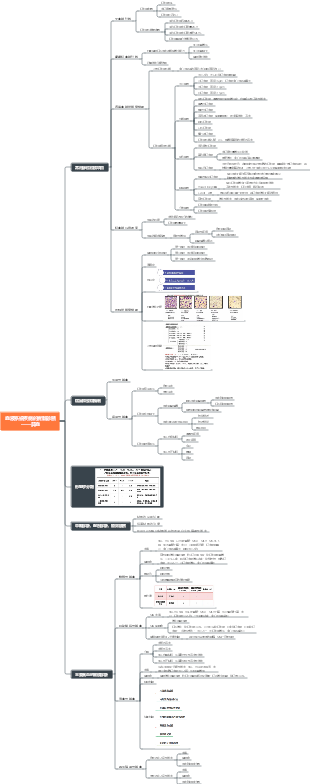
MindMap Gallery Chemical element compounds Alkali metal elements and their compounds (taking Na as an example)
Sodium and its important compounds. Contains properties, structure, Chemistry, reaction preparation Save, apply, etc. #High School Chemistry# Class Review Summary High School Chemistry Notes
Edited at 2024-01-26 22:52:40Avatar 3 centers on the Sully family, showcasing the internal rift caused by the sacrifice of their eldest son, and their alliance with other tribes on Pandora against the external conflict of the Ashbringers, who adhere to the philosophy of fire and are allied with humans. It explores the grand themes of family, faith, and survival.
This article discusses the Easter eggs and homages in Zootopia 2 that you may have discovered. The main content includes: character and archetype Easter eggs, cinematic universe crossover Easter eggs, animal ecology and behavior references, symbol and metaphor Easter eggs, social satire and brand allusions, and emotional storylines and sequel foreshadowing.
[Zootopia Character Relationship Chart] The idealistic rabbit police officer Judy and the cynical fox conman Nick form a charmingly contrasting duo, rising from street hustlers to become Zootopia police officers!
Avatar 3 centers on the Sully family, showcasing the internal rift caused by the sacrifice of their eldest son, and their alliance with other tribes on Pandora against the external conflict of the Ashbringers, who adhere to the philosophy of fire and are allied with humans. It explores the grand themes of family, faith, and survival.
This article discusses the Easter eggs and homages in Zootopia 2 that you may have discovered. The main content includes: character and archetype Easter eggs, cinematic universe crossover Easter eggs, animal ecology and behavior references, symbol and metaphor Easter eggs, social satire and brand allusions, and emotional storylines and sequel foreshadowing.
[Zootopia Character Relationship Chart] The idealistic rabbit police officer Judy and the cynical fox conman Nick form a charmingly contrasting duo, rising from street hustlers to become Zootopia police officers!
Chemical Elemental compounds Alkali metal elements and their compounds (taking Na as an example)
nature
physical properties
silvery white solid
Soft
Less dense than water
chemical properties
Can react with water to float, melt, swim, ring, and turn red
structure
In the nuclear structure, the number of electrons in the outermost shell is 1. When it becomes a stable structure, it is easy to lose electrons, and the chemical valence is 1.
chemical reaction
React with non-metals
Reacts with oxygen, the reaction conditions are different, and the products are different
Normal temperature: generate sodium oxide
Heating or burning: produces sodium peroxide
Reacts with chlorine: Heating produces sodium chloride, white smoke is generated, and the reaction is violent
Sodium eventually converts to sodium carbonate when exposed to air. Among them, sodium hydroxide is easy to deliquesce, and then generates sodium carbonate decahydrate and weathers. (Deliquescence is a physical change, weathering is a chemical change)
Reacts with water
Sodium chloride and hydrogen are generated, the reaction is exothermic, and the wall of the beaker is warm. float, melt, swim, ring, red
reacts with acid
Acid first then water, first water then salt
Does not react with base
Reacts with salt, first with water and then with salt
The essence is the reaction between sodium and water. If sodium reacts with saturated NaOH, bubbles will be generated first and then a white solid will precipitate.
Reacts with molten salt
Preparation of Industrial K:
The boiling point of potassium is lower than that of sodium. It escapes from the reaction system in the form of gas at high temperatures and the reaction is forced to occur.
There must be Na mixed in K(Nn)K
React with organic matter to determine the reactivity of alcohol, phenol and carboxyl groups
Reactions with organic matter are less severe than those with water
Analogy to other alkali metal elements
similarity
gradation
Special example: Potassium has a lower boiling point than sodium, industrial preparation of potassium
Flame reaction (physical change, related to the element itself, detecting whether a certain element is contained) Sodium-yellow Potassium - light purple (blue cobalt glass piece to exclude sodium interference) Equipment: platinum wire, washed with dilute hydrochloric acid (wash, burn, dip, burn, observe, wash, burn)
Application (application of compound)
Sodium oxide and sodium peroxide
Sodium oxide
white solid
Ratio of anions and cations: 1:2
Reacts with water to form sodium hydroxide; Reacts with carbon dioxide to produce sodium carbonate; Reacts with acid to produce sodium chloride and water
alkaline oxide
sodium peroxide
Light yellow solid
Ratio of anions and cations: 1:2
Not an alkaline oxide
Reacts with water to produce sodium hydroxide and oxygen; Reacts with carbon dioxide to produce sodium carbonate and oxygen; Reacts with acid to produce oxygen, water, and sodium ions
Purpose: Oxidative bleaching (permanent bleaching, irreversible) Submarine oxygen supply agent, oxidant
The transformation relationship between the two
Sodium carbonate and sodium bicarbonate
Sodium carbonate
Physical properties: soda ash, soda, easily soluble in water
Chemical properties: stable, not easy to decompose when heated, easy to weather
chemical reaction: 1. Reaction with non-metals: carbon dioxide and water react to form sodium bicarbonate 2. React with acid: generate carbon dioxide and water 3. Reaction with alkali calcium hydroxide: generate calcium carbonate precipitation 4. React with salt barium chloride and calcium chloride: generate precipitation
Usage: making glass
sodium bicarbonate
Physical properties: baking soda, easily soluble in water
Chemical properties: Easily decomposes when heated
chemical reaction: 1. Reacts with non-metals: carbon dioxide and water do not react, and cannot be weak or strong. 2. React with acid: generate carbon dioxide and water 3. Reaction with alkali calcium hydroxide: less certain and more variable 4. Reacts with salt barium chloride and calcium chloride: no reaction
use: fire extinguisher Medical treatment of gastric acid HCl (cannot be used for gastric ulcers because carbon dioxide is produced) fermentation
The transformation relationship between the two
Identification of both
save
Usually stored in kerosene or paraffin oil to prevent exposure to oxygen. Others cannot be put back into the bottle after use, but potassium and sodium must be put back immediately after use.
preparation
PreparationNa
Electrolysis of molten sodium chloride
Preparation of soda ash sodium carbonate
Ammonia-alkali method for producing soda ash
For ammoniation of brine, ammonia gas is first introduced into sodium chloride, and then carbon dioxide is introduced
shortcoming
The utilization rate of raw materials is not high, most of which are used to generate calcium chloride
The product calcium chloride has no utilization value
Combined alkali production method (Hou Debang alkali production method)
advantage
High raw material utilization rate
The by-product is ammonium chloride, which can be used as nitrogen fertilizer
Same principle. Different sources of raw materials and different by-products