MindMap Gallery Summary of the introduction to Heart Sutra
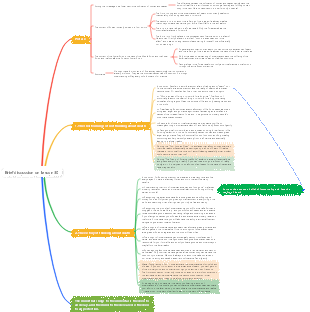
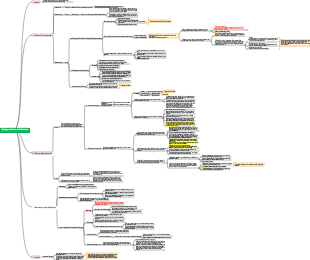
This is a mind map about the introduction and summary of the "Heart Sutra". The "Heart Sutra" is an important classic of the Mahayana Buddhism. Because the scriptures are short and concise and easy to recite, this sutra is very popular in mainland China and Tibet. In modern times, it has been translated into many languages and spread around the world.
Edited at 2024-01-23 11:02:05Avatar 3 centers on the Sully family, showcasing the internal rift caused by the sacrifice of their eldest son, and their alliance with other tribes on Pandora against the external conflict of the Ashbringers, who adhere to the philosophy of fire and are allied with humans. It explores the grand themes of family, faith, and survival.

This article discusses the Easter eggs and homages in Zootopia 2 that you may have discovered. The main content includes: character and archetype Easter eggs, cinematic universe crossover Easter eggs, animal ecology and behavior references, symbol and metaphor Easter eggs, social satire and brand allusions, and emotional storylines and sequel foreshadowing.
[Zootopia Character Relationship Chart] The idealistic rabbit police officer Judy and the cynical fox conman Nick form a charmingly contrasting duo, rising from street hustlers to become Zootopia police officers!
Avatar 3 centers on the Sully family, showcasing the internal rift caused by the sacrifice of their eldest son, and their alliance with other tribes on Pandora against the external conflict of the Ashbringers, who adhere to the philosophy of fire and are allied with humans. It explores the grand themes of family, faith, and survival.
This article discusses the Easter eggs and homages in Zootopia 2 that you may have discovered. The main content includes: character and archetype Easter eggs, cinematic universe crossover Easter eggs, animal ecology and behavior references, symbol and metaphor Easter eggs, social satire and brand allusions, and emotional storylines and sequel foreshadowing.
[Zootopia Character Relationship Chart] The idealistic rabbit police officer Judy and the cynical fox conman Nick form a charmingly contrasting duo, rising from street hustlers to become Zootopia police officers!
Summary of the introduction to "Heart Sutra"
Supplementary beginning
"Prajnaparamita Heart Sutra" belongs to the Buddha's two-time teaching method and belongs to the profound Prajnaparamita method. The characteristics of the two-time teaching method are "the two truths are unborn and the reality is separated." The "Diamond Sutra" and the "Heart Sutra" are The two sutras corroborate each other, which is of great benefit to us in truly understanding and accepting the Buddha's profound Prajnaparamita method.
Judgment
"Prajnaparamita Heart Sutra"
"Prajna" is the ability to break ignorance and see the truth. The practice of Buddhism, especially the practice of Mahayana Buddhism, is to mobilize the ability that we ordinary people have in our hearts to break ignorance and see the truth, to break ignorance. Thus we can see the reality of Buddha’s enlightenment. Therefore, Prajna is the core content of Mahayana Buddhism.
"Paramita" is the transliteration of the Sanskrit word, which means to save or reach the other shore.
The practice of Mahayana Buddhism can be summarized as the cultivation of the "six perfections", of which "prajna" is the core of the six perfections, the "eyes" of practice, the light, the guidance, and the guidance of the other "five perfections". Without prajna, the other five degrees are called "blind".
"Heart" here refers to "key points, essentials, and core content."
Therefore, the "Heart Sutra" talks about the essence and key points of Prajnaparamita. Therefore, although this sutra is short, its meaning is very important!
Although the "Heart Sutra" was spoken by Avalokitesvara Bodhisattva, it has been approved by the Buddha and is equivalent to what the Buddha said. Therefore, this sutra still belongs to the "sutra".
Exegetical questions
So I heard that at one time, the World-Honored One was in the Vulture Peak Mountain of Rajagaha, surrounded by a group of great monks and Bodhisattvas and Mahasattvas, as well as an assembly of Bodhisattvas and Mahasattvas. At that time, the World-Honored One entered the deep light and preached the Samadhi of the True Dharma. At that time, Avalokitesvara Bodhisattva Mahasattva was in the Buddha assembly. This Bodhisattva had been able to practice the deep Prajnaparamita and saw that the five aggregates were all empty in nature.
The preface of the "Heart Sutra" mainly introduces the time, place and people of this Dharma conference. Lingjiu Peak is the main location for teaching the teachings of the Second Period.
At that time, the Venerable Shariputra, in line with the Buddha's majesty, stepped forward and said to Avalokitesvara Bodhisattva Mahasattva: "If a good man or woman wishes to practice the profound Prajnaparamita Dharma here, what should I learn?" "At that time, Avalokitesvara Bodhisattva Mahasattva told the Venerable Shariputra: "Listen carefully now, I will preach to you. If you are a good man or a good woman who wishes to learn the profound Prajna Paramita Dharma, you should contemplate the nature of the five aggregates. All empty.
The authentic version of the Heart Sutra is the core content of this sutra.
The most widely circulated translation of the "Heart Sutra" is Master Xuanzang's translation, which begins with "Avalokitesvara". Obviously Xuanzang's translation is an abridged version, which is also called a brief version in Buddhism. The supplementary content is compiled based on the existing Sanskrit version and several translations of the full text.
Successfully access the translation of Master Xuanzang's "Heart Sutra"
first paragraph
Avalokitesvara Bodhisattva, after walking in the Deep Paramita for a long time, saw that the five aggregates are all empty and survived all hardships.
It takes a long time to practice the Deep Prajna Paramita method. The word "deep" should be interpreted with emphasis: For us ordinary people, the steps of practicing the Deep Prajna Paramita method can be divided into three stages.
Enlightenment without self
Demonstrate emptiness
See the truth
"Surviving all suffering" is the lowest level of practicing the deep Prajnaparamita, that is, "realizing emptiness". Only in this way can we stay away from all suffering. On the contrary, the way to stay away from all suffering is, of course, to realize emptiness
Seeing that the five aggregates are all empty
Zhao: Sanskrit means "watch, see". In order to distinguish it from the color-viewing function of the "Twelve Points" eye later, it is translated as "photo".
The "five aggregates" divide the world that ordinary people think is real into five forms.
color
pure material form of existence
The "color" of the five aggregates covers a wider range than the "color" of the six dusts. It not only corresponds to the colors we see with our eyes, but also includes pure matter, the existence of material obstacles, and a considerable amount of Density is a form of material existence, also called "color".
by
"Feeling" is biased towards "color" and is relatively passive. This "feeling" is when our inner spirit comes into contact with external matter, it is a relatively simple, passive acceptance and acceptance. For example, "When you take a sip of boiling water, your tongue will sting due to the burning, and the stinging feeling is feeling" is a kind of passive acceptance. "
think
When our inner consciousness comes into contact with and interacts with external matter, further mental activities occur based on "feeling", such as "association" and "analysis". For example: ...After being burned, I will think, who poured the boiling water for me?
OK
"Practice" is biased towards "knowledge" and is more proactive. It is when our inner subjective spirit interacts with external matter. There is "feeling" and "thinking", and on the basis of "thinking", there is a kind of very active psychological activity of doing and behaving, and this kind of psychological activity will drive all kinds of things. Behavior, this is called "action".
knowledge
Pure spiritual form of existence
"Seeing that the five aggregates are all empty" means that all existence in our ordinary realm has no permanence, no self-nature, and no self. This realm is actually the second realm of the "Fourfold Two Truths", that is, "the emptiness of conditional origin". Therefore, the meaning of this passage is the first stage of the practice sequence - the realization of selflessness. It is the Dharma taught to all living beings at the “endowment level”.
The "emptiness" of "the five aggregates are all empty" is the emptiness of self-nature
Self-nature emptiness means no self-nature, emptiness, and no self. The corresponding Sanskrit word is "niḥsvabhāva"
Second paragraph
Relics, color is not different from emptiness, emptiness is not different from color; color is emptiness, emptiness is color. Want to know that line, same is the case.
Form is not different from emptiness, emptiness is not different from form: the five aggregates are not different from emptiness, and emptiness is not different from the five aggregates.
Here, the fourfold truth is compressed into twofold, namely "existence" and "emptiness".
Emptiness here refers to "emptiness", and the corresponding Sanskrit word is "śūnyatā"
This is the middle way based on the two truths of "Contingency Madhyamika" - the actual existence of conventional truth (the five aggregates) and the ultimate truth of emptiness.
"Five aggregates" and "emptiness" are the same, there is no difference
"Form" and "emptiness" are the same, this is the realm of "contingency Madhyamaka"
Color is not different from emptiness, and emptiness is not different. Color is not different from each other, which means there is no difference. Its default premise is to assume that there is a pair of two sides, "color" and "empty".
The purpose of the realm expressed by "Contingency Madhyamaka" is to attract all sentient beings. After the compression of the fourfold truth, the conventional truth "existence" becomes the ultimate truth "emptiness". Emptiness is the opposite of reality, and reality is a compromise in order to conform to all sentient beings.
Form is emptiness, emptiness is form. The five aggregates are emptiness, and emptiness is the five aggregates. This is talking about Madhyamaka from the perspective of ultimate Madhyamaka. The real world that ordinary people think of is that nothing exists as its basic feature.
This is to lead from the "contingency Madhyamaka" to the "ultimate Madhyamaka". The purpose is to guide all living beings to completely eliminate the two sides and realize "emptiness".
In the Buddhist system, the purpose of establishing "emptiness of nature" is to guide us to "enlighten selflessness"; to establish the famous saying of "emptiness" is to guide us to "realize emptiness". The two are completely different realms and steps of practice. The only connection is that "empty nature" can be theoretically deduced. This section of "empty nature" is a dharma for beings in the "material stage" and "preliminary stage";
Paragraph 3
Relics are the empty appearance of all dharmas, neither born nor destroyed. Not dirty, not clean, neither increasing nor decreasing. Therefore, there is no color in the air, no thoughts, no eyes, ears, nose, tongue, body and mind; colorless sound, fragrance, and touch; no vision, not even the unconscious realm; no ignorance, no end of ignorance, no old age and death, no end of old age and death; no The accumulation of suffering destroys the path; there is no wisdom and no gain.
Relics are all dharmas that are empty, neither born nor destroyed, neither dirty nor pure, neither increasing nor decreasing.
"All Dharmas" corresponds to "all Dharmas", which is what all ordinary people in our ordinary realm think of as their existence.
"Empty phase" corresponds to "emptiness". All laws and all existences in the ordinary realm have "emptiness" as their phase.
"Neither arises nor ceases..." All dharmas are emptiness, which means no birth.
Because there is no birth, there is no such thing as "birth and death", "increase and decrease", and "purification of dirt".
Emptiness: Emptiness
Dirt: contamination, contamination
Neither increase nor decrease: increase and decrease; gain and loss
This is to teach the Middle Way in the ultimate Madhyamaka, to guide all sentient beings away from the "two sides" by completely annihilating the "two sides".
Therefore, there is no form in the air, no feelings, thoughts, formations, and consciousness;
There are no five aggregates in emptiness
No eyes, ears, nose, tongue, body, or mind; no color, sound, smell, taste, touch, or method;
There are no twelve bases in emptiness. "Twelve Stations" Another way the Buddha classified the realm of ordinary people
There is no vision or even the unconscious world;
Eighteen realms: the eye realm, the ear realm, the nose realm, the tongue realm, the body realm, the mind realm, the color realm, the sound realm, the aroma realm, the taste realm, the touch realm, the dharma realm, the eye-consciousness realm, the ear-consciousness realm, the nose-consciousness realm, The realm of tongue consciousness, the realm of body consciousness, the realm of consciousness
The "Eighteen Realms" is a more detailed division of the realm of ordinary people by the Buddha.
Therefore, there is no color in the air, no feelings, thoughts, actions, and consciousness; no eyes, ears, nose, tongue, body, or mind; no color, sound, fragrance, taste, touch, or method; no vision or even unconscious world;
There are no five aggregates, no twelve bases, and no eighteen realms in emptiness. That is to say, in emptiness, there is no trace of the real existence that ordinary people think they have in the ordinary realm.
There is no ignorance, and there is no end of ignorance, and there is no old age and death, and there is no end of old age and death;
Avalokitesvara Bodhisattva tells us that there is no ordinary realm in emptiness, nor does the Dharma (twelve causes and conditions) mentioned by the Buddha.
The Twelve Causes and Conditions (Twelve Dependent Originations) are the teachings taught to us by the Buddha after he attained enlightenment.
The Buddha used the twelve theoretical models of dependent origination and established twelve famous sayings to outline for us the reincarnation process of our ordinary lives and deaths.
About the twelve causes and conditions
gate of life and death
How to Understand the Twelve Dependent Originations
Group 1: Ignorance, Actions (Causes)
The second group: consciousness, name and form, six bases, contact, feeling, craving, grasping, and existence (process)
Group 3: Birth, Old Age and Death (Results)
Use the "this is, therefore that is, this is, therefore that is," model
Nirvana is the end of the world
We need to get rid of the cause and source of our reincarnation - the end of ignorance. Break ignorance, destroy ignorance. "Ignorance" is over, the result is "action",... Finally, "being" is over, life, old age and death are no longer "birth". This "birth" is over, and "old age and death" are also over. .
Only breaking through ignorance is the way to liberation.
Use the pattern of "this is nothing and that is nothing, this is destroyed therefore that is destroyed"
Core essentials First, the most fundamental reason for the endless reincarnation of ordinary people is "ignorance"; Second, the process of reincarnation does not have an independent spiritual subject, but is "selfless". Third, only by breaking ignorance can samsara be cut off. (plan)
No suffering, collection, cessation, path
Suffering: The truth of suffering, the most important characteristic of life cycle is suffering, the truth of suffering talks about the appearance of suffering;
Ji: Ji truth, the cause of suffering, ignorance; (the twelve causes and conditions belong to Ji truth)
Annihilation: the truth of annihilation, Nirvana
Tao: The truth of Tao, the method and process of obtaining annihilation, cultivating Tao;
There are no "four truths" in emptiness
No wisdom, no gain
Wisdom is the ability to prove, and gaining is what you can prove.
subtopic
There is nothing "that can be" in emptiness
There are no five aggregates in emptiness, no twelve bases, no eighteen realms, no twelve causes and conditions, and no four truths; there is nothing that can be done. The Buddha denied the dharma he said and just said it. This is the Dharma taught to sentient beings in the preliminaries and enlightenment stages.
Paragraph 4
To gain nothing
leads to two results
Because of the Prajna Paramita, Bodhisattva has no worries in the heart; because there are no worries, there is no fear, and he is far away from upside-down dreams, and finally achieves nirvana.
first result
Bodhisattva, free translation means "awareness of feelings", the Han people simply refer to it as "Bodhisattva"
Self-realization: Sentient beings who are constantly and striving to seek self-realization are called enlightened sentient beings.
Awareness of others: The awareness of "I" cannot be separated from the "awakening" of all living beings. The awareness of "I" is the "awakening" of all living beings.
The Bodhisattva here refers to the Bodhisattva on the holy land, the Bodhisattva who "cultivates the path", and who attains the Bodhisattva status after ascending to the earth.
The Bodhisattva practices according to the Prajnaparamita method, and the result is "no worries"
The Sanskrit word for "heart" is citta, which can be understood as the heart of all living beings.
The Sanskrit word "avarana" means "obstacle".
The Bodhisattva who has attained the stage of seeing the Way has no obstacles in his mind, because he has broken through "ignorance".
"There are no worries, so there is no fear."
Once ignorance is broken, there is no longer the barrier of ignorance, and therefore there is no more terror. Before seeing the Tao, sentient beings have many fears, such as fear of life and death.
As a practitioner of Mahayana Buddhism, there is great terror in the process of realizing emptiness from the reality of ordinary people. There is terror when realizing emptiness
Replenish
For ordinary people, there are five types of fear: fear of not living, fear of notoriety, fear of the power of the masses, fear of death, and fear of evil paths. The shock and terror of realizing emptiness
Stay away from upside-down dreams, and reach nirvana
The inversion is the ordinary view. When a wise man like the Buddha looks at us ordinary people, our understanding of the world is exactly the opposite.
As the ascended Bodhisattva breaks ignorance, all these fears disappear.
"Dream" Buddha sees us ordinary people as if we are in a big dream, but we don't think it is a dream, and we insist on illusory dreams as reality.
ultimate nirvana,
Meaning "final nirvana"
Establish a famous saying "Nirvana without abiding"
The Bodhisattva who ascended to the ground stayed away from the upside-down dreams of ordinary people and moved towards the ultimate "Nirvana without abiding".
See the state of Taoism
Paragraph 5
All the Buddhas of the three generations achieved Anuttarasamyaksambodhi based on Prajnaparamita.
second result
Anuttarasamyaksambodhi is not Anuttarasamyaksambodhi. It is called Anuttarasamyaksambodhi. (Scan as you say)
The realm of enlightenment
The first five paragraphs of Avalokitesvara Bodhisattva's answer to the question of the relics actually cover the "endowment level", "advanced practice level", "seeing the way", "cultivation level" and "enlightenment" of Mahayana Buddhism practice. Bit". Therefore, although the Heart Sutra is short, it has a strict system and clear sequence. This is a very special aspect of the Heart Sutra.
Paragraph 6
Therefore, we know that Prajna Paramita is a great divine mantra, a great enlightenment mantra, a supreme mantra, and an infinite mantra, which can eliminate all suffering and is true and true. So Prajna Paramita mantra, that is, the mantra says: Reveal the truth, reveal the truth, Polo monk, reveal the truth, Bodhisattva, Bodhisattva.
Indians believe that the most convenient way to transmit energy and information in the world is sound.
Various sects regard reciting mantras as a very important way of practice, and Buddhism is no exception. Avalokitesvara Bodhisattva gives a mandala, a mantra,
Avalokitesvara gives a practice method
The Great God Mantra, this mantra is for those who have developed the bodhicitta to "save all sentient beings" and become Buddhas.
The Great Ming Mantra is very bright and can obviously break ignorance.
The Supreme Mantra, this mantra can lead to Buddhahood.
The Immortal Mantra is very unparalleled and cannot be equated. This is a very high praise for the mantra. The Mahaprajna Sutra praises it as the "King of Mantras", the most core mantra among the mantras, so it is "The Curse of No Waiting"
I highly praise this mantra. The purpose is to guide all living beings to practice the mantra.
Supplementary ending
At that time, the World-Honored One arose from his concentration and told the saint Avalokitesvara Bodhisattva: "Good, good! Good man, so, so! Just as you said. He should practice Prajna Paramita in this way. All Tathagatas should also rejoice. At that time, the World-Honored One Having said this, Sariputta, Avalokitesvara Bodhisattva, Mahasattva, and all gods, humans, asuras, gandharvas, etc., all in the world were very happy when they heard what the Buddha said, and believed in it and followed it.