MindMap Gallery Essential Manual for Store Managers 3 Team Management
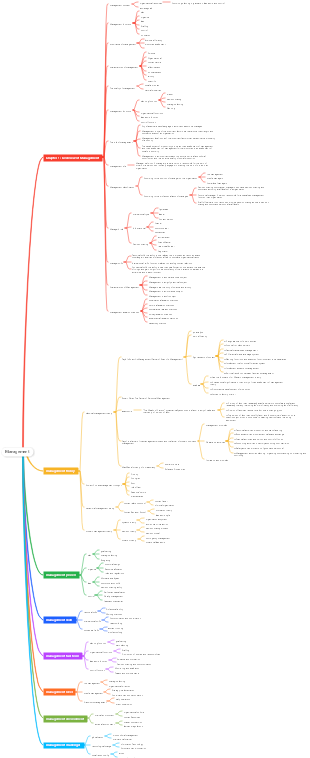
Team management, organizational structure, team management skills, meeting management. A well-structured team should have nine team roles, namely: promoter, executor, completer, diplomat, coordinator, cohesiver, wise multi-star, reviewer and professional. These nine team roles play a role in the team. play complementary but equally important roles.
Edited at 2022-03-29 16:29:18Avatar 3 centers on the Sully family, showcasing the internal rift caused by the sacrifice of their eldest son, and their alliance with other tribes on Pandora against the external conflict of the Ashbringers, who adhere to the philosophy of fire and are allied with humans. It explores the grand themes of family, faith, and survival.

This article discusses the Easter eggs and homages in Zootopia 2 that you may have discovered. The main content includes: character and archetype Easter eggs, cinematic universe crossover Easter eggs, animal ecology and behavior references, symbol and metaphor Easter eggs, social satire and brand allusions, and emotional storylines and sequel foreshadowing.
[Zootopia Character Relationship Chart] The idealistic rabbit police officer Judy and the cynical fox conman Nick form a charmingly contrasting duo, rising from street hustlers to become Zootopia police officers!
Avatar 3 centers on the Sully family, showcasing the internal rift caused by the sacrifice of their eldest son, and their alliance with other tribes on Pandora against the external conflict of the Ashbringers, who adhere to the philosophy of fire and are allied with humans. It explores the grand themes of family, faith, and survival.
This article discusses the Easter eggs and homages in Zootopia 2 that you may have discovered. The main content includes: character and archetype Easter eggs, cinematic universe crossover Easter eggs, animal ecology and behavior references, symbol and metaphor Easter eggs, social satire and brand allusions, and emotional storylines and sequel foreshadowing.
[Zootopia Character Relationship Chart] The idealistic rabbit police officer Judy and the cynical fox conman Nick form a charmingly contrasting duo, rising from street hustlers to become Zootopia police officers!
Essential Manual for Store Managers 3 Team management
Concepts and types of teams
Teams and their basic characteristics
A team consists of a small number of people with complementary skills who use the same methods and who hold each other accountable to achieve a common purpose and performance goals.
Technical or functional expertise, problem-solving and decision-making skills, and interpersonal skills;
The so-called "common purpose and performance goals" means that in a team, a common purpose enables the team to have a better state and dynamic mechanism, and specific performance goals are an important part of the common purpose.
"Same method" means that the team needs to develop a common means to achieve its goals
"Mutual accountability" at its core is "a commitment to ourselves and others to two key aspects that form the basis of a team: accountability and mutual trust."
The difference between team and individual
commonality
Common goals are higher than individual goals
Individual goals should be subordinated to common goals
interactivity
In a team, each member plays a role, but the individual role cannot produce an effect alone, but must interact with other members of the team to form a joint force and obtain the overall performance of the team.
The difference between teams and groups
work group
Two or more interacting and interdependent individuals come together to achieve a specific goal. In a work group, members interact to share information, make decisions, and help each member better assume his or her responsibilities.
team
Through the joint efforts of its members, positive synergies can be generated, and the results of the efforts of its team members make the team's performance level much greater than the sum of the individual members' performance.
Type of team
problem solving
These groups typically consist of five to 12 workers from the same department who meet for a few hours each week to discuss how to improve product quality, productivity, and the work environment. We call this type of team a problem-solving team.
In problem-solving teams, members exchange ideas or provide suggestions on how to adjust work procedures and methods, but these teams have little authority to act unilaterally on these suggestions.
self-managed
Self-managed teams, usually composed of 10 to 15 people, assume some of the responsibilities formerly held by their bosses. Generally speaking, their scope of responsibilities includes controlling the pace of work, deciding on the distribution of work tasks, and arranging breaks.
Thoroughly self-managing teams can even select their own members. By having members perform performance reviews on each other, the supervisor becomes less important and can even be eliminated.
Multifunctional
A multifunctional team is composed of employees from the same level and different work areas who come together to complete a task.
Multifunctional teams are an effective method that enable employees from different areas within and even between organizations to exchange information, stimulate new perspectives, solve problems faced, and coordinate complex projects.
Work team member roles
1. Creator, innovator: generate innovative ideas
- Generally speaking, this kind of person is imaginative and good at proposing new ideas or concepts. They are highly independent and like to arrange their own working hours and work in their own way and at their own pace.
2. Explore, Advocate: Advocate and champion new ideas as they arise
They are willing to accept and support new ideas. After creators and innovators propose new ideas, they are good at utilizing these new ideas and finding resources to support new ideas. The main weakness of such people is that they do not always have the patience and control to get others to follow new ideas.
3. Evaluation, developers: analyze decision-making solutions
They have high analytical skills, and it would be perfect if they were allowed to evaluate and analyze the pros and cons of several different options before making a decision.
4. Facilitator, organizer: provide structure
They enjoy developing operating procedures to make new ideas a reality. They will set goals, make plans, organize manpower, and establish various systems to ensure that tasks are completed on time.
5. Summary, Producer: Provide guidance and follow through
Similar to promoters and organizers, they also care about the results of activities. But their main focus is on insisting that tasks must be completed on time and ensuring that all commitments can be fulfilled. What they are proud of is that the products they produce meet standards.
6. Controller, Inspector: Check specific details
This type of person is most concerned about the establishment and implementation of rules and regulations. They are good at verifying details and making sure to avoid any mistakes. They want to check all the facts and figures and make sure nothing goes wrong.
7. Supporter, maintainer: handles external conflicts and contradictions
This type of person has strong beliefs about the way things should be done, and they actively protect the team from outsiders while supporting those within the team. They are very important to the team as they enhance its stability.
8. Reporter, Adviser: Seeking comprehensive information
They are good listeners and are reluctant to impose their views on others. They prefer to be fully informed before making decisions. Therefore, they play a very important role in encouraging the team to fully gather information before making decisions, rather than rushing into decisions.
9. Liaison and collaborator: comprehensive coordination
This last role overlaps with other roles, and any of the eight roles mentioned above has the intelligence to assume this role. Liaisons tend to understand everyone's perspective; they are facilitators and investigators. They don't like to go to extremes and try to build a cooperative relationship among all team members. They recognize that other team members can contribute in a variety of ways to improve team performance. Despite the differences that members may have, they strive to integrate people and activities together.
Store team organization structure
Tips for team success
Commitment to common goals
Members of successful teams usually spend a lot of time and energy discussing, revising and improving a purpose that is accepted by everyone at both the collective and individual levels. Once this common purpose is accepted by the team, it is like the knowledge of navigation. Like a captain - he can guide the way in any situation.
Establish specific goals
Successful teams transform their shared purpose into specific, measurable, and realistic performance goals. Goals enable individuals to improve their performance levels, and goals enable groups to become empowered. Specific goals promote clear communication, and they help teams focus their efforts on achieving effective results.
Store manager and structure
How to arrange work schedules, what skills need to be developed, how to resolve various conflicts, how to make and modify decisions, determine the specific work tasks of members, and adapt work tasks to the individual skill levels of team members.
socialization and responsibility
Successful teams enable members to individually and collectively take responsibility for the team's goals, objectives, and actions. Team members should clearly know which ones are personal responsibilities and which ones are shared responsibilities.
Appropriate performance evaluation and reward system
Individual performance reviews, fixed hourly wages, individual incentives, etc. are inconsistent with the development of high-performing teams. Therefore, in addition to evaluating and rewarding individuals based on their contributions, store managers should also consider performing performance reviews on a group basis. , profit sharing, small group incentives and other changes to strengthen the team's enterprising spirit and commitment.
Optimization of team structure
1. Design the structure first and then consider specific candidates.
We must first consider the problem from the overall needs. At the beginning of the establishment, first determine what the functions of this team are (teams in different departments, different regions, and different levels have different functions). Then, according to its functions, design the structure of the team. Look at what types of members are needed from various aspects such as age, knowledge, profession, intelligence, temperament, etc., what is the proportion of each type of members, and how The mix is more reasonable, and different specific standards and requirements are put forward for managers and ordinary members. After the structure is designed, select members according to this requirement. If they fit, use them, and if they don’t fit, leave them.
2. Be proactive in self-regulation
From the perspective of systems theory, the team structure is a dynamic open system that should achieve balance in dynamics; from the perspective of structural theory, the team structure is a "dissipative structure" (living structure) that needs to constantly exchange energy with the outside world. , in order to maintain its stable and orderly state. As the team's functions change, members' ages change, and people enter and exit, its structure is also changing and cannot be fixed once and for all. Therefore, whenever you find that any aspect of the team's structure is not suitable, you should make timely adjustments. This adjustment includes not only personnel changes, but also knowledge updates, business improvements, intelligence, and temperament coordination.
Department settings within the store team
Administrative Team
◇ Determination of store organization system. ◇ Formulation and implementation of personnel system. ◇ Formulation and implementation of employee welfare system. ◇ Human resource planning, personnel recruitment and training. ◇ Formulation and implementation of reward and punishment measures. ◇ Store contract management and maintenance of rights and interests. ◇Coordination work between other departments.
planning group
◇ Actively organize and carry out business district investigations, monitor business conditions, analyze various information, and provide basis for the formulation of store development strategies and related work plans.
◇ Work process arrangement, formulation and execution of promotion strategies, store product configuration, display design and improvement, etc.
◇ Assist store decision-makers to establish a scientific and pragmatic crisis management mechanism, and be responsible for the collection of daily crisis information and crisis early warning (prevention) work.
◇ Respond specifically to and properly handle various sudden crisis events that the store may face at any time, and effectively maintain the social reputation and good image of the store or brand.
◇ Make overall plans and consider issues related to the overall image construction such as store image positioning and design, and propose practical suggestions and plans to decision-makers.
◇ Develop an overall communication plan and effectively spread the good image of the store or brand by planning and implementing various press release activities or special public relations activities.
◇ Actively and proactively communicate with the public related to store operations, coordinate and expand these relationships, and create a good environment for the development of the store.
marketing team
◇ Regularly evaluate existing suppliers. This can ensure that the development status of suppliers can meet the current and future development needs of buyers, especially whether the development routes of key manufacturers can meet the needs of future store development.
◇ Determine the appropriate supplier relationship model. Three relationship models of transaction, cooperation and strategic alliance are determined based on category strategies.
◇ Optimize the supply base. According to the supply strategy, through regular performance appraisals and cross-functional team evaluations, we continuously optimize the supplier base and enhance the supplier's competitiveness.
finance team
◇ Realize store cost control through cost budgeting and control of stores, departments, and individuals. Conduct deviation analysis on the entire store's expenditure and budget to provide decision support for store development.
◇ Able to form a data interface with the store's existing financial management system and combine with other modules of the system to process financial data and update reports to meet management's reporting requirements for financial data.
◇ Achieve detailed management of store contracts, sales, and each expense, and be able to conduct comprehensive tracking and management of the details of contracts and expenses.
Internal team management skills
Tips for efficient team functioning
1. Opinions should be expressed as clearly and clearly as possible
2. Make preparations before group discussion
3. Be good at asking questions
4. Make a comprehensive evaluation in a timely manner
5. Pay attention to creating a relaxed and harmonious atmosphere
6. Be good at grasping the key to the problem
7. Be able to obey the majority
How to resolve conflicts within a team
1.Yellow Card Warning Law
For both parties whose conflicts continue and become increasingly intensified, certain administrative means and organizational measures will be adopted on the basis of criticism and education and clarifying the cause of justice. Methods such as democratic consultation, ordered inspection and "ultimatum" are used to issue yellow card warnings.
2. Use cold heating method
In the face of intensified conflicts, when it is difficult to solve the problem for the time being, both parties to the conflict must be able to control themselves rationally and think calmly. As a store manager, they must try to "cool down" and then "take the heat from the bottom of the pot." The core of using this method is to control anger.
3. Frank neutralization method
When team members have pros and cons of their opinions or opinions, disputes or conflicts often occur. Both parties should clearly understand the pros and cons of their own or the other party's opinions, sincerely withdraw or partially withdraw their original opinions or opinions, and finally form a The decision should be made to focus on everyone's strengths, reflect collective wisdom, and turn conflicts into positive and beneficial factors.
4. Self-compensation method
When the store manager's personal opinions are rejected by the leadership group, in order to ease the psychological conflict, the store manager can change the original opinions and opinions and propose new understandings and opinions or opinions that may be accepted by everyone to compensate. As a store manager, you should carefully consider these new opinions and ideas, and try to achieve a consensus between the store manager and the team as a whole.
5. Mutual concession method
When a store manager finds that he is at a disadvantage in a conflict, he should have the courage to face up to his mistakes. However, it is difficult to take the initiative to give in during a conflict, especially for the store manager who is the leader of the store. At this time, both parties need to make concessions and reach a mutually acceptable agreement. The key to adopting this method is to grasp the appropriate point. The first is to look at the "tone" of both parties in the conflict and analyze the initial intentions of both parties; the second is to look at the facts of the conflict and the impact of the atmosphere that suppresses the conflict on the psychology of both parties, and provide them with preliminary opinions on lowering the "tone"; the third is to In the stalemate stage when both parties or one party to the conflict temporarily refuses to accept the mediation opinions, temporary measures of playing hard to get can be adopted to exert pressure openly and covertly to encourage them to make an early turn.
Building a team spirit
1. Establish a common goal for the team
When establishing the common goal of the team, it must be in line with the actual situation of the store. The goal should be neither too high nor too low. This requires the leader of the floor shop team, the store manager, to carry out comprehensive weighing and planning.
2. Effective communication mechanism
To maintain team spirit and cohesion, communication is an important link. Smooth communication channels and frequent information exchanges will prevent each member of the team from feeling depressed, the work will be more effective, and the goals will be successfully achieved. Therefore, the determined long-term development strategy and short-term goals must be handed down to subordinates, and communication and coordination must be maintained.
3. Humanized management
Humanized management is a management technique that puts priority on handling daily work and dealing with superior-subordinate relationships. Effective incentives from both spiritual and material aspects can stimulate employees' individual drive and stabilize employees. In particular, managing knowledge workers requires care, love, patience, good use, trust and respect. On this basis, by enriching other series of elements such as leadership art, fair incentive mechanism, values, cultural accomplishment, rewards and commendations, and policy continuity, team spirit and cohesion can be promoted and consolidated, and the potential creativity of the store can be play, the overall goals of the enterprise can be successfully achieved.
4. Create a team atmosphere of mutual trust
Mutual trust among team members is important. Mutual trust has a huge impact on every member of the organization, especially increasing employees' emotional recognition of the organization. Emotional mutual trust is the most solid foundation for cooperation in an organization. It can give employees a sense of security. Only then can employees truly identify with the store, regard the store as their home, and use it as a stage for personal development.
5. Punishment should be cautious
Punishment leads to behavioral withdrawal, which is negative and passive; incentives are active and active, and can continuously improve efficiency. Punishment is the denial of employees. An employee who is often denied will often lose enthusiasm for work over time. Incentives and affirmations can help enhance employees' positive identification with the team, thereby stimulating employees' greater enthusiasm for work.
Ways to inspire team spirit
1. Build a collaborative team culture
◇Principle of equality
That is to say, managers are required to handle various management affairs on the basis of personality equality and respect the personality of employees when dealing with interpersonal relationships.
◇Principle of mutual benefit
This principle requires all types of personnel to maintain a basic balance between their labor contributions and their income, and to be good at using spiritual power to balance various imbalances caused by material shortages.
◇Principle of humility
According to this principle, managers, regardless of their status or knowledge, must treat others with humility, objectively affirm the achievements and talents of others, and do not exaggerate their own achievements and contributions, let alone take away the credit of others.
◇Principles of cooperation
This principle requires strengthening close cooperation between people and cultivating team spirit.
◇Principle of tolerance
This principle requires managers to be good at tolerating the small faults and shortcomings of others and not to make a fuss out of a molehill and seek blame.
◇Principle of trust
This principle requires managers to establish credibility and trust people.
2. Enhance team member pride
From creating the store's image system to encouraging various departments and project teams to create a positive culture, it will have a positive and far-reaching impact on the team's creativity.
3. Let every member give full play to their strengths
An efficient team requires each member's talent to match the role and requires everyone to give their best.
4. Develop the qualities of team members
⑴ Cultivate employees’ proactive style of doing things.
Everyone has the desire to succeed, but success does not come by waiting, but by hard work. No store will welcome employees who follow the steps. Employees cannot just passively wait for others to tell them what they should do. Instead, employees should take the initiative to understand what the store needs to do and what they need to do.
⑵ Cultivate employees’ dedicated character.
Almost all teams require members to have professional qualities and professionalism, so that they can take the team's affairs as their own business and have a sense of responsibility, so that they can use their intelligence and talents. An individual's destiny is linked to his or her team and collective.
⑶ Cultivate the character of tolerance and cooperation among employees.
Store managers need to pay attention to cultivating employees' good attitude in getting along with others and apply it in daily life. It is necessary to tell every employee that everyone in the team has their own strengths and weaknesses. The key is how the members treat each other. They can discover the beauty of each other in ordinary times instead of picking on his faults. Cultivate employees to Look at things in a way that seeks common ground while reserving differences.
⑷ Cultivate employees' overall awareness and overall concept.
Team spirit does not mean that you are against individuality, but individuality must be consistent with the team's actions, and you must have an overall awareness, a global concept, and consider the needs of the team. Team members should help each other, take care of each other, cooperate with each other, and work together for the collective goal. At work, it is extremely important to consciously cultivate employees' overall perspective.
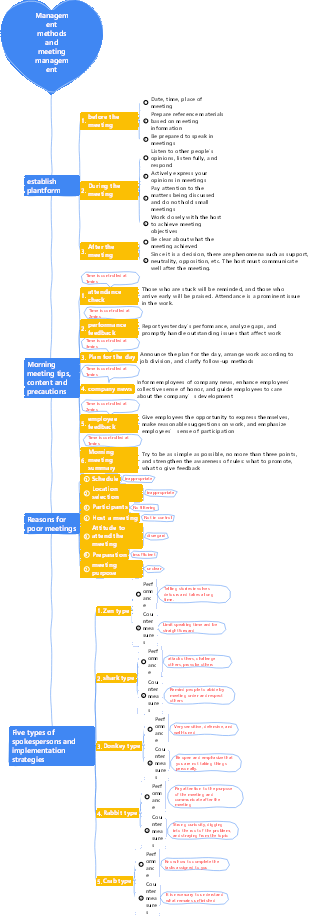
Conference management
Suggestions for meetings
1. Every meeting has a clear purpose, and there should be no meetings without purpose.
That is to say, the store manager must first understand what is to be done before the meeting, and also let the members who are about to participate in the meeting understand why the meeting is being held in order to be prepared. Don’t have a meeting without a clear goal. Especially impromptu meetings. In addition, in order to carry out normal and continuous communication and contact, regular organizational meetings should not be interrupted.
2. Each meeting should only address one central topic, and no meetings with many topics should be held.
Multi-topic meetings prevent participants from grasping the key points of the meeting. They feel that this point is also important and that point cannot be ignored. As a result, they are likely to be most impressed by one point and dilute other aspects. Many people who have practiced this kind of meeting know that too many points to discuss in a meeting, especially too many tasks, often cause boredom and fail to achieve the expected meeting effect.
3. There must be sufficient preparation before the meeting, and no unprepared meeting will be held.
Unless there are special circumstances, it is best not to engage in "surprise attacks" during meetings. The store manager must be prepared to host this meeting to achieve the desired results; participants must also be prepared to accept the information conveyed by the meeting in the most sober manner and provide timely feedback.
4. Only hold meetings that are necessary and don’t hold meetings that are optional.
The "meeting" here refers to a temporary meeting just like the first one. Don't call a meeting for trivial matters, because over time, it will reduce the excitement of the participants at the meeting.
5. Participants of the meeting must be directly related to the topic of the meeting. Those who are not related to the topic should not attend the meeting.
What we’re talking about here is the issue of meeting participants. Don’t let “meeting idlers” exist. Don’t let people attend meetings who participate or don’t participate.
6. During meetings, do not make off-topic discussions but focus on the center. The store manager must play a good role in guiding.
Once a speech goes off-topic, it should be corrected promptly and the focus of the participants' discussion should always be on the central theme of the meeting.
7. Points of view should be expressed concisely and clearly, and meetings should not allow repetition of topics that others have already said.
In this way, the leader can obtain as much information as possible and eliminate the laziness and lack of insight among the participants.
8. The meeting must have a resolution, and no meeting without a resolution is allowed.
Even if no resolution can be reached at this meeting, the meeting must be temporarily adjourned, and further requirements for the next meeting should be announced to inform everyone to prepare in advance.
9. Meetings should be free of heated arguments between two opposing viewpoints.
Meetings should encourage everyone to express their opinions, but they must not fall into meaningless and fruitless debates between two opposing views. If this happens, the store manager should let them reserve their opinions and discuss it after the meeting, without taking up other people's time to speak.
10. Meetings should prohibit participants from entering and exiting the venue frequently.
Because this will affect the emotions of participants, distract attention, and affect the efficiency of the meeting. The effectiveness of the meeting will also be compromised.
Get everyone involved in the meeting
1. The topic of the meeting must be related to or of interest to everyone attending the meeting. It is opposed to inviting people who have nothing to do with the topic of the meeting to the meeting because their idleness will affect other people, thereby reducing the effectiveness of the meeting.
2. The store manager should create a stressful atmosphere to force everyone to listen and think seriously. This method can be used. The store manager takes a list of attendees and can ask any attendee to stand up and repeat what he just said, or simply express his opinion on a certain question. If he can't answer it, he can Asking him to stand up in meetings or conduct self-examination in front of everyone, so that everyone has a kind of pressure, which makes them dare not be sloppy.
3. The store manager should strengthen the guiding role during the meeting. For example, after raising a problem, he can propose several solutions and let the participants discuss extensively to find the most appropriate method; when the discussants have too many differences, they can appropriately Provide some guidance to unify attendees as much as possible.
4. The store manager should affirm or praise the participants' speeches from time to time during the meeting and discussion, even if sometimes these speeches are ineffective. Only in this way can more participants be encouraged to speak enthusiastically, and the speaker will praise and praise them. If you think further with positive encouragement, you may come up with constructive suggestions.
Practical Tips for Hosting Meetings
1. Practical skills to start with a clear meaning and get a head start
As the host of the meeting, the store manager must clearly understand the purpose of the meeting, grasp the theme of the meeting, be fully prepared in advance, and have a plan in mind, so that he can be calm and confident in the face of danger, and not be stretched everywhere and passively beaten. Especially the introduction stage of the meeting is the key to the meeting discussion.
2. Practical skills to adapt to the situation and mobilize emotions
It is essential to state the content in the opening remarks of the meeting, including the theme, purpose, significance, agenda, opening method, etc. of the meeting. However, this is definitely not to be limited to procedures and without modification, but to be based on reality and adapt to the situation. Flexible arrangements.
3. Be prepared and have practical skills for natural connection
Before the meeting, make an outline of what you want to talk about to ensure that the meeting proceeds step by step according to your ideas. This is actually the procedure for the meeting process. Keep in mind the idea or central topic you want everyone to know after the meeting. Your hosting should revolve around this theme.
4. Practical skills to control the rhythm and stick to the theme
Meetings have their limits. The general meeting time is limited to 2 hours, which is set based on people's physiological and psychological conditions. Meetings that drag on and are unorganized for more than 2 hours will only increase fatigue without producing good results.
5. Practical skills to break the silence and provide positive guidance
If the meeting is turned into a one-person meeting where the host performs a one-man show, the original intention of brainstorming and expressing one's own opinions will be lost, and it will not be conducive to the full development of democracy. The level of leadership is not reflected in imposing one's own intentions on others with personal authority. Although one must have the dignity of "only oneself", one must be flexible and changeable in methods. We must be good at asking questions and actively guiding during meetings, so that the venue presents a lively and informal situation. Only then can we discover, raise, analyze, and solve problems from various angles and aspects.
6. Practical skills for starting well and ending well without leaving any traces behind.
Giving instructions and making work arrangements at the end of the meeting can often make the participants accept it with conviction and put it into practice immediately after the meeting. Because the process of meeting discussion is a process of resolving differences and gradually seeking unity. People have a more comprehensive and clear understanding of the current situation, have reached a consensus on the solution to the problem, and it is natural for them to understand and absorb the spirit of the meeting. In the summary, the store manager should express his feelings directly and make a decisive decision.