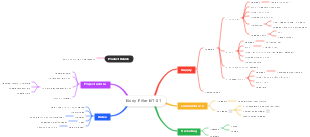
MindMap Gallery Quality Control
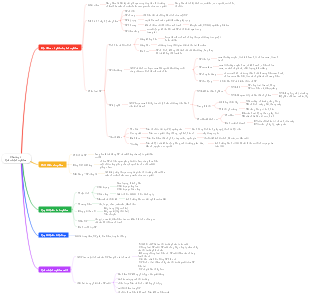
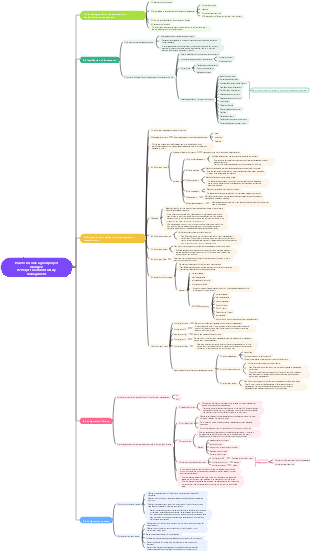
This is a mind map about quality management. The main contents are: 1. Quality concept; 2. Quality inspection; 3. Quality cost; 4. Common techniques for quality management; 5. Common tools for quality management; 6. QCC quality control circle activities.
Edited at 2022-04-01 11:50:57This article discusses the Easter eggs and homages in Zootopia 2 that you may have discovered. The main content includes: character and archetype Easter eggs, cinematic universe crossover Easter eggs, animal ecology and behavior references, symbol and metaphor Easter eggs, social satire and brand allusions, and emotional storylines and sequel foreshadowing.

[Zootopia Character Relationship Chart] The idealistic rabbit police officer Judy and the cynical fox conman Nick form a charmingly contrasting duo, rising from street hustlers to become Zootopia police officers!
This is a mind map about Deep Analysis of Character Relationships in Zootopia 2, Main content: 1、 Multi-layer network of relationships: interweaving of main lines, branch lines, and hidden interactions, 2、 Motivation for Character Behavior: Active Promoter and Hidden Intendant, 3、 Key points of interaction: logic of conflict, collaboration, and covert support, 4、 Fun Easter eggs: metaphorical details hidden in interactions.
This article discusses the Easter eggs and homages in Zootopia 2 that you may have discovered. The main content includes: character and archetype Easter eggs, cinematic universe crossover Easter eggs, animal ecology and behavior references, symbol and metaphor Easter eggs, social satire and brand allusions, and emotional storylines and sequel foreshadowing.
[Zootopia Character Relationship Chart] The idealistic rabbit police officer Judy and the cynical fox conman Nick form a charmingly contrasting duo, rising from street hustlers to become Zootopia police officers!
This is a mind map about Deep Analysis of Character Relationships in Zootopia 2, Main content: 1、 Multi-layer network of relationships: interweaving of main lines, branch lines, and hidden interactions, 2、 Motivation for Character Behavior: Active Promoter and Hidden Intendant, 3、 Key points of interaction: logic of conflict, collaboration, and covert support, 4、 Fun Easter eggs: metaphorical details hidden in interactions.
Quality Control
1.Quality concept
The relationship between product quality and customers
Product quality is product quality, the degree to which the inherent characteristics of the product meet the requirements
Good quality means meeting customer requirements, needs and expectations. Customer is God
Market law: If a customer is satisfied, he will tell 6 other people about his satisfaction. If he is not satisfied, he will tell 22 other people about his dissatisfaction.
Zhang Ruimin said: When a product is eliminated, it is not eliminated by your competitors, but by your customers.
Your next process is your market, and your next process is your users.
When quality is improved, costs will be reduced, delivery will be on time, customer satisfaction will increase, and corporate profits will increase.
The quality concept that on-site managers should have
Quality is not something that can be detected, it is something that comes from design, production, prevention and habits. It is based on customer satisfaction.
Quality is closely related to everyone
Every employee must be very clear about their job requirements and make everything they do meet the requirements. This is a contribution to quality.
Zero defects, 100% is completely achievable.
Quality improvement cannot be achieved overnight and must be achieved through continuous improvement.
Quality is the starting point of value and dignity, and the lifeblood of an enterprise's survival.
Quality first, output second.
Quality lies in prevention.
Excellent products are made by excellent people.
There is no discount on quality. Quality means executing according to customer requirements without compromise.
Seven Principles of Quality Management
Customer focus
Identify customer needs.
Turn customer requirements into internal needs and ultimately into product and service needs.
Improve customer satisfaction with products
Good cooperation and communication with customers
leadership role
Leaders lead by example
Provide employees with necessary resources and create a good working atmosphere for employees
Responsibilities and authorities should be clearly demarcated
High-performance setting of company development goals (long, medium and short-term goals)
Provide employees with plans and strategies
Employee awareness
Every employee must take responsibility
Each employee actively strives for improvement in his/her job position
Improve your abilities, knowledge and experience
Create customer value
process approach
identification process
Clarify methods and means of process control
Process results and feedback
keep improve
Scope of continuous improvement: product quality, quality management system, service, customer satisfaction
Company quality goals and data statistical analysis
Regularly conduct internal quality management system audits and management reviews
employee training
Decision-making based on evidence
Collect various operational data of the company
Analyze data results
Take corrective and preventive actions based on the results reflected in the data
relationship management
A win-win situation for all stakeholders of the enterprise, that is, a win-win situation for shareholders, communities, suppliers, employees, customers, etc.
Stakeholders become a community of life
Stakeholders work together to grow and develop
2.Quality inspection
IQC
Test items
Exterior
size, structure
Electrical characteristics
Physical and chemical properties
Mechanical properties
Testing method
Appearance inspection: general visual inspection, hand feel, and limited sample.
Dimensional inspection: straight/draw ruler, vernier caliper, micrometer, three-dimensional measuring instrument, etc.
Structural inspection: tension gauge, torque gauge, etc.
Characteristic inspection: use more instruments, such as metallographic analyzers, oscilloscopes, multimeters, etc.
Test specification
Inspect materials according to incoming inspection items
Sampling method: Full inspection is used for materials with small quantity and high price, and random inspection is used for large quantity or recurring materials.
Determination standards: Determine qualified materials or unqualified materials according to the standards specified in the MIL-STD-105E sampling plan.
Process inspection
First Article Inspection
Purpose of first inspection
Early detection of factors affecting product quality during the production process
Mass production can only be carried out after passing the first inspection to prevent the occurrence of batches of unqualified products.
Confirm whether there are any abnormalities in tooling fixtures and materials used
First inspection time
Batch products before production starts
When equipment is readjusted or process conditions change
When shift operations staff change
When materials change
First inspection requirements
Three-inspection system: self-inspection, mutual inspection and special inspection. The first piece must be self-inspected by the operator, then mutually inspected by the production team leader, and finally specially inspected by the inspector. Production can continue only after it is confirmed to be qualified.
The first piece that passes the inspection must be marked as required, and the first piece inspection record must be kept.
When the first article fails to pass the inspection, the cause must be identified, the fault must be eliminated and re-inspected. Only after passing the inspection can subsequent production be carried out.
First inspection items
Whether it meets the requirements of drawings and technical documents
Whether the material or workpiece surface treatment and installation meet the requirements
Are the materials, workpieces and work orders consistent?
Do the formula and ingredients meet the requirements?
Tour inspection
Purpose of inspection
Early detection of factors affecting product quality during the production process
Correct errors in the production process promptly
Timely analyze the causes of abnormalities in the production process and take measures
Inspection timing
After each shift starts production normally every day
When equipment is readjusted or process conditions change
When new products are launched and new processes are trialled
Inspection requirements
Self-inspection and special inspection: Products in the production process must be self-inspected by operators, and finally inspectors conduct random inspections at fixed intervals.
Problems discovered during patrol inspections must be recorded and identified
When the patrol inspection finds that the product is unqualified, it should be reported to the production team leader in a timely manner. The cause must be identified and the fault must be eliminated.
Inspection items
Does the appearance meet the requirements?
Does the size meet the requirements?
Do the materials, workpieces and production work orders match?
Product testing
Inspection before warehousing
Check whether the inspection order, inspection products and order shipping requirements are consistent
Check whether the quantity applied for inspection is consistent with the physical quantity
Check whether the finished product's appearance, size, performance, and product performance (including various physical and chemical properties) meet the requirements.
Is the product packaging consistent with the order requirements?
Shipping inspection
Appearance, size, performance
Accuracy
safety
Is the packaging method correct?
Precautions
Check whether the production data, signed packaging sample and order are consistent
Check whether the outbound order is consistent with the inspection quantity
After passing the inspection, affix a qualified label and go through the shipping procedures.
Keep the completed product inspection report for further inquiry
Defective product control
Classification of unqualified products
A. Serious shortcomings (CR): shortcomings that result in personal injury or the inability to use the product.
B. Major Disadvantages (MA): Disadvantages that may cause product dysfunction and reduce its functionality.
C. Minor shortcomings (MI): Functional or appearance shortcomings that do not affect the normal use of the product
Defective product handling procedures
Define the responsibilities and authorities for determining and handling defective products
Mark and isolate defective products to prevent misuse or misinstallation
Keep records of defective products
Evaluate defective products and propose reasonable treatment methods
Find the causes of defective products and provide suggestions for improvement
How to handle defective products
Rework: Measures taken to make defective products meet requirements
Rework: Measures taken to make defective products meet expected requirements
Downgrade: Change the grade of defective products so that they meet requirements different from the original requirements.
Scrap: Defective products are confirmed to be unable to be reworked or accepted at concessions, or the cost of rework is too high, and should be disposed of directly as waste.
Three principles of never letting go
Don't let go until the reason is found out. If the cause cannot be found, prevention and correction cannot be carried out, and the recurrence of quality problems cannot be prevented.
Those responsible will not be let go until they are found out. The purpose of identifying the responsible person is to prevent, improve the operating skills of the responsible person, improve work methods and attitudes, and ensure the stability of quality.
Don’t let go until improvement measures are implemented. Regardless of identifying the cause or the person responsible, the goal is to implement improvement measures to further improve product quality.
3. Quality cost
Prevention cost (5%~15%)
Quality planning work fee
Product design review fee
Supplier evaluation fee
Quality audit fee
Customer survey fee
Quality training fee
Quality improvement measures fee
Quality Award
process control costs
Appraisal cost (10%~20%)
Incoming inspection fee
Process inspection fee
Finished product inspection fee
Test equipment maintenance fees
Test materials and labor costs, product costs consumed by destructive testing, and materials and labor costs consumed
Internal loss cost (25%~35%)
scrap loss
Rework loss
Re-inspection fee
Downtime losses
Yield loss
Quality troubleshooting fee
quality degradation loss
External loss cost (25%~35%)
Claim fees
return loss
Warranty fee
price reduction loss
litigation costs
Repair or selection costs
Other losses, such as loss of company reputation, etc.
6.QCC quality control zone activities
Discover the problem
Group records
Develop activity plan
Topic selection
Analysis of main factors
Data collection
analyze data
Solve the problem
Improve strategy
Effect confirmed
Effect maintained
Recurrence prevention and standardization efforts
Inspire each other
Data organization
Release of results
5. Common tools for quality management
Checklist: A form designed in advance to collect data for a certain period and to allow continuous recording in a simple way on the same form.
Solve problems effectively (based on facts and collect information)
Avoid simultaneous observation and analysis
Use records instead of memories to make observations more in-depth
Avoid emotions when collecting data, unclear narratives, etc.
Checklist classification
record checklist
General type
frequency distribution table
Location distribution
Inspection record sheet
How to design
Clarify the purpose (object and scope of data collection)
Determine the angle of the layers
Decide what items to inspect
Decide on the format of the checklist
Decide how to record data
Decide how data will be collected (5W1H)
Hierarchical method: classify investigation matters from a certain perspective and collect various types of data for comparison.
Find the differences between different factors through comparison
layer angle
Person: Group, class, age, years of service, education level, gender, training level, professional title
Raw materials: batch type, supplier type, origin type, composition type, grade, part type
Machinery and tools: machine number, form, speed, location, new and old, tools
Operating conditions: temperature, pressure, speed, rotation speed, humidity, sequence, operating method
Products: batches, varieties, new and old products
Time: time, day, week, month, year, before and after improvement
Plato: A figure that seeks to find the cause, condition, or location that accounts for the greatest proportion based on differentiating standards for bad causes, bad conditions, and locations where bad things occur.
Plato's approach
Classification of causes of problems
Classification based on results: bad project category, site category, project category
Classification according to reasons: material type, machine type, equipment type, operator type
Determine the data collection cycle
In order of the number of occurrences, record the items and times in the defective analysis table
Make statistical tables based on classified items and statistical data to calculate the cumulative number of defective items and the cumulative defective rate
Use a chart to draw the vertical and horizontal axes. The left side represents the number of defects, the right side represents the degree of impact. The horizontal axis represents the project. Point on the number of defects and the degree of impact and connect them with a polyline.
Precautions
The item categories on the horizontal axis need to be arranged from high to low in order of size, with other items listed as the last item.
The items are divided into 4 to 6 items
The left side of the vertical axis is best expressed in terms of dollar amounts.
The distance between axes of Plato's column should be the same
Characteristic factors diagram: A diagram that analyzes the relationship between results and causes or between desired effects and countermeasures in detail by connecting them with arrows.
drawing method
1. Determine the characteristics of the problem
2. Prepare a piece of paper and draw the skeleton of the characteristic factor diagram. The characteristics are at the right end. Draw a thick trunk line (general line) from the left to represent the manufacturing process.
3. Divide the causes into several major categories, draw each major category on the bone, and classify it according to the process. Generally, it is classified into people, machines, materials, methods, and environment.
4. Explore the big reasons and then subdivide the small and medium reasons.
5. Determine the order of the influencing factors, point out the most likely influencing factors, and mark them in order on the diagram.
Histogram: Group the measurement values in a certain period into a count distribution table, and graphically illustrate it with columns to grasp the information represented by these data.
drawing method
1. Be optimistic about the collection of more than 50 data.
2. Determine the number of groups
3. Determine the group distance C = full distance R (maximum - minimum) / number of groups K, and find the appropriate data closest to the C value from the data that is an integer multiple of the measurement unit as the group distance
4. Determine the boundaries of each group,
5. Find the center value of each group
6. Make a rep allocation table
7. Distribute the statistical table according to the number of times to make a histogram. The horizontal axis is the characteristics and the vertical axis is the number of times.
Common types
Normal type: left and right symmetrical distribution, indicating stable process
Missing tooth type: indicates an abnormality in the manufacturing process.
Skewed type: The manufacturing process has a skewed distribution, and a certain factor affects the spread to the left (right).
Cliff type: Insufficient process capabilities
Bimodal type: 4M layers required
Island type: engineering changes, raw material abnormalities or measurement errors
Scatter diagram: In order to understand the relationship between two kinds of data (factor-characteristic, factor-factor, characteristic-characteristic), two ordered paired methods are plotted on the Cartesian coordinate system.
drawing method
1. Clarify the purpose and determine the object of investigation
2 Collect data, 50~100 pairs of data
3. Find the maximum and minimum values of the two types of data respectively
4. Draw the vertical and horizontal axes and make appropriate scales. Usually the horizontal axis is the factor and the vertical axis is the characteristic.
5. Dot the paired data on the graph
6 Record necessary matters
title
Data measurement date, plotting date, plotter
Number of samples
Product name, process name
Scatter plot type
Positive correlation
non-significant positive correlation
negative correlation
non-significant negative correlation
Not relevant
curve correlation
Transition chart: As time goes by, the changes in the data are plotted according to the selected graduations, and the points are connected with polylines to understand the changes in the data.
drawing method
1. Determine the characteristics of data collection
2. Collect data in chronological order
3. Drawing: take the characteristic value on the vertical axis and mark it with a scale, and take the time scale on the horizontal axis
4. Click the collected data into the corresponding location
5. Connect points with polylines
4. Common techniques for quality management
4M1E
people
Different personality traits, attitudes towards work, and understanding of product quality are different
Gentle, slow, careful, take things seriously
Impatient, only focus on efficiency, lack of quality awareness, high work efficiency,
Introverted, not telling others about difficulties, not easy to accept new knowledge and things
Outgoing, proactive and active, likes to gossip in the workplace
Use different methods for people with different personalities, make the best use of their talents, and learn to be good at using people
machine
Equipment, tools and other production auxiliary tools
material
Materials, semi-finished products, accessories, auxiliary materials and other product materials
Law
The rules and regulations followed during the production process, including various operating procedures/work instructions, production plans, drawings, etc.
ring
Environmental requirements during product production.
PDCA
PDCA (Deming Circle)
Plan(P)
Determine activity goals and activity plans
Execute(D)
follow the plan
Check(C)
Check plan execution results
Processing(A)
Summary and analysis of execution results
Eight steps of PDCA
1. Analyze the column status and find out the existing quality problems
2. Analyze the causes and influencing factors
3. Find out the main influencing factors
4. Develop measures, propose action plans and expected results (5W1H)
Why are these measures in place (WHY)
What are these measures intended to achieve (WHAT)
Where (WHERE) these measures are executed (which process, link or department)
When to execute (WHEN)
Who is responsible for enforcement (WHO)
How it is done or how much it costs (HOW OR HOW MUCH)
5. Execute plans or measures
6. Check the execution results of the plan (compare the execution results with the predetermined goals through self-inspection, mutual inspection, process handover, special inspection, etc.)
7. Summarize experience (what has been solved should be documented and standards formulated)
8. If the problem is unresolved or the effect is not significant, do not avoid it and reflect it realistically to the next cycle.
Characteristics of PDCA cycle
Large loops within small loops, small environmental protection loops, promoting the big cycle
Keep moving forward and keep improving. Just like climbing stairs, one cycle ends, the quality improves by one step, and then enters the next cycle, running again, improving again, constantly moving forward, and constantly improving.
Closed circuit ascent. Every time a PDCA cycle is passed, a summary must be made, new goals must be proposed, and then the next PDCA cycle must be carried out.