MindMap Gallery Top ten PMO systems and their relationships
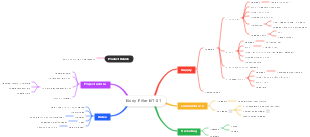
The ten major PMO systems (MES, ERP, SCM, WMS, APS, SCADA, PLM, QMS, CRM, EAM) and their relationships. These systems are each responsible for different business areas and processes, and together form the core framework of enterprise operation management.
Edited at 2024-03-07 09:27:22This is a mind map about bacteria, and its main contents include: overview, morphology, types, structure, reproduction, distribution, application, and expansion. The summary is comprehensive and meticulous, suitable as review materials.

This is a mind map about plant asexual reproduction, and its main contents include: concept, spore reproduction, vegetative reproduction, tissue culture, and buds. The summary is comprehensive and meticulous, suitable as review materials.
This is a mind map about the reproductive development of animals, and its main contents include: insects, frogs, birds, sexual reproduction, and asexual reproduction. The summary is comprehensive and meticulous, suitable as review materials.
This is a mind map about bacteria, and its main contents include: overview, morphology, types, structure, reproduction, distribution, application, and expansion. The summary is comprehensive and meticulous, suitable as review materials.
This is a mind map about plant asexual reproduction, and its main contents include: concept, spore reproduction, vegetative reproduction, tissue culture, and buds. The summary is comprehensive and meticulous, suitable as review materials.
This is a mind map about the reproductive development of animals, and its main contents include: insects, frogs, birds, sexual reproduction, and asexual reproduction. The summary is comprehensive and meticulous, suitable as review materials.
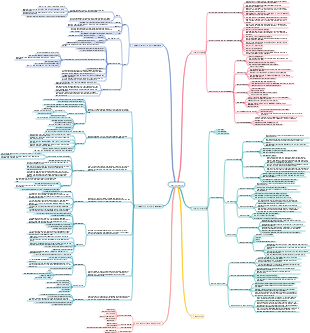
The top ten PMO systems (MES, ERP, SCM, WMS, APS, SCADA, PLM, QMS, CRM, EAM) and their relationships
Top 10 system terms
MES (Manufacturing Execution System)
Connect the enterprise planning system and production control layer to provide real-time production process management
Production scheduling, quality management, equipment management, material tracking, human resources management
ERP (Enterprise Resource Planning)
Integrate the main business processes of the enterprise and support resource management through information technology
Financial management, supply chain management, human resource management, manufacturing and product management, customer relationship management
SCM (supply chain management)
Optimize the entire supply chain process, improve efficiency and reduce costs
Demand planning and forecasting, procurement and supplier management, production planning and scheduling, inventory management, logistics and transportation management
WMS (Warehouse Management System)
Manage warehouse and distribution center operations to improve warehouse operation efficiency and accuracy
Inventory management, picking and packing, receiving and shipping, job and task management, reporting and analytics
APS (Advanced Planning and Scheduling)
Provide detailed production planning and scheduling functions to optimize production efficiency and delivery performance
Production scheduling, resource optimization, constraint management, demand planning
SCADA (Supervisory Control and Data Acquisition)
Used to monitor and control distributed facilities and systems, and achieve remote monitoring and operation
Real-time data collection, remote monitoring, alarm and event management, historical data recording
PLM (Product Lifecycle Management)
Manage the entire life cycle of a product from conceptual design to delisting, promoting team collaboration and information sharing
Product data management, collaborative design and development, supply chain collaboration, change management
QMS (Quality Management System)
Manage and improve the quality of products and services to ensure customer needs and compliance requirements are met
Quality planning, quality control, quality assurance, quality improvement
CRM (Customer Relationship Management)
Help enterprises manage relationships and interactions with customers and improve customer satisfaction and loyalty
Customer data management, sales management, marketing automation, customer service and support
EAM (Enterprise Asset Management)
Manage an organization's physical assets and infrastructure to maximize asset performance and value and reduce operating costs
Asset maintenance, asset life cycle management, equipment maintenance and fault management, performance monitoring
The relationship between the ten major systems
ERP and other systems
The ERP system is the backbone of an enterprise, responsible for integrating information in finance, human resources, production, supply chain, sales and other aspects. It integrates with MES, WMS, SCM and other systems to obtain real-time data, inventory information and supply chain status of the production site to achieve effective planning and management of enterprise resources.
MES and ERP/SCADA
MES is directly related to production line operations. It bridges the ERP system and the production process, providing real-time data at the workshop level to the ERP system, while collecting equipment and process data from the SCADA system to optimize production execution.
SCM and ERP/WMS
The SCM system manages all aspects of the supply chain, from raw material procurement to finished product delivery. It integrates with ERP systems to ensure consistency in financial and order management; integrates with WMS to optimize inventory management and logistics operations
WMS and ERP/SCM
WMS is responsible for managing logistics activities in the warehouse. Integration with ERP systems can ensure the accuracy and timely updating of inventory data. Integration with SCM supports the efficiency of the entire supply chain.
APS and ERP/MES
APS provides advanced functions for production planning and scheduling. Integration with ERP systems can ensure resource availability for production plans, and integration with MES can optimize the execution of the production process.
PLM and ERP/QMS
PLM manages the entire life cycle of products from concept to delisting. It integrates with the ERP system to ensure that product information is shared within the enterprise; and integrates with QMS to ensure the management and monitoring of product quality.
QMS and ERP/PLM
QMS ensures that products and services meet quality standards and customer requirements. Integration with ERP can improve financial and operational management of quality data. Integration with PLM supports quality control of product development and life cycle management.
CRM and ERP
CRM systems manage customer information and interactions, and integration with ERP systems can improve customer order processing efficiency and financial management.
EAM and ERP/SCADA
The EAM system manages the physical assets of the enterprise, integrates with the ERP system to optimize financial and operational decisions, and integrates with SCADA to monitor equipment status and maintenance needs in real time.
Detailed explanation of the ten major relationships
MES (Manufacturing Execution System)
concept
It is an information technology solution located between the enterprise's planning layer (ERP system) and the factory control system, designed to provide real-time monitoring and management of factory floor operations. MES can provide key information, such as production progress, equipment efficiency, quality management and material tracking, to help companies make immediate decisions, optimize production processes and improve production efficiency.
The main function
1. Production scheduling: Arrange production tasks according to resource availability and order priority
2. Quality management: monitor product quality and ensure that the production process meets standards
3. Equipment management: monitor equipment status, predict maintenance needs, and reduce downtime
4. Material tracking and traceability: Track the entire production process from raw materials to finished products, supporting recalls and compliance
5. Human resource management: allocate and manage human resources on the production line
Scope of application
1. Manufacturing industry: suitable for manufacturing companies that need to carefully manage the production process, improve production efficiency and quality control
2. Industries include automobiles, electronics, food and beverages, chemicals, pharmaceuticals, aerospace, etc.
ERP (Enterprise Resource Planning)
concept
It is at the core of enterprise management, improving data accuracy, efficiency and decision-making speed by integrating key business processes across all departments. The main goals of an ERP system are to provide a shared data source, reduce data duplication, and increase reporting accuracy
Core functions
1. Financial management: track corporate financial status, prepare budgets and financial reports
2. Supply chain management: optimize procurement, inventory and logistics, reduce costs and improve efficiency
3. Human resources management: employee information management, compensation and benefits, recruitment and performance evaluation
4. Manufacturing and product management: Support product life cycle management, from production planning to production execution
5. Customer Relationship Management (CRM): Manage customer information, sales channels and customer service
Scope of application
1. Widely used in enterprises of all sizes, from small and medium-sized enterprises to multinational corporations
2. Industries include manufacturing, retail, service industry, finance, public services and almost all fields
SCM (Supply Chain Management)
concept
Committed to the optimization of the entire supply chain, including all aspects from source material procurement, manufacturing to final product delivery to consumers. The goal of SCM is to reduce costs and improve speed and service levels by improving supply chain transparency and coordination.
Features and components
1. Demand planning and forecasting: predict future demand based on historical data and market trends
2. Procurement and supplier management: select and manage suppliers, purchase raw materials and services
3. Production planning and scheduling: ensure that production activities are coordinated with demand forecasts and material supply
4. Inventory management: Optimize inventory levels, reduce inventory costs, and ensure that customer needs are met.
5. Logistics and transportation management: manage the storage and transportation of products to ensure timely delivery
Scope of application
Ideal for businesses that need to manage complex supply chain networks, especially those that rely on a wide range of suppliers and distribution channels
Industries include manufacturing, retail, logistics, e-commerce, automotive, consumer goods, etc.
WMS (Warehouse Management System)
concept
It is a critical logistics management system specifically designed to support the daily operations of a warehouse or distribution center. By automating inventory tracking and efficient goods handling processes, WMS can significantly improve the efficiency and accuracy of warehouse operations.
Features and components
1. Inventory management: track inventory levels in real time, manage cargo locations, and ensure inventory accuracy
2. Picking and packaging: Optimize picking paths and sequences, reduce picking errors, and increase order processing speed.
3. Receiving and shipping: Automate the receiving process, quickly process incoming and outgoing warehouses, and reduce waiting time
4. Job and task management: allocate and optimize warehouse job tasks to improve employee productivity
5. Reporting and Analysis: Provide detailed inventory and performance reports to support decision-making
Scope of application
1. Suitable for businesses of all sizes that require efficient inventory and distribution operations
2. Industries include manufacturing, retail, logistics service providers, e-commerce, etc.
APS (Advanced Planning and Scheduling)
concept
It is an advanced production planning and scheduling tool designed to optimize resource usage, production capacity and material requirements in the manufacturing process. It improves productivity and execution by taking into account multiple complex factors
Features and components
1. Production scheduling: Develop detailed production plans based on actual production capacity and material availability
2. Resource optimization: ensure effective utilization of all production resources, including machines, manpower and materials
3. Constraint management: Consider various constraints in the production process, such as equipment limitations, material shortages, and delivery deadlines
4. Demand planning: synchronized with sales and operations plans to meet market demand
Scope of application
1. Mainly suitable for manufacturing industries, companies whose product production processes are complex and require precise management
2. Industries such as automobiles, aviation, electronics, food processing, etc.
SCADA (Supervisory Control And Data Acquisition)
concept
It is an industrial automation control system used to monitor and control facilities and infrastructure distributed over a wide geographical location. It enables operators to remotely monitor the entire process, optimize operations and increase efficiency by collecting real-time data
The main function
1. Real-time data collection: Collect data from on-site sensors and equipment
2. Remote monitoring: allows operators to view and control factory equipment and processes remotely
3. Alarm and event management automatically detects abnormal conditions and alerts operators
4. Historical data records: store process data for trend analysis and future optimization
Scope of application
1. Suitable for various infrastructure and industrial environments that require remote monitoring and control
2. Industries include electricity, water treatment, oil and gas, transportation and public facilities, etc.
PLM (Product Lifecycle management)
concept
PLM software enables companies to effectively manage products throughout their entire life cycle, from initial concept, design and development, through production, operations and eventual decommissioning. PLM is designed to facilitate the centralized storage of product information and collaboration among teams to accelerate product development, optimize resource usage, and improve product quality.
The main function
1. Product Data Management (PDM): Centrally manages all product data, including design files, specifications and configurations
2. Collaborative design and development: Support team collaboration across departments and geographical locations, and share and update product data in real time
3. Supply chain collaboration: Integrate suppliers and partners into the product development process to optimize procurement and production plans
4. Change management: Manage changes in product design and processes to ensure that all relevant parties have the latest news
Scope of application
Ideal for businesses that need to manage complex product data and collaborate across departments, especially in the manufacturing, automotive, aerospace, electronics and consumer products industries
QMS (Quality Management System)
concept
QMS is a series of processes and procedures designed by organizations to improve product and service quality, meet customer needs, and comply with legal and regulatory requirements. It includes methods of quality planning, control, assurance and continuous improvement
The main function
1. Quality planning: Determine quality objectives and necessary operating procedures and resources
2. Quality control: Monitor and measure processes and products, compare with quality standards, and take necessary corrective actions
3. Quality Assurance: Provide confidence that products and services will meet quality requirements
4. Quality improvement: Continuously look for ways to improve efficiency and effectiveness.
Scope of application
Suitable for all industries, especially those where product and service quality is critical to customer satisfaction and compliance, such as healthcare, manufacturing and food industries
CRM (Customer Relationship Management)
concept
CRM systems are tools used by businesses to manage and analyze customer interactions and data, with the goal of improving business relationships, increasing customer satisfaction and loyalty, and ultimately driving sales growth.
The main function
1. Customer data management: Centrally store detailed customer information, including contact information, preferences, transaction history and communication records
2. Sales management: track potential customers and sales opportunities, and manage sales funnels
3. Marketing Automation: Design and execute marketing campaigns to attract new customers and maintain the interest of existing customers
4. Customer service and support: Provide customer service management, including support tickets and service requests
Scope of application
Ideal for all businesses, regardless of size, that need to manage customer relationships, especially in the retail, financial services, healthcare and technology services industries
EAM (Enterprise Asset Management)
concept
EAM systems help organizations effectively manage their physical assets and related information to optimize asset performance and value and reduce operating costs. EAM covers the entire life cycle of an asset, from procurement, installation, operation, maintenance to retirement
The main function
1. Asset maintenance: plan and perform preventive maintenance to reduce equipment failures and downtime
2. Asset life cycle management: track every stage of assets from procurement to retirement, and optimize asset use and replacement decisions
3. Equipment maintenance and fault management: manage and analyze equipment faults, respond quickly and solve problems
4. Performance monitoring: monitor asset performance to ensure efficient operation
Scope of application
Ideal for organizations that need to manage large volumes of assets, such as manufacturing, utilities, transportation and energy industries