 Wondershare EdrawMind
MindMap Gallery The courage to be hated 2023.8.15
- 33
The courage to be hated 2023.8.15
1. We cannot change objective facts, but we can change subjective interpretations at will. Moreover, we all live in a subjective world; 2. It doesn’t matter whether we are walking in front or behind. We are all walking on a horizontal plane where there is no vertical axis. We keep moving forward not to compete with anyone. . The value lies in constantly surpassing oneself; 3. Don’t be afraid of being disliked but move forward courageously, don’t follow the crowd but march forward bravely. This is the freedom for people.
Edited at 2023-08-17 08:42:29
- Analisi controllo gestione portata progetto
Mappa mentale per l’analisi del controllo della gestione del portata di progetto. Tre sezioni principali: 1. WBS Scope Breakdown – scomposizione gerarchica del lavoro con dettaglio dello Scopo del progetto. 2. Scope Boundary / Exclusions – definizione chiara dei confini del progetto e di ciò che è escluso per evitare scope creep. Strumento ideale per project manager e team di controllo per mantenere allineamento e ridurre rischi.
- Miglioramento continuo del sistema di gestione della qualità
Questo template, ideato con EdrawMind, è un modello completo per il miglioramento continuo del sistema di gestione della qualità, con una descrizione di circa 500 parole. È strutturato come un diagramma a lisca di pesce, strumento efficace per analizzare le cause principali dei problemi di qualità e definire le leve di controllo necessarie per risolverli. Il processo è organizzato in quattro fasi chiave: la prima è lo standard e la pianificazione, dove si definiscono gli obiettivi di qualità, i criteri di accettazione, i requisiti di prova e le porte di qualità (Quality Gate). La seconda fase analizza i processi e le porte di controllo, per garantire che ogni passaggio del lavoro segua i standard stabiliti. La terza fase riguarda l’esecuzione QA/QC, con la definizione di metodi di prova e ispezione, nonché regole per la gestione dei difetti e delle non conformità. L’ultima fase è il miglioramento e le azioni correttive e preventive (CAPA), insieme a una catena di audit per monitorare l’efficacia delle misure adottate. In basso, una tabella "Quality Gate" permette di tracciare ogni punto di controllo, con criteri specifici, metodi di prova, proprietario e stato di avanzamento. Grazie alla visualizzazione chiara e intuitiva di EdrawMind, questo strumento aiuta il team a identificare le cause root dei problemi di qualità, implementare azioni efficaci e mantenere un ciclo di miglioramento continuo, garantendo la qualità finale del prodotto o servizio.
- Ottimizzazione del piano di gestione della comunicazione per progetti
Questo template, creato con EdrawMind, è un modello di piano di comunicazione ottimizzato, con una descrizione di circa 500 parole. È uno strumento chiave per evitare incomprensioni tra stakeholder, garantire la trasparenza e mantenere il team allineato agli obiettivi del progetto. Il modello è composto da tre elementi fondamentali e interconnessi: la matrice di comunicazione, la cadenza timeline e le regole di comunicazione/SLA. La matrice di comunicazione è una tabella dettagliata dove per ogni pubblico o stakeholder, si definisce il tipo di informazioni da condividere, lo scopo della comunicazione, il canale da utilizzare (email, riunioni, piattaforme di progetto), la frequenza, il proprietario responsabile, il formato e il percorso di escalazione in caso di problemi. La cadenza timeline è una linea temporale che definisce le scadenze delle comunicazioni chiave, garantendo che le informazioni siano condivise in momento opportuno e non si verifichino ritardi o omissioni. Le regole di comunicazione e gli accordi sul livello di servizio (SLA) definiscono le norme formali della comunicazione, come i tempi di risposta, il tono da adottare e le responsabilità di ciascun membro del team. Grazie alla struttura visuale di EdrawMind, questo template permette di pianificare la comunicazione in modo strategico, trasparente e efficiente, riducendo i rischi di cattiva informazione, migliorando la collaborazione e garantendo che tutti gli stakeholder siano informati e coinvolti nel progetto.
The courage to be hated 2023.8.15
- Analisi controllo gestione portata progetto
Mappa mentale per l’analisi del controllo della gestione del portata di progetto. Tre sezioni principali: 1. WBS Scope Breakdown – scomposizione gerarchica del lavoro con dettaglio dello Scopo del progetto. 2. Scope Boundary / Exclusions – definizione chiara dei confini del progetto e di ciò che è escluso per evitare scope creep. Strumento ideale per project manager e team di controllo per mantenere allineamento e ridurre rischi.
- Miglioramento continuo del sistema di gestione della qualità
Questo template, ideato con EdrawMind, è un modello completo per il miglioramento continuo del sistema di gestione della qualità, con una descrizione di circa 500 parole. È strutturato come un diagramma a lisca di pesce, strumento efficace per analizzare le cause principali dei problemi di qualità e definire le leve di controllo necessarie per risolverli. Il processo è organizzato in quattro fasi chiave: la prima è lo standard e la pianificazione, dove si definiscono gli obiettivi di qualità, i criteri di accettazione, i requisiti di prova e le porte di qualità (Quality Gate). La seconda fase analizza i processi e le porte di controllo, per garantire che ogni passaggio del lavoro segua i standard stabiliti. La terza fase riguarda l’esecuzione QA/QC, con la definizione di metodi di prova e ispezione, nonché regole per la gestione dei difetti e delle non conformità. L’ultima fase è il miglioramento e le azioni correttive e preventive (CAPA), insieme a una catena di audit per monitorare l’efficacia delle misure adottate. In basso, una tabella "Quality Gate" permette di tracciare ogni punto di controllo, con criteri specifici, metodi di prova, proprietario e stato di avanzamento. Grazie alla visualizzazione chiara e intuitiva di EdrawMind, questo strumento aiuta il team a identificare le cause root dei problemi di qualità, implementare azioni efficaci e mantenere un ciclo di miglioramento continuo, garantendo la qualità finale del prodotto o servizio.
- Ottimizzazione del piano di gestione della comunicazione per progetti
Questo template, creato con EdrawMind, è un modello di piano di comunicazione ottimizzato, con una descrizione di circa 500 parole. È uno strumento chiave per evitare incomprensioni tra stakeholder, garantire la trasparenza e mantenere il team allineato agli obiettivi del progetto. Il modello è composto da tre elementi fondamentali e interconnessi: la matrice di comunicazione, la cadenza timeline e le regole di comunicazione/SLA. La matrice di comunicazione è una tabella dettagliata dove per ogni pubblico o stakeholder, si definisce il tipo di informazioni da condividere, lo scopo della comunicazione, il canale da utilizzare (email, riunioni, piattaforme di progetto), la frequenza, il proprietario responsabile, il formato e il percorso di escalazione in caso di problemi. La cadenza timeline è una linea temporale che definisce le scadenze delle comunicazioni chiave, garantendo che le informazioni siano condivise in momento opportuno e non si verifichino ritardi o omissioni. Le regole di comunicazione e gli accordi sul livello di servizio (SLA) definiscono le norme formali della comunicazione, come i tempi di risposta, il tono da adottare e le responsabilità di ciascun membro del team. Grazie alla struttura visuale di EdrawMind, questo template permette di pianificare la comunicazione in modo strategico, trasparente e efficiente, riducendo i rischi di cattiva informazione, migliorando la collaborazione e garantendo che tutti gli stakeholder siano informati e coinvolti nel progetto.
- Recommended to you
- Outline
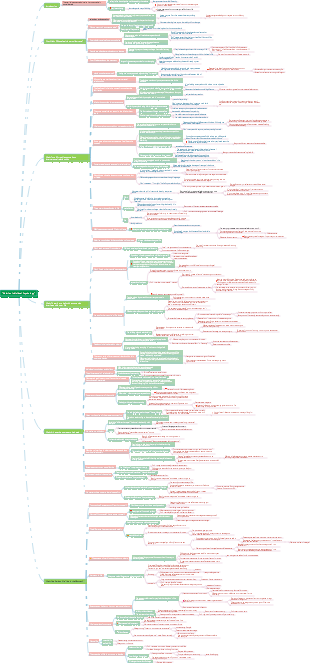
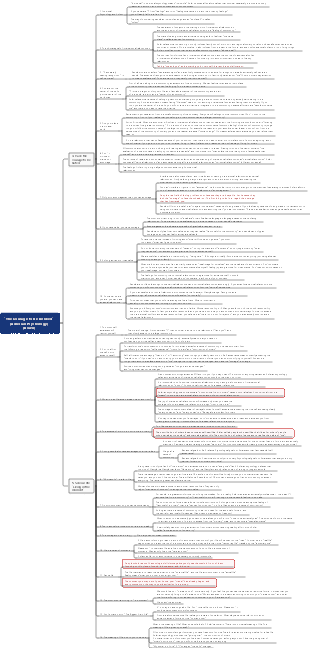
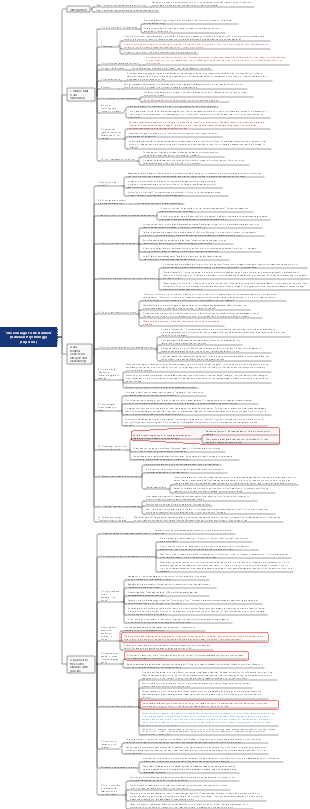
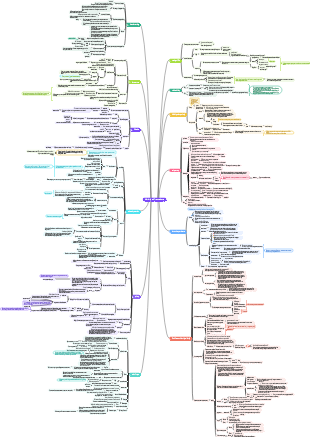

Book Title: The Courage to Be Disliked: Philosophical Lessons from Adler, the “Father of Self-Enlightenment” Author: Ichiro Kishimi, Fumiken Koga Translator: Qu Haixia Publisher: Machinery Industry Press Publication time: 2017-05-01 ISBN: 9787111495482
Translator's Preface
As the founder of individual psychology and a pioneer of humanistic psychology, Adler is known as the "father of modern self-psychology"
Adler's theory centers on "inferiority complex" and "creative self" and emphasizes "social consciousness"
First Night Whose fault is our misfortune?
"Cause Theory" and "Teleology"
If you blindly focus on past causes and try to explain things solely by causes, you will fall into "determinism." In other words, we will eventually come to the conclusion that our present and even the future are all determined by the past and cannot be changed at all.
It's not that your friend is insecure and can't step out. It happened in the opposite order. I think he created the uneasiness because he didn't want to go outside.
Your friend first has the goal of "not going out" and then creates emotions such as uneasiness or fear in order to achieve this goal. Adlerian psychology calls this "teleology"
Not pretending to be sick. The uneasiness or fear your friend is feeling is real, and he may sometimes be suffering from severe headaches or intense abdominal pains. However, these symptoms are also created for the purpose of "not going out"
Psychological trauma does not exist
Adler said the following when denying the theory of psychological trauma: "Any experience itself is not the cause of success or failure. We are not suffering because of the stimulation in our own experiences-the so-called psychological trauma. In fact, We discover in our experiences what suits our purpose. It is not our past experiences that determine us, but the meaning we give to them.”
Adler said that what determines us is not "experience itself" but "the meaning given to experience." Please pay attention to this. This is not to say that events such as encountering major disasters or being abused in childhood have no impact on personality formation. On the contrary, the impact will be huge. But the point is that experience alone doesn’t determine anything. The meaning we attach to past experiences directly determines our lives. Life is not given by others, but chosen by yourself. It is you who chooses how to live.
If your friend believes that "he cannot adapt to society because he was abused by his parents", it means that he has a "purpose" in his heart that makes him think that way.
Parents will be very worried if they stay locked up in their own room. This allows you to focus your parents' attention on one person, and you can also get careful care from your parents.
On the other hand, even if you step out of your home, you will become the "majority" that no one pays attention to, you will become a very ordinary member of the vast sea of people, and even become a mediocre person inferior to others; moreover, no one will take you seriously. . These are the common mentalities of those who live in seclusion.
He was dissatisfied and unhappy. However, he did act in accordance with the "purpose". Not just him, all of us are living for a certain "purpose". This is teleology
Anger is all fabricated
You are not "getting angry because of anger", you are "creating anger for the sake of being angry". In other words, creating angry feelings for the purpose of getting angry
You first had the purpose of getting angry. In other words, you want to shock the erring waiter by getting angry, so that he will listen carefully to your words. As a countermeasure, you fabricated the emotion of anger
Even if you don't yell but are reasonable, the waiter should sincerely apologize to you or wipe you with a clean rag. In short, he will probably take some appropriate measures and may even do your laundry. Moreover, you somewhat expected that he might do that.
Still, you yelled at him. You feel that reasoning is too troublesome, so you want to use a faster way to make the non-resistant opponent surrender. As a corresponding measure, you adopted the emotion of "anger"
The so-called anger is actually just a "means" that can be released or recovered. It can be neatly folded up when you answer the phone, and can be released again after hanging up the phone. This mother did not get angry because she was angry. She just used the emotion of anger to scare her daughter with her loud voice and make her listen to her words.
Freud was wrong
I'm not denying the existence of feelings. Everyone has feelings, this is a matter of course. However, if you say "people cannot resist the existence of emotions", then I will firmly deny this view. We do not act under the control of our emotions. Moreover, at the level of "people are not controlled by emotions", and furthermore at the level of "people are not controlled by the past", Adlerian psychology is a kind of thought and philosophy that is diametrically opposed to nihilism.
If a person has encountered changes in his parents' divorce in his past, this is like 18-degree well water, an objective thing, right? On the other hand, the cold or warm perception of this matter is the subjective feeling of "now". No matter what happened in the past, your current state depends on the meaning you give to existing events.
The question is not "what happened" but "how to interpret it"
We cannot go back in time in a time machine, nor can we turn back the clock. If you become a believer in the theory of causes, you will never be able to achieve happiness under the shackles of the past.
If the past determines everything and the past cannot be changed, then we living today will be helpless in life. What will be the result? Then you may fall into nihilism or pessimism, despair of the world and disgust with life.
We have to consider human potential. If people are beings that can change, then values based on the theory of causes will not be possible, and the theory of teleology will naturally fall into place.
Denying our human free will and treating humans as machines is a Freudian theory of cause.
People are not influenced by past reasons, but move towards their own goals.
socrates and adler
Why are you so anxious to get answers? The answer should not be obtained from others, but should be found out for oneself. The answers you get from others are just symptomatic treatments and have little value.
Do you want to "become someone else"?
What matters is not what is given, but how to use what is given
Your misfortunes are all “chosen” by yourself
You are the one ignoring reality. Will the reality change if we just stick to "what we have been given"? We are not replaceable machinery. What we need is not replacement but renewal
For example, you don't feel happy now. Sometimes I feel that life is very painful, and I even want to become someone else. However, the reason why you are unlucky now is precisely because you chose to be "unlucky" yourself, not because you were born unlucky.
There are indeed many evil deeds. But no matter what kind of criminal, no one does bad things just because they want to do evil. All criminals have their own inherent "corresponding reasons" for committing crimes. Suppose someone kills someone over a dispute over money. Even so, it is an action that has a "corresponding reason" for him, in other words, a "good" action. Of course, this does not refer to goodness in the moral sense, but to goodness in the sense of "self-interest"
In Greek, the word "good" does not contain moral connotations, but only means "good"; on the other hand, the word "evil" also means "no good". The world is filled with all sorts of evil things like breaking the law or committing crimes. However, there are no people who want to do "evil = useless things" in a pure sense.
People often resolve not to change
Let's assume that a person is distressed by "My personality is pessimistic", we can try to replace his words with "I have a pessimistic 'world view'". I think the problem is not my personality, but the worldview I hold. The word personality may have the feeling of being "immutable", but if it is a worldview, then there is the possibility of change.
To put it more accurately, it should mean "the state of life". You will definitely think that your temperament or character will not change according to your own will. But Adlerian psychology believes that lifestyle is the result of one’s own active choices
It's you who choose your own way of life.
I did not consciously choose "this kind of me". The initial choice may have been an unconscious behavior. Moreover, when choosing, the external factors you mentioned again and again, that is, factors such as race, nationality, culture or family environment, will also have a great impact. Even so, it’s you who chose “this kind of me”
When did you make your choice? Philosopher: Adlerian psychology believes that it is around the age of 10
If the lifestyle is not given innately, but is the result of your own choices, then you can make a new choice by yourself
It's not that you can't change. People can change at any time and under any circumstances. The reason why you can't change is because you have made up your mind not to change.
People are always choosing their own way of life, even in the moment of having a conversation like now. You describe yourself as an unfortunate person, and you also say that you want to change immediately, or even say that you want to become someone else. Despite this, it still hasn't changed. Why? That's because you are constantly determined not to change your lifestyle
Although there is some inconvenience and lack of freedom, you still feel that your current lifestyle is better. You probably feel that it is easier to stay like this without making changes.
If you remain "who you are now", you can speculate based on experience on how to deal with the situation in front of you and what the outcome will be. It can be said that you are in a state of familiarity. Even if you encounter some situation, you can find a way to deal with it.
On the other hand, if you choose a new way of life, you will neither know what problems your new self will encounter nor how you should deal with the things in front of you. The future is difficult to predict, and life will be full of uneasiness. There may also be a more painful and unfortunate life waiting for you. In other words, even though people are dissatisfied, they still find it easier and more reassuring to maintain the status quo.
Want to change but afraid of change
It takes a lot of "courage" to change your lifestyle. Facing the "uneasiness" caused by change and the "dissatisfaction" caused by change
Adlerian psychology is the psychology of courage. The reason why you are unlucky is not because of the past or the environment, nor because of lack of ability. You just lack "courage", which can be said to be the lack of "the courage to obtain happiness."
Your life depends on "now"
What should you do first now? That is to have the determination to "abandon the current way of life"
Excuses for not making changes?
I have a young friend who dreams of becoming a novelist but can never write anything. He said that he was too busy at work and had very limited time to write novels, so he was unable to write any works and had never participated in any competitions.
But is it really so? In fact, he wanted to retain the possibility of "I can do it if I do it" by not participating in the competition, that is, he did not want to go out and be judged by others, let alone face the reality of losing because of poor work. . He just wants to live in the possibility that "I can do it as long as I have time, I can write as long as the environment is right, and I have this talent." Maybe in 5 or 10 years, he will start to use excuses like "no longer young" or "already has a family"
You should do it even if you fail to apply. In that case, you may be able to grow, and you may understand that you should choose another path. In short, there can be some development. That's what it means to change your current lifestyle. If you never submit articles and apply for applications, there will be no development.
If you want to change your view (lifestyle) of the world or yourself, you must change the way you communicate with the world, and even change your own behavior. Don’t forget what exactly “must change.” You are still "you", you just need to choose your lifestyle again
Adler's teleology says: "No matter what happened in your previous life, it has no impact on how you spend your future life." What determines your life is yourself living in "this moment"
Night Two All troubles come from interpersonal relationships
Why do you hate yourself?
Her trouble is that she is afraid of meeting people and blushes when she is in front of people. She said that she wants to cure this phobia of blushing no matter what. So I asked her: "If this phobia of blushing is cured, what do you want to do?" So she told me that she had a boy she wanted to date. Although she secretly likes the boy, she has not been able to express her feelings yet. She also said that once she was cured of her blushing phobia, she would immediately confess to him and hope to date him
It fits the topic of female students very well. In order to confess your love to the one you love, you must first cure your phobia of blushing
Is this really the case? My judgment is that this is not the case. Why does she suffer from blushing phobia? And why can’t it be cured? That's because she "needs the symptom of blushing"
What do you think is the thing she fears the most and wants to escape from? Of course it is being rejected by the boy you like, which is the possible blow and self-denial caused by falling out of love. Because the characteristics of lovelorn in adolescence are very obvious in this aspect
However, as long as the blushing phobia exists, she can use the idea of "the reason why I can't date him is because of this blushing phobia" to escape from herself, so that she does not have to muster the courage to confess or even be rejected. You can also convince yourself; and, in the end, you can also live in fantasy with thoughts such as "If my blush phobia is cured, I can also..."
She made up the "blush phobia" to find an excuse for herself who couldn't confess her feelings or because she was afraid of being rejected.
She has no confidence in herself and always holds the fear that "if this happens, even if she confesses, she will definitely be rejected, and then she will lose even more confidence", which is why she creates problems such as blushing phobia. All I can do is to first let him accept "the current self", no matter what the result is, first let him build up the courage to move forward. Adlerian psychology calls this "encouragement"
You said that you can only see your shortcomings now and you can't like yourself at all. And you also said, "No one wants to associate with a eccentric person like me," right?
Why do you hate yourself? Why do we only focus on our shortcomings and refuse to like ourselves? That's because you're too afraid of being disliked by others and afraid of being hurt in relationships.
Just like she who has blush phobia is afraid of being rejected by men, you are also afraid of being rejected by others. Fear of being looked down upon or rejected by others, fear of being hurt mentally. You think it would be better not to be associated with anyone in the first place than to be in that predicament. That is, your "purpose" is to "avoid getting hurt in your relationships with others."
So, how to achieve this purpose? The answer is simple. Just become a person who only looks at your own shortcomings, hates yourself extremely, and tries not to get involved in interpersonal relationships. In this way, as long as you hide in your own shell, you can not associate with anyone, and if you are rejected by others, you can use this as an excuse to comfort yourself. I will think in my heart: I am rejected because of this shortcoming. As long as I don’t have this shortcoming, I will be very lovable.
It’s a great attitude to admit. However, please don’t forget that it is impossible not to get hurt in relationships. As long as you are involved in interpersonal relationships, you will be hurt, big or small, and you will hurt others. Adler once said, "To eliminate worries, only one person must survive in the universe." But that kind of thing is simply impossible to do
All worries are worries about interpersonal relationships
The reason why you feel lonely is not because you are alone. You feel lonely when you feel alienated from others, society and the community around you. In order to experience loneliness, we also need the presence of others. In other words, people only become "individuals" in social relationships
In essence, people must be premised on the existence of others, and it is impossible to completely isolate themselves from others.
You hate yourself because you are too afraid of interpersonal relationships. You are avoiding interpersonal relationships through self-loathing.
The feeling of inferiority comes from subjective fabrication
So what kind of inferiority complex do you have specifically?
For example, when I see the active postures of my peers in newspapers, I feel extremely inferior. People living in the same era are so active, but what are they doing? Or when they see their friends living happily, they don’t want blessings but feel jealous or very anxious. Of course, I don’t like my face that is full of acne, and I also have a strong sense of inferiority regarding social conditions such as academic qualifications, occupation, and annual income. Oh, in short, I feel very inferior everywhere.
In the German language used by Adler, inferiority means a "feeling" of less value. In other words, the sense of inferiority is a word about self-worth judgment.
It’s a feeling like “I have no value or only a little value”
He went on to say: "What are you doing growing taller? You have the ability to make people feel relaxed!" Indeed, tall and strong men themselves will give people a sense of shock; on the other hand, I, who is short, can make others feel relaxed. Let your guard down. It seems that being short is good for both those around you and yourself! This is the conversion of value. Now I no longer worry about my height
The key point here is that my height of 155cm is not "inferior"
In fact, the problem is not that something is lacking. The height of 155 centimeters is just an objective measurement number that is lower than the average. At first glance it might seem inferior. However, the question is how do I view this height and what value do I attribute to it
After all, my feeling about my height is still a subjective "feeling of inferiority" arising from comparison with others - that is, interpersonal relationships. If there was no one else to compare myself to, I wouldn't think I was too short. Are you suffering from various "inferiority complexes" now? However, that is not an objective "inferiority", but a subjective "feeling of inferiority." Even questions like height can be subjectively restored
I was inspired by my friend's words "You have the ability to make people feel relaxed", so I came up with this idea: If you start from "making people feel relaxed" or "not making people feel too intimidating" From a personal perspective, your height can also be an advantage. Of course, this is a subjective interpretation. To be more precise, it is a subjective conjecture
However, subjectivity has an advantage, that is, you can choose with your own hands. It's up to you to decide whether your height is an advantage or a disadvantage. Because of this, I have the freedom to choose
We cannot change objective facts, but we can change subjective interpretations at will. Moreover, we all live in a subjective world
For example, expensive diamonds or currency. We will find some value in it and say how much does 1 carat cost or what the price is. However, if you look at it from another perspective, things like diamonds are just stones.
That is, value must be based on social meaning. Even if the value carried by a dollar bill is a common sense (common feeling), it is not an objective value. If you think about it in terms of printing costs, it's not equal to $1 at all
If I were the only person in this world, I might put these $1 bills in the fireplace for fuel or use them as toilet paper. By the same token, I will naturally no longer worry about my height.
Inferiority complex is just an excuse
Human beings live in this world as a powerless existence. Moreover, people want to get rid of this powerless state, and then they have universal desires. Adler called it "the pursuit of superiority"
Here, you can simply understand it as "hoping for progress" or "pursuing an ideal state". For example, toddlers learn to stand on their own; they learn language and can communicate freely with those around them. We all share a universal desire to escape powerlessness and pursue progress. Scientific progress in human history is also the result of the "pursuit of superiority"
Corresponding to this is a sense of inferiority. People are all in a "state of hoping for progress" in the pursuit of superiority, establishing certain ideals or goals and working hard to achieve them. At the same time, you will have a sense of inferiority about yourself who cannot achieve your ideals. For example, the more ambitious a chef is, the more he or she may have an inferiority complex such as "not yet skilled" or "must cook better"
Adler said that "neither the pursuit of superiority nor the feeling of inferiority is pathological, but a stimulus that can promote healthy, normal effort and growth." When handled properly, feelings of inferiority can also be a catalyst for effort and growth.
We should abandon our sense of inferiority and move forward; we should not be satisfied with the status quo and make continuous progress; we should be happier. If it is such an inferiority complex, then there is no problem
However, some people cannot recognize the fact that "situations can be changed through realistic efforts" and simply do not have the courage to move forward. Without doing anything, they conclude that they are incapable or that reality cannot be changed.
This is not an inferiority complex, but an inferiority complex
The term inferiority complex originally refers to a complex and abnormal psychological state, which has nothing to do with inferiority complex. For example, even the "Oedipus complex" proposed by Freud originally referred to an abnormal antagonism toward same-sex parents.
For example, although you have an inferiority complex about your academic qualifications, if it is because of this that you make a determination such as "My academic qualifications are low, so I have to work harder," that may actually turn out to be a good thing.
On the other hand, an inferiority complex refers to the state of using one's inferiority complex as some kind of excuse. Specifically, thoughts like "I can't succeed because I have low education" or "I can't get married because I'm not pretty." Promoting theories like "Because I have A, I can't do B" in daily life goes beyond the scope of inferiority complex; it is an inferiority complex.
Regarding the causal relationship you are talking about, Adler used the term "external causal law" to explain. What it means is: interpreting something that originally has no causal relationship as if it has a major causal relationship. For example, someone said a few days ago: "The reason why I have never been able to get married is because my parents divorced when I was young." From the perspective of Freud's theory of causes, the divorce of his parents caused great mental trauma to him. It has a great causal relationship with your own view of marriage. However, Adler called this argument "the law of external causation" from a teleological perspective.
The real problem is that people with higher education are more likely to succeed in society! Sir, you should also have this kind of social common sense, right?
The question is how you face this social reality. If you have thoughts like "I can't succeed because of my low academic qualifications," it's not "can't succeed" but "I don't want to succeed."
Simply put it is a fear of moving forward or a lack of real effort. Unwillingness to sacrifice the pleasures you currently enjoy—such as fun or leisure time—in order to change yourself. That is to say, they cannot find the "courage" to change their lifestyle. Even if they are dissatisfied or not free, they still prefer to maintain the status quo.
The more conceited a person is, the inferior he or she is
He has an inferiority complex about his academic qualifications and thinks, "I cannot succeed because of my low academic qualifications." On the other hand, this also means that "as long as I have a high degree of education, I can also achieve great success."
This is another aspect of the inferiority complex. Those who use words or attitudes to express their inferiority complex and those who claim "because I have A that I cannot do B", their implication is "As long as there is no A, I will be a capable and valuable person."
Regarding feelings of inferiority, Adler noted that "no one can endure feelings of inferiority for long." In other words, although everyone has a sense of inferiority, it is so heavy that no one can endure this state forever.
Having an inferiority complex is a state of feeling that the current "I" is lacking.
How to make up for what you lack? The most healthy attitude should be to make up for the deficiencies through hard work and growth, such as studying hard, practicing diligently, working hard, etc.
However, people who do not have this kind of courage will fall into an inferiority complex. Taking the example just now, you will have thoughts such as "I cannot succeed because of my low education", and you will further hint at your abilities by saying "I can easily succeed if I have a high education". It means "Now I am just buried by the factor of low academic qualifications. The 'real me' is actually very good."
superiority complex
Although he suffers from a strong sense of inferiority, he does not have the courage to make changes through sound means such as hard work or growth. Even so, I can't stand the inferiority complex of "I can't do B because I have A", and I can't accept my "incompetent self". As a result, people will want to use simpler methods to compensate
Acting as if you are superior and then immersing yourself in a false sense of superiority
Although I don’t know much about fashion, if people wear ruby or emerald rings on all 10 fingers, it’s not so much a matter of aesthetic consciousness, but rather an issue of inferiority complex, which is a manifestation of a superiority complex.
For example, those who want to be proud of their own achievements, those who are addicted to the glory of the past and only talk about their own glorious achievements all day long, I am afraid there are such people around you. These can all be called superiority complex
People who go out of their way to brag about themselves actually have no confidence in themselves. Adler clearly pointed out that "if someone is arrogant, it must be because he has an inferiority complex."
If you truly have self-confidence, you won't be arrogant. It is precisely because of a strong sense of inferiority that one becomes arrogant, which is actually a deliberate attempt to show off that one is excellent. I worry that if I don’t do that, I won’t be recognized by those around me. This is completely a superiority complex
A very common example is "asserting one's power"
For example, vigorously promoting oneself as a powerful person - it can be a team leader or a famous person. In fact, this is a way to show that one is a special existence. Falsifying resumes or excessive pursuit of brand-name clothing are also characteristics of asserting power and having a superiority complex. These situations all belong to the fact that "I" is not good or special. And by combining "I" with power, it seems that "I" is excellent. This is also called "false superiority"
People who use the power of power to elevate themselves are ultimately living in the values and lives of others. This is what must be emphasized
boast about misfortune
A pattern of achieving an abnormal sense of superiority by intensifying the sense of inferiority.
That is to say, those who relish or even boast about the various misfortunes in their growth history. Moreover, even if others want to comfort or help them change, they will use "you can't understand my feelings" to push away the helping hand.
This kind of people actually want to use misfortune to show that they are "special". They want to use their misfortune to suppress others.
For example, I am very short. In this regard, kind-hearted people will comfort me with words such as "There is no need to care" or "A person's value is not determined by height." However, if I reject him by saying "How can you understand the troubles of the dwarf!", then no one will have anything to say. If this happens, I'm afraid the people around me will treat me with caution.
In this way, I can become more advantageous and “special” than others. When they are sick, injured, broken up in love, and in such situations, many people will use this attitude to make themselves "special beings"
Use your misfortune as a weapon to dominate the other person. By telling how unfortunate and painful one is, people around him - such as family members or friends - worry or restrict his words and actions. Those who stay behind closed doors as mentioned at the beginning are often immersed in a sense of superiority that uses misfortune as a weapon. Adler even noted: “In our culture, vulnerability is actually very powerful and privileged.”
Adler said: "In our culture, if you want to ask who is the most powerful, the answer should probably be the baby. The baby is always in a position of dominance rather than being dominated." Babies dominate adults through their weak characteristics. . Moreover, babies are not controlled by anyone because they are weak.
Of course, there is some truth in what the injured person says, such as "You can't understand how I feel." No one can fully understand the feelings of the suffering parties. But as long as one uses one's misfortune as a weapon to remain "special," one will always need misfortune
Life is not a competition with others
Although the distance or speed traveled varies, everyone walks equally on the same plane. The so-called "pursuit of superiority" means that one is constantly moving forward, rather than being superior to others.
Don’t compete with anyone, just keep moving forward. Of course, there is no need to compare yourself with others
A healthy sense of inferiority does not come from comparing with others, but from comparing with the "ideal self"
We are all different. Gender, age, knowledge, experience, appearance, no one is exactly the same. We should view differences between ourselves and others positively. However, we are "different but equal"
People are all different, and this "difference" is not about good or evil or superiority or inferiority. Because no matter what differences exist, we are all equal people
There may be differences in terms of knowledge, experience or responsibilities. Maybe the child can't tie his shoes well, can't solve complex equations, or can't take responsibility like an adult when things go wrong. However, human value cannot be determined by these
Treated neither as an adult nor as a child, but “as a human being”. Treat your child as a person like yourself and treat them sincerely
It doesn’t matter whether we are walking in front or behind. We are all walking on a horizontal plane where there is no vertical axis. We keep moving forward not to compete with anyone. The value lies in constantly surpassing oneself
It is to escape from the competition of victory and defeat. When a person wants to be himself, competition will inevitably become an obstacle
If that competitor can be called a "partner" to you, it may be beneficial to self-research. But in most cases, competitors cannot become partners
The only one who cares about your appearance is yourself
If there is "competition" in interpersonal relationships, it is impossible for people to get rid of the troubles caused by interpersonal relationships, and it is impossible to get rid of misfortunes
Because where there is competition, there will be winners and losers.
Because of the relationship between them, they will inevitably be aware of the outcome, and there will be "A gentleman went to a prestigious university, B gentleman entered that big company, C gentleman found such a beautiful girlfriend, but he is thoughts like this
If you are aware of competition or winning or losing, you will inevitably have a feeling of inferiority. Because often comparing oneself with others will lead to thoughts such as "better than this, worse than that", and an inferiority complex or superiority complex will follow. So, what kind of existence do others look like to you at this time?
Not just a competitor. Unknowingly, you will see others and even the entire world as "the enemy"
That is to say, they think that everyone is an enemy who can fool, ridicule, attack or even frame themselves at any time and should never be taken lightly, and that the world is a scary place.
This is the scary thing about competition. Even if he is not a loser, even if he has been in an invincible position, people in the competition will never feel at ease and do not want to become a loser. In order not to become a loser, you must always win and cannot trust others. The reason why many people cannot feel happy despite achieving social success is because they live in competition. Because the world in their eyes is a dangerous place full of enemies.
But in reality, will others really pay that much attention to you? Will it monitor you 24 hours a day, looking for opportunities to attack you? I'm afraid that's not the case
"I cannot sincerely bless others who are living a happy life." That is because I consider interpersonal relationships from a competitive perspective and regard other people's happiness as "my failure", so I cannot give blessings.
However, once you are liberated from the cycle of competition, you no longer need to defeat anyone, and you can get rid of the fear of "maybe losing" and become able to sincerely wish the happiness of others and make positive contributions to the happiness of others. contribution. When someone is in trouble and you are always willing to lend a helping hand, that person is a partner to you.
The key lies in the following point. If you can realize that "everyone is my partner", your view of the world will be completely different. No longer regard the world as a dangerous place, and no longer live in unnecessary suspicion. The world in your eyes will become a safe and comfortable place. The troubles in interpersonal relationships will also be greatly reduced
It's a sunflower. It’s the theory that sunflowers grow when they are bathed in warm sunlight and absorb enough water.
"Power Struggle" and Revenge in Relationships
We can neither travel back in time nor turn back the clock. However, what kind of value is given to the past is a question faced by the "present you"
Yes, we sometimes get angry about social problems. But this was not a sudden emotion, but logical indignation. Personal anger (private outrage) and anger at social contradictions or injustices (public outrage) are not of the same category. Personal anger cools quickly, but public outrage lingers for a long time. Anger expressed out of personal anger is nothing more than a tool to bring others into submission.
Because public outrage outweighs self-interest
If someone insults me to my face, I will think about that person's hidden "purpose". Not only direct insults in person, but also when you are angered by the other party's words and deeds, you must also recognize that the other party is provoking a "power struggle."
For example, children sometimes play pranks to play tricks on adults. In many cases, the purpose is to attract the attention of an adult, who will often stop the prank before the adult actually gets angry. However, if the child still does not stop playing tricks when the adult is really angry, then the purpose is the "fight" itself.
Why fight? Philosopher: I want to win. I want to prove my strength by winning.
In this case, what is the other party’s purpose? Do you just want to discuss politics? no. The other party just wants to blame and provoke you, and through a power struggle, they can achieve the purpose of making you surrender if you don't like it. If you get angry at this time, you are playing into their hands, and the relationship will turn sharply into a power struggle. Therefore, we cannot fall for any provocation
Suppose you squelch the argument, and the other party, having completely admitted defeat, exits without hesitation. However, the struggle for power did not end there. The defeated opponent will quickly move to the next stage.
"Revenge" stage. Even though they are temporarily defeated, the opponent will be planning revenge in other places and in other forms, waiting for revenge.
For example?
Some children who have been abused by their parents will go astray, skip school, and even engage in self-harm behaviors such as cutting their wrists. If you follow Freud's theory of causes, it will definitely be summed up from the perspective of simple cause and effect: "Because parents use such methods to educate, so children become like this." Just like because plants are not watered, they become like this. Like dryness. This is indeed a simple and easy to understand explanation
However, Adlerian teleology does not ignore the child's hidden purpose - namely, "revenge on the parents." If you behave badly, skip school, or even slit your wrists, your parents will be troubled and panicked and miserable. It is precisely because children know this that they develop problem behaviors. Children are not affected by past reasons (family environment), but to achieve current goals (revenge of parents)
Once a relationship develops into the revenge stage, it is almost impossible to reconcile the parties involved. In order to avoid this, you must not be fooled when provoked by power struggles.
Admitting your mistakes does not mean you have failed
The very idea of "suffering" is a sign that you are still locked in a power struggle. It’s about not reacting to the other person’s behavior. That's all we can do
Does controlling anger mean “patience”? No, we should learn how not to use anger, because anger is ultimately a means and tool to achieve a goal
Hopefully you can understand the fact that anger is a form of communication and that it is possible to communicate without using anger. We can communicate and gain approval from others without using anger. If we can understand this from experience, then naturally there will be no more anger.
It’s not that you can’t be angry, but that “there is no need to rely on anger as a tool.”
Irritable people do not have an impatient temper, but rather do not understand effective communication tools other than anger. That's why I say things like "I can't help but get angry". This is actually using anger to communicate.
We have language and can communicate through language; we must believe in the power of language and logical language.
No matter how right you think you are, don't use it as a reason to blame the other person
Once people are convinced that "I am right" in interpersonal relationships, they have entered into a power struggle.
I am correct, which means the other party is wrong. Once you think of it this way, the focus of the debate changes from "the correctness of the claim" to "the way you relate to each other." In other words, the belief that "I am right" means insisting that "the other party is wrong" will eventually turn into a battle of victory and defeat such as "so I must win." This is a complete power struggle, right?
The right or wrong of the original proposition has nothing to do with victory or defeat. If you think you're right, it shouldn't matter what the other person's opinion is. However, many people get caught up in power struggles and try to bring the other person to heel. Because of this, people think that "admitting one's mistakes" is equivalent to "admitting failure"
Because you don’t want to fail, you don’t want to admit your mistakes, and you end up choosing the wrong path. Admitting mistakes, apologizing, and withdrawing from power struggles are not "failures."
The pursuit of superiority is not accomplished through competition with others
If your glasses are blurred and you can only see the victory or defeat in front of you, you will go down the wrong path. Only by taking off the glasses of competition or victory or defeat can we change and improve ourselves.
Three major issues in life: making friends, work and love
The behavioral goals include "self-reliance" and "harmony with society." Moreover, the psychological goals that underpin this behavior are the two consciousnesses of "I am capable" and "Everyone is my partner."
As children, we live under the protection of our parents and can survive even if we don't work much. However, the time of "independence" soon comes. Needless to say, we can no longer rely on our parents and must strive for spiritual independence. We must also be independent in a social sense and must do some work-this does not mean working in a company. Work in a narrow sense such as going to work
There is distance and depth in relationships. To emphasize this point, Adler also used the expression "three major bonds"
When an individual wants to survive as a social being, he will encounter interpersonal relationships that he has to face. This is a life issue. It can indeed be said to be an "obligation" in the sense of "having to face it"
First, let’s consider it from the perspective of “work issues”. No matter what kind of work, no one person can complete it alone. For example, I usually write manuscripts in this study room. Writing is indeed a job that no one can replace and must be completed by oneself. But even so, the work was only possible with the presence of an editor and the assistance of bookbinders, printers, and distribution or bookstore personnel. In principle, there is no work that does not require collaboration with others
From the perspective of distance and depth, interpersonal relationships at work can be said to have the lowest threshold. Because interpersonal relationships at work have a simple and easy-to-understand common goal of achieving results, they can cooperate or must cooperate even if they are not compatible with each other. Moreover, the relationship formed by "work" can be resumed after get off work or changing careers. Return to another person's relationship
The core issue is human relationships. For example, if you send out your resume in order to apply for a job, but after an interview you are not accepted by any company, your self-esteem will be greatly hurt, and after thinking about it, you will begin to doubt the meaning of work. Or, you encounter a major failure at work, and the company suffers huge losses due to your mistakes, and your eyes become dark, so you begin to hate going to the company again. These situations are not about hating the work itself, but hating being criticized and blamed by others for the work, hating being labeled as incompetent such as "you are incompetent" or "you are not suitable for this job", and even more hating being irreplaceable. "My" dignity is hurt. In other words, everything is a matter of interpersonal relationships
It’s not that you don’t want to work or refuse to work, but you just don’t want to go to work to escape “work-related interpersonal relationships”?
Romantic red thread and strong chain
Friendship topics
This refers to a broader friendship beyond work. Just because there is no coercive force like a working relationship, it is more difficult to start and develop.
Many people think that the more friends the better, but is this really the case? The number of friends or acquaintances has no value. This is related to the theme of love, what we should consider is the distance and depth of the relationship
As long as you change, the surroundings will also change. Something has to change. Adlerian psychology is not a psychology of changing others, but a psychology of pursuing self-change. Don't wait for others to change, don't wait for the situation to change, but take the first step bravely yourself
The subject of love
One point can be divided into two stages: one is the so-called love relationship, and the other is the relationship with family members, especially the parent-child relationship. Among the three major issues of work, making friends and love, the issue of love is probably the most difficult one.
For example, when a friendship develops into a romantic relationship, some words and deeds that are allowed between friends are no longer allowed. Specifically, for example, you cannot play with friends of the opposite sex. Sometimes, your lover will be jealous just because you are on the phone with a friend of the opposite sex. Like this, the distance is closer and the relationship is deeper
However, Adler did not agree to tie the other party down. If the other person lives a happy life, then you can sincerely bless them. This is love. A mutually binding relationship can quickly break down
It is not a positive affirmation of Huaxin. Please think about it this way, if you feel depressed or nervous together, then even a romantic relationship cannot be called love. Only when people can feel that "you can be unrestrained with this person" can you experience love. There is no need to show off inferiority or superiority, and one can maintain a calm and natural state. Real love should be like this
Bondage, on the other hand, is a desire to dominate the other person and is an idea based on distrust. It is simply impossible to maintain a natural state when you are in the same space with someone who does not trust you. Adler said: "If you want to live harmoniously together, you must treat each other as equals."
However, a relationship or couple can also choose to "break up." Even couples who have lived together all year round may choose to break up if they find it difficult to maintain their relationship. However, in principle, this cannot be the case for parent-child relationships. If love is a relationship tied with red silk thread, then the parent-child relationship is a relationship tied with strong chains. Moreover, I only have a small pair of scissors in my hand. This is where the difficulty lies in the parent-child relationship
What can be said at this stage is that there is no escape. No matter how difficult a relationship is, you cannot choose to escape, you must face it bravely. Even if it ends up being cut with scissors, you must first choose to face it. The most undesirable thing is to stop moving forward in "this" state
"The lie of life" teaches us how to escape
It's not that you hate A because you can't tolerate his shortcomings, but that you first have the purpose of "hating A" and then find the shortcomings that suit this purpose.
In order to escape the interpersonal relationship with A
In a relationship or a relationship, after a certain period, sometimes anything the other person says or does will make you angry. The way you eat makes you dissatisfied, the sloppy posture in the room makes you annoyed, and even the sound of the other person's breathing while sleeping makes you angry, even though it wasn't like this a few months ago.
This is because that person has made up his mind to find an opportunity to "end the relationship" and is collecting materials to end the relationship, so he feels that way. In fact, the other party has not changed at all, but his "purpose" has changed.
People are such willful and selfish creatures. Once they have this idea, they can find the shortcomings of the other party no matter what. Even if the other person is a saint and a gentleman, he can easily find reasons to dislike him. Because of this, the world may become a dangerous place at any time, and people may regard all others as "enemies"
Adler called this attempt to create excuses to avoid life's issues "life lies."
This word is very sharp. For your current situation, you shift the responsibility to others and avoid life issues by blaming others or the environment. The same goes for the female student I mentioned earlier who suffers from blushing phobia - she lies to herself and to those around her. If you think about it carefully, this is indeed a quite sharp word.
The fact that it is not anyone else who determines your lifestyle (state of life) but yourself
If your lifestyle is determined by other people or circumstances, it's possible to shift blame. However, since we choose our own lifestyle, our responsibilities are very clear.
Adler did not intend to distinguish life's lessons or life's lies in terms of good and evil. What we should be talking about now is neither a question of good or evil nor a question of morality, but a question of "courage"
Even if you avoid life's issues and rely on life's lies, it is not because you are contaminated with "evil." This is not a question that should be condemned from a moral perspective, it is just a question of "courage"
Adlerian Psychology is the "Psychology of Courage"
If I add one more thing, it is that Adlerian psychology is not a "psychology of possession" but a "psychology of use."
Freudian causation is a "psychology of possession," which then turns to determinism. On the other hand, Adlerian psychology is a "psychology of use", and it is you who plays the decisive role.
We humans are not fragile beings susceptible to what the theory of trauma would call trauma. From a teleological perspective, we use our own hands to choose our own life and lifestyle. we have this power
I am a human being, not a machine. It is impossible for me to replenish my courage as soon as I hear an instruction such as "Take courage"!
The third night Give hell to anyone who interferes with your life
Freedom means not seeking approval anymore?
Adlerian psychology denies seeking approval from others
There is no need to be recognized by others, and there is no need to seek recognition.
Do you want to live in the expectations of others?
Herein lies the danger of recognition of desire. Why on earth do people seek approval from others? In fact, in many cases it is due to the influence of reward and punishment education.
If you do something appropriate, you will be praised, and if you do something inappropriate, you will be punished. Adler severely criticized this kind of reward-and-punishment education. Under reward-and-punishment education, a wrong way of life will arise, that is, "If no one praises me, I won't do good things" or "If no one punishes me, I will do bad things too." I first had the purpose of getting praise, so I picked up garbage. And if you can't get praise from anyone, you will be very angry or determined never to do such a thing again. Obviously, this is an abnormal idea
If you blindly seek other people’s approval and care about other people’s evaluations, you will end up living in other people’s lives.
If you hope too much to be recognized by others, you will live according to other people's expectations. That is to give up your true self and live in the lives of others
Moreover, please remember that if you "don't live to meet other people's expectations," then others "don't live to meet your expectations." Don't get angry when other people's behavior is not in line with your own ideas. This is also a matter of course
It is very painful not to be recognized. If you are not recognized by others and parents, you will have no self-confidence. So, can such a life be called healthy?
For example, some people may think: "Because God is watching, we must accumulate good deeds." But this is a kind of thought that is opposite to nihilism such as "Because there is no God, we can do all evil." Even if God does not exist, even if we cannot gain God's approval, we must still live our own lives. Moreover, it is precisely in order to overcome the nihilism of a godless world that it is even more necessary to deny the recognition of others
Will you really be happy if you are recognized? Can people who have achieved a certain social status experience happiness?
When wanting to gain recognition from others, almost everyone will resort to the method of "meeting others' expectations." This is actually influenced by the reward and punishment education of "if you do the right thing, you will be praised." However, if the main goal of the job becomes "meeting other people's expectations," then the job will become quite painful. Because then you will only care about other people's eyes and be afraid of other people's evaluation, and you will not be able to be your true self at all.
Separate your own “life issues” from those of others
Whether children study or play with friends is originally a "child's issue", not a parent's issue.
Learning is a child's subject. In contrast, parents who order their children to study are interfering in other people's subjects. If this is the case, conflicts will certainly be inevitable. Therefore, we must separate our own issues from other people's issues from the perspective of "whose issue is this?"
Basically, all interpersonal conflicts arise from interference in other people's issues or interference in one's own issues. As long as subjects can be separated, interpersonal relationships will change dramatically.
The way to identify whose project it is is very simple, just think about "who will ultimately bear the consequences of a certain choice?"
If a child chooses the option of “not studying”, the ultimate bearer of the consequences of this decision—such as poor grades, inability to attend a good school, etc.—is not the parents, but the child. In other words, learning is a child’s subject
Indeed, parents in the world always say things like "I'm thinking of you." However, parents' behavior is sometimes clearly to satisfy their own goals - face and vanity or the desire for dominance. In other words, it’s not “for you” but “for me.” It is precisely because they are aware of this deception that the child will resist.
This needs attention. Adlerian psychology does not promote laissez-faire. Permissiveness is an attitude of not knowing and not wanting to know what your child is doing. Adlerian psychology does not advocate this, but protects children based on understanding what they do. If it comes to learning, tell the child that this is his own subject. Parents should be ready to help when he wants to learn, but never interfere with his child's subject. Don’t point fingers at your children when they don’t ask you for help.
After receiving psychological counseling, what determination the counselee makes and whether to change his lifestyle are all matters of the counselee himself, and the counselor cannot interfere.
Of course, counselors should do their best to help, but they should not interfere. There is a proverb in a certain country: You can lead a horse to water, but you cannot force it to drink. Psychological counseling in Adlerian psychology and all assistance to others follow this requirement. If you ignore your wishes and force them to "change", the result will only be an even stronger reaction in the future.
The only one who can change yourself is yourself
Even parents have to put aside their children's issues
Whether or how to get rid of the isolation at home, in principle, these are issues that should be solved by the individual himself, and parents cannot interfere. Even so, they are not strangers, so they need some assistance. The most important thing is whether the child wants to sincerely consult his parents when he is in trouble or whether he can establish that kind of trusting relationship from the beginning.
First of all, I would conclude that "this is a child's issue." Do not interfere or pay too much attention to the child's seclusion. Also, tell your child that I am always available to help when he is confused. In this way, children who notice changes in their parents will have to think about how to deal with this issue in the future. He may seek help, or he may find a solution on his own
Parents who are troubled by their relationship with their children tend to think that their children are my life. In short, they regard the children's issues as their own issues and always only consider the children. When they realize it, they have lost themselves.
But no matter how much parents take care of their children's problems, children are still independent individuals and will not live completely according to their parents' ideas. The child's study, work, marriage partner, or even daily behavior will not be exactly what the parents want. Of course, I would also worry and even want to interfere. However, I also said just now: "Others do not live to meet your expectations." Even my own children do not live to meet the expectations of their parents.
Precisely because we are closely related family members, it is even more necessary to consciously separate topics.
The act of trust also requires subject separation. Trust others, that's your job. However, how to treat your trust is the subject of the other party. If you don't distinguish between boundaries and instead impose your own wishes on others, it becomes gross "interference."
Can you still trust and love the other person even if they are not what you want? Adler's "problem of love" includes this kind of questioning
Let go of other people’s issues and your worries will fly away gently
So, suppose they opposed more directly and fiercely. The father was furious, and the mother cried bitterly. In short, they all tried every means to oppose, and even threatened to never recognize the librarian son, and if he did not inherit the family business with his brother, he would have to fight with him. You sever the parent-child relationship. However, how to overcome this feeling of "disapproval" is not your problem, but your parents' problem. You don't need to care at all
"It doesn't matter how sad it makes your parents"? PHILOSOPHER: It doesn’t matter
All you can do about your life is "choose the path you think is best." On the other hand, how others evaluate your choice is their business and you have no control over it.
That's what separation is all about. You care too much about other people's views and evaluations, so you constantly seek approval from others. So, why do people care so much about other people’s eyes? The answer given by Adlerian psychology is very simple, that is because you do not know how to separate subjects. Treat issues that should be other people’s issues as your own issues
Please think about what the old lady said before, "The only one who cares about your face is yourself." Her words get to the heart of the separation of subjects. What other people think when they see your face is their business and you have no control over it.
However, if you want to gain the approval of this boss, perhaps the first thing you should think of is "work", right? But work is not about pleasing colleagues in the company
Your boss hates you. And, hate you for no reason. If this is the case, there is no need for you to take the initiative to cater to him
This is also what Adler referred to as "the lie of life." I am unable to work because I am alienated by my boss. My failure at work is all because of that boss. People who say this are actually using their boss as an excuse to "do a bad job". Like the schoolgirl who suffers from blush phobia, you also need the existence of a "annoying boss" in order to think in your mind: "I can work better without this boss."
If you are angry, you will not be able to think calmly. Thinking that "because you have such a boss, you can't work well" is completely causation theory. Please don't think like this, but think about it the other way around: "Because you don't want to work, you create an annoying boss." Or think: "Because you don't want to accept your incompetence, you create an incompetent boss." This becomes teleological thinking
So, what if you can separate topics? In other words, no matter how unreasonably and unreasonably the boss loses his temper, it is not "my" issue. Being unreasonable is an issue that my boss should deal with. There is no need to please or compromise. What I should do is face my own life honestly and handle my issues correctly. If you could understand it this way, things would be completely different
Don't interfere with other people's issues, and don't let others interfere with your own issues. This is the concrete and epoch-making perspective given by Adlerian psychology that may completely change the troubles in interpersonal relationships.
Cut off the "Gerdios Knot"
He was a Macedonian king active in the 4th century BC. When he was on an expedition to Lydia, the Persian territory, a chariot was enshrined in the temple. The chariot was tied to the pillars of the temple by the former king Gerdeos. There is a local legend: "Whoever unties this knot will become the king of Asia." This is a knot that many skilled challengers have not untied. So, what do you think Alexander the Great would have done when faced with that knot?
When Alexander the Great saw that the knot was very strong, he immediately took out his dagger and cut it in two.
It is said that he went on to say at that time: "Destiny is not determined by legends but carved out by my own sword. I don't need the power of legends but by my own sword to create my destiny." As you know, he later became An emperor who ruled from the Middle East to West Asia. And the "Gerdios Knot" has also become a famous anecdote.
Such intricate knots, which are the "bonds" in interpersonal relationships, can no longer be untied by ordinary methods, and must be cut off with new methods. When I explain "Separation of Subjects" I always think of the Gerdios Knot.
For example, if you get too close to a book while reading, you won't be able to see anything. Likewise, building good relationships requires maintaining a certain distance. If the distance is too close and they stick together, you will not be able to have a direct conversation with the other party.
Even so, the distance cannot be too far. If parents blindly scold their children, their hearts will become alienated. If this is the case, the child will not even discuss it with the parents, and the parents will not be able to provide appropriate assistance. It is very important to maintain a moderate distance within reach but without stepping into the other party's territory.
You just said that the separation of subjects is a wanton trampling on the good intentions of the other party. This is actually an idea bound by the idea of "reward". In other words, if the other person does something for you - even if it is not what you expected - you must repay it.
In fact, this is not about living up to good intentions, but just being bound by the idea of repayment. No matter what the other party does, you should be the one who decides what you should do
If there is "reward thought" in interpersonal relationships, it will lead to the idea of "because I have done this for you, so you should give me something in return." Of course, this is an idea that goes against subject separation. We can neither seek rewards nor be bound by them
However, in some cases it is easier to interfere with other people's projects rather than separate them. For example, a child always has trouble tying his shoelaces. For a busy mother, it is faster to tie the shoelaces directly for the child than to wait for the child to tie them himself. However, this behavior is a kind of interference and deprives the child of the subject. Moreover, the result of repeated interference will be that the child will learn nothing and eventually lose the courage to face life's issues. "Children who don't learn to face difficulties head on will eventually want to avoid all difficulties," Adler said.
There are aspects of Adlerian psychology that are counter-intuitive: denying the theory of causes, denying mental trauma, and adopting teleology; believing that people's troubles are all about interpersonal troubles; in addition, not seeking recognition or separation of topics are also counter-intuitive. theory
The pursuit of recognition kills freedom
Indeed, it is easier to live according to other people's expectations, because that is entrusting your life to others, such as walking on the track paved by your parents. Although there will be various dissatisfaction here, as long as you are still walking on the track, you will not get lost. However, if you have to decide your own path, you may get lost, and you may even face the problem of "how to survive?"
So why choose this unfree lifestyle? You used the word "desire for recognition", in short, you don't want to be disliked by anyone.
There really is no one who wishes to be annoying. But think about it this way: What do you need to do in order not to be disliked by anyone? There is only one answer. That is to always look into other people's faces and swear loyalty to anyone. If there are 10 people around you, swear loyalty to 10 people. If this is the case, you won’t be annoying to anyone for the time being.
However, there is a big contradiction waiting for you at this time. Because I don’t want to be disliked, I swear to be loyal to all 10 people. This is like a politician trapped in populism. He promises to “do it” even if he cannot do it, and takes on all the responsibilities that he cannot bear. Of course, this kind of lie will be exposed soon, and then you will lose credibility and make your life even more painful. Naturally, the pressure to continue lying is beyond imagination.
Please understand this carefully. Living to meet other people's expectations and entrusting your life to others is a way of life that lies to yourself and to those around you.
Separating projects is not self-centered. On the contrary, interfering with other people's projects is self-centered. Parents force their children to study or even dictate their life plans or marriage partners. These are all self-centered ideas.
Can children live as they please regardless of their parents' wishes? Philosopher: There is no reason not to live the life you like
Adults who have chosen an unfree lifestyle will criticize young people for their "hedonism" when they look at young people living freely in the present. Of course, this is actually a lie concocted in order to allow yourself to live without freedom. Adults who have chosen true freedom will not say such things. On the contrary, they will encourage young people to have the courage to fight for freedom.
Freedom is being hated by others
Having said that, it is also true that no matter how hard we try, there will be people who hate me and people who hate you. How do you feel when you are disliked by others or feel that you might be disliked by others?
Not wanting to be disliked by others is a very natural desire and impulse for people. Kant, the giant of modern philosophy, called this desire "tendency"
Yes, that is, instinctive desires and impulsive desires. So, is it "freedom" to live according to this "tendency", that is, to live according to desires or impulses, to live like a stone rolling down a slope? Absolutely not! This lifestyle is just a slave to desires and impulses. True freedom is an attitude that pushes you up from below
Stones are powerless. Once you start rolling down a slope, you will continue to roll according to natural laws such as gravity or inertia. However, we are not rocks, we are beings who can resist tendencies, stop ourselves from falling and climb back up the slope.
Perhaps the desire for recognition is a natural desire. So, is it necessary to keep rolling down the slope in order to gain the approval of others? Is it going to wear itself out like a falling stone until it loses its shape and becomes round? Can the sphere created in this way be called the "true self"? Totally impossible!
Freedom is being hated by others
It's you who is disliked by someone. This is evidence that you are exercising and living your freedom, and that you are living according to your own goals.
Indeed, it is painful to be disliked. If possible, we all want to live without being unpleasant and try our best to satisfy our need for approval. However, the lifestyle of trying to please everyone is an extremely unfree lifestyle, and it is also impossible to achieve.
If you want to exercise your freedom, you need to pay a price. In interpersonal relationships, the price of freedom is being disliked by others.
You must think that freedom means "freedom from organization". Thinking that freedom means breaking away from groups such as family, school, company or country. However, true freedom cannot be obtained even by breaking out of the organization. Don't care about other people's evaluation, don't be afraid of being disliked by others, don't pursue being recognized by others. If you don't pay the above prices, you won't be able to implement your own way of life, that is, you won't be able to gain freedom.
I mean don't be afraid of being hated.
It doesn't mean to intentionally be annoying or to do evil. Please don't misunderstand this
It’s not self-righteousness, nor is it a mistake, it’s just a matter of separation. Even if someone doesn't like you, that's not your problem. In addition, thoughts such as "You should like me" or "I've worked so hard and you still don't like me is weird" are also reciprocal thoughts that interfere with the other party's issues.
Not being afraid of being disliked but moving forward courageously, not following the crowd but forging ahead bravely, this is the freedom for people
If I were given the choice between "a life in which everyone loves me" and a "life in which some people hate me", I would choose the latter without hesitation. I care more about how I am doing than what other people think of me. That is, I want to live freely
yes. "I don't want to be hated by others" may be my issue, but "whether you hate me or not" is someone else's issue. Even if someone doesn't like me, I can't interfere. If we use the proverb just introduced, we only make efforts to "lead the horse to the water". Whether to drink water is a matter for that person.
The courage to be happy also includes "the courage to be hated." Once you have this courage, your relationships will suddenly become easier
The "trump card" of interpersonal relationships is in your own hands
Because my father is a man of few words and difficult to get close to. However, the idea that "the relationship is not harmonious because I was beaten at that time" is a Freudian etiology.
If we stand from the standpoint of Adler's teleology, the explanation of the law of causality will be completely reversed. In other words, I "didn't want to have a good relationship with my father, so I brought out the memory of being beaten."
It made more sense for me not to repair my relationship with my father because I could blame him if things didn't go well in my life. There is "goodness" to me, and perhaps "revenge" on my feudal father.
This can be considered from the perspective of the "interpersonal relationship card". As long as I follow the theory of cause and believe that "I was beaten and that's why I was at odds with my father," then I will be helpless now. However, if you think that you "removed the memory of being beaten because you don't want to reconcile with your father," then you will hold the "relationship repair card" in your hands. Because as long as I change my "purpose", things will be solved
When I made up my "determination" to repair the relationship, what kind of lifestyle my father had, how he looked at me, and what his attitude was towards me taking the initiative to approach him, etc., had nothing to do with me. It doesn’t matter if the other person doesn’t want to repair the relationship at all. The question is whether I have made up my mind, the "relationship card" is always in my own hands
Many people believe that other people hold the cards in relationships. Because of this, I care very much about "what that person thinks of me" and choose a lifestyle that satisfies other people's expectations. However, if you can understand the separation of topics, you will find that all the cards are actually in your own hands. This will be a brand new discovery
My change was not "to change my father." That's the wrong idea of wanting to manipulate others.
I have changed, it is only "I" that has changed. As a result, I don't know what the other party will do, and I can't control it. This is also a separation of topics. Of course, as I change—not through my change—the other person also changes. There may be many situations where the other party has to change, but that is not the purpose, and it may not happen. In short, it is a very wrong idea to use changing oneself as a means of manipulating others.
When it comes to interpersonal relationships, people often think of "relationships between two people" or "relationships with many people", but in fact it is themselves first. If you are bound by the desire for approval, then the "relationship card" will always be in the hands of others. Should you entrust this card to others, or should you control it yourself?
One day, my father said "thank you" to me for taking care of him as usual. I never knew that this word existed in my father's dictionary. I was very shocked, but at the same time I was very grateful for the days before. I think that through my long-term caregiving life, I did what I could, which was to bring my father to the water. And, eventually the father drank the water. I think so
fourth night Have the courage to be hated
individual psychology and holism
Indeed, Adler's term "individual psychology" may be misleading. Here I want to give a brief explanation. First of all, in English, individual psychology is called "individual psychology". Moreover, the word "individual" here means "indivisible" etymologically.
In short, it means the smallest unit that cannot be further divided. So specifically, what cannot be divided? Adler opposed all dualist values that consider separately the mind and body, reason and emotion, and consciousness and unconsciousness.
For example, please think about the words of the female student who came for consultation because of her phobia of blushing. Why does she have a phobia of blushing? Adlerian psychology does not consider physical symptoms separately from the mind (spirit), but believes that the mind and body are an inseparable "whole", just like the hands and feet will tremble due to inner tension, the cheeks will turn red, or the body will become red due to inner tension. Fearful and pale, etc.
The same goes for reason and emotion, consciousness and unconsciousness. Normally, calm people do not become angry when driven by impulse. We are not governed by separate entities of emotion, but by a unified whole
This way of considering people as indivisible beings and "whole self" is called "holism"
The separation of subjects is not to alienate others, but to unravel the intricate threads of interpersonal relationships.
You now see the world with your own threads and other people's threads tangled together in a messy way. Red, blue, yellow, green, all colors are mixed together. This state is called "entanglement", not "connection"
The ultimate goal of relationships
If others are partners and we live among them, we can find our own "position" in them, and we can also think that we are making contributions to our partners - that is, the community. This state of seeing others as partners and being able to feel that "one has a place" is called a sense of community.
Adler believes that the community he describes includes not only family, school, work unit, and regional society, but also all existences such as countries or humans; on the timeline, it also includes from the past to the future, and even includes animals, plants, or non-living things.
A sense of community is the most important indicator of happy relationships
In English, the sense of community is called "social interest", which means "concern for society." Here I want to ask you, do you know what the smallest unit of society is in sociology?
"Me and you". As long as two people exist, society and community will be created. To understand what Adler calls the sense of community, we can first start with "I and you"
Turn self-interest into social interest
Is "desperately seeking recognition" self-centered?
It is self-centered in the sense that it only cares about "me". It is precisely because you don’t want others to think bad about you that you care about the eyes of others. This is not concern for others, but dedication to oneself
If someone thinks you are not good, it proves that you live freely, and perhaps you can feel the aura of self-centeredness from it. However, that is not what we are going to discuss now. A lifestyle that only cares about "what others think" is a self-centered lifestyle that only cares about "me"
You are not the center of the world, just the center of the world map
The protagonist of my life is "I". There is nothing wrong with this understanding. However, this does not mean that "I" reign at the center of the world. "I" am the protagonist of my own life, and I am also a member of the community and a part of the whole
People who only care about themselves tend to think that they are at the center of the world. For such people, others are just "people who serve me"; they may even think: "Everyone should serve me and my mood should be given priority."
Others don’t live to meet your expectations
When their expectations are met, they tend to be disappointed and feel greatly humiliated, and they will also be very angry, with words such as "That person did nothing for me", "That person failed to live up to my expectations" or "That person No longer friends but enemies” and that kind of thinking. People who believe they are at the center of the world will soon lose their "friends"
For example, on the world map used by France, the American continent is at the left end, Asia is at the right end, and Europe is drawn in the center of the map, which is France. On the other hand, if it were a map used by China, China would be drawn in the center, with the American continent on the right and Europe on the left. Perhaps the French will have an indescribable sense of dissonance when looking at the Chinese version of the world map, thinking that they have been improperly pushed to the edge, as if the world has been arbitrarily cut.
What about looking at the world on a globe? If it were a globe, France could be regarded as the center, China could be regarded as the center, and Brazil could be regarded as the center. Every place is the center, and at the same time, no place is the center. An infinite number of centers can be generated depending on the position or angle of the person looking at it. This is the globe
The same goes for what I just said, "You are not the center of the world." You are part of the community, not the center.
Whether you or I, we are not the center of the world. We must take the initiative to face interpersonal issues with our own feet; instead of thinking about "what will this person give me", we must think about "what can I give" What is this person?" This is participation and integration into the community
A sense of belonging is not something you are born with, it must be obtained by your own hands.
Find your place in a wider world
For example, some people lose energy immediately after retiring. Being separated from the community of the company, losing the title, losing the business card, and becoming a nameless "ordinary person", that is, becoming ordinary. Some people who cannot accept this change will suddenly age.
However, this is just being separated from the small community of the company. Everyone still belongs to other communities. Because, no matter what, everything about us belongs to the community of the earth and the community of the universe.
Suppose you are a student and only see the community "school". In other words, school is everything. I am "I" precisely because of school. There is no way that "I" outside of this can exist.
However, it is natural to encounter certain troubles in this community - being bullied, not being able to make friends, not doing well in homework, or simply being unable to adapt to the school system. That is to say, "I" may not have a sense of belonging to the school community as "I can be here"
At this time, if you think school is everything, you will not have any sense of belonging. Then they will escape to smaller communities, such as families, and they will hide inside and refuse to go out. Sometimes they will even fall into bad situations such as domestic violence, hoping to gain some sense of belonging by doing so.
However, what I hope you can pay attention to here is "there are more other communities", especially "there are larger communities"
There is a wider world beyond school. And, we are all part of that world. If there is no place for you in the school, you can find another place "outside" the school, transfer to another school, or even drop out. A community that can be cut off with a withdrawal application will only have that level of contact after all.
If you understand how big the world is, you will understand that the suffering you suffered in school is just a "storm in a cup." Just jump out of the cup and the fierce storm will turn into a breeze
Staying in your room is like staying in a cup and hiding in a small shelter. Even if you can take temporary shelter from the rain, the storm will not stop
Here are principles of action to remember. When we encounter difficulties in interpersonal relationships or cannot see an exit, the first thing we should consider is the principle of "listening to the voice of the greater community"
If it is a school, then do not use the common sense (common feeling) of the school community to judge things, but follow the common sense of the larger community.
Assume that teachers are the absolute dominant power in your school, but that power or authority is just common sense that applies to the small community of the school, and nothing else. If we think about it in terms of the community of "human society", you and the teacher are both equal "human beings". If an unreasonable request is made, you can refuse it directly.
This can also be explained by the relationship between "me and you". If it is a relationship that can collapse because of your opposition, then there is no need to enter into this relationship from the beginning, and it doesn't matter if you give it up on your own initiative. Living in fear of relationship breakdown is an unfree lifestyle of living for others.
There is no need to stick to the small community in front of you. More other "me and you", more other "everyone", and more large communities must exist
Criticism is not good...and praise is not good either?
Regarding all interactions with others, including child-rearing activities, Adlerian psychology takes the position of "no praise"
Of course, we also oppose corporal punishment and do not accept criticism. Neither criticism nor praise is allowed, this is the stance of Adlerian psychology
Praising this behavior contains the characteristics of "the evaluation of the incompetent by the capable". Some mothers will praise their children who help prepare dinner and say, "You are amazing." However, if the husband did the same thing, he would generally not praise him and say, "You are amazing."
In other words, mothers who praise their children with words such as "You are amazing," "You're doing a great job," or "You're really capable" unintentionally create a superior-subordinate relationship—putting their children in lower regard than themselves. The training you mentioned just now symbolizes the superior-subordinate and vertical relationship behind "praise". The purpose of praising others is to "manipulate others who are less capable than themselves", and there is neither gratitude nor respect.
The only difference between praising or criticizing others is "using sugar or using a whip", and the purpose behind them is manipulation. The reason why Adlerian psychology strongly denies reward and punishment education is because it is used to manipulate children.
Wanting to be praised by others or conversely wanting to praise others is proof that all interpersonal relationships are understood as "vertical relationships." You also want to be praised because you live in a vertical relationship. Adlerian psychology opposes all "vertical relationships" and advocates treating all interpersonal relationships as "horizontal relationships." In a sense, this can be said to be the basic principle of Adlerian psychology
It is an equal or "horizontal" relationship. For example, some men will scold housewives with words such as "You don't make any money!" or "Who supports you?" and so on. I have also heard someone say, "You can spend your money as you please, what else are you dissatisfied with?" Such words, these are such heartless words! Economic status has nothing to do with human worth. Company employees and housewives only have different workplaces and tasks. They are completely "different but equal."
They are probably very afraid of women becoming smarter, making more money than themselves, or talking back to them. They regard interpersonal relationships as "vertical relationships" and are afraid of being looked down upon by women, which is to hide their strong sense of inferiority.
The feeling of inferiority is originally a consciousness arising from vertical relationships. As long as we can establish a "different but equal" horizontal relationship with everyone, there will be no inferiority complex at all.
Only with encouragement can you have courage
So, why do people interfere with others? Behind it is actually a vertical relationship. It is precisely because we regard interpersonal relationships as vertical relationships and regard the other party as lower than ourselves that we interfere. Hoping to lead the other party in the direction you want through intervention. This is the belief that one is right and the other person is wrong
Of course, interference here is manipulation. Parents who order their children to "study hard" are a typical example. Maybe I have good intentions, but the result is that I interfere because I want to manipulate the other party according to my own wishes.
You can't just ignore it. There needs to be some “aid” that is not interference
Children's learning is a topic that should be solved by the children themselves. Parents or teachers cannot replace it. Interference means arbitrarily intervening in other people's projects, giving instructions such as "Study hard" or "Which university should I go to?"
On the other hand, the main premise of aid is subject separation and horizontal relationships. On the basis of understanding that learning is a child's task, consider what you can do. Specifically, do not order your child to study from a high position, but work hard to help him build his confidence that "he can learn" and improve his ability to cope with the task independently. Ability
It is not mandatory, but to help him use his own strength to solve the problem on the premise of separating the subjects. That is, "you can take the horse to the water, but you cannot force it to drink water." He is the one who faces the issue head-on, and he is the one who makes up his mind
Yes, neither praise nor criticism. Adlerian psychology calls this kind of assistance based on horizontal relationships "encouragement"
People are afraid of facing problems not because they are incapable. Adlerian psychology believes that this is not a problem of ability, but simply a "lack of courage" to face the problem head-on. If this is the case, then you should first find the courage to be frustrated
People will form the belief that they are incapable because of being praised.
The more praise a person receives from others, the more likely he or she will form the belief that he or she is incapable.
If you take pleasure in receiving praise, it is tantamount to subordinating a vertical relationship and admitting that you are incompetent. Because praise is "an evaluation made by a capable person to an incompetent person"
If the goal is to gain praise, you will end up choosing a lifestyle that caters to other people's values. Aren't you always tired of living according to your parents' expectations?
First, subject separation should be carried out, and then an equal horizontal relationship should be established while accepting the differences between both parties. "Encouragement" is a method based on this
If you have value, you have courage.
Use "Thank you" to express your gratitude to your partners who helped you, or use words such as "I'm very happy" to express your true joy, and use "It helped a lot" to express your gratitude. This is the encouragement method based on horizontal relationships
The most important thing is not to "evaluate" others. Evaluative language is language based on vertical relationships. If you can establish a horizontal relationship, you will naturally say something more sincere to express gratitude, respect or joy.
To be praised is to receive comments such as "very good" from others. Moreover, judging whether a certain behavior is "good" or "bad" is based on other people's standards. If you want to be praised, you can only conform to other people's standards and hinder your own freedom. "Thank you", on the other hand, is not a comment but a more pure word of thanks. When people hear words of thanks, they will know that they can contribute something to others.
How can one acquire "courage"? Adler's insight is: People can only gain courage when they can feel that they are valuable.
People can only feel their own value when they can realize "I am useful to the community." This is the answer to Adlerian psychology
That is, by serving the community, that is, others, we can realize that "I am useful to others." Instead of being evaluated by others as "very good", we can subjectively think that "I can contribute to others." Only in this way can we Really realize your own value
Showing concern for others, establishing horizontal relationships, and using encouragement methods can all give you the practical feeling of "I am useful to others", which in turn can increase your courage in life.
As long as it exists, it has value
You are now looking at others by the standard of "behavior", that is, the dimension of "what that person did". Indeed, if considered according to this standard, the bedridden elderly can only rely on others to take care of them, which seems to be of no use.
Therefore, please do not use the standard of "behavior" but the standard of "existence" to view others; do not judge others by "what they have done", but express joy and gratitude for their existence itself.
If we consider it according to the standard of existence, just because we "exist here", we are already useful and valuable to others. This is an undoubted fact.
For example, let’s say your mother was involved in a traffic accident and fell into a coma or life-threatening condition. At this time, you will not consider questions such as "what did your mother do" at all. You will feel that as long as your mother survives, you will be extremely happy. As long as your mother is alive today, you will be thankful.
That's what standard gratitude is. Although your mother is in critical condition and can't do anything, the mere fact that she is alive can support you and your family and play a huge role.
you, too. If you are in danger, the people around you will also be extremely happy because of the fact that "you still exist", which means that no direct action is required. Just existing peacefully is very valuable. At least there is no reason not to think so. For yourself, don’t think about yourself based on the “behavior” standard, but first accept it based on the “existence” standard.
When we look at others, we often arbitrarily make up an "ideal image for ourselves" and then evaluate it like subtraction.
For example, parents all hope that their children will get perfect scores in studies and sports, and then go to a good university or join a big company. If you compare yourself with this ideal image of a child that does not exist at all, you will have all kinds of dissatisfaction with your own children. Points are deducted bit by bit from the 100 points of the ideal image. This is exactly the idea of "evaluation"
Don't do this, but rather than compare your child with anyone else, treat him as himself, be happy and grateful for his existence, and don't deduct points based on the ideal image, but start from scratch. If this is the case, then you can express gratitude for "existence" itself
For example, suppose your child who is staying at home helps wash the dishes after eating. If you say, "Forget it and go to school," that's what parents are saying by subtracting the image of their ideal child. If you do this, it will further dampen the child's courage.
However, if you can sincerely say "thank you", your children may be able to realize their own value and take a new step.
No matter where you are, you can have an equal relationship
If you establish a vertical relationship with someone, you will unconsciously grasp all interpersonal relationships from a "vertical" perspective
If you can establish a horizontal relationship with someone, that is, establish a true equal relationship, it will be a major change in your lifestyle. Taking this as a breakthrough, all interpersonal relationships will develop "horizontally"
Indeed, respect for elders is very important. If it is a corporate organization, differences in responsibilities will naturally exist. It doesn’t mean turning anyone into a friend or treating everyone like a friend. That’s not the case. The important thing is equality in consciousness and insisting on one’s own opinions.
What is a boss? What is an arrogant opinion? Belonging to a vertical relationship by observing words and deeds is an irresponsible act to evade one's own responsibilities.
You have room to say no and suggest a better way. In order to escape the interpersonal conflicts and evade responsibilities, you believe that "there is no room for rejection" and passively belong to the vertical relationship.
fifth night Serious life "live in the moment"
Not to affirm oneself, but to accept oneself
In other words, you don’t have confidence in your true self, right? That’s why I try to avoid showing my true self in relationships. When you are alone in a room, you must be able to sing loudly, dance to the music, or talk loudly.
When alone, anyone can be as carefree as a king. All in all, this is also an issue that should be considered from an interpersonal perspective. Because it’s not that the “authentic self” doesn’t exist, it’s just that it can’t be shown in front of others.
Build a sense of community. This needs to start from the following three points: "self-acceptance", "trust in others" and "contribution of others"
We can neither throw away nor replace the container "I". However, the important thing is "how to use what is given" to change the view of "I" and the method of use
There is no need to affirm yourself particularly actively, it is not self-affirmation but self-acceptance
Self-affirmation means saying "I can do it" or "I am strong" even though you clearly can't do it. It can also be said to be an idea that can easily lead to a superiority complex and a way of life that lies to oneself.
Self-acceptance means that if you can't do it, honestly accept this "you can't do it", and then try your best to work in the direction of what you can do without lying to yourself.
To put it more clearly, saying to yourself who scored 60 points, "It's just bad luck this time, the real self can score 100 points" is self-affirmation; on the contrary, on the basis of honestly accepting 60 points, Think hard about "how to get closer to 100 points", this is self-acceptance
I'm going to use the word "affirmative philosophy"
The same goes for the separation of topics. It is necessary to distinguish between "things that can be changed" and "things that cannot be changed." We cannot change "what has been given." However, as for "how to use what is given", we can use our own power to change it. This means not focusing on the "can't change" but focusing on the "can change". That's what I call self-acceptance
Accept the things that cannot be replaced, accept the reality of "this me", and then, for those things that can be changed, show the "courage" to change. this is self acceptance
What is the difference between credit and trust?
The word "daguan" originally means "to see clearly". Seeing the truth of things clearly is "Taken". This is not pessimism
Here we need to separate the word "believe" into credit and trust for different consideration. First of all, credit has conditions attached, which in English is “credit”. For example, if you want to get a loan from a bank, you must provide certain collateral. The bank will estimate the mortgage value and lend you the corresponding amount. "I'll lend it to you if you pay it back" or "I'll only lend you what you can repay." This attitude is not trust, but credit.
Adlerian psychology believes that the basis of interpersonal relationships should not be "credit" but "trust"
Put no strings attached when trusting others. Even if there is no objective basis that is sufficient to constitute credit, you still believe it, regardless of things like mortgage, and believe it unconditionally. This is trust
Of course, trusting others unconditionally can sometimes lead to betrayal. Just like loan guarantors sometimes suffer losses. The attitude of continuing to believe even so is called trust
You may be deceived or taken advantage of. However, please put yourself in the position of the betrayer and think about it. If someone continues to believe in you unconditionally even if they are betrayed by you, and they will still trust you no matter what kind of treatment they suffer. Can you still commit treacherous behavior against such a person repeatedly?
It’s not you who decides whether to betray or not, that’s someone else’s issue. You just have to think about "how do I do this?" "If the other party is trustworthy, I will also give trust." This is nothing more than a credit relationship based on mortgage or conditions.
Adlerian psychology does not advocate "unconditional trust in others" based on moral values. Unconditional trust is a "means" to improve interpersonal relationships and build horizontal relationships
If you don’t want to have a good relationship with that person, you can also use the scissors in your hand to completely cut off the relationship, because cutting off the relationship is your own task.
The unintentional words and deeds of the other party, the tone of voice when talking to others on the phone, the time when they are not in contact... If you look at it with a skeptical eye, everything will seem to be "evidence of non-specificity", even if it is not the case.
If the relationship is shallow, there will be less pain when it breaks up, but the relationship will also produce less joy in life. Only when you have the courage to further deepen relationships through "trust in others" will the joy of interpersonal relationships increase, and the joy of life will also increase.
Self-acceptance. As long as you can accept your true self and see clearly "what you can do" and "what you can't do", you can understand that betrayal is a problem for others, and then it will not be difficult to take steps toward trusting others.
It’s okay to be sad when you’re sad. Because it is precisely the desire to avoid pain or sadness that prevents us from taking action, and thus prevents us from establishing a deep relationship with anyone.
The essence of work is contribution to others
To influence and contribute to others as partners is the contribution of others
Other contribution does not mean self-sacrifice. On the contrary, Adler called people who sacrificed their lives for others "socially over-adapted people" and warned against this
Contribution by others is not about giving up "I" and serving others. It is a means to realize the value of "I".
The most easily understood contribution of others is work - going to work in society or doing housework. Labor is not a means of earning money. We use labor to realize the contributions of others, participate in the community, realize that "I am useful to others", and then gain the value of our own existence.
Of course, making money is also an important factor. Just like what you looked up earlier about Dostoevsky’s “forged freedom.” However, some rich people already have huge wealth that they will never spend in their lifetime, but most of them are still busy working. Why work? Is it because of bottomless desire? no. This is for others to contribute and then gain a sense of belonging that “can be here.” Rich people who have devoted themselves to charity activities after acquiring huge wealth also engage in various activities in order to feel their self-worth and confirm their sense of belonging that "they can be here"
Young people also have advantages over their elders
Please imagine this situation. In a certain family, after dinner, the table was covered with cutlery. The children went back to their rooms and the husband sat on the sofa watching TV. Only my wife (me) is cleaning up. Moreover, the family took it for granted and no one planned to help. If we think about it according to common sense, in this situation, my wife (me) will have complaints such as "Why don't you help me?" or "Why is it only me?"
However, even if you don't hear "thank you" from your family at this time, you should still think "I am useful to my family" while clearing the dishes. What we should think about is not what others have done for me, but what I can do for others, and actively practice it. As long as you have this kind of dedication, the reality in front of you will have a completely different color
In fact, if you wash the dishes very anxiously at this time, not only will you not find it interesting, but your family will not want to get close to you. On the other hand, if you are washing the dishes while humming happily, the children may come to help, or at least create an atmosphere where it is easy to help.
It is precisely because you have accepted your true self—that is, "self-acceptance"—that you can achieve "trust in others" without fear of betrayal; and precisely because you can give unconditional trust to others and regard others as your partners, Only by making contributions to others can we realize that "I am useful to others" and then accept the true self and achieve "self-acceptance"
Behavioral goals: ①Self-reliance. ②Coexist harmoniously with society
The psychological goals that underpin this behavior: ①Awareness of “I am capable”. ②Awareness of “Everyone is my partner”
①The so-called "self-reliance" and "awareness that I am capable" are topics about self-acceptance. On the other hand, ②'s "harmonious coexistence with society" and "the awareness that everyone is my partner" are related to trust in others and their contributions.
"Workaholic" is a lie in life
There must be no mistake here about the fact that in any case it is only the "person" who attacked me who has a problem, and it is never the fault of "everyone"
People with a neurotic lifestyle often use words like "everyone," "always," or "everything." “Everyone hates themselves,” “You are always the only one who suffers,” or “Everything is wrong,” etc. If you often say such general words, you need to pay attention
Smooth interpersonal relationships are neither due to stuttering nor blushing phobia. The real problem lies in the inability to accept self, trust in others and contributions from others, but focus on one insignificant aspect and attempt to evaluate the entire world based on it. . This is a wrong lifestyle that lacks harmony in life
Workaholics only focus on specific aspects of life
Maybe they will argue: "Because they are busy at work, they have no time to take care of their family." However, this is actually a lie in life. It’s just using work as an excuse to avoid other responsibilities. Originally, housework, childcare, making friends or hobbies should all be taken care of, but Adler does not approve of a lifestyle that is outstanding in any one aspect.
In a sense, this is a way of life that dares not face the issues of life. "Work" doesn't just mean working in a company. Work at home, childcare, contribution to local society, interests, etc., all of these are "work", and the company is only a small part of it. Thinking only about company work is a lifestyle that lacks harmony in life.
Perhaps such a father can only rely on "behavior standards" to recognize his own value. I think that after working these hours, earning enough money to support my family, and gaining recognition from society, I am the most valuable person in the family.
However, there comes a time when everyone is no longer a producer. For example, if you are older and have to rely on pensions or child support after retirement, or if you are young but cannot work due to injury or illness. At this time, people who can only accept themselves with "behavior standards" will always be hit very hard.
Whether to accept yourself according to "behavior standards" or to accept yourself according to "existence standards" is exactly a question about "the courage to obtain happiness"
From this moment on, you can become happy
For people, the greatest misfortune is not liking themselves. For this reality, Adler prepared an extremely simple answer-"I am beneficial to the community" or "I am useful to others" is enough to make people feel their own value.
Moreover, there is a very important point, that is, the contributions of others mentioned here can also be invisible contributions.
It’s not you who decides whether your contribution is effective. That’s someone else’s business and something you can’t interfere with. Whether it has actually made a contribution is impossible to know in principle. In other words, even if we make invisible contributions when making contributions to others, as long as we can create a subjective feeling of "I am useful to others", that is, a "sense of contribution", it is okay.
Have you noticed it? That is, "happiness is a sense of contribution." This is the definition of happiness
All people can achieve happiness. However, this does not mean "all people are happy", you must first understand this. Whether you use behavioral standards or existential standards, you need to "feel" that you are useful to others, that is, a sense of contribution.
But it is now clear why people seek recognition. People want to like themselves and feel that they are valuable. For this reason, they want to have a sense of contribution that "I am useful to others." A common way to obtain a sense of contribution is to seek recognition from others.
You forgot a very important issue. Once the means to gain a sense of contribution becomes "being recognized by others," you will eventually have to live your life according to the wishes of others. There is no freedom in the sense of contribution gained through the desire for recognition. But we humans are pursuing happiness while choosing freedom
If you can truly have a sense of contribution, you no longer need recognition from others. Because even if you don’t specifically seek approval from others, you can still feel that “I am useful to others.” In other words, people who are bound by the desire for recognition do not have a sense of community and cannot yet achieve self-acceptance, trust in others, and contributions from others.
Two roads before those who pursue their ideals
Most children "want to be outstanding" in their initial stages. Specifically, listen to your parents' instructions, behave well, and do your best to learn, exercise, and master skills. They want to gain their parents' approval by doing this
However, when the desire to be particularly good does not come true—for example, when studies or sports are not going well—it turns to "the desire to be particularly bad."
Whether you want to be particularly good or want to be particularly bad, the purpose is the same - to attract the attention of others, to escape from the "ordinary" state, and to become a "special existence." This is their purpose
Originally, whether it is studying or exercising, in order to achieve certain results, a certain amount of effort is required. But children with "extremely bad hopes"—those who engage in problem behaviors—can gain attention without making this healthy effort. Adlerian psychology calls it “the cheap pursuit of superiority.”
For example, some problem children disrupt class by throwing rubbers or talking loudly during class. This will definitely attract the attention of classmates or teachers, and they can become special beings at this moment. But this is a "cheap pursuit of superiority" and an unsound attitude
All problematic behaviors, such as skipping school or cutting one's wrists and underage drinking or smoking, are all "cheap pursuits of superiority." The same goes for that friend you mentioned at the beginning who keeps close to home.
When children engage in problematic behavior, parents or the adults around them will scold them. Being scolded is undoubtedly stressful for children. However, even in the form of being scolded, children still want their parents' attention. No matter what form it takes, it’s just that you want to be special; in a sense, it’s natural for a child to not stop his problematic behavior no matter how much he is scolded.
Exactly. Because parents or adults gave them attention by reprimanding the behavior
"Revenge" and "cheap pursuit of superiority" are easily linked. This is when you want to become a "special being" while annoying the other person.
The courage to be ordinary
Why does it have to be “special”? This is due to the inability to accept the “ordinary self”. Therefore, after the dream of "extremely good" was frustrated, it turned into "extremely bad" in an extreme way.
But is ordinary and ordinary really bad? What's wrong with that? In fact, everyone is an ordinary person. No need to dwell on this
Self-acceptance is an important step. If you can have "the courage to be ordinary", you will have a completely different view of the world
If you refuse to be ordinary, you may interpret "ordinary" as "incompetent". Being ordinary does not mean being incompetent. There is no need for us to show off our superiority.
Life is a series of moments
However, if life is about climbing to reach the top of the mountain, then most of your life will be on the "road." In other words, "real life" begins when you reach the top of the mountain, and the journey before that is all a "temporary life" traveled by the "temporary me"
People who view life as a mountain climber actually view their life as a "line". The line that started the moment you were born into this world draws all kinds of curves, large and small, reaching the top, and finally reaches the end point of "death". But this idea of understanding life as a story is closely tied to Freudian etiology, and involves spending much of life as "on the road."
Please don’t understand life as a line, but as a succession of points.
Life, which seems like a line, is actually a series of points. In other words, life is a series of moments.
It is the continuation of the moment "now". We can only live in "this moment", our life only exists in a moment
Adults who don't understand this always want to force young people to live a "line" life. In their view, going to a good university, entering a good company, and having a stable family is the path to a happy life. However, life cannot be a line
If life is a line, then life planning is possible. However, our life is just a series of points. A planned life is not about whether it is necessary, but simply impossible.
Dance life
Life is like a succession of moments spinning and dancing in each moment. Moreover, when Mu Ran looks around, he is often surprised: "Are you here already?"
Some of those who danced the violin dance may have become professional violinists, some of those who danced the judicial examination dance may have become lawyers, and some may have danced the writing dance and became writers. Of course, it is possible to have completely different results. However, all life does not end "on the road", as long as the dancing "at this moment" is fulfilled, it is enough
In dance, dancing is the goal in itself, and no one knows where it will end up. Of course, as a result of jumping you end up somewhere. Because it keeps beating, it won't stop in place. But there is no destination
What you call the life you want to reach your destination can be called a "potential life." In contrast, what I call a dance-like life can be called a "realistic life."
The journey to the destination is incomplete in the sense that the destination has not yet been reached. This is potential life
Ordinary motion—we call it movement—has a beginning and an end. Movement from start to finish is best done as efficiently and quickly as possible. If you can take an express train, there is no need to take a regular train that stops at every station.
Realistic movement is a kind of movement that is "completed as soon as it is done"
In other words, it can also be understood as "a movement that regards the process itself as the result." This is true for dancing, and the same is true for travel itself.
What is the purpose of travel? For example, you are traveling to Egypt. At this time, would you want to reach the Pyramid of Khufu as soon as possible and then return in the shortest distance?
If that's the case, it can't be called travel. The moment you step out of your home, your "travel" has already begun, and every moment on the way to your destination is a journey. Of course, even if something doesn't make it to the pyramids, it's not without travel. This is real life
If the purpose of mountaineering is to reach the top of a mountain, then it is an act of potentiality. To put it more extreme, you can take the elevator to the top of the mountain, stay there for 5 minutes, and then take the elevator back. Of course, if you fail to reach the top of the mountain, your mountaineering activity will be a failure.
However, if the purpose of mountain climbing is not to reach the summit but to climb the mountain itself, then it can be said to be a realistic activity. It doesn’t matter whether you can reach the top of the mountain or not in the end.
The most important thing is "at this moment"
If you take the stance of Freudian causation, you will understand life as a long story based on the law of cause and effect. When and where I was born, what kind of childhood I spent, what kind of school I graduated from, and what kind of company I joined, it is these factors that determine who I am now and who I will be in the future.
Focusing on the "here and now" means doing what you can do now carefully and carefully
Confrontation with "The Biggest Lie in Life"
For example, although you want to go to college but don't want to study, this is an attitude that does not take the "here and now" seriously. Of course, the exam may be a long time coming, and you don’t know how much you have studied, so you may feel troublesome. However, it’s okay to make a little progress every day, whether it’s solving a calculation or memorizing a word. That means just keep dancing. In this way, there will inevitably be “things that can be done today.” This day exists for this, not for exams in the distant future.
Life is simple, not something profound. If you live every moment seriously, there is no need to make it too profound.
And one more thing to remember. From a realistic perspective, life is always in a state of completion
You and I, even if life ends at "this moment", it is not enough to be called misfortune. Whether it is a life that ends at the age of 20 or a life that ends at the age of 90, it is a complete and happy life.
The meaning of life is up to you to decide
Such as war or natural disasters, the world we live in is full of all kinds of irrational things. It is also impossible for us to talk about the "meaning of life" in front of the children who were involved in the war and lost their lives. In other words, there is no meaning in life that can be regarded as common sense.
However, to take no action in the face of this unreasonable tragedy is to affirm the tragedy that has already occurred. No matter what happens, we must take some action and we must fight against what Kant calls a tendency
After Adler said, "There is no universal meaning of life," he also said, "The meaning of life is what you give yourself."
Life has no universal meaning. However, you can give meaning to such a life, and the only one who can give meaning to your life is yourself.
We must live the "this moment" as a moment seriously like dancing. We neither look at the past nor the future. We only need to live every completed moment well. There is no need to compete with anyone, and there is no need for a destination. As long as you dance, you will definitely reach a certain place.