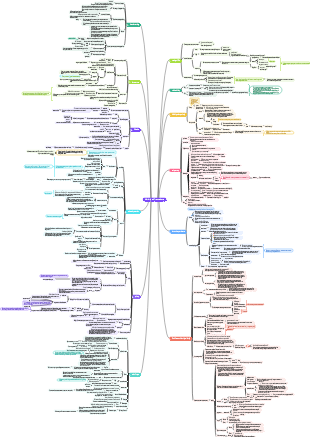
MindMap Gallery The Courage to Be Disliked (Part 2)
The book adopts the classical method of Greek philosophy "Dialogue" and launches a simple but profound discussion around the issue of "how people can obtain happiness". The "philosopher" explains to the "youth" in a simple and easy-to-understand way how to improve interpersonal relationships, how to obtain happiness, and how to muster up the courage to face others when being disliked.
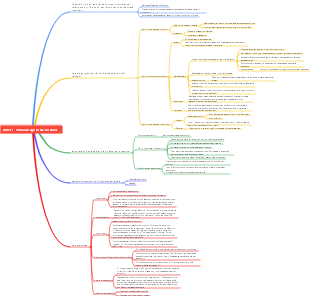
Edited at 2023-01-19 16:49:53This article discusses the Easter eggs and homages in Zootopia 2 that you may have discovered. The main content includes: character and archetype Easter eggs, cinematic universe crossover Easter eggs, animal ecology and behavior references, symbol and metaphor Easter eggs, social satire and brand allusions, and emotional storylines and sequel foreshadowing.

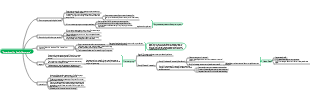
[Zootopia Character Relationship Chart] The idealistic rabbit police officer Judy and the cynical fox conman Nick form a charmingly contrasting duo, rising from street hustlers to become Zootopia police officers!
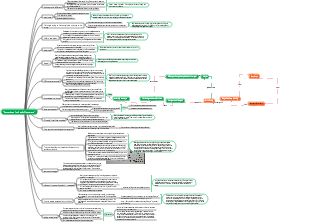
This is a mind map about Deep Analysis of Character Relationships in Zootopia 2, Main content: 1、 Multi-layer network of relationships: interweaving of main lines, branch lines, and hidden interactions, 2、 Motivation for Character Behavior: Active Promoter and Hidden Intendant, 3、 Key points of interaction: logic of conflict, collaboration, and covert support, 4、 Fun Easter eggs: metaphorical details hidden in interactions.
This article discusses the Easter eggs and homages in Zootopia 2 that you may have discovered. The main content includes: character and archetype Easter eggs, cinematic universe crossover Easter eggs, animal ecology and behavior references, symbol and metaphor Easter eggs, social satire and brand allusions, and emotional storylines and sequel foreshadowing.
[Zootopia Character Relationship Chart] The idealistic rabbit police officer Judy and the cynical fox conman Nick form a charmingly contrasting duo, rising from street hustlers to become Zootopia police officers!
This is a mind map about Deep Analysis of Character Relationships in Zootopia 2, Main content: 1、 Multi-layer network of relationships: interweaving of main lines, branch lines, and hidden interactions, 2、 Motivation for Character Behavior: Active Promoter and Hidden Intendant, 3、 Key points of interaction: logic of conflict, collaboration, and covert support, 4、 Fun Easter eggs: metaphorical details hidden in interactions.
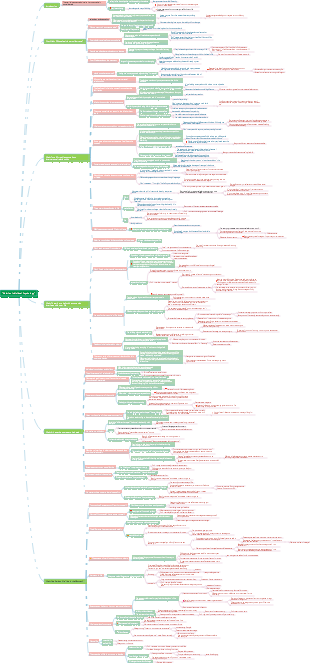
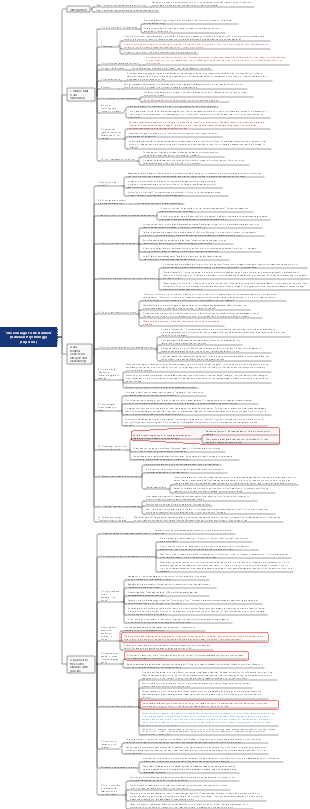
"The Courage to Be Disliked" (Adlerian Psychology) (Down)
4. Have the courage to be hated
1. Individual Psychology and Holism
"Individual" in individual psychology means "indivisible". Adler opposed all dualistic values that consider separately the mind and body, reason and emotion, and consciousness and unconsciousness.
If you separate "I" from "feelings" and think "feelings make me do that or be driven by feelings", you will easily fall into a lie in life.
The way of considering people as indivisible beings and as "whole self" is called "holism".
2. The ultimate goal of interpersonal relationships
The separation of subjects is the starting point of interpersonal relationships, and the end point of interpersonal relationships is the "feeling of community."
The state of seeing others as partners and being able to feel that "one has a place" is called a sense of community.
Adler believes that community not only includes family, school, work unit, and regional society, but also includes all existences such as countries or humans. On the timeline, it also includes from the past to the future, and even includes animals, plants, or non-living things. (Adler himself admitted that what he called community was an "elusive ideal")
The source of misfortune lies in interpersonal relationships, and the source of happiness also lies in interpersonal relationships. A sense of community is the most important indicator of happy relationships.
Taking "me and you" as the starting point, turn self-interest into social interest.
3. “Desperately seeking recognition” is self-centered?
People who are unable to "separate subjects" and are blindly obsessed with the desire for recognition are also extremely self-centered people. The essence of recognition desire seems to be looking at others, but in fact it only cares about "me" (How do others pay attention to me and evaluate me? To what extent do they satisfy their own desires?)
4. You are not the center of the world, just the center of the world map
First of all, we belong to the community as a member of the community. We can feel that we have our own place in the community, that is, a sense of belonging. This is a basic human desire.
"I" is the protagonist of my own life, and I am also a member of the community and a part of the whole, rather than the "center of the community."
Adler believes that a sense of belonging cannot be obtained just by being there, but must be obtained by actively participating in the community. Active participation means facing "life issues" head-on, not avoiding interpersonal issues, and facing them proactively. If you think you are the center of the world, you will not take the initiative to integrate into the community, because all others are "people who serve me" and there is no need to take the initiative.
5. Find your place in a broader world
Retirement is just separation from the small community of the company. Everyone still belongs to other communities. (Don’t stick to the community in front of you, realize that you belong to other communities and a larger community)
Action Principle: When we encounter difficulties in interpersonal relationships or cannot see an exit, the first thing we should consider is "listening to the voice of the greater community." If it is a school, then do not use the common sense (common feeling) of the school community to judge things, but follow the common sense of the larger community. For example, the teacher is your absolute power leader in school, but from the perspective of the community of society, you and the teacher are equal "human beings". If unreasonable requests are made, you can refuse them head-on.
If it is a relationship that can collapse because of your opposition, then there is no need to enter into this relationship from the beginning, and it doesn't matter if you give it up on your own initiative. Living in fear of relationship breakdown is an unfree way of living for others.
6. Don’t criticize or praise, but encourage
All communications with others, including child-rearing activities, cannot be criticized or praised. Praising this kind of behavior contains "the evaluation of those who have no ability by those who are capable", and its purpose is to "manipulate the other party who is less capable than oneself", and there is neither gratitude nor respect.
The purpose of reward and punishment education is manipulation and understanding of interpersonal relationships as "vertical relationships." Adler opposed all "vertical relationships" and advocated viewing all interpersonal relationships as "horizontal relationships" (different but equal).
The feeling of inferiority is originally a consciousness arising from vertical relationships.
7. Only with encouragement can you have courage.
Interference is also manipulation, and it is also about viewing interpersonal relationships as vertical relationships, firmly believing that you are right and the other person is wrong, and steering the other person in the direction you want.
You can't interfere or ignore it, but "assistance" - help him solve it with his own strength on the premise of separating the issues. Adler calls this kind of assistance based on horizontal relationships "encouragement."
People are afraid of facing problems not because they are incapable, but because they lack the "courage" to face them head-on. The first thing to do is to regain the courage that has frustrated you.
People will form the belief that "they are incompetent" because of being praised. If you feel happy because of being praised, it is tantamount to being subordinate to a vertical relationship and admitting that "you are incompetent." Praise is an evaluation made by a capable person to an incompetent person.
8. If you have value, you have courage.
The most important thing is not to "evaluate" others. Evaluative language is language based on manipulating relationships. To be praised is to be evaluated by others and based on other people's standards.
Encouragement is a sincere expression of gratitude, respect, or joy.
People can only feel their own value when they can realize "I am useful to the community", and people can only gain courage when they can feel that they are valuable.
9. As long as it exists, it has value
To take the initiative, instead of thinking about "what will this person give me", you must think about "what can I give this person".
Do not look at others by the standard of "behavior" but by the standard of "existence"; do not judge others by "what they have done", but express joy and gratitude for their existence itself.
We are useful and valuable to others simply by “being here.” (Although a critically ill mother cannot do anything, just being alive can support you and your family)
When we look at others, we often arbitrarily make up an "ideal image for ourselves" and then evaluate it like subtraction. Don't compare your child with anyone else, just treat him as someone else. myself, feeling joy and gratitude for his existence. Don't deduct points based on your ideal image, but start from scratch.
The feeling of community, the horizontal relationships, the gratitude for existence itself, it should start with you, and even if other people don't cooperate, that's none of your business.
10. No matter where you are, you can have an equal relationship
People are not flexible enough to use vertical relationships and horizontal relationships accordingly. If you establish a vertical relationship with someone, you will unconsciously grasp all interpersonal relationships from the "vertical" perspective.
If you can develop a horizontal relationship with someone, that's a major lifestyle change. Taking this as a breakthrough, all interpersonal relationships will develop "horizontally".
This does not mean that you should treat everyone like a friend. What is important is equality in consciousness and insisting on your own opinions.
Suppose you follow your boss's instructions and it ends in failure. Whose responsibility is it? Many people think it's the boss's responsibility and you just follow orders. In fact, you are also responsible, and you have room to say no and come up with better ways. In order to escape the interpersonal conflicts and evade responsibilities, you believe that "there is no room for rejection" and you are passively subordinate to the vertical relationship.
5. Serious life "Living in the moment"
1. Too much self-awareness will restrict yourself.
The order of change: first understand "I", then consider the one-to-one relationship ("I and you"), and then slowly expand to the larger community.
2. Not to affirm oneself, but to accept oneself
Not being able to be unrestrained, but acting cautiously, essentially means that you have no confidence in your true self and cannot show it in front of others.
To transform one's own obsession into concern for others and establish a sense of community, one needs to start from the following three points: "self-acceptance", "trust of others" and "contribution of others".
Self-affirmation means saying "I can do it" or "I am strong" even though you clearly cannot do it. Self-acceptance means honestly accepting the "unable to do it" if you can't do it, and then try your best to work in the direction of what you can do without lying to yourself. Accept the things that cannot be replaced, accept this "me", change the things that can be changed, and have the "courage" to change.
Positive optimism requires distinguishing between "things that can be changed" and "things that cannot be changed."
3. What is the difference between credit and trust?
Credit comes with strings attached (I'll lend it to you if you pay it back). Trust without any strings attached. Adlerian psychology believes that the basis of interpersonal relationships should not be credit, but trust.
It is impossible to build positive interpersonal relationships by basing the foundation of interpersonal relationships on "doubt." Unconditional trust can build a deeper relationship.
Adlerian psychology does not advocate "unconditional trust in others" based on moral values. Unconditional trust is a "means" to improve interpersonal relationships and build horizontal relationships.
The joy of interpersonal relationships will increase only when you have the courage to further deepen the relationship through "trust in the other."
The courage to overcome the fear of betrayal comes from self-acceptance, accepting the true self and seeing clearly "what you can do" and "what you can't do." Betrayal is a problem for others.
It's okay to be sad when you're betrayed, but it's the desire to escape the pain or sadness that keeps you from taking action, making it impossible to build a deep relationship with anyone.
4. The essence of work is to contribute to others
To influence and contribute to others as partners is the contribution of others.
The contribution of others does not mean self-sacrifice. Adler called people who sacrifice their lives for others "people who over-adapt to society" and warned against this. The contribution of others is a means to realize the value of "me".
5. Young people also have advantages over their elders
In the spirit of dedication, what we should think about is not what others have done for me, but what I can do for others, and actively practice it. Dedication means treating others as "partners". Contributions made while treating others as enemies may be hypocritical.
Life goal: a sense of community
Behavioral goals: ① Self-reliance Psychological goals: ① Awareness that I am capable (self-acceptance)
Behavioral goals: ② Coexist harmoniously with society Psychological goals: ② Awareness that everyone is my partner (others trust, others contribute)
6. “Workaholic” is a lie in life
In any case, it is only the fault of "the person" who attacked me, and it is never "everyone's" fault. Adlerian psychology believes that this kind of lifestyle is a lifestyle that lacks "life harmony" and is a lifestyle that only relies on part of a thing to judge the whole.
There is a passage in Jewish teachings that if there are 10 people, one of them will definitely criticize you no matter what happens. He hates you, and you don't like him either. There will also be 2 people out of 10 who can become good friends with whom you accept everything. The remaining seven people were neither.
Workaholics use work as an excuse to avoid other responsibilities. They can only rely on "standards of conduct" to recognize their own value.
7. From this moment on, you can become happy
For people, the greatest misfortune is not liking themselves. For this reality, Adler prepared an extremely simple answer - the idea of "I am beneficial to the community" or "I am useful to others" is enough to make people feel their own value.
The contributions of others can also be invisible contributions. As long as it can produce a subjective feeling of "I am useful to others", that is, a "sense of contribution", it is fine. (Happiness is the sense of contribution)
As long as there is a sense of community, there is no need for the approval of others, and the desire for approval will disappear. (Happiness is predicated on freedom)
8.Two roads before those who pursue their ideals
When the wish to be extremely good cannot be realized, you will turn to "hope to be extremely bad". The purpose of both is the same - to attract the attention of others, to escape from the "ordinary" state, and to become a "special existence".
A particularly bad wish is to gain attention from others without exerting healthy effort, which Adler called "a cheap pursuit of superiority."
9. The courage to be ordinary
Ordinary does not mean incompetent
10. Life is a series of moments
If life is about climbing to reach the top of the mountain, then most of your life will be spent on the "road." In other words, "real life" begins when you reach the top of the mountain, and the journey before that is the "temporary life" traveled by the "temporary me".
Please don’t understand life as a line, but as a succession of points. Life is a succession of moments. We can only live in the "here and now."
A planned life is not about whether it is necessary, but simply impossible.
11. Dance life
People who dream of becoming a violinist may always only see the music in front of them, focusing on this piece of music, this measure, and this note.
The life that wants to reach the destination is the "potential life", and the life at this moment is the "actual life". Reality means "what you do now is done right now."
The moment you step out of your home, your "travel" has already begun, and every moment on the way to your destination is a journey.
12. The most important thing is “this moment”
We should live our “here and now” more seriously. If you feel like you can see the past and predict the future, it proves that you are not seriously living in the "here and now." What happened in the past has nothing to do with your "here and now", and what the future will bring is not a question to consider in your "here and now".
Life doesn't need stories.
13. Confrontation with “The Biggest Lie in Life”
It’s okay to have no goals in life. Don’t make life too profound. Please don’t confuse seriousness with profoundness.
From a realistic perspective, life is always in a state of completion. What plays a decisive role is not the non-existent past and future, but the "now and now".
14. The meaning of life is up to you to decide
What is the meaning of life? What do people live for? Adler's answer is: "There is no universal meaning of life. The meaning of life is given by oneself."
Of course it is possible to get lost when you have freedom of choice. Therefore, as an important guideline for a free life, Adlerian psychology proposes the "guiding star" - the contribution of others. No matter what kind of moment you live, even if someone hates you, as long as you don't lose the guiding star of "others' contribution", then you will not be lost, and you can do anything.
"My power is infinite." If "I" changes, "the world" changes.