MindMap Gallery Intermediate Software Test System Integration Project Management Engineer - Chapter 6 Overall Project Management (2)
Software Exam Intermediate "System Integration Project Management Engineer" Textbook (Second Edition) Test Points Overview Series 6.2, share it with friends in need
Edited at 2022-05-24 22:54:11Avatar 3 centers on the Sully family, showcasing the internal rift caused by the sacrifice of their eldest son, and their alliance with other tribes on Pandora against the external conflict of the Ashbringers, who adhere to the philosophy of fire and are allied with humans. It explores the grand themes of family, faith, and survival.

This article discusses the Easter eggs and homages in Zootopia 2 that you may have discovered. The main content includes: character and archetype Easter eggs, cinematic universe crossover Easter eggs, animal ecology and behavior references, symbol and metaphor Easter eggs, social satire and brand allusions, and emotional storylines and sequel foreshadowing.
[Zootopia Character Relationship Chart] The idealistic rabbit police officer Judy and the cynical fox conman Nick form a charmingly contrasting duo, rising from street hustlers to become Zootopia police officers!
Avatar 3 centers on the Sully family, showcasing the internal rift caused by the sacrifice of their eldest son, and their alliance with other tribes on Pandora against the external conflict of the Ashbringers, who adhere to the philosophy of fire and are allied with humans. It explores the grand themes of family, faith, and survival.
This article discusses the Easter eggs and homages in Zootopia 2 that you may have discovered. The main content includes: character and archetype Easter eggs, cinematic universe crossover Easter eggs, animal ecology and behavior references, symbol and metaphor Easter eggs, social satire and brand allusions, and emotional storylines and sequel foreshadowing.
[Zootopia Character Relationship Chart] The idealistic rabbit police officer Judy and the cynical fox conman Nick form a charmingly contrasting duo, rising from street hustlers to become Zootopia police officers!
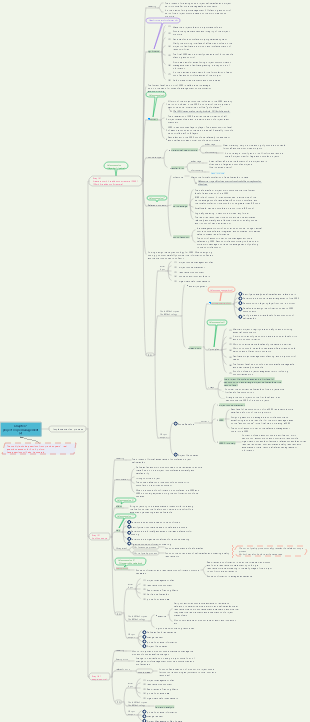
Chapter 6 Overall project management (2)
Implementation process
Step (4) Monitor project work
meaning
The process of tracking, reviewing, and reporting project progress to achieve the performance objectives identified in the project management plan
Throughout the project work
Monitor not only project execution, but also project initiation, planning and closure
Main concern
(1) Compare actual project performance to the project management plan
(2) Evaluate project performance, determine whether corrective or preventive action is needed, and recommend necessary actions
(3) Identify new risks, analyze, track and monitor existing risks, ensure comprehensive identification of risks, report risk status, and implement appropriate risk response plans
(4) Maintain an accurate and up-to-date information base throughout the project to reflect project products and related documents
(5) Provide information for status reporting, progress measurement and forecasting
(6) Make forecasts to update current cost and schedule information
(7) Monitor the implementation of approved changes
(8) If the project is part of a program, project progress and status should also be reported to program management
ITO
enter Input
(1) project management plan
(2) progress forecast
(3) cost forecast
(4) Confirmed changes
(5) job performance information
(6) business environment factors
(7) organizational process assets
Tools & Techniques Tool&Technology
a. analytical skills
Select test site 6 【Frequent Examination】
i. regression analysis
Determine the interdependence between two or more variables A statistical analysis method for quantitative relationships
ii. Grouping method
Divide the population under study into several groups of different natures, Make the differences within groups as small as possible and the differences between groups as large as possible
iii. cause and effect analysis
Also known as fishbone diagram
iv. Root Cause Analysis (RCA)
A structured problem-solving approach to gradually identify the root cause of a problem and solve them rather than just focusing on the symptoms of the problem
analyzing tool
cause and effect diagram
Brainstorming
Cause and effect analysis (fishbone diagram)
v. method of prediction
What-if scenario analysis and simulation (Monte Carlo analysis)
vi. Failure Mode and Effects Analysis (FMEA)
Early stage to identify a product or process failure situation and the impact if it occurs
vii. Fault Tree Analysis (FTA)
viii. Reserve analysis
ix. trend analysis
Also known as trend prediction method, including: trend average method, exponential smoothing method, linear trend method, non-linear trend method
x. Earned value management
b. project management information system
c. Meeting
d. expert judgment
Output output
1||| change request
2||| job performance report
3||| Project Management Plan Update
4||| Project file updates
Step (5) Implement holistic change control
Select test site 7 [Required 1 point]
meaning
Choose a Frequently Asked Test Point
The process of reviewing all change requests, approving or rejecting changes, managing changes to deliverables, organizational process assets, project documents, and project management plans, and communicating the results of change processing
Throughout the project and applied at all stages of the project; the project manager has the ultimate responsibility for this
Any stakeholder in the project can submit a change request. Although they may be made verbally, all change requests must be documented in writing and included in the change management and configuration management systems
Each documented change request must be approved or rejected by a responsible person. This person is usually the project sponsor or project manager
Change Control BoardCCB
A formally constituted group responsible for reviewing, evaluating, approving, deferring, or rejecting project changes, and documenting and communicating change-handling decisions
approve
Choose a Frequently Asked Test Point
Overall change control can be accomplished through CCB and change control systems. But overall change control is not just a matter of CCB, but also a matter of project managers and project teams.
The CCB is a group composed of representatives of key project stakeholders. The project manager may be one of the members, but is usually not the team leader. The CCB is responsible for reviewing change requests and approving or rejecting them
Changes that may affect the project objectives must be approved by the Change Control Board (CCB) before they can be implemented; after CCB approval, they may also need to be approved by the customer or sponsor, unless they are already members of the CCB
A change control system refers to a series of formal written procedures for change management, including documentation, tracking systems, change approval levels, etc.
the difference
Easy test points
Configuration control
Focus on the matching between deliverables and technical specifications of each process
change control
Focus on identifying, documenting, approving or rejecting changes to project documents, deliverables or baselines
Configuration management activities
1. Configuration identification
2. Configuration status logging
3. Configuration verification and auditing
change activities
Just understand
(1) Identify changes that may occur and have occurred
(2) Relevant factors affecting overall change control to ensure that only approved changes are implemented
(3) Review and approve change requests
(4) Manage approved changes through a standardized change request process
(5) Manage the completeness of the baseline to ensure that only approved changes are integrated into the project product or service, and maintain configuration and planning documentation for the changes
(6) Review and approve all written corrective and preventive actions
(7) Control and update the project's scope, cost, budget, schedule and quality requirements based on approved changes. Changes must be coordinated from the perspective of the entire project.
(8) To document all impacts of change requests
(9) Verify correctness of defect fix
(10) Control project quality based on quality reports to ensure compliance with standards
ITO
enter Input
(1) project management plan
(2) job performance report
(3) change request
(4) business environment factors
(5) organizational process assets
Tools & Techniques Tool&Technology
a. change control tools
b. expert judgment
c. Meeting
Output output
1||| Approved change request
2||| Project Management Plan Update
3||| Project file updates
4||| Change log
Step (6) End project or phase
meaning
The process of completing and closing all activities of all project management process groups to formally close a project or project phase
Include
Select test site 8
1. Administrative closing [Management Closing]
content
1||| product verification
Confirm that all work is completed according to the established requirements of the project product
2||| financial closing
Make final project payments and complete financial settlement
3||| Update project record
Complete final project performance report and performance records of project team members
4||| Summarize experience and lessons and conduct post-completion evaluation of the project
5||| Perform organizational process asset updates
Collect, organize and archive various project materials
6||| End the relationship between project stakeholders on the project and dissolve the project team
result
1. Formal acceptance of project products
2. Complete project archive
3. Organizational process asset update (summary of lessons learned)
4. Resource release (including human and non-human resources)
2. Contract closing
End the contract work, conduct procurement audits, end the contractual relationship between the parties, and collect and archive relevant information
The relationship between the two
Easy test points
connect
Both need to conduct product verification, summarize experiences and lessons, organize and archive relevant data, and update organizational process assets.
the difference
a. Administrative closing is for the project and each phase of the project. Not only the entire project needs to be administratively closed once, but also the corresponding administrative closing must be carried out at the end of each project phase; -------------------------------------------------- ------------------- Contract closing is specific to the contract. Each contract needs to be closed only once.
b. From the perspective of the entire project, contract closing occurs before administrative closing; -------------------------------------------------- ----- If the project is carried out in the form of a contract, in the closing stage, the procurement audit and contract closing will be carried out first, and then the administrative closing will be carried out.
c. From the perspective of a certain contract, contract closing also includes administrative closing work (administrative closing of the contract)
d. Administrative closure requires the project sponsor or senior management to issue written confirmation to the project manager that the project phase is completed or the project is completed as a whole; -------------------------------------------------- ---------------- At the end of the contract, the member responsible for procurement management (which may be the project manager or others) issues a written confirmation of the end of the contract to the seller.
ITO
enter Input
(1) project management plan
(2) Deliverables for acceptance
(3) organizational process assets
Tools & Techniques Tool&Technology
a. analytical skills
b. expert judgment
c. Meeting
Output output
1||| Final product, service or output handover
2||| Organizational process asset updates
The multiple-choice questions from previous years’ real questions account for 5 to 6 points. Case questions may involve