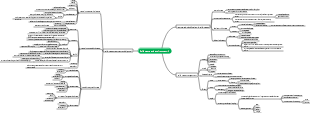
MindMap Gallery Environmental Planning and Management
Environmental planning and management is a core course in environmental science and engineering majors in my country. From the content point of view, environmental planning and management is a comprehensive integration of environmental science and technology, environmental policy and management research and practice. It is highly comprehensive and cross-functional, and continues to develop with the needs of ecological environment protection and management. As my country's ecological environment protection and ecological civilization construction continue to deepen, the role of environmental planning and management has become more prominent and has received great attention. It can be seen that environmental planning and management is a young subject with strong vitality.
Edited at 2024-04-02 11:14:45Avatar 3 centers on the Sully family, showcasing the internal rift caused by the sacrifice of their eldest son, and their alliance with other tribes on Pandora against the external conflict of the Ashbringers, who adhere to the philosophy of fire and are allied with humans. It explores the grand themes of family, faith, and survival.

This article discusses the Easter eggs and homages in Zootopia 2 that you may have discovered. The main content includes: character and archetype Easter eggs, cinematic universe crossover Easter eggs, animal ecology and behavior references, symbol and metaphor Easter eggs, social satire and brand allusions, and emotional storylines and sequel foreshadowing.
[Zootopia Character Relationship Chart] The idealistic rabbit police officer Judy and the cynical fox conman Nick form a charmingly contrasting duo, rising from street hustlers to become Zootopia police officers!
Avatar 3 centers on the Sully family, showcasing the internal rift caused by the sacrifice of their eldest son, and their alliance with other tribes on Pandora against the external conflict of the Ashbringers, who adhere to the philosophy of fire and are allied with humans. It explores the grand themes of family, faith, and survival.
This article discusses the Easter eggs and homages in Zootopia 2 that you may have discovered. The main content includes: character and archetype Easter eggs, cinematic universe crossover Easter eggs, animal ecology and behavior references, symbol and metaphor Easter eggs, social satire and brand allusions, and emotional storylines and sequel foreshadowing.
[Zootopia Character Relationship Chart] The idealistic rabbit police officer Judy and the cynical fox conman Nick form a charmingly contrasting duo, rising from street hustlers to become Zootopia police officers!
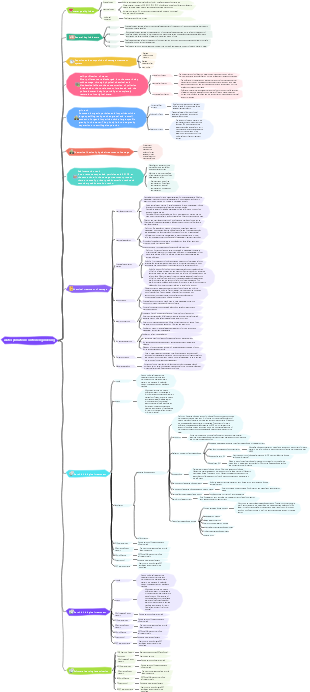
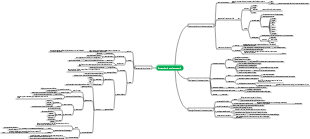
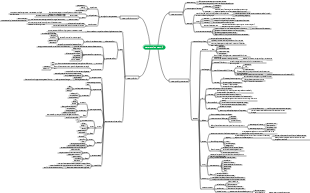
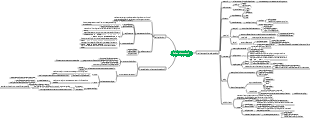
Environmental Planning and Management
Chapter 1 Overview
Overview of environmental management
definition
In accordance with national environmental policies, environmental laws, regulations and standards, Adhere to the combination of macro comprehensive decision-making and micro law enforcement supervision, Starting from comprehensive decision-making on environment and development, using various effective management methods, Regulating various human behaviors and coordinating the relationship between economic and social development and environmental protection, Limit human activities that damage environmental quality to maintain normal environmental order and environmental safety in the region, The overall behavior to achieve sustainable development of regional society.
connotation
Environmental management is the management of people
Environmental management mainly solves secondary environmental problems
Environmental management is an important part of national management
Features
Regional, comprehensive, social
Task
Change environmental concepts and adjust environmental behaviors
object
People are the main body of management activities (individuals, enterprises, governments)
Resources are the material basis of management
Funds are the driving force for management activities
Information is the "nerve" of management systems
Space and time conditions are management constraints
type
Classified by management scope
Resource and environmental management
Regional environmental management
Departmental Environmental Management
Classified by management nature
Environmental Planning and Program Management
Environmental quality management
Environmental Technology Management
means
Administrative means, legal means, economic means, publicity and education means, scientific and technological means
Overview of environmental planning
definition
It is the reasonable arrangement of time and space made by human beings for their own activities and environment in order to coordinate the development of environment and economy and society. It is one of the comprehensive decision-making processes for the government to fulfill its environmental responsibilities and is a programmatic document that restricts and guides government administrative actions.
connotation
The research object is the "social-economic-environmental" composite ecosystem, the entire country or a region (city, province, river basin)
The task is to coordinate the development of the system and maintain a virtuous cycle of the system in order to seek the best development of the system.
Based on socio-economic principles, ecological principles, geoscience principles, systems theory and sustainable development theory, it fully reflects the intersectionality and marginality of this discipline.
The main content is to reasonably arrange human activities and the environment
Optimized under certain conditions, it must conform to the technology and economic development level and capabilities of a certain historical period
content
Environmental status survey and evaluation, environmental prediction, environmental zoning and functional zoning, environmental goals, environmental planning and design, selection of planning solutions, support and guarantee for the implementation of environmental planning
type
Divided by planning period
long term, medium term, annual
Divided by environmental factors
Divided by specific planned tasks
Ecological protection planning, pollution prevention and control planning Special topic planning, environmental science and technology and industrial development planning
The relationship between environmental management and environmental planning
1. Planning function is the primary function of environmental management
2. Environmental goals are the common core of environmental planning and environmental management
3. Environmental planning and environmental management have a common theoretical basis
Theoretical Basis of Environmental Planning and Management
sustainable development theory
in principle
fairness, continuity, commonality
research direction
Ecology, Economics, Sociology, Systematics
main schools
Sustainable utilization of resources, externality theory, fair intergenerational distribution of wealth theory, three production theories
three production theories
content
material production
social productivity
Resource utilization
population production
Population
Population quality
Consumption patterns
environmental production
Pollution absorption capacity
resource production capacity
effect
Clarify the nature of people and the environment
Revealing the essence of environmental problems and their origins
Specifies the main goals and tasks of environmental management
Clarified the main areas and regulatory objects of environmental management
Laying the methodological foundation for environmental management
management science theory
five basic functions
Plan, organize, lead, control, innovate
three foundations
Mathematics, Economics, Behavior
three levels
Basic management, functional management, strategic management
three areas
Management theory and methods, business administration and management of non-profit organizations, public policy and macro management
formation and development
Scientific management stage, behavioral science stage, management jungle stage
New progress: Management transformation and transformation into the information age (research on organizational theory and management methods)
status role
Environmental management is the most important management activity for the continued survival and development of human society. Change environmental concepts, adjust environmental behaviors, and control material flows in the "environmental-social system".
The complexity of the natural environment and the complexity and uncertainty of its interaction with human society are difficult problems faced by environmental management.
Drawing on, applying and developing mature theories and methods of management and constructing a theoretical and methodological system of environmental management are important trends in the development of environmental management and are also a top priority.
Basic principles of environmental management
Principles of development of environmental and social systems
win-win principle
Interface Activity Cybernetics Principles
Conflict synergy principle
Whole process control principle
Supplement: Three lines and one order
Ecological protection red line
Environmental quality bottom line
Resource utilization goes online
Ecological environment access list
Chapter 2 Technical Support
environmental assessment methods
Environmental Quality Assessment Methods
Index evaluation method
Pollution Source Assessment Methods
Equivalent standard pollution load (ratio)
Resource and Environmental Forecasting Methods
Resource Forecasting Methods
Energy consumption forecast
per capita energy consumption law
A method to estimate daily energy consumption based on the energy demand for food, clothing, housing and transportation in people's lives
elastic coefficient method
Energy consumption elasticity coefficient = annual average energy consumption growth rate / annual average economic growth rate
Linear regression method
water use forecast
Total water consumption forecast
Domestic water consumption forecast
Industrial water consumption forecast
Agricultural water consumption forecast
Air pollution prediction methods
Source intensity prediction of air pollution sources
Air pollutant emission forecast
Forecast of atmospheric environmental quality changes
Prediction of atmospheric environmental impacts caused by pollutant emissions
Water pollution prediction methods
Source intensity prediction of water pollution sources
Industrial wastewater discharge forecast
Domestic sewage discharge forecast
Prediction of changes in water environment quality
Solid Waste Forecasting Methods
coefficient prediction method
Gray prediction method
Gray prediction of GM(1,1) 1st order and 1 variable
decision analysis method
Single-objective decision analysis method
Environmental cost-benefit analysis method
basic procedure
clarify the problem
Determination of the relationship between environmental quality and receiver impact
Cost/benefit identification of alternatives
Cost/benefit discounting of alternatives
Cost/benefit evaluation and selection of alternatives
Monetization method for environmental benefit assessment
Productivity change method (market price method)
cost of illness approach
Human Capital Law – Lost Wage Law
opportunity cost approach
Precautionary Expenditure Act (Precautionary Expenditure Act)
Restoration or Replacement Cost Method
shadow engineering method
Willingness survey evaluation method (willingness to pay method)
Cost/benefit discounting of alternatives
Cost/benefit evaluation and selection of alternatives
Net present value/net benefit (npv)
Benefit-cost ratio method (B/C)
B/C=1, the net benefit is zero
B/C<1 means that from an economic perspective, the project will cause losses
mathematical programming methods
definition
It refers to generalizing the environmental system planning decision-making problem into a predetermined objective function and constraint conditions based on the specific characteristics of the environmental planning system and combined with the basic requirements of mathematical programming methods. A mathematical programming model that optimizes the selection of planning solutions represented by several decision variables.
substance
Conduct a systematic analysis of the problem to be solved, establish a model, and then solve it.
Commonly used
Linear programming method, integer programming method, non-linear programming method, dynamic programming method, other methods-neuron network algorithm, genetic algorithm
Multi-objective decision analysis method
matrix method
analytic hierarchy process
clarify the problem
Build an analytic hierarchy process
Establish a judgment matrix and calculate the maximum eigenroot and corresponding eigenvector
Hierarchical single sorting and judgment matrix consistency test
Overall hierarchical ordering and consistency check
Chapter 3 Policy Methods
China's environmental management system
Features
A model combining decentralized management and consent supervision
Combination of central and local hierarchical supervision and management
Environmental management in my country is a government action with strong enforcement power.
evolution
Initial stage (1972-1978 Creation stage (1979-1988 Development stage (1989-1995 Deepening stage (1996-2011 Improvement stage (2012-present)
system
Legislated and supervised by the National People’s Congress
Implemented by governments at all levels
Under the unified supervision and management of the environmental protection administrative department
Supervision and management shall be implemented by relevant departments in accordance with legal provisions
Organizational setup
National People's Congress Environment and Resources Protection Committee
Ministry of Environmental Protection
It is the administrative department for environmental protection under the State Council and implements unified supervision and management of environmental protection work nationwide.
Other departments of the State Council related to environmental protection
local environmental management agency
China Environmental Management Department
Basic functions
Planning, coordination, supervision, guidance
Supervision and management scope
Manage environmental problems caused by production and life activities: industrial waste, transportation, agricultural pollution, toxic chemicals
Managing environmental issues arising from construction and development: large-scale projects, resource development, regional development
Manage natural environments of special value: rare and endangered animals and plants, special ecological functional areas, scientific, cultural and historical values, etc.
Marine pollution prevention and control: ship pollution, oil field development, ocean dumping of waste
Environmental quality management: regional watersheds and sea areas, environmental protection inspection and inspection
Responsibilities of each department
Ministry of Ecology and Environment
Provincial environmental management agency
Local environmental management agencies at all levels
Environmental management agencies of enterprises and institutions
Suggestions for improving the system
Reduce the intervention of local protectionism and establish a mutually supportive responsibility implementation mechanism
Clarify the environmental protection responsibilities of party committees and governments at all levels and establish a law enforcement mechanism for testing and supervision
Use independent law enforcement as a platform to strengthen law enforcement
Improve the organizational structure that adapts to development needs and scientifically manage talent establishment
U.S. environmental management system
mechanism
National Council on Environmental Quality
Provides advice to the President on environmental policy and coordinates environmental-related activities of various executive departments.
U.S. Environmental Protection Agency
Regulation development and enforcement, provision of financial assistance, sponsorship of voluntary partners and programs, enhancement of environmental education
federal government agency for environmental protection
Features
Achieve national environmental protection goals by reforming administrative decision-making methods and procedures
Combining law and technology to control pollution
Integrate administration and public participation to improve management efficiency
Environmental management policies and systems
Environmental protection is a basic national policy of China
In 1983, at the Second National Environmental Protection Conference, it was proposed that environmental protection is a strategic task in modernization and a basic national policy, thereby establishing the status of environmental protection in national development.
China’s basic policies for environmental protection
In 1973, China held its first National Environmental Protection Conference. The thirty-two-character policy of "comprehensive planning, rational layout, comprehensive utilization, turning harm into benefit, relying on the masses, everyone taking action, protecting the environment and benefiting the people" was put forward.
"Three synchronizations, three unifications" policy: Under the unified guidance of the national plan, environmental protection, economic construction, and urban and rural construction are planned, implemented, and developed simultaneously to achieve the unity of economic benefits, social benefits, and environmental benefits.
Sustainable development policy: adhere to the basic national policy of environmental protection, implement the sustainable development strategy, implement the policy of simultaneous planning, simultaneous implementation and simultaneous development of economic construction, urban and rural construction, and environmental construction, actively promote the transformation of the economic system and economic growth mode, and realize the economic Unification of benefits, social benefits and environmental benefits.
Five-in-one, four comprehensive policies: economic construction, political construction, cultural construction, social construction and ecological civilization construction; comprehensively building a moderately prosperous society, comprehensively deepening reforms, comprehensively advancing law-based governance, and comprehensively and strictly governing the party.
China’s basic policies for environmental protection
prevention-oriented policy
The idea is to implement measures to eliminate pollution and protect the environment before or during the process of economic development and construction, to fundamentally eliminate the root causes of environmental problems and reduce the heavy price to pay for subsequent pollution control and ecological protection.
Who pollutes, who controls the policy
The idea is to control pollution and protect the environment. It is the unshirkable responsibility and obligation of producers. The damage caused by pollution and the cost of pollution control should be borne and compensated by the polluter, so that external diseconomy can be internalized into the enterprise. Go into production.
Strengthen environmental management policies
It is the core of the three basic policies and has the most Chinese characteristics. The background of its proposal is based on two important facts at that time.
First, there is insufficient economic and technological strength to control pollution.
Second, many existing environmental problems are caused by poor management.
The main content of this basic policy is to strengthen environmental legislation and law enforcement, and establish and improve environmental management institutions and environmental management systems.
Main policies for environmental management in China
Old three items
environmental impact assessment system
"Three Simultaneities" System
Pollutant discharge charging system
new pentathlon
Quantitative assessment system for comprehensive improvement of urban environment
Environmental protection target responsibility system
Pollutant discharge declaration registration and pollutant discharge permit system
centralized pollution control system
Pollution deadline control system
Environmental management policy development trends
Environmental Management Laws and Regulations
The basic principle
protection priority principle
Ways: (1) Protection for restoring quality (2) Protection for maintaining quality (3) Protection for improving quality (4) Protection for reasonable use (5) Protection for prohibited use
Damage liability principle
Ways: Environmental protection target responsibility system, increasing penalties
Prevention first, comprehensive management principle
Approach: Comprehensive planning and rational layout, preventive environmental management system, source benefit system
Principles of public participation
Ways: Ensure the public’s right to know, right to participate in decision-making, and compensation or compensation for environmental rights and interests.
Environmental administrative responsibility
definition
It refers to the legal liability that should be borne by violating the administrative obligations or legal prohibitions stipulated in the Environmental and Resource Protection Law and national administrative regulations.
Classification
Punitive environmental resources administrative responsibilities: notification of criticism, administrative sanctions, and administrative penalties.
Remedial environmental resources administrative responsibility: admit mistakes, apologize, and restore reputation.
Components
The illegality of the behavior (a necessary condition for constituting environmental administrative liability)
That is, the actor committed an act prohibited by law or violated an obligation stipulated by law. Certain behaviors that violate the Public Security Punishment Law and damage the environment can also be investigated for administrative liability.
the perpetrator's fault
The perpetrator's subjective intention or negligence is also a necessary condition for assuming administrative liability.
harmful consequences of behavior
It is a selection condition for assuming environmental administrative responsibility.
There is a causal relationship between illegal acts and harmful consequences
It is a selection condition for assuming environmental administrative responsibility.
Sanctions
Administrative sanctions (disciplinary sanctions)
Concept: It refers to an administrative sanction imposed by national administrative agencies, enterprises and institutions on the basis of administrative affiliation and in accordance with relevant laws and regulations or internal rules to subordinate personnel who commit illegal dereliction of duty and disciplinary violations.
Implementing unit: must be a national administrative agency or enterprise or institution with affiliation and administrative sanction power.
Basis for punishment: national environmental protection laws, regulations and internal rules of enterprises and institutions; two national regulations on administrative sanctions: "Interim Provisions of the State Council on Rewards and Punishments for Staff of State Agencies" and "Regulations on Rewards and Punishments for Enterprise Employees"
Target subjects of administrative sanctions: ① Relevant responsible personnel whose units have committed acts that pollute or damage the environment, and the circumstances are serious but not sufficient for criminal punishment; ② Staff members of the environmental protection supervision and management department have abused their power, neglected their duties, and engaged in malpractice for personal gain during the law enforcement process. Violations that are not criminally punishable.
Administrative penalties
Concept: It is a legal sanction imposed by a specific national administrative agency on citizens, legal persons or other organizations that violate environmental and resource protection laws or national administrative regulations that do not constitute a crime.
Basis for punishment: relevant laws, regulations or rules.
Implementing unit: Environmental protection departments at all levels that implement unified supervision and management of environmental protection work; The State Oceanic Administration, port supervision, fishery administration and fishing port supervision, military environmental protection departments and public security, transportation, railway, civil aviation and other management departments at all levels implement supervision and management of environmental pollution prevention and control in accordance with legal provisions; Land, mining, forestry, agriculture, water conservancy and other competent departments of governments at or above the county level that supervise and manage resource protection in accordance with the law.
Types of administrative penalties
"Administrative Penalty Law": warning; fine; confiscation of illegal income and illegal property; order to suspend production and business; temporary suspension or revocation of license, temporary suspension or revocation of license; administrative detention; other administrative penalties prescribed by laws and administrative regulations.
"Environmental Protection Law": warning; fine; order to stop production or use; order to reinstall and use; order to suspend business or close down. Among administrative penalties, fines are the most commonly used. It can be used in conjunction with other forms of administrative punishment.
Environmental civil liability
Components
A. Subjective fault; B. Illegality of the act; C. Damage result; D. There is a causal relationship between the illegal act and the damage result.
no-fault liability principle
definition
Refers to units or individuals that cause property or personal damage to others due to environmental pollution. Even if there is no intention or negligence subjectively, they must bear liability for compensation for the damage caused. Generally applicable to civil liability for environmental pollution.
Reason for implementation
Pollution is a product of modern industry. Even if the company is not at fault, it will cause harm to others.
Implementing the principle of fault liability in civil liability for public nuisances is unfair to victims in a vulnerable position
Disclaimer
Force majeure: natural disasters, war
The Environmental and Resource Protection Law requires that in the event of force majeure, the pollutant-discharging unit must take reasonable measures and the damage cannot be avoided before the pollutant-discharging unit can be exempted from civil liability.
caused by the victim himself
caused by the intention or negligence of a third party.
Responsibility
Stop the infringement; remove obstacles; eliminate danger; return property; restore to original condition; repair, redo, replace; compensate for losses; pay liquidated damages; eliminate impact, restore reputation; apologize
environmental criminal liability
definition
It means that the perpetrator intentionally or negligently carries out behavior that seriously harms the environment and causes personal injury or death or serious losses of public or private property. It has constituted a crime and must bear legal responsibility for criminal sanctions.
Crime of major environmental pollution accident
It means that the perpetrator violates national regulations by discharging, dumping or disposing of radioactive waste, waste containing infectious disease pathogens, toxic substances or other hazardous waste into land, water, or the atmosphere, causing major environmental pollution accidents and causing major damage to public and private property. serious consequences of loss or personal injury.
Components of the crime of damaging the environment and resource protection
criminal subject
crime object
objective aspects of crime
subjective aspects of crime
Classification
Crime related to environmental pollution
natural resource related crime
Crimes related to environmental damage and resource protection
new environmental law
Promulgate and implement
Features
Innovative legislative concepts
Promote ecological civilization construction, assessment mechanism, and environmental credit system
Enhance technical means
Environmental risk investigation, risk assessment
Transformation supervision model
Comprehensive regulations on licensing management
Strong regulatory measures
Seize, detain, comprehensive control measures (water outage, power outage, land application restrictions, export quota reduction, etc.)
Embody the principles of environmental democracy
Public participation, information disclosure, public interest litigation
Chapter 4 Environmental Planning
regional environmental planning
Environmental status survey and evaluation
Conduct a detailed investigation of the basic natural, social, and economic conditions of the planned area, land use, water supply, ecological environment, residents' living conditions, and environmental quality conditions such as atmosphere, water, soil, noise, and solid waste.
environmental forecast
Based on the current situation investigation and evaluation, environmental impact prediction and analysis are carried out. That is, based on the current situation and development trends, Scientific prediction of environmental quality within the planning period. Forecasts mainly include social development and economic development forecasts, pollutant generation And emission prediction, environmental quality prediction.
Environmental planning goals set
basic requirements
①Have common characteristics of general development planning goals.
②Coordinate with economic and social development goals.
③ Ensure the implementability of goals.
④ Ensure the advancement of goals.
The basic principle
①Based on the environmental characteristics, nature and functions of the planned area.
② Based on the strategic thinking of economic and social development.
③Planning goals should meet the basic requirements for environmental quality for people’s survival and development.
④The planning objectives should meet the existing technical and economic conditions.
⑤Planning goals require the ability to decompose and quantify in time and space.
Development of environmental planning indicator system
Environmental functional zoning
Atmospheric environment functional area
Category 1 areas: refers to nature reserves, scenic spots and other areas that require special protection.
Category II areas: refers to residential areas, commercial, traffic and residential mixed areas, cultural areas, general industrial areas and rural areas determined in urban planning, as well as areas not included in Category I and III areas.
Category III area: refers to a specific industrial area.
Surface water environmental functional zone
Class I waters: Mainly applicable to source waters and national nature reserves.
Class II waters: Mainly suitable for first-level protected areas of centralized drinking water surface water sources, rare aquatic creature habitats, fish and shrimp spawning grounds, feeding grounds for young and young fish, etc.
Class III waters: Mainly suitable for fishery waters and swimming areas such as secondary protection areas of centralized drinking water surface water sources, fish and shrimp wintering grounds, migration channels, aquaculture areas, etc.
Class IV waters: Mainly suitable for general industrial water areas and recreational water areas with indirect human contact.
Class V waters: Mainly suitable for agricultural water areas and waters with general landscape requirements.
Marine water environment functional zone
subtopic
subtopic
subtopic
Noise environment functional area
Category 0 area: suitable for areas that particularly require quietness, such as health resorts, high-end villa areas, high-end hotel areas, etc.
Category 1 areas: Applicable to areas dominated by residences and cultural and educational institutions, including rural living environments
Category 2 area: suitable for mixed residential, commercial and industrial areas.
Category 3 area: suitable for industrial areas.
Category 4 areas: Suitable for areas on both sides of road traffic trunk roads and areas on both sides of inland waterways passing through urban areas.
Environmental planning design and implementation
①Analyze the survey and evaluation results. ②Analyze the predicted results. ③ List the overall environmental planning goals and sub-goals in detail to clarify the gap between the actual environment and environmental goals. ④ Formulate environmental development strategies and main tasks, and propose the overall direction, focus, main tasks and steps for environmental protection. ⑤ Formulate measures and countermeasures for environmental planning.
Environmental planning implementation and management
① Incorporate the environmental protection plan into the regional national economic and social development plan. ② Decompose and implement environmental planning goals. ③Implement environmental protection funds.
air pollution control planning
main content
Based on the analysis of pollution sources and the analysis of the current status and development trends of environmental quality, carry out functional zoning, determine planning goals, select planning methods and corresponding parameters, and formulate planning plans, evaluate and make decisions.
Main technical methods for total quantity control
Demarcation of planning areas
A-P value method for total quantity control
Comprehensive prevention and control measures for air pollution
Reduce pollutant emissions
Adopt a sound energy policy
heat concentration
Employ effective governance techniques
Implement cleaner production
Controlling emissions from mobile sources
Reasonable Utilization of Atmospheric Environment Capacity
Making full use of the self-purification ability of the atmosphere can reduce the reduction of pollutants and reduce investment in treatment.
Reasonable layout of air pollution sources
Reasonably arrange urban functional areas
Strengthen greening
In addition to beautifying the environment, regulating air temperature, humidity and urban microclimate, green plants are also factories that absorb carbon dioxide to produce oxygen, and have various functions such as absorbing harmful gases, dust, sterilization, reducing noise and monitoring air pollution.
Phytopurification
Properly set up green isolation belts
water pollution control planning
main content
Calculation of water environment capacity
water pollution control unit
Water environment pollution control planning model
Comprehensive water pollution control measures
Reduce pollutant emission load
Implement cleaner production
total quantity control
sewage treatment
Provide and fully utilize the pollution-holding capacity of water bodies
artificial reoxygenation
Wastewater conditioning
river flow control
Solid waste management planning
main content
(1) Current situation investigation and evaluation
(2) Solid waste forecast
(3) Formulate planning plan
(4) Comprehensive evaluation of planning plans
model approach
Solid waste generation forecasting method
Management system optimization model
Site selection methods for solid waste disposal facilities
Chapter 5 Environmental Management
Regional environmental management
urban environmental management
Setting goals for urban environmental protection and sustainable development
Survey and prediction of the current situation of urban environment
Urban environmental functional zoning
Develop environmental planning plans
Formulate various policy guarantees and management measures for the implementation of the plan
Rural Environmental Management
Strengthen institutional construction of rural environmental management
Formulate rural and township environmental plans
Strengthen environmental management of township industries
Promote modern ecological agriculture and prevent and control pollution from pesticides and chemical fertilizers
Create towns with beautiful environment and ecological towns
Watershed environmental management
Establish a new watershed environmental management system
Develop an environmental plan for the entire city
Establish a water resource protection and pollution compensation mechanism in Liucheng
Establish a settlement system for water disputes in Liucheng
Strengthening emergency management of sudden water pollution incidents in Liucheng
Regional development environment management
regional development
Definition: Refers to major development behaviors and activities such as resource development, large-scale project construction, economic and social development planning, and regional ecological environment construction carried out within a larger region.
Characteristics: long time and large spatial scale, high behavioral intensity, and strong purpose.
Including: the development of the western region, the revitalization of the old industrial base in Northeast China, the construction of the Qinghai-Tibet Railway, the construction of the Three Gorges of the Yangtze River, the transmission of electricity from the west to the east, and the transmission of natural gas from the west to the east.
Basic content and methods
Scientific decision-making on major regional development actions
Conduct strategic environmental assessment
Develop an environmental plan
Carry out environmental monitoring and early warning, supervision and auditing
Government Enterprise Environmental Management
Government Industrial Environmental Management
definition
The government uses the theoretical methods of modern environmental science and policy management science, takes environmental behavior in industrial activities as the management object, and adopts legal, administrative, economic, technical, publicity and education means to adjust and control resource consumption in industrial activities. , a general term for various management actions such as waste emissions, related production technology and equipment standards, and industrial development directions.
Classification
Micro-environmental management (specific enterprises)
Environmental management in the process of enterprise development and construction
Environmental management of enterprise production process
Other corporate environmental behaviors
Macro-environmental management (a certain industry)
Develop preferential policies to support environmental protection industries
Develop a green procurement system to promote management
Formulate and implement energy resource standards policies
Formulate and implement industry environmental technology policies
feature
Comprehensive, mandatory, guiding, targeted
effect
The government is the leader and organizer of the entire social behavior.
The government strictly enforces environmental law enforcement and supervision to create a fair legal environment.
Government's environmental supervision and management of enterprises
Manage waste/carry out cleaner production and develop circular economy
Green design, manufacturing and green marketing
Establish an internal management system for the enterprise
Develop corporate environmental policies
Corporate Environmental Report
Environmental management with enterprises as the main body