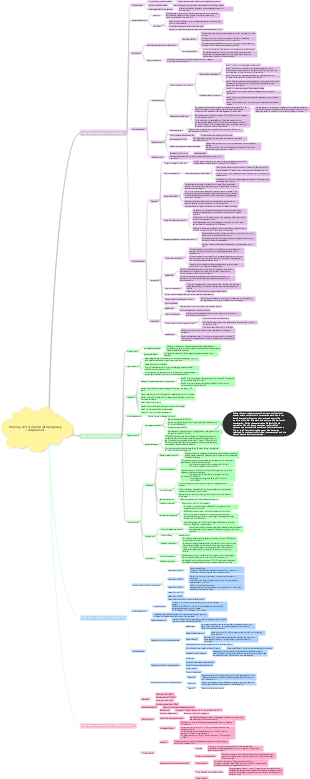
MindMap Gallery Ectopic pregnancy
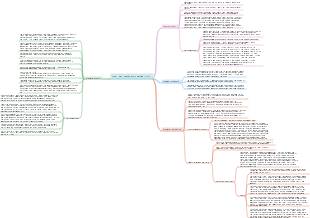
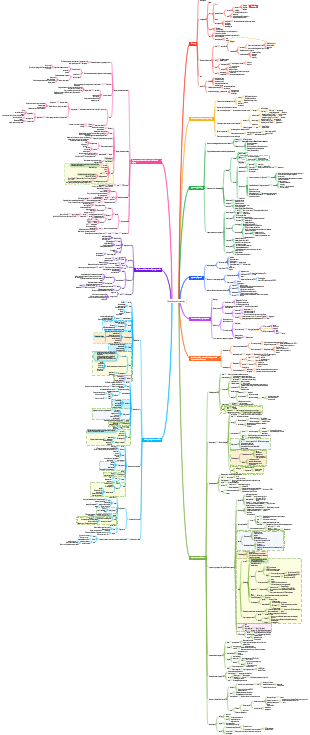
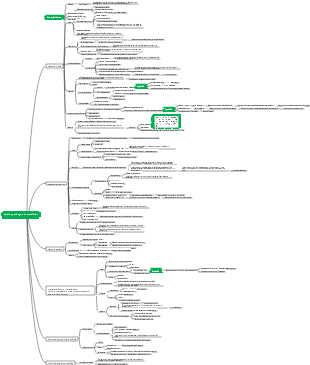
The main overview, symptoms, diagnosis, treatment, etc. of ectopic pregnancy. Ectopic pregnancy refers to the abnormal pregnancy process in which the pregnant egg implants and develops outside the uterine cavity.
Edited at 2024-03-13 19:52:36This is a mind map about bacteria, and its main contents include: overview, morphology, types, structure, reproduction, distribution, application, and expansion. The summary is comprehensive and meticulous, suitable as review materials.

This is a mind map about plant asexual reproduction, and its main contents include: concept, spore reproduction, vegetative reproduction, tissue culture, and buds. The summary is comprehensive and meticulous, suitable as review materials.
This is a mind map about the reproductive development of animals, and its main contents include: insects, frogs, birds, sexual reproduction, and asexual reproduction. The summary is comprehensive and meticulous, suitable as review materials.
This is a mind map about bacteria, and its main contents include: overview, morphology, types, structure, reproduction, distribution, application, and expansion. The summary is comprehensive and meticulous, suitable as review materials.
This is a mind map about plant asexual reproduction, and its main contents include: concept, spore reproduction, vegetative reproduction, tissue culture, and buds. The summary is comprehensive and meticulous, suitable as review materials.
This is a mind map about the reproductive development of animals, and its main contents include: insects, frogs, birds, sexual reproduction, and asexual reproduction. The summary is comprehensive and meticulous, suitable as review materials.
Ectopic pregnancy (ectopic pregnancy)
Overview
The fertilized egg implants outside the uterine cavity
Fallopian tube pregnancy is the most common (95%)
Ampullary pregnancy is the most common, accounting for about 78%
Followed by isthmus and fimbriae pregnancy, interstitial pregnancy is less common.
Rarely, ovarian pregnancy, abdominal pregnancy, cervical pregnancy, broad ligament pregnancy, and cesarean scar pregnancy
Cause
(1) Fallopian tube inflammation
It is the main cause of ectopic pregnancy. It can be divided into fallopian tube catarrh and peri-fallopian tube inflammation.
(2) History of fallopian tube pregnancy or surgery
History of fallopian tube sterilization and surgery.
(3) Fallopian tube dysplasia or abnormal function
Fallopian tubes that are too long, poor muscle development, lack of mucociliation, and fallopian tube distraction can all cause fallopian tube pregnancy.
(4)Assisted reproductive technology
The incidence of fallopian tube pregnancy is 2.8%
(5) Contraceptive failure
If intrauterine devices fail to prevent pregnancy or oral emergency contraceptive pills fail, there is a greater chance of ectopic pregnancy.
(6)Others
Uterine fibroids and ovarian tumors compress the fallopian tubes, affecting the smoothness of the fallopian tube lumen and blocking the movement of fertilized eggs.
pathology
clinical manifestations
Typical symptoms
Menopause: Most people have a history of 6 to 8 weeks of menopause.
Abdominal pain: main symptom (95%)
Before miscarriage or rupture of fallopian tube pregnancy, dull pain in one side of the lower abdomen is often present.
When miscarriage or rupture occurs, you will suddenly feel tearing pain in the lower abdomen on one side, accompanied by nausea and vomiting.
Vaginal bleeding: Irregular vaginal bleeding often occurs after embryonic death, generally does not exceed menstrual flow, and may be accompanied by decidual discharge.
triad of ectopic pregnancy
other
Fainting and shock
Caused by intra-abdominal bleeding and severe abdominal pain. The severity of symptoms is not directly proportional to the amount of vaginal bleeding
abdominal mass
The hematoma formed during fallopian tube pregnancy miscarriage or rupture lasts for a long time and is caused by blood coagulation and adhesion to surrounding tissues.
signs of intra-abdominal bleeding
Anemia, weak pulse, decreased blood pressure and other shock manifestations, lower abdominal tenderness and rebound tenderness, and possibly shifting dullness.
Gynecological examination
①Vagina
There is often a little blood in the vagina from the uterine cavity. The posterior vaginal fornix is full and tender, and blood can be extracted by puncture of the posterior fornix.
② Fallopian tube
In cases of fallopian tube pregnancy without miscarriage or rupture, in addition to a slight enlargement of the uterus, the swollen fallopian tubes and mild tenderness can be palpated.
③Uterus
Cervical lifting pain or rocking pain is one of the main signs of fallopian tube pregnancy vibration. When there is a lot of internal bleeding, the uterus may feel like it is floating. The mass can be palpated on one side of the uterus or behind it, with unclear boundaries and obvious tenderness.
Note: ① Endometriosis - fixed retroversion of the uterus, rectouterine depression, tender nodules on the posterior wall of the uterus, and cystic and solid masses in the adnexal area.
② Ectopic pregnancy - the uterus has a floating feeling, and there is a tender mass on one side of the uterus or behind it, with unclear boundaries.
③Cervical lifting pain - fallopian tube pregnancy, acute pelvic inflammatory disease, ovarian cyst pedicle torsion.
old ectopic pregnancy
During the gynecological examination, a mass can be palpated on one side of the uterus, which is soft, irregular in surface, and tender: posterior curvature puncture can be positive:
hCG can be seen clearly; B-ultrasound shows irregular masses around the uterus and a small amount of pelvic fluid, which are easily confused with pelvic inflammatory disease and adnexal tumors. Therefore, the diagnostic value of B-ultrasound is limited and cannot be used as a basis for diagnosis. Posterior curvature puncture is a more reliable diagnostic basis.
physical signs
Cervical lifting pain or rocking pain is one of the main signs of fallopian tube pregnancy vibration
diagnosis
Key points for consultation
The clinical manifestations of fallopian tube pregnancy are not obvious when miscarriage or rupture does not occur, making diagnosis difficult. Diagnosis after a rupture has occurred is not difficult.
Inspection Method
The first choice for diagnosis of fallopian tube pregnancy rupture is posterior fornix puncture.
Differential diagnosis
treat
(1)Surgical treatment
①Indications for surgery
A. Those with unstable vital signs or signs of intra-abdominal bleeding
B. Those with progressive ectopic pregnancy (such as blood hCG>3000U/L, fetal heartbeat, large mass in the adnexal area, etc.)
C. Those with unreliable follow-up visits
D. Drug treatment is contraindicated or ineffective
E. Persistent ectopic pregnancy.
②Surgical method
Depending on whether to preserve the fallopian tube on the affected side
conservative surgery
It is suitable for young women who want to have children, especially those whose contralateral fallopian tube has been removed or has obvious lesions.
radical surgery
It is suitable for emergency patients with fallopian tube pregnancy and internal bleeding complicated by shock who do not want to have children.
(2)Drug treatment
Ectopic pregnancy must be diagnosed and intrauterine pregnancy excluded before chemotherapy.
①Indications: Fallopian tube pregnancy has not ruptured; gestational sac diameter <4cm; blood hCG <2000U/L; no intra-abdominal bleeding.
②Contraindications: unstable vital signs; rupture of ectopic pregnancy; gestational sac diameter ≥4cm or ≥3.5cm with fetal heartbeat; drug allergy.
③Commonly used drugs
Methotrexate: The treatment mechanism is to inhibit the proliferation of trophoblast cells, destroy villi, and cause necrosis, shedding, and absorption of embryonic tissue.
④Treatment plan
A. Systemic medication
Methotrexate was injected intramuscularly once a day for 5 days. B-ultrasound and blood hCG should be used for close monitoring.
B. Topical application
Methotrexate is directly injected into the gestational sac of the fallopian tube through puncture or laparoscopy under the guidance of B-ultrasound
prognosis
prevention