 Wondershare EdrawMind
MindMap Gallery Pharmacy 4Powders, granules and capsules
- 48
Pharmacy 4Powders, granules and capsules
This is a mind map about Pharmacy 4 powders, granules and capsules, including an overview, Classification, Quality requirements, preparation, Quality inspection etc.
Edited at 2024-03-09 11:28:26
- bacteria
This is a mind map about bacteria, and its main contents include: overview, morphology, types, structure, reproduction, distribution, application, and expansion. The summary is comprehensive and meticulous, suitable as review materials.
- Plant asexual reproduction
This is a mind map about plant asexual reproduction, and its main contents include: concept, spore reproduction, vegetative reproduction, tissue culture, and buds. The summary is comprehensive and meticulous, suitable as review materials.
- Reproductive development of animals
This is a mind map about the reproductive development of animals, and its main contents include: insects, frogs, birds, sexual reproduction, and asexual reproduction. The summary is comprehensive and meticulous, suitable as review materials.
Pharmacy 4Powders, granules and capsules
- bacteria
This is a mind map about bacteria, and its main contents include: overview, morphology, types, structure, reproduction, distribution, application, and expansion. The summary is comprehensive and meticulous, suitable as review materials.
- Plant asexual reproduction
This is a mind map about plant asexual reproduction, and its main contents include: concept, spore reproduction, vegetative reproduction, tissue culture, and buds. The summary is comprehensive and meticulous, suitable as review materials.
- Reproductive development of animals
This is a mind map about the reproductive development of animals, and its main contents include: insects, frogs, birds, sexual reproduction, and asexual reproduction. The summary is comprehensive and meticulous, suitable as review materials.
- Recommended to you
- Outline
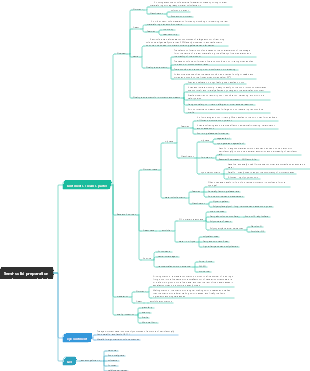
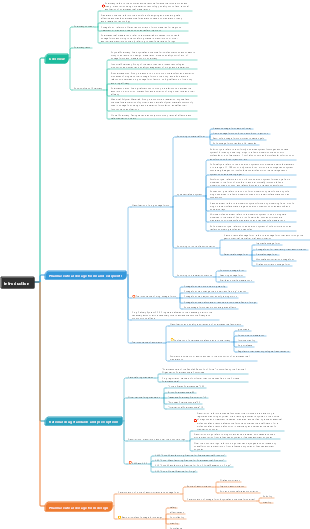
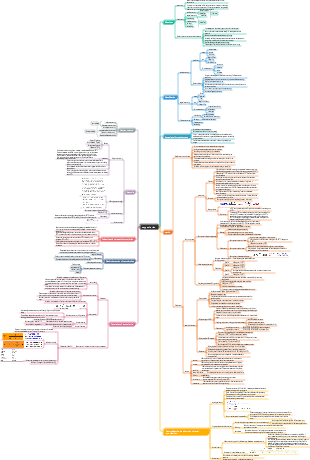
Powders, granules and capsules
Powder
Overview
Powder: refers to a dry powdery preparation made from raw materials or appropriate excipients by crushing and evenly mixing them, and can be used internally or externally.
Powder characteristics
advantage
The powder has small particle size, large specific surface area, easy dispersion, fast drug dissolution and absorption, and quick onset of effect.
The external powder covers a large area and can simultaneously play a protective and astringent role.
The dosage is easy to control and convenient for infants and young children to take
Simple preparation method, easy to store, transport and carry
shortcoming
Drugs that are highly irritating, easily hygroscopic, and unstable when exposed to light and heat are generally not suitable to be made into powders
Classification
Classified by use
Oral powder-Chuanxiong Tea Powder, Wubei Powder
Topical powder-Bingboran Powder Wubai Powder
Classification by composition
Single powder - Nux vomica powder, Montmorillonite powder
Compound powder-Angong Niuhuang Powder and Sishi Powder
Classified by dose
Divided doses (multiple oral administration)-Xiaoer Jingfeng Powder
Regardless of dosage (mostly for external use)-Wuling Powder
Quality requirements
All raw materials for powder preparation should be crushed. Unless otherwise specified, powders for oral use shall be fine powder, and powders for pediatric use and topical use shall be the finest powder.
The powder should be dry and loose, evenly mixed and consistent in color. When preparing powders containing toxic drugs, expensive drugs or small doses of drugs, the grinding method should be used to mix and sift
Powders can be packaged in single doses, and multi-dose packages should be accompanied by a device for dividing doses. Oral powders containing toxic drugs should be packaged in single doses
The powder may or may not contain excipients. Flavoring agents, aromatics, coloring agents, etc. can also be added to oral powders when necessary.
Unless otherwise specified, powders should be stored sealed. Powders containing volatile raw materials or moisture-absorbing raw materials should be stored sealed
preparation
Process flow
Raw and auxiliary materials → crushing → sieving → mixing → dosing → quality inspection → packaging → finished product
smash
significance
Reduce particle size, increase drug surface area, promote drug dissolution and absorption, and improve drug bioavailability
Convenient to prepare a variety of dosage forms, such as powders, granules, capsules, tablets, pills, etc.
Helps increase the leaching speed of active ingredients from medicinal materials
Makes it easy to mix the ingredients evenly and take them
Mechanism - The crushing process is achieved by using external mechanical force to destroy the cohesion between material molecules.
method
Dry crushing
Wet grinding
Liquid-added grinding method - high degree of grinding, avoids flying dust, and reduces the harm of toxic or irritating drugs to the human body. Reduce the loss of valuable drugs
Water flying method - suitable for crushing mineral medicinal shells, such as cinnabar
crush alone
Oxidizing and reducing drugs - Oxidizing drugs such as potassium permanganate and iodine should not be mixed with reducing substances such as sulfur, starch, glycerin, etc., as they are prone to explosion.
Precious fine materials - such as antelope horn, musk, bezoar
Toxic drugs and irritating drugs - such as realgar and nux vomica
Mix and crush - drugs similar in properties and hardness
Low-temperature crushing-contains volatile components and antibiotics, etc.
Ultra-fine crushing - valuable medicinal materials, such as Cordyceps sinensis, ginseng, Panax notoginseng, Gastrodia elata
equipment
Mortar
It is suitable for crushing small doses of drugs. To crush toxic drugs or valuable drugs, a glass mortar should be used.
Ball mill:
The crushing equipment has both impact force and grinding force. It is suitable for crushing toxic drugs, valuable drugs and irritating drugs. It can also crush easily oxidized drugs and explosive drugs in a sealed manner under the condition of passing inert gas. It has the disadvantages of low efficiency and long crushing time. Long, can be used for dry crushing and wet crushing
impact crusher
"Universal Crusher"
flow energy mill
"Jet flow mill" ultra-fine crushing, heat-sensitive materials and low-melting point materials are crushed (using cooling effect), aseptic crushing, and the crushing cost is expensive
Operational points
Select the appropriate crushing equipment and crushing method according to the nature of the material, the degree of crushing of the material, the amount of crushing, etc.
During the process of drug crushing, fine powder should be screened out in time to avoid excessive crushing of the drug to reduce power consumption and drug loss.
The medicinal parts of Chinese herbal medicines must be completely crushed before use
When crushing toxic drugs or highly irritating drugs, attention should be paid to labor protection to avoid poisoning. At the same time, precautions should be taken to prevent cross-contamination of drugs.
Sieve
Screening - the operation of separating materials of different strengths by using the size of the sieve mesh.
Purpose - Classify the crushed materials according to particle size to obtain a more uniform powder to meet the needs of medical treatment and preparation of preparations
Grading of drug screening
Classification by production method
punch sieve
woven screen
Oscillating screen
Sort by screen number
method
Expressed in terms of sieve hole inner diameter (μm), a total of nine sieve sizes are specified.
The number of sieve holes contained in 1 inch (2.54cm) length, expressed as "mesh"
Grading
No. 1 sieve 2000μm±70μm 10 mesh
No. 2 sieve 850μm±29μm 24 mesh
No. 3 sieve 355μm±13μm 50 mesh
No. 4 sieve 250μm±9.9μm 65 mesh
No. 5 sieve 180μm±7.6μm 80 mesh
No. 6 sieve 150μm±6.6μm 100 mesh
No. 7 sieve 125μm±5.8μm 120 mesh
No. 8 sieve 90μm±4.6μm 150 mesh
No. 9 sieve 75μm±4.1μm 200 mesh
Grading of powder
The coarsest powder refers to the powder that can all pass through the No. 1 sieve, but is mixed with no more than 20% of the powder that can pass through the No. 3 sieve.
Coarse powder refers to powder that can pass through the No. 2 sieve, but is mixed with no more than 40% of the powder that can pass through the No. 4 sieve.
Medium powder refers to the powder that can pass through the No. 4 sieve, but is mixed with no more than 60% of the powder that can pass through the No. 5 sieve.
Fine powder refers to powder that can pass through No. 5 sieve and contains no less than 95% that can pass through No. 6 sieve (can be taken orally)
The finest powder refers to powder that can pass through No. 6 sieve, but contains no less than 95% that can pass through No. 7 sieve (pediatrics, topical use)
Ultra-fine powder refers to powder that can all pass No. 8 sieve and contains no less than 95% that can pass No. 9 sieve (powder for eye use)
equipment
Shaking sieve - often used to measure particle size distribution or sieve a small amount of highly toxic drugs, irritating drugs or light pharmaceutical powders to avoid flying fine powder
Oscillation drying - equipment commonly used in production to screen powdery and granular materials of varying thicknesses.
Operational points
Enhance vibration - force the powder to move through the sieve holes
The dust thickness should be moderate
The powder should be dry
mix
Mixing - the operation of mixing two or more component materials. The purpose is to make the components in the preparation evenly distributed and in uniform content to ensure accurate, safe and effective dosage.
mixed methods
Stirring and mixing - Mixers are often used in mass production to stir and mix.
Grinding and mixing - suitable for mixing small amounts of especially crystalline drugs, but not suitable for mixing hygroscopic and explosive ingredients
Sieve and mix - the sieved mixture still needs to be stirred to mix evenly
Mixing equipment
Container rotation type
Horizontal cylinder mixer
V type mixer
Double cone mixer
Three-dimensional mixer
Container fixed mixer
Stirring tank mixer
Conical vertical spiral mixer
Factors affecting uniform mixing
The proportion of each component - if the proportion of each component is very different, the equal-amount incremental method (mixing grinding method) should be used at this time
Beidan - often added to special drugs with a certain proportion of diluent to make diluent powder, suitable for toxic drugs, expensive drugs or small-dose drugs.
Particle size and density of each component - when the particle size difference is large, add the component with larger particle size first; when the density difference is large, materials with smaller density should be loaded first to prevent the heavy ones from sinking to the bottom; when the color difference of the drugs is large , add the dark-colored drug first, then add the light-colored drug, which is commonly known as the "color-registering method"
Contains components that form a eutectic mixture - when two or more drugs are mixed in a certain proportion, the melting point is lowered and the phenomenon of wetting or liquefaction occurs, which is called eutectic, and the mixture is called a eutectic. The formation should be avoided as much as possible, or absorbents should be used to absorb liquefied materials
Contains liquid or hygroscopic ingredients
If the prescription contains a small amount of liquid ingredients, other solid ingredients in the prescription can be used as liquid absorbents
Drugs containing crystal water (such as sodium sulfate) release crystal water during grinding and can be replaced by equimolar anhydrous.
Highly hygroscopic drugs (such as pepsin) should be prepared in an environment below their critical relative humidity, mixed quickly, and sealed to prevent moisture.
Some drugs (such as sodium para-aminobenzoate and sodium benzoate) do not absorb moisture themselves. If mixed, the hygroscopicity will increase. Therefore, they should be packaged separately and mixed before use.
Mixing time - determined by the nature of the mixed materials, the mixing amount and the performance of the equipment used.
divided dose
Visual inspection method - This method can be used when medical institutions temporarily prepare a small amount of pharmaceutical powders and traditional Chinese medicines.
Volumetric method - a method of dividing doses using solid capacity containers
Gravimetric method - mainly used for dividing doses of toxic drugs, expensive drugs, and small-dose powders
Packaging and storage
Package
Packaging Materials
method of packing
store
Unless otherwise specified, powders should be stored in a sealed container. Powders containing volatile raw materials or raw materials that easily lose moisture should be stored in a closed container.
storage conditions
Light-shielding: Packed in opaque containers
Avoid light: avoid direct sunlight
Sealing: Seal the container to prevent dust and foreign matter from entering.
Sealing: Seal the container to prevent weathering, moisture absorption, volatilization or the entry of foreign matter
Welding/tight sealing: Welding or tightly sealing the container with suitable materials to prevent the intrusion of air and moisture and prevent contamination
Shade: refers to not exceeding 20℃
Cool and dark place: avoid light and does not exceed 20℃
Cold place: 20℃~10℃
Normal temperature: 10℃~30℃
Unless otherwise specified, if the storage item does not specify the storage temperature, it generally refers to normal temperature.
quality inspection
Particle size - the weight of the powder that passes through No. 7 sieve for chemical medicinal powder (Chinese medicine passes through No. 6 sieve) shall not be less than 95%
Uniformity of appearance - uniform color, no patterns or spots
Moisture content - unless otherwise specified, shall not exceed 9.0%
Loss on drying - Drying to constant weight at 105℃, weight loss shall not exceed 2.0%
Difference in filling volume - the number of powders exceeding the filling volume difference limit shall not exceed 2 bags, and no one bag may exceed 1 times the filling volume difference limit; chemical drugs and biological product powders that require content uniformity inspection are generally no longer required. Check for loading differences
Filling capacity - multi-dose packaged powders shall be inspected according to the minimum filling capacity inspection method
Sterility - Topical powders used for burns, severe trauma or where sterility is clinically necessary should be checked
Microbiological limits - Biological product powders that are required to be tested for miscellaneous bacteria do not need to be tested for microbial limits.
Basics of Powder Science
granules
Overview
Concept: The raw material drug is mixed with appropriate excipients to form a dry granular preparation with a certain strength for oral use.
Compared with powder, it has the following characteristics:
Less scattering, adhesion, cohesion and hygroscopicity
It is easy to take and can be made into granules with good color and fragrance as needed.
The granules are coated when necessary. Depending on the nature of the coating material, the granules can be moisture-proof, sustained-release or enteric-coated.
Stable in nature, easy to transport, carry and store
When a variety of particles are mixed, segregation is likely to occur due to different particle sizes and large differences in particle density, resulting in inaccurate dosage.
Classification
soluble particles
suspended particles
Effervescent granules
Enteric coated granules
Sustained release granules
controlled release granules
Quality requirements
Raw materials and excipients should be mixed evenly
For drugs that are volatile raw materials or drugs that are unstable when exposed to heat, attention should be paid to controlling appropriate temperature conditions during the preparation process; the raw materials are unstable when exposed to light, and the raw materials should be handled in shading
Unless otherwise specified, volatile oil should be sprayed evenly into the dry particles
Appropriate excipients can be added to the granules as needed
In order to prevent moisture and cover up the bad smell of raw materials, the particles can also be film-coated.
The granules should be dry, with uniform particles and consistent color, without moisture absorption, softening, agglomeration, moisture knots, etc.
The microbiological limits of granules should meet the requirements
Dissolution, release, content uniformity, etc. should meet the requirements
Unless otherwise specified, granules should be sealed and stored in a dry place to prevent moisture
preparation
Material preparation - (wetting agent, binder, diluent, disintegrant) → granulation → drying → granulation and classification → general mixing → quality inspection → dosing and packaging → finished product
Material preparation
Granulation
extrusion granulation
Making soft materials - forming a ball when held and falling apart when touched
extrusion granulation
High speed stirring granulation method
Fluidized boiling granulation method - a granulation method
dry
The drying temperature is generally 50℃~80℃. For heat-stable drugs, the temperature can be appropriately adjusted to 80℃~100℃.
box drying method
Fluidized bed drying method
biological desiccant
Whole grain and grading
Total mix
Dosage and packaging
quality inspection
Particle size - the sum of those that cannot pass No. 1 sieve and those that can pass No. 5 sieve shall not exceed 15%
Loss on drying or moisture - when chemicals and biological products are dried to constant weight at 105°C, the weight loss shall not exceed 2.0%; the moisture content of traditional Chinese medicine particles shall not exceed 8% unless otherwise specified.
solubility
Loading volume difference
There shall be no more than 2 bags of granules exceeding the loading capacity difference limit, and no 1 bag may exceed the loading capacity limit by more than 1 times.
Difference limits for particle loading in dose packaging
1.0g and below ±10%
Above 1.0g to 1.5g ±8%
Above 1.5g to 6.0g ±7%
6.0g or more ±5%
For granules that are stipulated to check the content uniformity, the loading difference check is generally no longer required.
quantity
Microbial Limit
Capsules
Overview
Concepts and features
Capsules - solid preparations made of raw materials or suitable excipients filled into hollow capsules or sealed in soft bags, mainly for oral use
Features
Can mask the bad smell of drugs and improve drug stability
Dissolution rate of drugs and high bioavailability
Can convert liquid medicine into solid dosage form
Delayed or targeted drug release
Easy to identify
Reduce the irritation of drugs
Not suitable for capsule preparation
Drug aqueous solution or dilute ethanol solution can dissolve the capsule shell
Weathering drugs that soften the capsule walls
Strongly hygroscopic drugs can make the capsule wall dry and brittle
Aldehydes, which can cause gelatin denaturation
Liquid drugs containing volatile, small-molecule organic compounds that can soften or dissolve the capsule material
O/W emulsion drugs can cause the cyst wall to soften
Soluble and irritating drugs
Classification
hardness
hard capsule
Soft capsule
Dissolution and release properties
Sustained release capsules
controlled release capsules
Enteric coated capsules
Quality requirements
Appearance, moisture content (12%-15%), friability, disintegration time
The contents of capsules, whether raw materials or excipients, should not cause the capsule shell to deteriorate.
Small doses of raw materials should be diluted with appropriate diluents and mixed evenly.
Capsules should be clean and tidy, without bonding, deformation, leakage or capsule shell rupture, and should have no peculiar odor.
The dissolution, release, content uniformity, microbial limits, etc. of the capsules should meet the requirements. When necessary, content-coated capsules should be checked for residual solvents
Unless otherwise specified, silent and sealed storage, the storage environment temperature shall not be higher than 30℃. Relative humidity 40% to prevent moisture, mildew and deterioration
preparation
Preparation of hard capsules
Preparation of hollow capsules
The composition of hollow capsules
The main raw material - gelatin - acid hydrolysis is called type A gelatin, and alkali hydrolysis is called type B gelatin.
Plasticizer - increase the toughness and plasticity of empty capsules, glycerin, sorbitol
Colorants - to increase appearance and ease of identification, lemon yellow, carmine
Sunscreen agent - to increase the stability of light-sensitive drugs, titanium dioxide
Preservatives - to prevent capsules from molding during storage, hydroxyphenyl esters
Flavoring agents - adjust the taste of capsules, essence, sucrose
Thickener - reduce the fluidity after dipping the film, increase the glue power, agar
Preparation of hollow capsules - 10℃~25℃, relative humidity 35%~45%
Specifications of hollow capsules
Eight specifications - 000, 00, 0, 1, 2, 3, 4, 5. As the number goes from small to large, the volume goes from large to small.
Preparation of filling materials
filling
Sealing and lighting
Fitting method - flat mouth, lock mouth
Preparation of soft capsules
Requirements for capsule materials and contents
Dry gelatin: plasticizer: water - 1: (0.4-0.6): 1
Commonly used plasticizers are glycerin, sorbitol or a mixture of the two
Drugs that should not be made into soft capsule contents
Liquid medicine (moisture content >5%) - causes the cyst wall to dissolve
Liquid drugs (pH<2.5 or ph>2.5) - causing gelatin hydrolysis or denaturation
Aldehydes--causing gelatin denaturation
Liquid drugs containing volatile, small-molecule organic compounds—causing the cyst wall to soften or dissolve
O/W emulsion drug - causing the cyst wall to soften
Matrix adsorption rate - the number of grams of liquid matrix required when 1g of solid drug is made into a suspension filled with soft capsules (adsorption rate = matrix weight/solid weight)
Preparation of soft capsules
dripping method
Put the glue solution and the oily liquid into two storage tanks respectively. The two liquids flow out at different speeds through the double-layer nozzle, so that a certain amount of glue wraps a certain amount of the liquid and then drops into the immiscible liquid paraffin cooling liquid. , due to surface tension, it shrinks into a spherical shape and gradually solidifies into a soft capsule.
Completed by a pill-dropping machine with two layers of drippers
Suppression
A method in which the glue solution is made into a tape of uniform thickness, and then the solution is placed between the two layers of tape, and pressed into a soft capsule with a steel plate film or rotating film.
Mainly using rotation molding method
Enteric capsule coating materials
Cellulose Acetate Phthalate CAP
Hypromellose phthalate HPMCP
Polyacrylic resin No. Ⅱ, No. Ⅲ
quality inspection
quality inspection
Moisture - unless otherwise specified, shall not exceed 9.0%
Loading volume difference
No more than 2 pills may exceed the limit of loading difference, and no 1 pill may exceed the limit by more than 1 times.
Below 0.30g, ±10% 0.30 and above ±7.5%
Disintegration time limit
Hard capsules and soft capsules - Take 6 capsules. The hard capsules should be completely decomposed within 30 minutes, and the soft capsules should be completely decomposed within 1 hour. If 1 tablet cannot be completely disintegrated, 6 tablets should be taken and retested.
Enteric-coated capsules - a total of 6 capsules. First check them in hydrochloric acid solution. There should be no cracks or disintegration. They should all disintegrate within 1 hour after checking in artificial intestinal fluid. If 1 capsule cannot be completely decomposed, another 6 capsules should be taken for retesting.
Microbiological limits - Biological product capsules that are required to be tested for miscellaneous bacteria do not need to be tested for microbial limits.
Packaging and storage - Unless otherwise specified, capsules should be stored in a sealed environment with a storage environment temperature not higher than 30°C and a relative humidity of 35% to 65% to prevent moisture, mold, and deterioration.