MindMap Gallery Pharmacy1Introduction
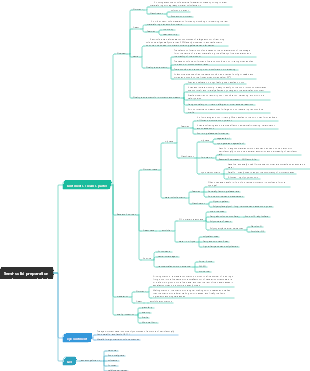
This is a mind map about the introduction to pharmacy. Pharmacy refers to the comprehensive technical science that studies the basic theory of pharmaceutical preparations, prescription design, preparation technology, quality control and rational application.
Edited at 2024-03-09 11:25:11This is a mind map about bacteria, and its main contents include: overview, morphology, types, structure, reproduction, distribution, application, and expansion. The summary is comprehensive and meticulous, suitable as review materials.

This is a mind map about plant asexual reproduction, and its main contents include: concept, spore reproduction, vegetative reproduction, tissue culture, and buds. The summary is comprehensive and meticulous, suitable as review materials.
This is a mind map about the reproductive development of animals, and its main contents include: insects, frogs, birds, sexual reproduction, and asexual reproduction. The summary is comprehensive and meticulous, suitable as review materials.
This is a mind map about bacteria, and its main contents include: overview, morphology, types, structure, reproduction, distribution, application, and expansion. The summary is comprehensive and meticulous, suitable as review materials.
This is a mind map about plant asexual reproduction, and its main contents include: concept, spore reproduction, vegetative reproduction, tissue culture, and buds. The summary is comprehensive and meticulous, suitable as review materials.
This is a mind map about the reproductive development of animals, and its main contents include: insects, frogs, birds, sexual reproduction, and asexual reproduction. The summary is comprehensive and meticulous, suitable as review materials.
introduction
Overview
Pharmacy concept
Pharmacy: refers to the comprehensive technical science that studies the basic theory, prescription design, preparation technology, quality control and rational application of pharmaceutical preparations.
Preparation science: refers to the discipline of designing and preparing safe, effective and stable pharmaceutical preparations based on preparation theory and preparation technology.
Dosage form: refers to different administration forms prepared for diagnosis, treatment or prevention needs, such as tablets, injections
Pharmaceutical preparations: refer to raw materials processed into suitable dosage forms according to national drug standard prescriptions or other appropriate prescriptions, mainly referring to specific varieties of drugs
Pharmacy tasks
Subdisciplines of Pharmacy
Physical Pharmacy: Use physical and chemical principles, methods and means to study the prescription design, preparation process, quality control, etc. of dosage forms and preparations in pharmacy
Industrial Pharmacy: Study of the basic theories, process technologies, production equipment and quality management of drugs and preparations.
Biopharmaceutics: Study the absorption, distribution, metabolism and excretion processes of drugs and their dosage forms in the body, and elucidate the relationship between drug dosage form factors, biological factors of the body and drug efficacy.
Pharmacokinetics: Use digital methods to study the relationship between the absorption, distribution, metabolism, and excretion of drugs over time and their efficacy.
Medicinal Polymer Materials: Study the structure, preparation, physical and chemical characteristics of synthetic and natural polymer materials commonly used in dosage form design and preparation formulation, as well as their functions and applications
Clinical Pharmacy: Taking patients as subjects to study rational, effective and safe medication use, etc.
Pharmaceutical dosage forms and excipients
Classification of drug dosage forms
According to material form
Gaseous dosage form: aerosol, spray
Liquid dosage forms: solutions, emulsions, injections
Semi-solid dosage forms: ointments, pastes, gels
Solid dosage forms: tablets, pills, capsules
by decentralized system
Solution type: refers to a uniformly dispersed system (homogeneous phase system) formed by dispersing drugs in a liquid dispersion medium with molecules or ions (diameter ≤ 1 nm), also known as low molecular solution, such as solutions, solution injections, etc.
Colloidal type: refers to two dispersion systems with dispersed particle diameters in the range of 1-100nm: ① polymer solution, which is a homogeneous system, such as a glue agent ② insoluble nanoparticles, which is a heterogeneous system, such as a coating agent
Emulsion type: refers to a non-uniform dispersion system formed by a liquid dispersed in the form of droplets in another mutually immiscible liquid dispersion medium, such as oral emulsions and intravenous emulsions.
Suspension type: refers to a non-uniform dispersion system formed by solid drugs dispersed in a liquid dispersion medium in a particulate state, such as suspensions
Gas dispersant: refers to a dispersion system formed by dispersing liquid or solid drugs in a particulate state in a gas dispersion medium, such as aerosols and powder sprays.
Microparticle dispersant: refers to a dispersion system in which drugs are dispersed in the state of liquid or solid particles, such as microsphere preparations, microcapsule preparations, and nanocapsule preparations
Solid dispersion type: refers to the dispersion system of solid mixture, such as tablets, powders, granules, and capsules
According to route of administration
Gastrointestinal dosage form: refers to a dosage form that acts through the gastrointestinal tract after oral administration
Parenteral dosage form
Injectable dosage form
Dosage form for respiratory tract administration
Dermal dosage form
Mucosal administration dosage form
Oral administration dosage form
According to preparation method
Common dosage form
Leaching dosage form
Sterile and sterile preparations
The importance of drug dosage forms
Dosage form can improve drug stability
Dosage form can change the properties of a drug’s action
Dosage form can adjust how quickly a drug works
Dosage forms can eliminate or reduce the toxic side effects of drugs
Some dosage forms can produce targeted effects
Drug Delivery System DDS: Drugs are delivered to the necessary parts in the necessary amount at the necessary time to achieve maximum efficacy and minimum toxic effects.
The importance of excipients
Classification and quality requirements of pharmaceutical excipients
Application of pharmaceutical excipients in pharmacy
give shape
Conducive to preparation
Improve stability
Adjust release
Regulators that meet physiological requirements
Excipients: excipients or additives used in the production of pharmaceutical preparations
National drug standards and prescriptions
National drug standards
"Pharmacopoeia of the People's Republic of China" is compiled by the National Organization Pharmacopoeia Committee
Drug registration standards (not lower than those specified in the Chinese Pharmacopoeia)
Other national drug standards
"United States Pharmacopeia" USP
British Pharmacopoeia BP
"Japanese Pharmacy Prescription" JP
"European Pharmacopoeia" EP
"International Pharmacopoeia" IP
Prescriptions, prescription and over-the-counter drugs
Prescription: refers to a medical document that is issued to a patient by a registered practicing physician or a practicing assistant physician in the course of diagnosis and treatment, reviewed, prepared, and verified by a pharmaceutical professional and technical personnel who has obtained the qualification for a professional and technical position in pharmacy, and serves as the patient's medication voucher.
Prescription drugs: refers to drugs that can be prepared, purchased and used with a prescription from a licensed physician or licensed assistant physician
Over-the-counter drugs: refers to drugs that can be judged and purchased by oneself without a prescription from a licensed physician or licensed assistant physician.
GMP and GSP
GMP "Good Manufacturing Practice for Pharmaceutical Products"
GSP "Good Manufacturing Practice for Pharmaceutical Products"
GLP "Good Manufacturing Practice for Non-Clinical Research on Drugs"
GCP "Good Clinical Practice for Drugs"
Pharmaceutical dosage form design
Determination of route of administration and dosage form
Route of administration
Oral administration
Injection administration
Skin and mucosal site administration
Determination of dosage form (physical and chemical properties)
Solubility
stability
Basic principles of dosage form design
safety
effectiveness
Controllability
stability
Compliance