MindMap Gallery Pharmacy 6 semi-solid preparation
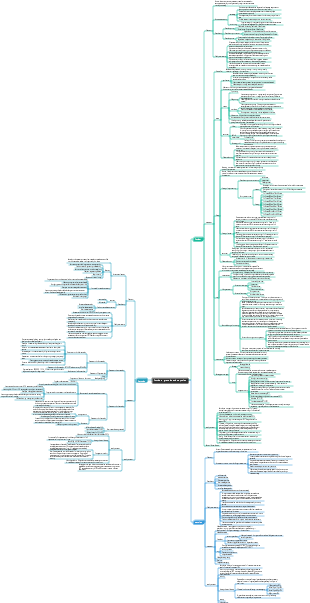
This is a mind map about pharmaceutical 6 semi-solid preparations, including ointments, cream holes, pastes, eye ointments, Gels, etc.
Edited at 2024-03-09 11:27:20This is a mind map about bacteria, and its main contents include: overview, morphology, types, structure, reproduction, distribution, application, and expansion. The summary is comprehensive and meticulous, suitable as review materials.

This is a mind map about plant asexual reproduction, and its main contents include: concept, spore reproduction, vegetative reproduction, tissue culture, and buds. The summary is comprehensive and meticulous, suitable as review materials.
This is a mind map about the reproductive development of animals, and its main contents include: insects, frogs, birds, sexual reproduction, and asexual reproduction. The summary is comprehensive and meticulous, suitable as review materials.
This is a mind map about bacteria, and its main contents include: overview, morphology, types, structure, reproduction, distribution, application, and expansion. The summary is comprehensive and meticulous, suitable as review materials.
This is a mind map about plant asexual reproduction, and its main contents include: concept, spore reproduction, vegetative reproduction, tissue culture, and buds. The summary is comprehensive and meticulous, suitable as review materials.
This is a mind map about the reproductive development of animals, and its main contents include: insects, frogs, birds, sexual reproduction, and asexual reproduction. The summary is comprehensive and meticulous, suitable as review materials.
Semi-solid preparation
Ointments, creams, pastes
Overview
Ointment
——A homogeneous semi-solid external preparation made by mixing the raw material drug with a greasy or water-soluble matrix
Classification
solution ointment
Suspension ointment
Cream
——A uniform semi-solid preparation formed by dissolving or dispersing the raw material drug in an emulsion matrix
Features
thixotropy
heat sensitivity
paste
——Semi-solid external preparations composed of a large amount of raw drug solid powder (generally more than 25%) evenly dispersed in a suitable matrix, which can be divided into water-containing gel pastes and fat pastes
Quality requirements
The selection of matrix should be based on the characteristics of the dosage form, the nature of the raw material drug, the efficacy of the preparation and the stability of the product.
The base should be uniform and fine, and should be non-irritating when applied to the skin or mucous membranes.
There should be no rancidity, odor, discoloration or hardening.
Unless otherwise specified, the paste should be protected from light, sealed and stored, and should not be frozen when stored below 25°C.
Quality requirements for ointments and creams
Even and delicate, no rough feeling when applied on skin
It has appropriate viscosity, is easy to apply on the skin or mucous membranes, does not melt, and is rarely affected by changes in the external environment.
Stable properties, no rancidity, odor, discoloration, hardening, etc. within the validity period
Has good safety, no irritation, allergies, or other adverse reactions
Skin ointments and creams used for large burns or severe injuries should be sterile
Base and Additives
Ointment base
oily base
Features
It is lubricating and non-irritating. When applied to the skin, it can form a closed oil film and promote skin hydration.
It has a softening and protective effect on epidermal thickening, keratinization and chapped skin.
Poor drug release performance
Classification
oily base
vegetable oil
hydrogenated vegetable oil
lipid matrix
Lanolin - has good water absorption and can be used in combination with petroleum jelly to improve the water absorption and permeability of petroleum jelly.
Beeswax/Spermaceti—W/O emulsifier
hydrocarbon matrix
Vaseline—especially useful for medications that are unstable when exposed to water
Paraffin - mainly used to adjust the consistency of ointment bases
Silicones - highly hydrophobic
water soluble matrix
Features
Often used as a base for oil-proof protective ointments, it dissolves to form a hydrogel
Generally fast drug release rate
Add moisturizers and preservatives
Classification
Glycerin gelatin
Polyethylene glycol – long-term use can cause skin dryness
Cream base
emulsifier
Oil-in-water cream base
one price soap
Fatty alcohol sodium sulfate
Sodium 12-alkyl sulfate
Polysorbates-Tweens
Polyoxyethylene ether derivatives
Flat plus O
Emulsifier OP
water-in-oil type
polyvalent soap
Fatty acid sorbitans-Span
Higher fatty acids and polyol esters
Additive
Antioxidants
bacteriostatic agent
transdermal absorption enhancer
Azine—Azone
DMSO
moisturizer
preparation
Ointment
Grinding method—a preparation method in which the fine powder of the drug is first ground into a fine paste with a small amount of base at room temperature, or the liquid is ground into a fine paste, and then the rest of the base is added in equal amounts and the mixture is evenly mixed.
Melting method - the matrix with a higher melting point is heated and melted, then the matrix with a lower melting point is added, and finally the liquid ingredients and drugs are added
Cream
emulsification method
quality inspection
granularity
quantity
Sterile
Microbial Limit
eye ointment
The eye ointment base is commonly composed of a mixture of petroleum jelly, liquid paraffin, and lanolin (8:1:1).
Metallic foreign matter should be checked
Gel
aqueous gel matrix
carbomer
Sodium alginate
poloxamer
Chitosan
cellulose derivatives