 Wondershare EdrawMind
MindMap Gallery Pharmacy 7 Suppositories
- 56
Pharmacy 7 Suppositories
This is a mind map about pharmaceutical 7 suppositories, which refer to solid preparations made of drugs and suitable bases for intraoral administration.
Edited at 2024-03-09 11:28:11
- bacteria
This is a mind map about bacteria, and its main contents include: overview, morphology, types, structure, reproduction, distribution, application, and expansion. The summary is comprehensive and meticulous, suitable as review materials.
- Plant asexual reproduction
This is a mind map about plant asexual reproduction, and its main contents include: concept, spore reproduction, vegetative reproduction, tissue culture, and buds. The summary is comprehensive and meticulous, suitable as review materials.
- Reproductive development of animals
This is a mind map about the reproductive development of animals, and its main contents include: insects, frogs, birds, sexual reproduction, and asexual reproduction. The summary is comprehensive and meticulous, suitable as review materials.
Pharmacy 7 Suppositories
- bacteria
This is a mind map about bacteria, and its main contents include: overview, morphology, types, structure, reproduction, distribution, application, and expansion. The summary is comprehensive and meticulous, suitable as review materials.
- Plant asexual reproduction
This is a mind map about plant asexual reproduction, and its main contents include: concept, spore reproduction, vegetative reproduction, tissue culture, and buds. The summary is comprehensive and meticulous, suitable as review materials.
- Reproductive development of animals
This is a mind map about the reproductive development of animals, and its main contents include: insects, frogs, birds, sexual reproduction, and asexual reproduction. The summary is comprehensive and meticulous, suitable as review materials.
- Recommended to you
- Outline
suppositories
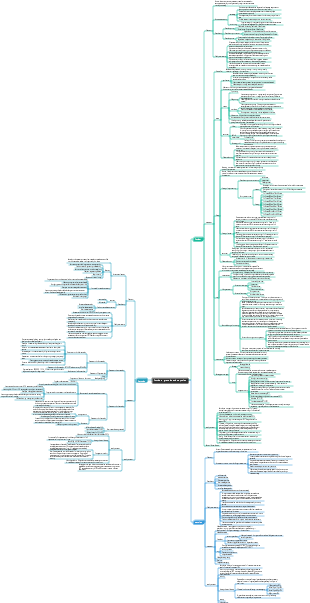
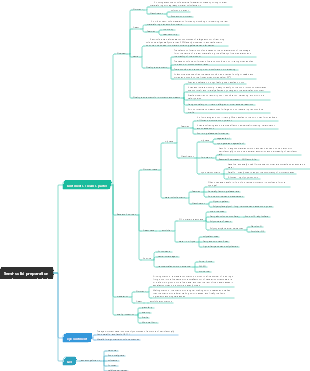
Overview
suppository
Refers to a solid preparation made of a drug and a suitable matrix for oral administration.
It is solid at room temperature. After being inserted into the cavity, it can quickly melt, soften or dissolve in the secretion fluid at body temperature, and gradually release the drug to produce local or systemic effects.
Classification
rectal suppository
Systemic effects
local effect
vaginal suppository
local effect
Most used
urethral plug
Nasal suppository
Ear plugs
dental plug
local effect
Systemic suppositories versus oral preparations
Not damaged and inactivated by gastrointestinal pH and enzymes
Gastric irritants can be administered rectally (to reduce gastrointestinal reactions)
Reduce first-pass effects and hepatotoxicity of drugs
Suitable for adults and pediatric patients who cannot take oral medications or are unwilling to swallow them. Convenient administration
An effective way to treat patients with vomiting
Disadvantages: Traditional concepts are not used and the cost is high
Classification
rectal suppository
local effect
shape
torpedo shape
Conical
Cylindrical
size
Length: 3-4cm
Weight: 2g
For children: 1g
For the treatment of
hemorrhoid
prostatitis
colitis
constipate
Systemic effects
Antipyretic and analgesic: Indomethacin suppository, Diclofenac sodium suppository
Analgesia: tramadol hydrochloride suppository, morphine sulfate suppository
Epilepsy: Valproamide suppositories
Asthma: compound clenbuterol hydrochloride suppository, compound atropine ephedrine suppository
Anti-infection: lincomycin hydrochloride suppository
Anti-cancer: Tegafur suppository
vaginal suppository
shape
Duckbill
spherical
Oval
size
Length: 1.5-2.5cm
Weight: 2-5g
For the treatment of
Urogenital tract infection
contraception
miscarriage
Other suppositories
urethral plug
Usually rod-shaped
alprostadil urethral suppository
Ear plugs
Chloramphenicol ear plugs
Nasal suppository
dental plug
General quality requirements
Complete and smooth appearance
Raw materials and base should be mixed evenly
It is non-irritating when inserted into the cavity and should be able to melt or dissolve and mix with secretions to gradually release the drug and produce local or systemic effects.
It should have suitable hardness to avoid deformation during packaging or storage.
matrix
Excellent matrix requirements
At room temperature: Appropriate hardness and toughness
At body temperature: easily melts, softens or dissolves
Has wetting or emulsifying ability, high water value
Stable properties: the formation of suppositories will not be affected by the transformation of crystal forms
The distance between the melting point and the freezing point should not be too large
The acid value, saponification value and iodine value of the oily matrix meet the requirements
Suitable for cold pressing and hot melt preparation, easy to remove film
Classification
Fatty or oily base
cocoa butter
Overview
A light yellowish-white solid fat with a slight cocoa aroma (pressed product) or a bland taste (solvent extracted product). Easily pulverized into powder at 10-20℃
Melting range 31-34℃, starts to soften when heated to 25℃, melts quickly at body temperature
The chemical composition is glycerides of various fatty acids (such as stearic acid, palmitic acid, oleic acid, etc.)
Good plasticity, non-irritating, compatible with a variety of drugs, and is recognized as an excellent suppository matrix
Camphor, menthol, borneol and other drugs lower the melting point of cocoa butter. An appropriate amount (3-6%) of beeswax and spermaceti can be added to increase the melting point.
Each 100g can absorb 20-30g of water, adding Tween to increase water absorption capacity
Substitute
my country's most commonly used natural oil substitutes - Chinese tallow tree butter and balsamic fruit butter
Semi-synthetic and fully synthetic fatty acid glycerides—substitutes
Heating method
Polymorphs
α, β, β', and γ types, among which β type is the most stable, with a melting point of 34°C.
It is heated to 36°C to completely melt and then solidify, and the melting point drops to 24°C. The reason is that the stable β-form (melting point 34°C) is partially transformed into unstable isomeric crystals (α-form, melting point 24°C). After being left for a few days, it becomes unstable. The crystal form changes to a stable crystal form (β form)
Semi-synthetic fatty acid glycerides
It is obtained by hydrolysis of natural vegetable oils (coconut oil, palm seed oil, litsea cubeba oil) → fractionation to obtain C12~C18 free fatty acids → partial hydrogenation → esterification with glycerin
It is a mixed ester of triglyceride, diglyceride and monoester.
Features
Stable properties and good formability
Appropriate melting point, not prone to rancidity
The most ideal suppository base to replace natural oils at present
Classification
Semi-synthetic coconut oil ester
Coconut oil stearic acid glycerin → coconut ester
Milky white block, insoluble in water, melting point 36~38℃, freezing point 31~36℃
Water absorption capacity>20%
Semi-synthetic palm oil ester
Palm kernel oil → palmitic acid stearic acid glycerin → palm oleyl ester
Milky white solid, strong heat resistance, low acid value and iodine value, no adverse effects on mucous membranes
Semi-synthetic litsea cubeba oil ester
Mixed fatty acid glycerides
Lauric acid, stearic acid, glycerin → mixed fatty acid glyceride (also called hard fat: fully synthetic)
Classification
Type 34
Melting point 33-35℃
Type 36
Melting point 35-37℃
Type 38
Melting point 37-39℃
Its physical and chemical properties are similar to cocoa butter and is most commonly used
Type 40
Melting point 39-41℃
Propylene glycol stearate (fully synthetic)
Propylene glycol stearate monoester and diester mixture, a fully synthetic fatty acid glyceride
Milky white or slightly yellow, waxy solid, water insoluble
Melting point 35-37℃
Insoluble in water, expands in hot water
No obvious irritation to mucous membranes, safe and non-toxic
water soluble matrix
Glycerin gelatin
Usually composed of gelatin, glycerin and water (2:7:1)
Elastic and not easy to break
It softens and slowly dissolves in secretions at body temperature, and has a slow and lasting effect.
The higher the glycerin and water content, the faster it dissolves
Drugs that are incompatible with protein cannot be used
It is often used as a vaginal suppository base for local effects.
Polyethylene glycol (PEG)
It does not melt at body temperature, but can slowly dissolve in body fluids to release drugs. It is a common matrix for poorly soluble drugs (fat-soluble drugs).
Preparation of suppositories by hot melt method
It is a carrier for poorly soluble drugs and also used as a matrix for water-soluble drugs.
Highly hygroscopic and irritating to mucous membranes
Add 20% water to the recipe
Moisten with water before use
Surface coated with cetyl alcohol or stearyl alcohol film
Classification
Low melting point matrix
96% PEG1000, 4% PEG4000 for rapid disintegration
high melting point matrix
75% PEG1000, 25% PEG4000 for slow absorption
Polyoxyethylene (40) stearate
This product is polyethylene glycol monostearate, a white waxy solid
Melting point 39-45℃, soluble in water, ethanol, acetone
It is a surfactant that is soluble in both water and oil. It is a hydrophilic matrix that is currently used more frequently.
Product name Myri 52, product code S-40
Can be mixed with PEG for better disintegration and release properties
Poloxamer
Polyoxyethylene-polyoxypropylene block copolymer, nonionic surfactant
The degree of polymerization increases, liquid → semi-solid → waxy solid
Commonly used Poloxamer 188 (trade name: Pluronic F-68), melting point 52°C
Can promote drug absorption, and play a role in sustained release and prolonged effect
additive
hardener
When the suppository is too soft, add an appropriate amount of white wax with high melting point, stearic acid, cetyl alcohol, and carnauba wax.
thickener
When the drug is poorly mixed with the matrix, hydrogenated castor oil, glyceryl monostearate, aluminum stearate, etc. can be added
emulsifier
When the suppository prescription contains a liquid phase that cannot be mixed with the base (content is greater than 5%), an appropriate amount of emulsifier can be added
absorption enhancer
To increase systemic absorption, commonly used surfactants and Azone
Colorant
Increase beauty
Antioxidants
Can be added when containing easily oxidized drugs, such as tert-butylhydroxyanisole (BHA), tert-butyl-p-cresol (BHT)
preservative
It can be added when containing aqueous solutions or plant extracts, such as parabens, which should be verified through testing
Factors affecting the absorption of rectal suppositories
physiological factors
The rectum contains only 2-3ml of fluid; if necessary, an enema can be used to defecate before administering medication
The pH of rectal fluid is generally 7.5 and has no effective buffering capacity. The dissociated form of a drug depends on the drug itself
There are no villi and microvilli on the rectal mucosa, but there are abundant blood vessels and lymphatic vessels
Avoid or reduce hepatic first pass effect
The appropriate depth of inserting the suppository into the rectum is about 2cm from the anus. 50%-75% of the drug can avoid the first-pass effect of the liver.
Double-layered suppository designed to extend residence time in the lower rectum
Drug physical and chemical properties
Good fat solubility and good absorption of non-dissociated drugs
Acidic drugs pKa>4.3, alkaline drugs pKa<8.5, rapid absorption
Use buffer solutions to adjust rectal pH to facilitate drug absorption
Solubility
Solubility ↑, absorption ↑; the drug can be dissolved in an appropriate solvent and mixed with the matrix
particle size
Particle size ↓, absorption ↑; solid drugs should be made into fine powder or the finest powder in advance; drugs should be evenly suspended in the matrix
Choice of matrix
Matrix opposite drug solubility facilitates drug release and increases absorption
Cocoa butter melts quickly, but because it is immiscible with rectal fluid, it cannot release fat-soluble drugs, so it is best to add water-soluble drugs or dissociative drugs
Lipid-soluble drugs are more readily released from a matrix of glycerol, gelatin or polyethylene glycol, but these two matrices dissolve slowly in body fluids. For example, indomethacin is a fat-soluble drug and is made into suppositories using mixed fatty acid glycerides and PEG as bases. The in vitro dissolution rate of the latter is 10 times that of the former.
Comparison of matrix liquefaction times
Add additives
Add surfactant to increase hydrophilicity and promote drug release and absorption
Added absorption enhancer - increases systemic absorption
Preparation of suppositories
Preparation
hand molding
Suitable for preparation of small amounts of fatty matrix
Mix the drug and matrix powder evenly to form a plastic mass, knead it with your hands separated by paper, roll it into a cylinder with gentle pressure, divide it into equal parts according to the required amount, and knead it into a suitable shape.
It is suitable for temporary preparation of small quantities. The appearance of the finished product is often inconsistent and not beautiful enough.
cold compression method
Suitable for mass production of fatty matrix suppositories
Place the drug and matrix powder in a container and mix them evenly, then put them into a thromboforming machine and press them into a certain shape.
Particularly suitable for the preparation of suppositories containing heat-labile drugs
fusion method
Suitable for the preparation of fat matrix and water-soluble matrix suppositories
Automatic suppository filling machine
Automatically complete suppository shell making, filling, cooling forming and sealing
The shell materials are plastic and aluminum foil, which are used both as packaging materials and as suppository molds.
Convenient production (3500-6000 capsules per hour)
Lubricant required
Grease-based suppositories: water-based lubricants
Soft soap: glycerin: ethanol=1:1:5
Water-soluble base suppositories: oil-based lubricants
Liquid paraffin or vegetable oil
Lubricant-free base
Cocoa butter and polyethylene glycol
Determination of the amount of matrix used in preparation
Displacement Value (DV)
The ratio of the weight of the drug to the weight of the matrix of the same volume is the replacement price of the drug for the matrix
Calculation formula
Cocoa butter replacement price for commonly used drugs
Calculation of dosage of itraconazole suppository
Quality inspection of suppositories
The appearance should be smooth, without cracks, frost or discoloration, and the mixture should be even when viewed from the longitudinal section.
weight difference
Melt time limit
The fatty matrix is completely melted or softened within 30 minutes
The water-soluble matrix is completely dissolved within 60 minutes
Microbiological limit check
Other quality assessment methods
Dissolution rate
body absorption
Mucosal irritation
Stable
Packaging and storage of suppositories
Each suppository should be enclosed and the packaging material should be non-toxic. Light-sensitive suppositories are generally packaged in opaque materials such as tin foil.
Suppositories are generally stored or transported in a sealed container below 30°C to prevent deformation, mold, and deterioration due to heat and moisture.
Cocoa butter suppositories must be stored below 30°C, preferably in the refrigerator (2°C to 8°C)
Glycerin gelatin suppositories can be stored at room temperature (20°C to 25°C)
Suppositories made of polyethylene glycol base can be stored at normal room temperature
Example
Glycerin suppository
Element
Glycerin: 91 grams
Sodium stearate: 9 grams
Purified water: 5 grams
Makes about 105g
preparation
To prepare this suppository, glycerin is heated in a suitable vessel to about 50°C. The sodium stearate is dissolved in the hot glycerin with stirring, purified water is added, and the mixture is immediately poured into suppository molds. If the mold is metal, it is recommended to heat it before adding the glycerin mixture. After cooling until solid, remove the suppository. This recipe will make approximately 50 adult suppositories
Glycerin is a hygroscopic excipient that promotes the laxative effect of suppositories by attracting water from the intestine and through its stimulating effect on the mucosal lining.
Sodium stearate is a soap that acts as a hardening agent and also helps with laxative effects
Due to the hygroscopic nature of glycerin, suppositories will absorb moisture and should therefore be stored in a sealed container at a temperature preferably below 25°C.
Wild chrysanthemum plug
ibuprofen suppository
Semi-synthetic fatty acid glycerides: 0.85g
Ibuprofen: 0.15g
Craftsmanship
Heat and melt the semi-synthetic fatty acid glyceride (about 50℃), cool while stirring, add ibuprofen at about 38℃, stir evenly, fill the mold, cool and demould
Povidone iodine
New suppository
hollow suppository
effervescent suppositories
quick release
double layer suppository
Microencapsulated suppositories
Osmotic pump suppository
Extended release suppositories
Sustained release