MindMap Gallery Diagnostics Electrocardiogram (2)
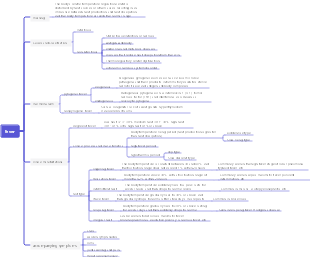
It includes the average cardiac axis, cardiac clockwise rotation, characteristics of each wave and segment of the electrocardiogram, and the conditions for determining sinus rhythm. I hope it will be helpful to you!
Edited at 2024-03-08 22:50:15This is a mind map about bacteria, and its main contents include: overview, morphology, types, structure, reproduction, distribution, application, and expansion. The summary is comprehensive and meticulous, suitable as review materials.

This is a mind map about plant asexual reproduction, and its main contents include: concept, spore reproduction, vegetative reproduction, tissue culture, and buds. The summary is comprehensive and meticulous, suitable as review materials.
This is a mind map about the reproductive development of animals, and its main contents include: insects, frogs, birds, sexual reproduction, and asexual reproduction. The summary is comprehensive and meticulous, suitable as review materials.
This is a mind map about bacteria, and its main contents include: overview, morphology, types, structure, reproduction, distribution, application, and expansion. The summary is comprehensive and meticulous, suitable as review materials.
This is a mind map about plant asexual reproduction, and its main contents include: concept, spore reproduction, vegetative reproduction, tissue culture, and buds. The summary is comprehensive and meticulous, suitable as review materials.
This is a mind map about the reproductive development of animals, and its main contents include: insects, frogs, birds, sexual reproduction, and asexual reproduction. The summary is comprehensive and meticulous, suitable as review materials.
Electrocardiogram (2)
Measurement of electrocardiogram
Heart rate=60/R-R interval
Measurement of each band
time course
From the leading edge of the waveform starting point to the leading edge of the waveform end point
amplitude
Upward - from the edge of the equipotential line to the upper end of the wave
Downward - the lower edge of the equipotential line to the lowest point of the wave
mean cardiac axis
Normal cardiac axis range: -30°~90°
Measurement methods
Visual inspection
The main waves of QRS complexes in leads I and III are all upward - no offset
The main wave in lead I is upward, and the main wave in lead III is downward - left deviation
The main wave in lead I is downward, and the main wave in lead III is upward - right deviation
"Mouth to mouth, go left; tip to tip, go right."
Drawing method
Find the vector sum of the upward wave and the downward wave - calculate the length on the corresponding lead axis - draw a vertical line, the intersection of the two vertical lines is the apex of the cardiac axis - connect the starting point and the apex, mark the direction
Look-up table method
Measure the vector sum of QRS complex amplitudes in lead I and lead III respectively - check the electrocardiogram chart
clinical significance
Left axis deviation - left ventricular hypertrophy, left anterior fascicular block, ventricular tachycardia of right ventricular origin, transverse heart, massive ascites, obesity, pregnancy
Right axis deviation - right ventricular hypertrophy, left posterior fascicular block, ventricular tachycardia of left ventricular origin, vertical heart, extensive myocardial infarction, emphysema, normal infants and young children
Severe right axis deviation - extreme right ventricular hypertrophy, normal people
cardiac clockwise transposition
The heart rotates clockwise or counterclockwise along its long axis in the chest cavity, based on the changes in the QRS complex of V3, observed from the apex to the bottom of the heart.
QRS complex of V3 - RS
Appears in V1 or V2 - counterclockwise inversion
left ventricular hypertrophy
Appears in V5 or V6 - clockwise inversion
right ventricular hypertrophy
Reflects changes in the electrical position of the heart, not all anatomical transpositions
Characteristics of each wave and segment of normal electrocardiogram
P wave: atrial depolarization wave
Ⅰ, Ⅱ, aVF, V3~V6: forward and upright aVR inverted
Time<0.12s Peak spacing<0.03s Amplitude: limb conduction <0.25mV, chest conduction <0.20mV
QRS complex: ventricular depolarization wave
V5≤2.5 millivolts, aVR<0.5 millivolts
V1~V6: R wave gradually increases, s wave gradually decreases
Q wave: except aVR, amplitude <R/4 of the same lead, time <0.04s
T wave: ventricular rapid repolarization wave
Leads V4~V6 - upright aVR lead - inverted The rest is changeable
U wave: post-relay potential
Leads V3 and V4 are obvious
The direction is consistent with the T wave
Significantly increased U wave—suggesting hypokalemia
P-R interval: the time from the beginning of atrium depolarization to the beginning of ventricular depolarization
0.12~0.20s
QRS time: ventricular depolarization time
0.06~0.10s
ST segment: slow ventricular repolarization period
Elevate: shift upward
Normal: V1~V3<0.3 mV, others<0.1 mV
Push down: shift downwards
Normal: <0.05 millivolts
Q-T interval: total time of ventricular depolarization and repolarization
0.32~0.44s
J point: the junction point between the end of the QRS complex and the beginning of the ST segment
Mostly on equipotential lines
Sinus rhythm judgment conditions
Sinus P wave: I, II, aVF, V3~V6: upright, aVR inverted
Each QRS wave is preceded by an associated P wave (generated by one impulse, with a constant P-R interval)
P-R interval≥0.12s