 Wondershare EdrawMind
MindMap Gallery This is Enough to Study Reading Notes
- 54
This is Enough to Study Reading Notes
This book will give you more advanced learning methods. Through the use of the sticky note method and the explanation of the book opener, learners can quickly get to the essence of a book and transform it into abilities that can be used in work and life. It not only provides an interpretation of knowledge, but also catalyzes learners' reflection and action. Learning ability is the basis of all abilities. With the ability to learn, you have control over your life!
Edited at 2024-03-07 17:48:19
- bacteria
This is a mind map about bacteria, and its main contents include: overview, morphology, types, structure, reproduction, distribution, application, and expansion. The summary is comprehensive and meticulous, suitable as review materials.
- Plant asexual reproduction
This is a mind map about plant asexual reproduction, and its main contents include: concept, spore reproduction, vegetative reproduction, tissue culture, and buds. The summary is comprehensive and meticulous, suitable as review materials.
- Reproductive development of animals
This is a mind map about the reproductive development of animals, and its main contents include: insects, frogs, birds, sexual reproduction, and asexual reproduction. The summary is comprehensive and meticulous, suitable as review materials.
This is Enough to Study Reading Notes
- bacteria
This is a mind map about bacteria, and its main contents include: overview, morphology, types, structure, reproduction, distribution, application, and expansion. The summary is comprehensive and meticulous, suitable as review materials.
- Plant asexual reproduction
This is a mind map about plant asexual reproduction, and its main contents include: concept, spore reproduction, vegetative reproduction, tissue culture, and buds. The summary is comprehensive and meticulous, suitable as review materials.
- Reproductive development of animals
This is a mind map about the reproductive development of animals, and its main contents include: insects, frogs, birds, sexual reproduction, and asexual reproduction. The summary is comprehensive and meticulous, suitable as review materials.
- Recommended to you
- Outline

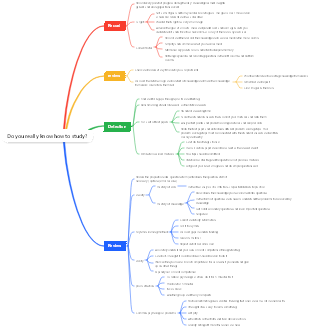
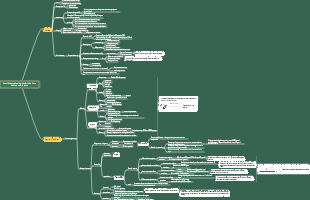
"This is Enough to Study" Reading Notes
Book information
Author: Zhao Zhou
Founder of Open Book Gang, educational practitioner, distinguished expert of School of Continuing Education, Renmin University of China
Currently, more than 1,100 book openers have been trained, deeply influencing the learning and lifestyle of hundreds of thousands of people.
Subtitle: Guide to Upgrading Personal Learning Ability
Publisher: CITIC Press
Publication year: 2017-12
Chapter 1 Why is reading so difficult?
If learning lacks the ability to internalize and apply knowledge, that is, it cannot transform knowledge into one's own abilities, then even if there is no time, no energy, problems such as not being able to understand, not being able to remember, not being able to stand, etc., it will not make much sense.
Problem 1: No time, no energy
Survival margin theoretical model
External load: work, including workplace work and unpaid home work
Internal load: from the individual’s evolving life expectations, buying a house, buying a car, wanting to get promoted, achieving financial freedom, etc.
External strength: derived from family background, network resources, financial ability
Internal Strengths: Personal Abilities and Experience
Survival capacity = Survival power/Survival load
A person always seeks a balance between the energy he needs and the energy provided. Those things that consume the individual's energy are called survival loads, and handling these loads requires survival strength.
To engage in learning activities, a person must have some survival ability
Problem 2: Can’t understand or remember
Reading itself cannot create value. Neither understanding nor memorizing knowledge can create value. Only changing behavior can create value.
And changing behavior only occurs after internalizing and reflecting on the knowledge read or heard.
The content that I can’t understand may be an important part of the original book, but it’s not necessarily important to me. For me, as long as I can internalize and apply it, it doesn’t matter if I get the fish and forget it.
How many people just sighed and sighed after reading it, and then continued to work and live as usual?
Just like a pebble dropped into a deep well, not even a ripple is caused
Self-directed reading does not care much about the problems of not being able to understand or remember, but only cares about improving one's abilities and changing behavior through reading.
Practical reading: The important thing is not to understand, but to be able to relate to your own experience. The important thing is not to remember, but to be able to apply the knowledge to your work and life.
Question 3: Can’t stand it
Learn with self-direction, no need to take notes, no need to read the whole book, the brain capacity is limited, do not let useless knowledge occupy the position of storing useful knowledge
Useless knowledge has nothing to do with me and has no impact on my work.
There's a lot of knowledge you don't need to learn, so there's no need to read a whole book
The more you read, the more you use it.
The thickest book is not necessarily the book that creates the most value for you, and the book that you have read thoroughly is not necessarily the book that is most helpful to you.
As long as you can use the books you read in your work even a little bit, the value the books will create for you will far exceed the price of the books.
In an era when inflation is running wild, the highest-yielding investment is to improve your abilities, especially your learning abilities.
The most cost-effective ones are practical books
There is no need to finish reading the book. People in the workplace do not have enough room to survive, so they should equip themselves with learning methods with the highest return on investment.
If there is a part in the book that reminds you of your own work, you can close the book and think about how to internalize and apply it.
Chapter 2 From reading to opening books
The theoretical basis of calligraphy is andragogy, which is implemented in RIA methodology.
Emphasizing learner-centeredness, we must connect learners’ experiences, solve learners’ problems, and improve learners’ abilities.
How should professionals learn
Two different learning ideas
Academic, academic, conducive to passing exams, suitable for general education
People who are more academic, more practical, focus on solving problems, suitable for adult education
Five Miles to Effective Learning
self-directed
Emphasis on active participation rather than passive acceptance
Workshops that emphasize interaction and participation rather than training
Emphasis on the learning atmosphere, which is the spirit of mutual communication and joint exploration between teachers and students
Relevant experience
Based on the learner’s experience, making full use of the learner’s experience
Emphasis on practice
The combination of ability level and willingness level is called an individual's readiness to do this, and adult readiness to learn is more oriented towards practicality
When choosing learning content, you must first consider whether it is useful - learn by using it
When judging the learning effect, the criteria for judging the learning effect should consider whether it can be used - used in learning
Focus on solving real problems
The connections and systems built in the process of solving practical problems are far more important than the knowledge system of theoretical learning.
Inner drive
Hope to solve problems, improve abilities and self-realization, and apply what they have learned
One-sided pursuit of "dry goods" is a "disease"
How much is knowledge worth?
People need water to survive, and diamonds are not indispensable. Although water is indispensable, the marginal benefit of an additional glass of water is negligible because there is too much water.
No one needs diamonds to survive, but there are so few diamonds that the marginal benefit of adding one unit of diamonds is very large
Knowledge is like water, it is good and important in itself, but in the information age, it is too easy to obtain additional knowledge. Knowledge is good, but not valuable.
Cases are important
Internet epidemic: obsession with useful information
The dehydrated version and the essence version take off exactly what is most likely to help learners internalize and apply, leaving behind the least valuable core knowledge.
I am stressed about growing up and anxious about learning, but I don’t know what kind of learning I really need. I can only comfort myself with dry goods and chicken soup and efforts that do not solve actual problems.
Core knowledge is dry goods, while cases are typical wet goods
Get inspiration from cases to help you understand
What to do when reading by yourself
As long as you can internalize and apply knowledge, you have the ability to transform knowledge into personal abilities.
The sticky note reading method, exercising this ability, is a real learning ability, which is very important and valuable.
RIA on-site learning: transform knowledge into abilities = read, split pages, explain and guide, use them for your own use
R (Reading): The book opener asks the learner to read the opened pages of the original book.
I (Interpretation): The book opener explains and guides or restates the core information in his own words.
If the content is simple, you can draw it directly in the text
A (Appropriation): Learners use it for their own purposes, practice and take action
A1: [Point to the past] Activate the learner’s relevant past experiences
A2: [Point to the future] Plan how to apply it in the future and how to take specific actions. Goal Action
A3: [Point to the present] The book-opening teacher will guide and encourage learners to practice and participate.
Chapter 3 Different Realms of Learners
What is more important than the answer itself is to keep thinking and deepening your questions. What is more important than the knowledge itself is to try your best to digest and get the knowledge you deserve.
What type of learner are you?
beginner learner
Treat the book as an authority and study the tasks to find the correct answers
The goal of learning is to pass the exam and get a certificate
Idols are people who read a lot of books and memorize them and winners of knowledge contests
Treat reading as something noble, pure, and free from vulgar taste
Blaming the teacher when learning results are poor
advanced learner
First determine the learning goals and the type of reading (use books to become a doctor)
Not responsible for the book, only responsible for solving your own problems and improving your abilities
Take the initiative to learn effectively, connect with your own experience, imagine future applications, and review after application
Treat problems as growth, ask and reflect on what the real problem is
Don’t complain about the lack of knowledge reserves, and don’t treat your brain as a hard drive
learning facilitator
Advanced learners can cure diseases and cure their own diseases
Learning facilitators can also save lives
Learning facilitators have the strongest learning ability and deeply master certain knowledge by teaching others
Turn the book into a lesson and use relevant knowledge for your own use. At the same time, your learning, communication and thinking abilities can be continuously strengthened.
Elementary Learner: The Learning State of Primitive Man
If you don’t know anything, just take a certificate and use the method you are most familiar with (examination) to solve new problems encountered in the changes.
Study and pass exams to get a diploma, so you will be unemployed after graduation.
Work depends on people's abilities, and only abilities (not knowledge) can create value for a company
In an era of rapid change, the most important learning ability is the ability to transform valuable knowledge into one's own.
Advanced Learners: Apply Reasoning to Personal Life
The mind loves good training, the content does not matter
Learned to think independently and learned to apply reasoning to personal life
Knowledge must be connected with practice. After learning knowledge, connect and reflect on your own experience.
Always ask questions while reading, ask about the information you read, and ask about past ideas.
Think about how to use new knowledge to solve your own practical problems
Restate the information in your own language to give your own experience, process your own cases, and break down the knowledge for use
Learning Facilitator: Proactively guides others
The best way to learn is to teach others
"Seven Habits of Highly Effective People"
Easier said than done: Knowing knowledge is easy, transforming it into actions for oneself or others is difficult
Jack Ma: The relationship between husband and wife should not be a relationship of mutual running-in, but a relationship of mutual training.
How to ask the right question
Only if you understand the question can you truly understand the answer
When asking questions, try to ask questions that you can actually learn from, and when answering other people's questions
Remind him not to focus too much on the correct answer and encourage him to think about his own questions
How do advanced learners ask questions?
When my girlfriend breaks up, I make the mistake of asking "Why?" The change of attitude asks: "How did we get to this point?"
Why do customers say my product is not practical? Replace it with “How do customers form the impression that my product is not practical?”
Why are you looking for a mistress outside? Replace it with "How did you end up having a home and not wanting to go back?"
Why can't I find a job I like? Replace it with "How do I plan my work and abilities?"
People who are good at learning will try to replace "why" with "how" when reflecting and questioning.
People who are good at learning are accustomed to asking each other questions at a standard level
Rather than asking how the other person views the current situation, ask what factors are considered in such matters.
Instead of asking "Why don't you like me", ask "What are your criteria for choosing a mate?"
Asking good questions is not only an important manifestation of learning ability, but also can effectively improve learning ability after being guided.
How learning facilitators answer questions
The biggest culprit that kills a problem is not rudely lighting it up in vain, but the correct answer
Knowledge dyspepsia: unable to think of the connection with oneself, unable to process one's own applications, unable to solve one's own problems
Can't change into one's own ability
What is more important than the answers is to keep thinking and deepening your questions. What is more important than the knowledge itself is to try your best to digest and apply the knowledge you have learned.
Be a valuable learning facilitator
Who to turn to for questions and answers
The best choice is someone who has answers and is good at asking questions.
You'd better be a learning facilitator, because when you help others learn, the biggest beneficiary is yourself. The best way to learn is to teach others
In adult learning, the least valuable thing is that you remember the teacher’s original words. Only actively created information is the most valuable. This kind of information has a high degree of personal relevance.
Chapter 4 Sticky Note Learning Method: Cultivating a New Thinking Model
Clear goal: improve learning ability
Benefits of the sticky note method
Relieve the stress caused by too thick books to finish
Focus on repeated experiences and reflections while reading
Focus on the internalization and application of book knowledge rather than the knowledge itself
Stay interested and the results will be visible
Convenient to organize afterwards
Can handle difficult or important parts of the book more effectively
Continuously improve your ability to transform knowledge into abilities
Principle of dismantling: seek others from yourself
The first axiom of adult learning is self-direction
Consider clearly whether you are responsible for the book when reading, or whether the book is responsible for you
As long as you can use it in your work and life, the value created for you will far exceed the cost.
Simple and easy to use work such as sticky notes, pens
Auxiliary tools
3 different colors of sticky notes that can be pasted over and over again
Category 1 Teardown: Restate the information in your own words
Category 2 Teardown: Describe your own relevant experience
Category 3 Teardown: My App, Goals and Actions
A set of multi-color instruction labels
a pen
"Unpacking the Book" Seven Steps
Step 1: Make sure you are reading practical books
Determine the purpose of reading is to improve your abilities in certain aspects, solve specific problems, and use them in actual work and life.
Step 2: Read faster
If it is important or useful to me at the moment, I will slow down my reading speed and read the relevant content carefully.
Step 3: Briefly restate the relevant information in your own words on the I-note
You can also summarize the inspiration and valuable reminders you have received and paste them on relevant book pages.
Step 4: Regarding a piece of information in the book, ask yourself if you have any relevant experience
If you have heard or seen similar things, write the record on the A1 note and stick it next to the I note.
Step 5: Plan how to apply it in the future
Try to consider the goals of the application first, and then write down the actions that should be implemented to achieve the goals. Write them on an A2 note. Also stick it on the book
Step 6: Place an instruction label next to the book page with the sticky note.
Provide your own learning materials on this page
Step 7: After reading a book, take out all the a2 labels and stick them on the wall
Prompt yourself to implement actions
Tips for using sticky notes
The content of the original book is concise and easy to understand, so there is no need for i notes and only the key points are drawn.
Think carefully before writing. Be targeted and the content should be clear and concise.
Instruction tags are equivalent to upgraded bookmarks, used to remind you which pages have sticky notes.
Don't fall into misunderstandings
The standards corresponding to the three labels: the standard of restating knowledge, the standard of internalizing knowledge, and the standard of applying knowledge
It doesn’t have to be a perfect match, just for reference
I: Restate the standards of knowledge
Interpretation: in your own words
Accurate: Accurately address relevant knowledge points in the original text
Clarity: clear logic and concise writing
Application: Summarize or process knowledge points into specific operation methods or suggested steps
Common misunderstandings about I notes: sticking to old knowledge
The stronger your learning ability, the better you can analyze differences in multiple dimensions.
A1: Internalize knowledge standards
Freshness: experiencing it personally, seeing it with your own eyes, hearing it with your own ears and understanding it.
Story: The narrative is complete and clearly reflects the cause and effect.
Correspondence: correspond to the elements of the original text, making it an appropriate case
Reflection: Help yourself to understand the experience more deeply and deepen your understanding of the original information.
Common misunderstandings about A1 notes: speaking in general terms
After hearing the question, instead of answering directly, first tell an experience story, then reveal the answer, and add a few posed questions.
I talked too much about what I thought was good and didn’t think about what the other party cared about and what they were most worried about.
A2 standards for applied knowledge
Target
Whether to plan goals and whether the goals comply with smart rules
Action: Whether the action can bring the current situation and the goal closer, what are the specific action steps, who takes action, where, when the action starts, and how frequent it is
Relevance: whether the original information or methods are used
Controllable: Everything you can do or push others to do, measurable, action explicit
Common misunderstandings in A2 notes: overflowing with determination or filled with emotions
Habitual expression of determination or emotion rather than real application and action
Four criteria distinguish between emotion and planning application: goal, action, relevance and controllability
Achieving goals is the best reward for action
WeChat training method using the sticky note method
If you want to repost an article, ask yourself if you can restate it in your own words before reposting it? Add something of your own
Only those who express some of their own thoughts, experiences and applications in their circle of friends are excellent people.
People who forward it directly can only say that they are easily moved and it is difficult to output some content.
Problems you may encounter
Can successful experiences be used as content in A1?
When I see the information, I remember that I didn’t do it well before because I didn’t do it. I reflect on my experience and I can deliberately copy and transplant it successfully next time.
A2 is to plan specific actions to solve individual problems. The purpose of A2 is to truly implement the application, help yourself solve problems, and turn it into your own actions.
How to learn from the sticky note method in knowledge-centered learning
The idea behind sticky notes is andragogy, which emphasizes self-guided learning. The learning ability developed using sticky notes can promote knowledge-centered learning.
What to do if you encounter "Chicken Soup"
Chicken soup seems to make sense, but it actually works hard to stimulate people's emotions and stimulate their desires.
Chicken soup is delicious and there is nothing wrong with it
You can learn the expression and packaging methods of chicken soup
Attachment and analogy
The purpose of attachment is to get rid of the "disorder" quickly. I mistakenly think that I quickly understand unfamiliar things.
Analogy is used to better understand unfamiliar things
Conformity hinders learning, analogy promotes learning
Multiple analogies to aid understanding
About applicable boundaries
Different scopes of application and different angles
Real change is still difficult
I used the sticky note method, contacted my experience, and implemented the application, but when the time passed, I forgot about it. First of all, I have to be tolerant to myself. Growth is difficult, and there are fluctuations in developing new habits.
Reflect on whether the goals are reasonable and whether specific actions can be optimized
Check in with peers to supervise and participate in community activities
Instead of emphasizing what you can’t do (such as checking your phone before going to bed), create a new habit to replace it (such as reading a book or meditating before going to bed).
If you can't do it yourself, teach others. In the process of teaching others, you will continue to grow.
How corporate reading clubs can learn from this
Distinguish the types of reading. Different books have different reading methods, and different learning purposes have different learning methods.
Be careful with "self-pleasure" reading meetings, which are actually empty of emotion or determination and cannot really change behavior.
I can’t find the page until I finish reading.
You don’t have to read the whole book, a little bit of it is worth a hundred times the price of the book. Girls don’t need to read through all the men to find a marriage partner.
As long as you change the concept of learning, you can skip reading some and read carefully some, and read with the goal of solving problems according to your own needs.
The applicable boundaries of the sticky note law
Able to choose a good book and analyze and organize information
The sticky note method solves common problems in adult learning
Adult learning problems are not to be solved but to be transcended
Beyond "no time and energy", there will be no anxiety, guilt and pressure of reading, only the fun of applying what you learn and improving your abilities.
Beyond “not understanding”, the key is to understand how important this knowledge is to me
Beyond “can’t remember”, internalization is much more important than remembering
Go beyond "can't stand it", treat books as doctors, and transform valuable knowledge into your own abilities
Chapter 9 Book Opener Become a Facilitator of Learning
Adults learn best not by practicing alone, but by learning in context
Effective learning is to enter relevant situations and find your own learning community
A new kind of “expert”: the book opener
The book-opener is the highest state of active learning
Book openers can learn the best by teaching others, they can process a book into on-site training, and they can also help people around them build a knowledge system
The best way for adults to learn is not to learn alone but to learn in situations. Effective learning is to enter relevant situations.
Book openers are learning facilitators and professionals, and book openers are a new profession
Practical books are divided into 4 categories
Practical type: focuses on solving problems, emphasizes practical combat, is close to reality, and often gives direct suggestions on certain types of problems.
Determine the knowledge and split the page: look for suggestions and bold words
Lesson preparation: generally no more than 2 pages
Explanation: Pay attention to the causes and consequences
Theoretical category: Focus on concepts, complete system, and careful discussion
Determine knowledge and split pages: find out the author’s main conclusions and summarize the core theory
Lesson Preparation: Transforming Ideas and Ideas into Advice
Be careful to understand the meaning of the original text
Fully understand the background of why the opinions or theories are given, and at the same time think about your own actual situation and how it is different from the author.
On the basis of the above, direct applications to the same background, and further suggestions for pairs with different backgrounds
Explanation: Grasp the application of each concept
Narrative type: There is more emotional content than rational content, and it is more likely to trigger feelings rather than actions.
Determine knowledge splitting: induction, deduction, knowledge reserve
Find what the character does well
Look for the bad parts of the character
Look beyond character expressions to principles
Break away from the usual evaluation of good and bad, and look at evaluation from the perspective of results and benefits.
Consider character motivations
Find conflict
Lesson preparation: Select the fragments from the original book that best reflect inspiration or guidance.
Explanation: Summarizing and refining content
Other categories: The disassembled knowledge and guidance are different from the author’s original intention
People’s understanding of “education” must be upgraded
Upgrade time limit
Education is more than just getting a degree
Upgrade connotation
Education is not just about learning knowledge
Upgrade the subject
We are not just consumers of the education industry
Chapter 8 The Realm of Active Learning
Identify your core competencies
Nowadays, payment for knowledge is very popular. The copywriting of books and courses is more attractive than product advertisements. Every topic looks good and every ability seems important. So how do you choose the topics to study?
You need to consolidate your core competencies in the never-ending workplace changes
Active learning is learning with output, in the form of output; practical application, case analysis, role playing, writing, speaking, teaching others
Build the three most effective outputs of the knowledge system
For A1A2, the most effective output is experience and reflection
For causes and consequences, the most effective output is writing
For applicable boundaries, the most effective output is to teach others
From shopping-based learning to self-directed learning
How to choose study topics? Someone recommended
Studying a subject is like going shopping. You come across an item, learn about it, think it’s good, and buy it.
The items I choose when shopping are not necessarily bad, but there are still many good books. Maybe there are many books that I need more but don’t know yet.
When doing sales, keep thinking: "Why do customers want to buy your stuff?"
The lowest level thing is your core competency in the workplace
The key to avoiding shopping-based learning
Identify your core competencies and find the gaps between them and the competencies required by the target position
Choose study topics in a targeted manner, and then use active learning methods to strengthen your corresponding core abilities.
Seeking change amidst change
Core competencies in the workplace
Interlaced lines are not necessarily like separated mountains, as long as you find the deepest and unchanging things
General abilities are divided into three types: information, people, and things.
Work-related core competencies
Communication and expression skills, information processing skills, the ability to use technology, planning and organizational skills, problem-solving skills, teamwork skills, and mathematical concept skills
Open book help workplace core competency system
communication skills
Relationship power
logical power
learning ability
Choice is more important than diligence
Learning materials: knowledge, information, experience
Don't "cross the river by feeling for the stones" where there is quality knowledge.
Or abandon high-quality information (high-quality books) and don’t indulge in low-quality information (books that are not suitable for you or articles concocted by WeChat writers)
Book selection tips for adult learning
First, distinguish between knowledge-centered reading, interest-based reading, and practical reading.
To read with knowledge as the center, just choose a classic in the corresponding field, check it out on Douban, and then ask experts.
Read with your interests as the center, just make sure you smell it and look for it
Practical reading in three steps
Audition
Start from the problem, start from yourself, and determine the topic you want to study
blind date
After the books arrive, take an hour or two to read them all and choose the one that suits you best.
live life
Choose a book and read only one book at this time
Case
Choose a book and benefit Qianjiadian "How to speak so that children will listen, and how to listen so that children will be willing to speak"
It is very consistent with the common problems of managing post-90s store clerks.
Learning tips for mobile reading for adults
The awareness of questioning the boundaries of applicability of new information is the criterion for judging whether the mind has been enlightened.
Distinguish the information that enters the brain
Make good use of comparison to help analyze and organize information. The tension between different information will force people to think and question. The causes and consequences can be clarified through questioning, and the applicable boundaries can be clarified through comparison.
four-step written method
conception
First have a core message (your opinion or suggestion on something), and process the causes and consequences, applicable boundaries, and A1 and A2 for it.
expansion
Add a relevant (similar or opposite) information point, which can be an information point extending horizontally or vertically.
Then comprehensively consider the relationship between the two pieces of information, how their respective causes and consequences are related, and what are the differences between different applicable boundaries.
deduction
Including citations (books and authorities), examples (one's own or others' A1), tributaries (branches - extraneous branches, quotations - fascinating, horizontal - interesting)
Package
Including adding stories (considering details and conflicts), adding interest (common hot spots and culture), sublimating themes, polishing writing...
Experience and reflection are the most important knowledge
Reflection on experience
Experience plus reflection is the most important knowledge
More important than experience is high-quality reflection
writing
Writing is a very efficient form of active learning, especially helpful in strengthening the sorting out the causes and consequences of the knowledge system.
For practical learning, writing includes writing cards and writing articles
Three notes are ready-made cards
I note to record the opinions or main points of the article
A1 sticky notes record ready-made cases
A2 notes record the goals and applications of grounding. Don’t always dwell on the theoretical or conceptual level.
teach others
The best way to learn is to teach others
Be an activist with dreams
Life does not stop with the present, there is also poetry and the distance
After being moved, most people still live in contentment and still daydream about poetry and the distant future.
Few people know exactly what they want to pursue. They can only use words like "poetry and distance" that sound beautiful but are completely unclear.
Poetry expresses aspirations. If there is no ambition, it is just complaints and emotions.
Wherever there is, or where there is no direction, it’s just an escape from here.
Ideally, your current leisure activities will bring you more options for your future self.
The world never lacks dreamers, but it’s the doers who deserve our applause.
Kaishu Gang is not your poem and distant place, Kaishu Gang accompanies you on the road of action.
Chapter 7 How to build a knowledge system
Unlock your communication skills
Communication skills are divided into four groups: expression ability, listening ability, persuasion ability, and questioning ability.
The growth system of book-openers
first dimension
The Book Opener Gang is a factory that manufactures book openers. It is not a community but a manufacturing industry. In order to ensure the quality of book openers, we have formulated a growth manual for book openers.
second dimension
Master-apprentice system, observer rating system, and national unified grading and certification system for book openers
third dimension
Rudder, organizational elder, education elder, member development, brand operation, finance, rotating chairman of events, sign-in officer, and photographer
Training system for professionals
The first dimension of workplace empowerment
clear dream
Including self-reflection and self-guidance, implementation into direction, goals, decision-making, etc.
Empower
Reflected in self-control, habits, persistence, self-motivation and emotional management, time management and energy management
emit energy
Emphasis on communication and influence, workplace skills and positive relationships
The second dimension of workplace empowerment
Organizing effective adult learning practices through learning cycles
The third dimension of workplace empowerment
Although giving energy is equally important, the energy for growth cannot be given by teachers
Chapter 6 Build your own knowledge system
Learning is not about copying other people’s systems
typical of course
Spending more time reading books will help you build your own knowledge system = eating more pig brains can replenish your brain
Just like relying on health supplements to maintain health, it may have a certain effect, but there is only one real way to health: exercise by yourself
Knowledge management: processed fragmented information
The knowledge system can give people a stable foundation and framework, and can help people establish growth thinking, critical thinking and systematic thinking, so that we will not be like duckweeds, drifting away when a wave of new information comes.
Be able to process fragmented information from different sources into your own knowledge system, and plan your own practical applications in connection with practical problems. Learning through application is a higher level of knowledge management.
The highest level is to upgrade expression through output, become an expert, realize knowledge, and at the same time increase self-wisdom, solve complex problems, and promote the growth of others.
People in the workplace most need knowledge management that gathers sand into a tower.
Create your own knowledge system, which can be used to solve problems, improve abilities, help deepen thinking, upgrade expression and become an expert
Two branches of knowledge management
Academic knowledge management: focus on knowledge learning, use knowledge to guide scientific research, sort out the framework, and write papers
Practical knowledge management: aiming to promote application, solve problems and create value
The knowledge system allows you to become a better version of yourself
Improvement in three aspects
The first aspect is to guide the expression of upgraded thinking, especially growth thinking, critical thinking and systematic thinking.
The second aspect is the ability to become an expert from zero to one.
The third aspect is the wisdom of dealing with others.
The sticky note method: a good tool for gathering sand into a tower
No matter how much information fragments are read and how well they are memorized, they cannot help learners achieve real learning and cognitive upgrades.
Add causes and consequences to the information, add applicable boundaries, reflection and action, reflection points to the past, action points to the future
A lattice system formed by combining multiple knowledge points
Three ideas for building a system
Idea 1: Starting from the problem, you can clarify the most important information to yourself.
Idea 2: From dots to nets, build the fragments into tall buildings to spell out the whole picture
Idea three: From the Internet to the point, carefully select books in specific fields, and carefully sort out the framework structure of the book
It is not necessary to establish a knowledge system on every topic. It is enough to specialize in one or two areas. Others should follow the standard that is sufficient.
A personal knowledge landscape is like a city. It must have a landmark building (field of expertise) and some surrounding shorter buildings (fields related to expertise). The combination is your own knowledge system.
When you encounter problems in work or life, you don’t need to build a mansion or a palace to learn the knowledge you need because of the problems. Just affordable housing is enough, because if these are not solved, they will cause a lot of trouble.
Example: Three characters in Jin Yong’s works
Mrs. Wang, daughter of Wu Yazi and Li Qiushui
Documentation-based knowledge management is of little use, if not completely useless.
Wang Yuyan
Being able to process fragmented information from different sources into your own knowledge system and plan your own practical application in connection with practical problems is a higher level of knowledge management.
Zhang Sanfeng
The highest realm of knowledge management is output, including writing output and teaching others
Chapter 5 Three Dimensions of Building Learning Ability
Three dimensions of learning ability
Analyze and organize information
Internalize and apply knowledge
Questioning and reflecting on experiences
Cooper Learning Circle - Experiential Learning Circle Model
The starting point for learning is people’s experience
Reflect on experience
The result of systematic and theoretical reflection
Learning ability is a meta-ability
All knowledge is information, but not all information is knowledge
Based on the current situation in China, for young people in the workplace with few assets, the best investment target is their own workplace ability. Only their own workplace ability can achieve exponential growth and ultimately help personal appreciation.
The most special ability is learning ability, because learning ability is a meta-ability, the ability about ability
Test your learning ability
Questioning and Reflecting on Experience
When encountering a problem, I always clarify the underlying assumptions, premises, or criteria to uncover the real problem that needs to be solved
I am good at summarizing knowledge from experience or cases
Friends consult me when they have questions because they recognize my insight
Analyze and organize information
I always ask about the cause and effect of information
I will add my own comments to the articles I forward to Moments instead of forwarding them directly.
When I see new information that interests me, I will deliberately search for more articles related to it to extend and compare reading.
Internalize and apply knowledge
I will ask about the difference between new knowledge and old knowledge
I quickly find knowledge that is useful to me and actually apply it
I give or teach valuable information to others
growth mindset
I believe that the solution to all problems lies not in the environment, nor in others, but in oneself
I seek and use feedback and learn from my mistakes
Helping others change and grow brings me great joy
critical thinking
I never simply accept an explanation for the cause, but ask if there are other hypotheses.
When others refute me, I will not be angry but willing to reconsider
I can always tell if an article is chicken soup, chicken blood, rumor or gossip
systems thinking
I identify the prerequisites, usage conditions, and boundary conditions for specific information or experiences
I learn through active output (such as writing or teaching others)
I will build my own knowledge system on multiple topics
Analyze and organize information
Lessons from the past
Why is this important to me? How does the author guide this information?
Cause and produce each other
What hypotheses does the author put forward regarding causes, and how are they verified or eliminated?
To see the aftereffects
What will happen if I follow the information? What are the benefits to me?
reap the consequences
What are the consequences of not doing this, and how serious is the problem of not changing?
counterproductive
Are there any contrary views and are there any examples that do not support this view?
Conditions of Use
What are the conditions for doing this, and under what circumstances does it not work?
Beating the drum
Is there any similar information before? How can other fields see similar problems?
Chuhehanjie
What is the real difference between information and where is the junction
The key to analyzing information is to inquire about causes and consequences, and the key to organizing information is to clarify the boundaries of application.
Two mechanisms of human learning
k mechanism: learning from knowledge or information
e-mechanism: learning from experience
introduction
The Uselessness of Reading and Learning Ability
The essence of the theory that reading is useless
Learners do not have the ability to make learning useful
"Reading" is not classified
Practical reading
To solve problems or improve capabilities
Before reading, you should first confirm your purpose, then choose different books and use different reading methods
Practical books should be dismantled for your own use and used in conjunction with personal experience to build your own knowledge system.
Whether reading is useful or useless depends on whether the learner has the ability to make learning useful
Knowledge payment and learning ability
The popular payment for knowledge is actually driven by users’ anxiety, panic and curiosity.
Facing the unpredictable and uncertain world, I don’t know where to go, and my heart is full of “knowledge anxiety” and “knowledge panic”
Everyone else is doing it, but if we don’t, we won’t be able to keep up. The gain may be that we feel at ease, but we don’t feel much value from paid-for-knowledge products.
Most people think that they need knowledge-based paid products, but cannot get value from them. This does not affect consumers from continuing to pay, because these people do not recognize knowledge and do not really need this knowledge.
Most people do not make their choices because they know what they lack and then make up for it, but because they are influenced by the packaging of social media and content interpreters.
A lot of knowledge just looks like knowledge, and many people just pretend to love learning.
Important dimensions of learning ability: Discrimination, being able to judge the topics you need, and distinguishing information from various sources
To judge the value of paid knowledge, we need to see whether it has real value to consumers and whether there is real growth.
Whether payment for knowledge can be sustained depends on whether the generally low learning ability can be improved.
Pseudo learning and real learning ability
Puzzled
I bought a lot of books, but I don’t have time to read them, I can’t remember them, and I can’t read them anymore.
I signed up for a lot of online courses, but after listening to them, besides feeling that the teacher was awesome, I didn’t feel that I had become a better person.
The key to workplace learning effectiveness lies not in “teaching” but in “learning”
The essence of the problem of "hearing to get excited, thinking about being moved, and then not moving" has not changed in essence.
Four common types of pseudo-learning
Chasing all kinds of "dry goods"
I pursue all kinds of "great gods" and take it for granted that I will become a great one after listening to the sharing of great people.
Worship all kinds of "new knowledge"
Obsessed with efforts that don’t solve real problems
It’s rare to become a hero. It’s like a pile of scattered sand without gathering it into a tower.
The key to whether you can truly achieve the desired results through learning lies in the learners themselves
Whether learners have sufficient learning ability that can be used for their own purposes, can process information, can solve problems, and integrate knowledge with action
Whether learners have their own knowledge system, can learn from others, draw inferences from analogies, draw inferences from one instance, and constantly upgrade to become experts.
Dismantling calligraphy and dismantling calligraphy
Three dimensions of adult learning ability: internalization and application of knowledge, analysis and organization of knowledge, questioning and reflection on experience
The important thing when opening a book is not to quickly find the key points in the book, but whether it can create value for me and solve problems for me.
Opening books is suitable for adult learning with the goal of improving abilities and solving problems. It emphasizes being learner-centered rather than knowledge-centered. Knowledge should be used to relate learners’ experiences and plan specific application scenarios.