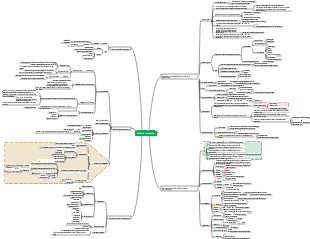
MindMap Gallery Neurocanal Anesthesia--Epidural
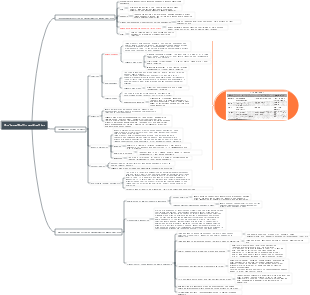
Anesthetic drugs are injected into the subarachnoid space or epidural space of the spinal canal, and the spinal nerve roots are blocked to produce anesthesia in the corresponding areas innervated by the nerve roots. This is collectively called intraspinal anesthesia. Depending on the injection location, it can be divided into subarachnoid anesthesia (also called spinal anesthesia or spinal anesthesia), epidural anesthesia, combined spinal and epidural anesthesia, and sacral canal block anesthesia. This article mainly introduces epidural.
Edited at 2022-10-21 16:14:48This is a mind map about bacteria, and its main contents include: overview, morphology, types, structure, reproduction, distribution, application, and expansion. The summary is comprehensive and meticulous, suitable as review materials.

This is a mind map about plant asexual reproduction, and its main contents include: concept, spore reproduction, vegetative reproduction, tissue culture, and buds. The summary is comprehensive and meticulous, suitable as review materials.
This is a mind map about the reproductive development of animals, and its main contents include: insects, frogs, birds, sexual reproduction, and asexual reproduction. The summary is comprehensive and meticulous, suitable as review materials.
This is a mind map about bacteria, and its main contents include: overview, morphology, types, structure, reproduction, distribution, application, and expansion. The summary is comprehensive and meticulous, suitable as review materials.
This is a mind map about plant asexual reproduction, and its main contents include: concept, spore reproduction, vegetative reproduction, tissue culture, and buds. The summary is comprehensive and meticulous, suitable as review materials.
This is a mind map about the reproductive development of animals, and its main contents include: insects, frogs, birds, sexual reproduction, and asexual reproduction. The summary is comprehensive and meticulous, suitable as review materials.
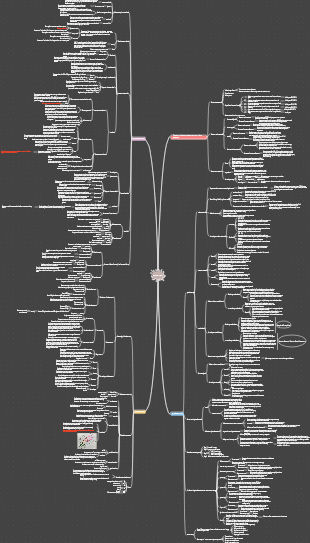
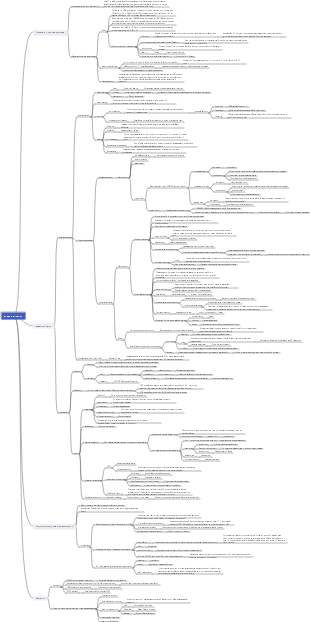
neuraxial anesthesia
Epidural block (EA)
Referred to as "epidural block" or "epidural anesthesia"
Inject local anesthetic into the epidural space (under negative pressure) to temporarily block the spinal nerve roots (it can also penetrate into the subarachnoid space, causing "delayed" spinal anesthesia)
Coughing, breath holding, pregnancy, etc. can reduce negative pressure
one-shot method
Poor controllability, many complications, less use
continuous method
Fractionated administration can extend anesthesia time and reduce complications
It can be divided into high position (C5~T6 puncture, thyroid, upper limb, chest wall surgery); middle position (T6~T12, abdominal surgery); low position (lumbar spine, lower limb, perineal surgery); sacral tube (without negative pressure) block (sacral tube hiatal, anal-perineal surgery)
Diffusion of local anesthetic in the epidural space
Local anesthetic concentration and volume
Capacity determines the range: large capacity has a wide range; concentration determines the depth and action time of blockage: high concentration blocks completely and has a wide range
Injection speed
Too fast causes discomfort to the patient, and the rest is similar to spinal anesthesia
height
The higher you go, you can increase it appropriately.
age
The spinal canal begins to grow at the age of 4, and stops at the age of 18 to 20. After that, the dosage is reduced (due to the physiological changes in the epidural space, local anesthetics spread more easily, and fewer neurons need to be blocked)
pregnancy
The dosage for full-term pregnant women is only 1/3 of that for non-pregnant women.
The full-term uterus compresses the inferior vena cava, dilating the intraspinal venous plexus and narrowing the epidural space.
The effects of estrogen and progesterone during pregnancy make local anesthetics spread more easily
arteriosclerosis
Diabetes and arteriosclerosis require a small dose of local anesthetic. In these patients, there are fewer neurons (more extensive blockade), and physiological changes in the epidural space make the diffusion of local anesthetic slow (time will be delayed).
Influence
Central Nervous System
direct impact
1. Increase the cerebrospinal fluid pressure and inject it too quickly, causing short-term dizziness.
2. Excessive local anesthetic enters the blood and causes syncope.
3. Continuous block is easier to tolerate
Indirect effects
caused by low blood pressure
cardiovascular
Similar to spinal anesthesia, blocks sympathetic nerves
After epidural local anesthetic is absorbed, it inhibits smooth muscle, blocks B receptors, and decreases cardiac output. After epidural absorption, it excites B receptors, increases cardiac output, and decreases peripheral resistance.
Injecting too quickly can increase cerebrospinal fluid pressure, causing a brief increase in cardiac tone and cardiac output.
blood pressure drops
Give infusion first to replenish blood volume
If necessary, iv ephedrine 10~15mg, or NE25~50ug
viscera
Hypotension indirectly affects the liver and kidneys. If the blood pressure is lower than 60~70mmHg, the liver blood flow will be reduced by 26%.
Nausea and vomiting due to pulling of internal organs
IV fentanyl 50ug or small dose ketamine, change to general anesthesia
breathe
There is no effect below T8. Above T4, the phrenic nerve is affected and the tidal volume decreases.
Local anesthetic concentration: 0.8%~1% lidocaine has little effect on motor fibers, 2% may cause a decrease in ventilation
Respiratory depression
Be prepared for respiratory first aid
muscle tone
Although epidural space anesthesia does not completely block motor nerve fibers, there is still some muscle relaxation.
Clinical application
Indications
Mainly used in abdominal surgery; it can also be used on the neck and upper limbs, but management is slightly more complicated.
High epidural is used for postoperative analgesia or general anesthesia combined with epidural to reduce the amount of general anesthesia and make anesthesia more stable.
Continuous epidural, labor analgesia and patient-controlled epidural analgesia (PCEA)
Below the horizontal partition, no time limit
Contraindications
Use with caution in severe anemia, high blood pressure, and cardiac insufficiency. Disabled in patients with shock or puncture infection.
local anesthetic
Ropivacaine, concentration: 0.5%~0.75%, maximum dose: 200mg, onset time: 15~20 minutes, duration 140~180 minutes (1.5~2h)
Precautions
1. Add 200ml of 1ml of 0.1% epinephrine (1:200,000): Purpose is to slow down the absorption of local anesthetics and extend the action time. For high blood pressure, the concentration needs to be reduced to avoid excessive vasoconstriction and systemic reactions.
2. Injection method
Test dose
2% lidocaine 3~5ml
Purpose: to eliminate the possibility of accidentally entering the subarachnoid space
If the pain and movement of the lower limbs disappears and the blood pressure drops after 5 minutes of injection, it may accidentally enter the arachnoid membrane, causing total spinal anesthesia and requiring immediate rescue.
From the blocking effect and range caused by the test dose, we can understand the patient's tolerance to the drug and guide the medication.
bolus dose
After 5 to 10 minutes of test dose, inject 3 to 5 ml of anesthetic every 5 minutes until the block effect meets the surgical requirements.
You can also inject a predetermined amount at one time, test amount additional dose = initial amount
subsequent dose
The patient changes from painless to painful, and his muscles become tense. Consider that the anesthetic effect has faded. If the blood pressure is stable, add a maintenance dose (1/2~1/3 of the initial dose).
Delayed operation time and increased drug dosage will increase the patient's tolerance to the drug, so the drug should be administered with caution
paracentesis
Specifically similar to spinal anesthesia
Determination of epidural space
After the puncture needle reaches the ligamentum flavum
resistance suddenly disappears
When the syringe first reaches the ligamentum flavum, there is a feeling of rebound when pushing the syringe. If the needle continues to be inserted, the resistance suddenly disappears and there is a "missing feeling". There is no resistance when injecting liquid or air.
negative pressure phenomenon
Hanging drop method: the needle reaches the ligamentum flavum, pulls out the needle core, hangs liquid on the needle base, breaks through the ligamentum flavum and reaches the epidural space, and the hanging drop is inhaled
Glass tube method: hanging drops fluctuate with breathing
Insertion method
Adjust the direction of the bevel of the needle pedicle and insert the tube 3~4cm
Connect the syringe to the end of the catheter and inject a little NS. There should be no resistance and no blood or cerebrospinal fluid should be withdrawn.
Precautions
If the catheter encounters resistance after passing through the bevel, the catheter and puncture needle need to be pulled out together, otherwise the bevel of the needle tip may cut the catheter.
During the intubation process, the patient's limbs appear abnormal or bounce, indicating that the catheter is on one side and irritates the spinal nerve root. It needs to be completely pulled out and re-inserted.
Bleeding in the catheter indicates puncture of the venous plexus, which can be flushed with NE containing a small amount of epinephrine. If bleeding still occurs, consider replacing the catheter with an interstitial catheter.
To prevent the liquid from flowing back, use tape to secure the syringe
Epidural block failure
The block range does not meet the surgical requirements
The piercing site is far away from the surgery
Multiple epidural anesthesia causes adhesions in the epidural space and blocks the diffusion of local anesthetics
Incomplete block
Insufficient local anesthetic concentration or volume
Insertion error
completely invalid
The catheter falls off or enters the vein by mistake, the catheter is twisted or blocked
Epidural puncture failed
Spinal deformity, obesity, positioning, etc.
complication
Infect
The most serious complication (spinal anesthesia too)
Total spinal anesthesia
Symptoms include no pain in the innervated parts, hypotension, loss of consciousness, and respiratory arrest.
Maintain respiratory circulation, cardiopulmonary resuscitation
abnormally widespread block
Similar to spinal anesthesia, but appears slowly and segmentally
epidural hematoma
The hematoma compresses the spinal cord, causing back pain at first, followed by muscle weakness and sphincter disorder for a short period of time, and then complete paraplegia.
Early diagnosis within 8 hours provides the best surgical decompression effect
Coagulopathy or anticoagulation or avoid epidural anesthesia and repeated violent punctures
Puncture the dura mater
Change anesthesia method
Enter blood vessels by mistake
If there is blood, withdraw the tube 1cm and flush it. If it does not slow down, re-puncture or change to anesthesia.
air embolism
Air may accidentally enter the blood vessels during the hanging drop method
Keeping the head low and feet high can prevent the embolus from traveling up into the brain, and can also cause the embolus to stay in the right atrium and be broken by the heartbeat.
pleural rupture
Broken catheter
Generally, it will not cause complications. Surgical removal is not recommended (the wound is large). Patients should be informed and followed up for observation.
spinal nerve root or spinal cord injury
Pay attention to blood coagulation, spinal conditions, and infections