MindMap Gallery Neural Anesthesia--Spinal Anesthesia
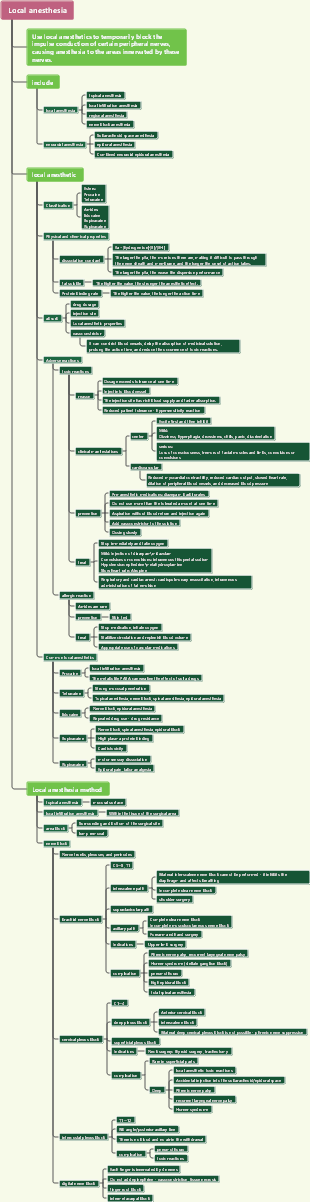
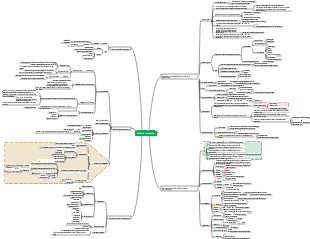
Anesthetic drugs are injected into the subarachnoid space or epidural space of the spinal canal, and the spinal nerve roots are blocked to produce anesthesia in the corresponding areas innervated by the nerve roots. This is collectively called intraspinal anesthesia. Depending on the injection location, it can be divided into subarachnoid anesthesia (also called spinal anesthesia or spinal anesthesia), epidural anesthesia, combined spinal and epidural anesthesia, and sacral canal block anesthesia. This article mainly introduces spinal anesthesia, but lumbar puncture can also be used for reference.
Edited at 2022-10-21 16:14:15This is a mind map about bacteria, and its main contents include: overview, morphology, types, structure, reproduction, distribution, application, and expansion. The summary is comprehensive and meticulous, suitable as review materials.

This is a mind map about plant asexual reproduction, and its main contents include: concept, spore reproduction, vegetative reproduction, tissue culture, and buds. The summary is comprehensive and meticulous, suitable as review materials.
This is a mind map about the reproductive development of animals, and its main contents include: insects, frogs, birds, sexual reproduction, and asexual reproduction. The summary is comprehensive and meticulous, suitable as review materials.
This is a mind map about bacteria, and its main contents include: overview, morphology, types, structure, reproduction, distribution, application, and expansion. The summary is comprehensive and meticulous, suitable as review materials.
This is a mind map about plant asexual reproduction, and its main contents include: concept, spore reproduction, vegetative reproduction, tissue culture, and buds. The summary is comprehensive and meticulous, suitable as review materials.
This is a mind map about the reproductive development of animals, and its main contents include: insects, frogs, birds, sexual reproduction, and asexual reproduction. The summary is comprehensive and meticulous, suitable as review materials.
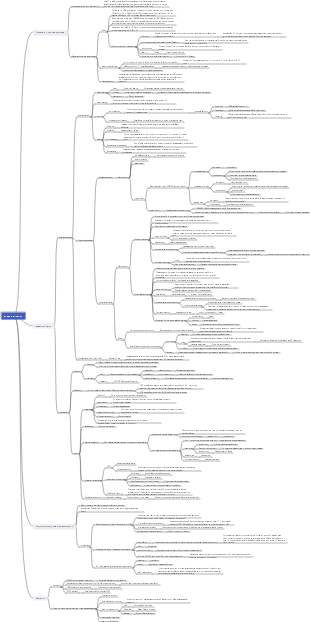
neuraxial anesthesia
Subarachnoid space block (SA)
Spinal anesthesia, referred to as "spinal anesthesia" or "lumbar anesthesia"
Inject local anesthetic into the subarachnoid space (cerebrospinal fluid) to temporarily block the anterior and posterior roots of the spinal nerves
Cerebrospinal fluid: specific gravity: 1.003~1.009, total volume: 120~150ml, subarachnoid space 25~30ml, pH: 7.35
Light specific gravity liquid
Local anesthetic larger amount (6~16ml) water for injection
isobaric liquid
Local anesthetic cerebrospinal fluid, the level of anesthesia is uncertain, use sparingly
Heavy specific gravity liquid
Local anesthetic GS (5%~10%)
The anesthesia range is easy to adjust and is the most commonly used
block plane
High spinal anesthesia
Higher than T4
median spinal anesthesia
T5~T9
spinal numbness
Below T10
Anma
The block is limited to the perineum and buttocks
effect
direct effect
blocking sequence
Autonomic nerve fibers (vasomotor nerves)
Sensory nerves (cold >> warm >> recognition of different temperatures >> slow pain >> fast pain >> touch)
Motor nerves (motor paralysis >> pressure sensation >> proprioception)
block plane
Sympathetic n is 2 to 4 segments higher than sensory n
Movement n is 1 to 4 segments lower than sensory n
indirect effect
cycle
Local anesthetic blocks thoracolumbar autonomic nerves
blood pressure
Blocks sympathetic preganglionic fibers, dilates arterioles and veins, decreases cardiac return volume (pulmonary artery pressure decreases, V/Q ratio decreases, dead space increases, PO2 decreases, PCO2 increases), preload decreases, cardiac output decreases, blood pressure decline
Spinal anesthesia does not damage the liver, but continued low blood pressure can worsen the diseased liver.
The higher the block level, the faster the blood pressure decreases
Elderly patients, anemia, insufficient circulating blood volume, malnutrition, long-term bed rest, water and electrolyte disorders, hypoxemia, CO2 accumulation, and body position changes
Circulation around
Sympathetic blockade, dysregulation of the anterior Cap sphincter, dilation of arterioles, reduction in peripheral resistance (afterload), and reduction in cardiac output
heart rate
slow down
The block level is too high (above T4), the cardiac SNS is blocked, and the vagus is relatively hyperactive.
coronary blood flow
Mainly depends on mean arterial pressure (mainly diastolic blood pressure) and myocardial oxygen consumption
MAP=diastolic blood pressure 1/3 pulse pressure difference
The degree of decrease in MAP is proportional to the decrease in coronary blood perfusion
Although blood pressure decreases and coronary perfusion decreases, cardiac oxygen consumption also decreases (lower afterload, lower HR), and there is no myocardial ischemia.
breathe
During spinal anesthesia, breathing is calm, which facilitates abdominal surgery (spinal anesthesia and muscle relaxation are sufficient)
Mainly depends on whether the diaphragm is affected
Low position does not affect
high position
The abdominal wall muscles relax and the diaphragm moves better, compensating for the impact of intercostal muscle paralysis on breathing.
The block level becomes higher and higher, the intercostal muscles are extensively paralyzed, and the phrenic nerve is even blocked, causing breathing to stop.
bronchial smooth muscle spasm
Sympathy at T4~5 is blocked
gastrointestinal tract
Sympathetic block, vagus dominance
Stomach
Peristalsis increases, gastric acid secretion increases, pyloric sphincter and Oddi sphincter relax, and bile refluxes into the stomach.
feel sick and vomit
Reasons: Increased gastrointestinal motility, reflux of bile into the stomach, hypotension, cerebral hypoxia, surgical retraction of internal organs
intestinal
Intestinal flexure contraction enhances peristalsis
Intestinal cramps
Genitourinary
Spinal anesthesia has no direct effect on the liver and kidneys (renal blood vessels are not under sympathetic control), but has indirect effects due to hypotension.
Blood pressure lower than 80mmHg, renal blood flow and filtration rate decrease
MAP <35mmHg, glomerular filtration stops, but blood pressure recovers
Parasympathetic paralysis, bladder smooth muscle relaxation, but the sphincter is not affected, urinary retention
The parasympathetic nerve fibers of S2~4 are very thin and are sensitive to local anesthetics. Sensation is restored, but urinary retention still exists.
Although bladder contraction is myogenic, PSNS excitement promotes contraction, and SNS excitement produces micturition reflex and further strengthens bladder contraction.
Indications and contraindications, complications
Indications
Lower abdominal and pelvic surgery
Anal and perineal surgery
Lower limb surgery
labor analgesia
The operation time is 2~3 hours
Contraindications
Central nervous system diseases (especially spinal cord or spinal neuropathy)
systemic severe infection
Shock (absolute contraindication, sudden drop in blood pressure after spinal anesthesia, cardiac arrest), mental illness, children, etc. who cannot cooperate
Coronary artery disease, history of spinal trauma or deformity, insufficient circulatory reserve
For those with significantly increased intra-abdominal pressure (large amounts of ascites, huge tumors), once the intra-abdominal pressure drops suddenly, the circulation will be unstable
complication
Headache
The most common (younger age, female, thicker puncture needle, pregnancy, more punctures, etc. are more common)
It occurs 6 to 12 hours after puncture, and most lasts for 1 to 4 days.
Cause: Leakage of cerebrospinal fluid through the puncture hole causes decrease in intracranial pressure and dilation of intracranial blood vessels.
Lying on your back and getting enough sleep after surgery can reduce
urinary retention
More common in men, urinary catheter can be left in place
neurological complications
Tissue toxicity of local anesthetics, accidental introduction of toxic substances, puncture injuries
Cranial nerve involvement (lack of cerebrospinal fluid buffering), pseudomeningitis, adhesive arachnoiditis, cauda equina syndrome, myelitis
Commonly used anesthetics
lidocaine
Only local anesthesia is performed. Spinal anesthesia is easy to spread and the plane is difficult to effectively control.
Bupivacaine
Spinal anesthesia is most commonly used
0.5%~0.75% bupivacaine 2ml, cerebrospinal fluid 1ml, heavy specific gravity solution, block to T10 dose: 10~15mg
The onset of effect is 4 to 8 minutes, so it is not advisable to adjust the level too quickly to avoid the level being too high.
Maintain for 130~230 minutes (2~4h)
Ropivacaine
Less toxic, highly safe, can produce sensory and motor block separation
Separation block---labor analgesia
0.5%~0.75% ropivacaine 2ml, cerebrospinal fluid 1ml, heavy specific gravity solution, block to T10 dose: 12~18mg
Maintain for 80~210 minutes (1.5~4h)
subarachnoid space puncture
Side entry method
It can avoid supraspinal and interspinous ligaments, especially suitable for elderly patients with ligament calcification, obese patients with spinal deformity and unclear spinous process space.
The needle tip entered the subarachnoid space and there was no cerebrospinal fluid reflux. The patient was considered to have low intracranial pressure.
Solution: compress the jugular vein, hold your breath, rotate the needle tip 180°, and aspirate with the syringe
Block plane adjustment
Block level: the limit where skin sensation disappears
Upper abdominal surgery, cesarean section: T4
Hip surgery, transurethral resection of the prostate: T10
Foot and Ankle Surgery: L2
The dose of local anesthetic is the main factor
puncture site
The spine has 4 physiological curvatures
Lordosis: cervical curvature, lumbar protrusion
Kyphosis: chest bulge, sacral bulge
In the supine position, L3 is the highest and T6 is the lowest.
Puncture and inject medicine at L2~3, turn to supine position, medicine goes to the head side, anesthesia level is high
Puncture and inject medicine at L3~4 or L4~5. Turn to supine position. The medicine will go to the side of the feet. The level of anesthesia is low.
For abdominal surgery, choose L2~3; lower limbs and perineum and anus should not exceed L3~4
Adults are below L2~3; children are below L3~4
Postural adjustment and drug specific gravity
Adjust your body position 5 to 10 minutes after injecting the medicine, and move the heavier medicine lower than the heavy medicine.
Injection speed
The faster the speed, the wider the block plane. Generally, 1ml is injected every 5 seconds.
Needle tip bevel direction
The inclined plane moves toward the head, and the anesthesia level is high.
Management during anesthesia
Drop in blood pressure and slow heart rate
The plane is higher than T4. 15 to 30 minutes after injection, the heart rate will be slow. In severe cases, nausea and vomiting will occur due to insufficient blood supply to the brain, and the face will look pale and restless.
Can be quickly infused with 200~300ml; if ineffective, iv ephedrine 5~10mg can be repeated if necessary
If the heart rate is slow, iv atropine 0.25~0.3mg
Respiratory depression
Intercostal muscle paralysis, rapid oxygen or assisted breathing
"Total spinal anesthesia" causes respiratory arrest, sudden drop in blood pressure, or even cardiac arrest. Immediate tracheal intubation, mechanical ventilation, and chest compressions
feel sick and vomit
Deal with it according to the reason
Pay attention to blood coagulation, spinal conditions, and infections