MindMap Gallery innate immune cells
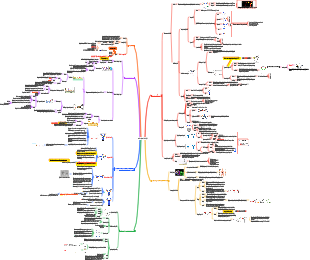
This is a mind map about innate immune cells. Innate immune cells are an important part of the body's innate immunity (non-specific immunity). They are a series of immune effector cells formed during the long-term germline evolution of organisms.
Edited at 2024-04-30 23:53:47This is a mind map about bacteria, and its main contents include: overview, morphology, types, structure, reproduction, distribution, application, and expansion. The summary is comprehensive and meticulous, suitable as review materials.

This is a mind map about plant asexual reproduction, and its main contents include: concept, spore reproduction, vegetative reproduction, tissue culture, and buds. The summary is comprehensive and meticulous, suitable as review materials.
This is a mind map about the reproductive development of animals, and its main contents include: insects, frogs, birds, sexual reproduction, and asexual reproduction. The summary is comprehensive and meticulous, suitable as review materials.
This is a mind map about bacteria, and its main contents include: overview, morphology, types, structure, reproduction, distribution, application, and expansion. The summary is comprehensive and meticulous, suitable as review materials.
This is a mind map about plant asexual reproduction, and its main contents include: concept, spore reproduction, vegetative reproduction, tissue culture, and buds. The summary is comprehensive and meticulous, suitable as review materials.
This is a mind map about the reproductive development of animals, and its main contents include: insects, frogs, birds, sexual reproduction, and asexual reproduction. The summary is comprehensive and meticulous, suitable as review materials.
innate immune cells
Overview
Innate immune cells: the main components of innate immunity
Including: phagocytes, NK cells, antigen-presenting cells, mast cells, etc.
After pathogens or foreign matter enter the body, some innate immune cells are rapidly activated, secrete pro-inflammatory cytokines and antiviral proteins, and kill and eliminate microorganisms and infected cells.
Initiates and participates in the adaptive immune response
phagocyte
Mononuclear/macrophages
Hematopoietic stem cells derived from bone marrow - monocyte/dendritic cell precursors - monocyte blasts - monocytes - macrophages
surface markings
Pattern recognition receptor (PRR), complement receptor, FcR
MHC class I molecules, MHC class II molecules
adhesion molecules, cytokine receptors, LPS receptors
Produce a variety of enzymes and biologically active substances
Various cytokines, chemokines, complement components
Proteolytic enzymes, lysozyme, lysosomal enzymes, reactive oxygen species, NO, etc.
Function
Devour, kill, digest
phagocytosis digestive function
Kill tumor cells
Antigen presentation
The antigen is taken up by endocytosis, processed to form an antigen peptide-MHC complex, and presented to effector T cells or memory cells to participate in the adaptive immune response.
Inflammation
Cytokines (IL-12, IL-1)
Immunomodulatory
Secrete cytokines with immune-enhancing effects, such as type II interferon (IFN-¡), which activate macrophages and can be regarded as "stimulants" for macrophages.
tissue repair
Fibroblast growth factors, angiogenic factors, metalloproteinases
neutrophils
Also called polymorphonuclear leukocytes, derived from bone marrow
Surface markers: PRR, Fc receptor, complement receptor, etc.
Neutrophils generally circulate in the blood. Within hours of microbial invasion, neutrophils migrate to the site of infection
The cytoplasm contains various enzymes such as lysozyme, collagenase, and elastase; and other bactericidal substances, such as defensins and antimicrobial peptides.
Neutrophils have stronger bactericidal ability than monocytes/macrophages
Function: Devour, kill
Has powerful devouring and killing capabilities
Mainly kills pathogens through oxygen-dependent and oxygen-independent (acidic environment, lysozyme, defensins)
Neutrophil extracellular trap
After the death of neutrophils, nucleic acids are released to form a network structure that can capture a variety of microorganisms, called a neutrophil trap.
Antigen presenting cells (APC)
Definition: A type of cell that can capture antigens, present antigen information to lymphocytes, and stimulate lymphocyte proliferation and differentiation.
Classification
Full-time APC
Constitutively expresses MHC-II class molecules and has strong antigen presentation effect
Include
Mononuclear/macrophages
Dendritic Cells
B cells
Part-time APC
Non-constitutively expresses MHC class II molecules and has weak antigen presentation ability
Including endothelial cells, fibroblasts, epithelial and mesothelial cells, etc.
dendritic cells (DC)
APC, which has the strongest antigen-presenting function currently known, can stimulate the activation and proliferation of initial T cells.
Source: myeloid stem cells, lymphoid stem cells
Classification
1
Conventional dendritic cells (mostly) cDC
• cDC engulfs the antigen, processes it and presents it to T lymphocytes to initiate the adaptive immune response
Plasmacytoid dendritic cells (minor) pDC
•pDC is the most important type I interferon-producing cell and plays an important role in the antiviral effect in the innate immune stage.
2 Press the DC surface mark
immature DC
Distributed in skin and gastrointestinal epithelium
Example: Langerhans cells
feature
High expression of receptors related to phagocytosis (Fc receptor, complement receptor, mannose receptor, etc.)
Low expression of costimulatory molecules and adhesion molecules, such as CD54 (ICAM-1), CD80 and CD40, etc.
MHC II molecules are less dense and have a shorter half-life
The main function
Antigen capture
Mature DC
Distributed in T cell areas of peripheral immune organs
Example: Syndactyly dendritic cells
feature
Low expression of receptors involved in phagocytosis
High expression of MHC class I and MHC class II molecules, costimulatory molecules such as CD54 (ICAM-1), CD80 and CD40, and adhesion molecules
The density of MHC II molecules is significantly increased, approximately 7 times that of phenotypically immature DC, and the half-life is significantly extended.
The main function
Antigen presentation
Biological functions of DC
commission antigen
soluble antigen
Receptor-mediated endocytosis, liquid-phase swallowing function
Large particles or microorganisms (>0.5μm)
Devoured by immature DC
mycobacterial antigen
After MΦ phagocytosis and degradation, the active ingredients are delivered to DC.
non-protein antigen
MHC and CD1 molecules expressed by DCs are involved in uptake
Activate naïve T cells
Participate in the intrathymic differentiation and development of T cells
Thymus selection, proliferation, differentiation, and memory maintenance
Immunomodulatory effect
Secretion of cytokines involved
induce immune tolerance
Macrophages and B cells
MΦ and B cells mainly present antigens to effector T cells or memory T cells.
MΦ
At the site of infection, MΦ presents antigen to effector Th cells
B cells
In lymph nodes and spleen, B cells present antigen to effector T cells
Purpose: To obtain the auxiliary effect of Th cells on B cell activation, proliferation and differentiation
Follicular dendritic cells (FDC)
Belongs to a broad class of antigen-presenting cells, located in the germinal center of lymphoid follicles
FDC has long cytoplasmic processes and expresses a large number of complement receptors and Fc receptors
Function: Collect antigens and display them on the cell surface for recognition by B cells
NK cells
large granular lymphocytes
It has no specific TCR and can kill target cells without proliferation and differentiation. Ability to respond more quickly to infection, cancer, or other forms of stress
surface marking
CD3-, CD56, CD16
Role in innate immune response
Kill virus-infected and mutated cells
Maintain or even increase the inflammatory state in infected tissues (immunomodulation)
surface receptors
Multiple immunoglobulin-like receptors and lectin-like receptors
Classified by function
Killer cell activating receptor (KAR)
Killer cell inhibitory receptor (KIR)
Basic principles of NK cell recognition and activation
NK cells recognize molecules expressed by their own cells
Inhibitory receptors on NK cells recognize MHC class I molecules (both classical and non-classical) and provide inhibitory signals to NK cells
NK cell activation depends on the balance of activating and inhibitory signals
Loss of self-molecules
When MHC-I class molecules are reduced or abnormal, it leads to insufficient inhibitory signals and activation of NK cells.
Molecules expressed under abnormal conditions
NK cells can also directly recognize molecules expressed by cells under stress, such as MICA/MICB
Function
Anti-infectious and anti-tumor effects
NK cells can kill cells infected by viruses or intracellular bacteria early
Can kill tumor cells, especially blood-borne tumor cells
Immunomodulatory effect
NK cells secrete IFN-γ, which can activate Mφ and promote the differentiation of CD4 T cells into Th1. NK cells secrete IFN-γ and TNF-α to promote DC maturation
IL-12 production by DC and Mφ during early infection stimulates NK cells to produce IFN-γ
innate-like lymphocytes
Lymphocytes with limited diversity of TCR or BCR present in the body and do not participate in lymphatic recirculation
Classification
Natural killer T cells (NKT)
NKT cells express both NK cell markers (human CD56) and T cell markers (TCR-CD3)
Mainly distributed in bone marrow, liver and thymus, etc.
NKT cells mainly recognize lipid antigens presented by CD1 molecules, and their recognition is not restricted by MHC
After activation, it secretes large amounts of IL-4, IFN-γ and other cytokines, participates in immune regulation, and has cytotoxic effects.
γδ T cells
Most γδ T cells are CD4-CD8-double-negative cells, and a few are CD8 cells.
Mainly distributed in skin, mucous membranes and subcutaneous tissue
Recognize peptide antigens presented without APC processing and lipid antigens presented by CD1
Activated γδ T cells mainly exert cytotoxic effects
Activated γδT cells release cytokines IL-2, IL-4, IL-5, IL-6, GM-GSF, TNF-α and IFN-γ, etc., and exert immunoregulatory effects.
B-1 B cells
B1 cells differentiate from embryonic or early postnatal precursor cells.
B1 cells are mainly distributed in the thoracic cavity, abdominal cavity and intestinal wall lamina propria
B1 cells mainly recognize polysaccharides that are TI-2 antigens. They generally do not undergo high-frequency somatic cell mutations or antibody class switching. They mainly produce low-affinity antibodies of the IgM class and do not produce immune memory.
Main functions: cytotoxicity, immune regulation
mast cells, eosinophils, basophils
Mast cells
Myeloid progenitor cells migrate to peripheral tissues and mature in situ.
Distributed around blood vessels in skin and mucous membrane epithelium;
The cytoplasm is rich in basophilic granules, containing cytokines, histamine and other biological mediators; expressing IgE Fc segment receptors, complement receptors and receptors for certain microbial products, etc.
Involved in helminth defense and type I hypersensitivity reaction
basophils
Basophils originate from precursor cells in the bone marrow and mature within the bone marrow
Mature basophils are located in the blood and account for less than 1% of white blood cells in the blood
During inflammation, induced by chemokines and recruited to inflammatory tissues
Basophils are similar in structure and function to mast cells
eosinophils
Derived from bone marrow and found in blood and peripheral tissues. Mainly distributed in the mucosa of the respiratory tract, gastrointestinal tract and genitourinary tract
There are a large number of eosinophilic granules in the cytoplasm, which are rich in a variety of enzymes, such as peroxidase, acid phosphatase, histamine, basic protein, etc.
Mainly involved in anti-parasitic immunity and the regulation of type I hypersensitivity reactions