MindMap Gallery Medical Immunology - Antibodies
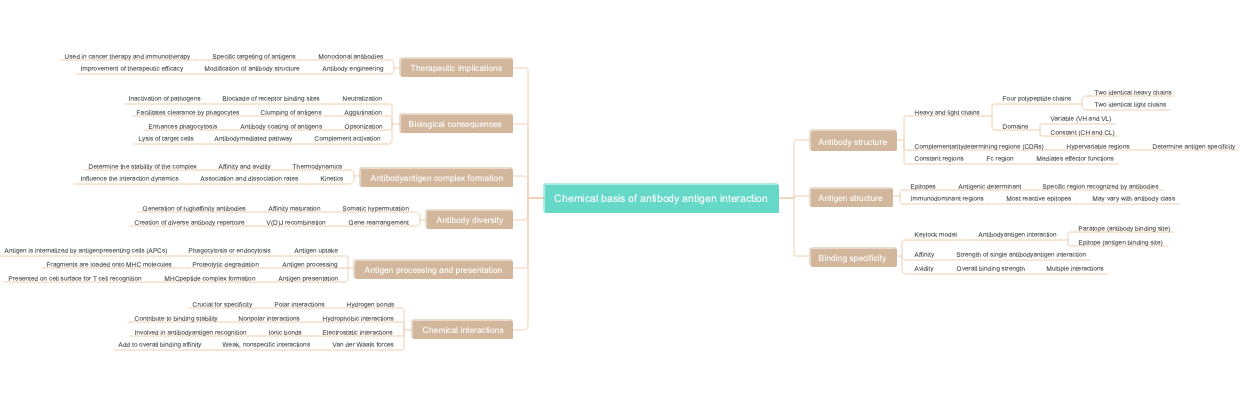
"Medical Immunology" People's Medical Publishing House, 7th Edition Chapter 4 Antibodies, mainly include the structure of antibodies, the diversity and immunogenicity of antibodies, the functions of antibodies, the characteristics and functions of various antibodies, etc.
Edited at 2024-03-23 18:57:39Avatar 3 centers on the Sully family, showcasing the internal rift caused by the sacrifice of their eldest son, and their alliance with other tribes on Pandora against the external conflict of the Ashbringers, who adhere to the philosophy of fire and are allied with humans. It explores the grand themes of family, faith, and survival.

This article discusses the Easter eggs and homages in Zootopia 2 that you may have discovered. The main content includes: character and archetype Easter eggs, cinematic universe crossover Easter eggs, animal ecology and behavior references, symbol and metaphor Easter eggs, social satire and brand allusions, and emotional storylines and sequel foreshadowing.
[Zootopia Character Relationship Chart] The idealistic rabbit police officer Judy and the cynical fox conman Nick form a charmingly contrasting duo, rising from street hustlers to become Zootopia police officers!
Avatar 3 centers on the Sully family, showcasing the internal rift caused by the sacrifice of their eldest son, and their alliance with other tribes on Pandora against the external conflict of the Ashbringers, who adhere to the philosophy of fire and are allied with humans. It explores the grand themes of family, faith, and survival.
This article discusses the Easter eggs and homages in Zootopia 2 that you may have discovered. The main content includes: character and archetype Easter eggs, cinematic universe crossover Easter eggs, animal ecology and behavior references, symbol and metaphor Easter eggs, social satire and brand allusions, and emotional storylines and sequel foreshadowing.
[Zootopia Character Relationship Chart] The idealistic rabbit police officer Judy and the cynical fox conman Nick form a charmingly contrasting duo, rising from street hustlers to become Zootopia police officers!
antibody antibody,Ab
1. Structure of Antibody
Basic structure of antibodies
Overview
A Y-shaped monomer (tetrapeptide chain structure) composed of two identical heavy chains and two identical light chains connected by disulfide bonds
light chain
Composed of two spherical domains containing approximately 110 amino acids with similar sequences but different functions.
heavy chain
It consists of 4 to 5 spherical domains containing approximately 110 amino acids, similar sequences but different functions.
VH: heavy chain variable region, CH: heavy chain constant region, VL: light chain variable region, CL: light chain constant region
Detailed description
heavy chain and light chain
Heavy chain (H)
Features
Molecular weight is about 50~75kD (450~550 aa), containing 4~5 structural domains
Classification (based on differences in antigenicity of heavy chain constant region CH) 5 categories
μ chain
gamma chain
IgG1
IgG2
IgG3
IgG4
alpha chain
IgA1
IgA2
chain
chain
Differences in characteristics of different types of antibodies
Number of domains (IgE, IgM: heavy chain has 5 domains)
Length of hinge region (IgE, IgM none)
Number and location of disulfide bonds
Number of linked oligosaccharides
Light chain (L)
Features
The molecular weight is relatively small (25 kD) and contains 2 domains.
Classification (based on the difference in antigenicity of the light chain constant region CL) Category 2
kappa
λ(lambda)
λ1
λ2
λ3
λ4
important features
The two light chains of natural antibodies are always of the same type
However, there can be antibody molecules with kappa or lambda chains in the same body.
The light chain of each of the five types of antibodies can have kappa and lambda chains, and there is no difference in the functions of the two types of light chains.
The proportions of two types of light chains in different species vary
Abnormalities in the κ:λ ratio may reflect abnormalities in the immune system
variable and constant regions
Variable region (V region)
definition
The 110 amino acid sequences near the N-terminus of the heavy chain and light chain in antibody molecules vary greatly, and the domains they form are called variable regions, namely VH and VL.
Related concepts
Hypervariable region (HVR)
Also known as: complementarity determining region (CDR)
高变区形成与抗原表位互补的空间构象
definition
VH and VL each have three regions with highly variable amino acid compositions and sequences.
Features
Generally, HVR3 (CDR3) sequence has the highest degree of change
main effect
The six CDRs in the V region of the heavy chain and light chain together form the antigen-binding site of the antibody, which determines the specificity of the antibody and is responsible for recognizing and binding antigens and exerting immune effects.
framework region (FR)
definition
The amino acid composition and sequence of the regions outside the CDR in the V region have relatively little change, and are called framework regions.
VH or VL each have 4 skeleton areas
FR1
FR2
FR3
FR4
main effect
Stabilize the spatial configuration of the CDR region to facilitate precise and specific binding between the antibody CDR and the antigenic determinants
constant region (C region)
definition
The amino acid composition and sequence of the heavy chain and light chain near the C-terminal end of the antibody molecule are relatively constant, and the structural domain they form is called the constant region, namely CH and CL.
Features
Antibodies of different classes have different CH lengths
IgG, IgD, and IgA have 3 CH domains
3A tactics belong to GooD
IgE and IgM have 4 CH domains
EZ4Me
hinge region
Location
Between CH1 and CH2 (none for IgM and IgE)
IgM
IgE
Structural features
Rich in proline, easy to stretch and bend
Function
It is conducive to the activity of both arms of Ig, and it is conducive to the simultaneous binding of two identical antigenic epitopes by both arms.
Physical and chemical properties
Easily hydrolyzed by proteases (papain, pepsin, etc.)
Example
Different Abs have different hinge region lengths
IgG1, IgG2, IgG4 and IgA have shorter hinge regions
IgG3 and IgD have longer hinge regions
IgM and IgE have no hinge region
Antibody auxiliary components (accessory structures)
J chain (joining chain)
composition
A cysteine-rich acidic glycoprotein composed of 124 amino acids
source
plasma cell synthesis
molecular weight
15KD
Function
Connect monomeric Ab molecules into dimers or multimers
Example
IgA dimer
IgM pentamer (Me=我=五)
The five IgM monomers are connected to each other by disulfide bonds and are connected to the J chain through disulfide bonds to form a pentamer.
IgG/IgE/IgD has no J chain
Precautions
J chain (gene name: JCHAIN) is not the same gene as the J gene encoding antibodies
Secretory piece (SP)
definition
Also known as secretory component (SC), it is an auxiliary component on the secretory IgA molecule (non-covalently bound to the IgA dimer, making it secretory IgA, or SIgA). It is a sugar-containing peptide chain.
molecular weight
75KD
source
Synthesized and secreted by mucosal epithelial cells
Function
Protects the hinge region of SIgA from degradation by proteolytic enzymes
Mediates the transport of SIgA dimers from the submucosal through mucosal epithelial cells to the mucosal surface
hydrolyzed fragments of antibody molecules
Hydrolysis fragments of papain
site
The disulfide-bonded proximal N-terminus of the heavy chain hinge region
product
Fragment antigen binding (Fab) x2
composition
VL/CL/VH/CH1
Features
It only binds to a single epitope and is a monovalent antibody with a size of approximately 50kD.
fragment crystallizable (Fc) x1
composition
CH2/CH3
Features
No antigen binding activity
It is the site where the antibody binds to the FC receptor or effector molecule
Hydrolysis fragments of pepsin
site
The C-terminus of the disulfide bond in the hinge region of the heavy chain, not specific
product
1 F(ab′)2 fragment
composition
2 Fabs
hinge area
Features
It can bind two antigenic epitopes at the same time and is a bivalent antibody.
It not only retains the biological activity of binding the corresponding antigen, but also avoids the side effects and hypersensitivity reactions that may be caused by the Fc segment antigenicity.
application
Biological products, such as diphtheria antitoxin and tetanus toxin refined and purified by gastric proteolysis
some small fragments pFc′
Features
It is eventually degraded and does not play any biological role.
Immunoglobulin superfamily (IgSF)
definition
In addition to Ig, there are a large number of proteins containing similar immunoglobulin fold domains, which together form the immunoglobulin superfamily.
Structural features
Immunoglobulin superfamily molecules contain at least one Ig domain consisting of 70 to 110 amino acids, folded into an antiparallel β-sheet structure, and the sheets are hydrophobic and connected through disulfide bonds to form an immunoglobulin fold.
Example
IgSF molecules are widely distributed and most are associated with the immune system
T cell antigen receptor
T cell coreceptors CD4 and CD8
B cell coreceptor CD19
Most immunoglobulin Fc receptors
costimulatory molecules
Some cytokines and their receptors
2. Antibody Diversity and Immunogenicity
Antibody Diversity
How to prove that antibodies are diverse?
The antibodies produced by B cells stimulated by different antigens vary in specificity and type.
Why do antibodies need diversity?
The binding specificity of antibodies to antigens is high, and the diversity of antigenic epitopes requires a diversity of antibodies to bind to them.
How is antibody diversity generated?
Determined by immunoglobulin gene rearrangement and expressed through antigen selection, it reflects the body's recognition and response to the fine structure of the antigen.
Immunogenicity of antibodies
definition
Antibodies themselves are also immunogenic and can stimulate the body to produce specific immune responses.
Fundamentals of structure and function
Antigen epitopes in antibody molecules
Three serotypes are classified based on antigenic epitopes
isotype
definition
Antibody molecules from different individuals of the same species stimulate heterogeneous individuals to produce the same serotype, called isotypes
Features
The constant regions share a large number of identical antigenic epitopes and are only immunogenic to heterogeneous individuals.
It is an antigen-specific marker shared by all individual Ab molecules of the same species and is a species-type marker.
Exists in the C region of Ab
Example
Use the CH CL of mouse IgG as the antigen to immunize goats. The antibodies isolated from goats can recognize the C region of all mouse IgG antibodies. What they recognize is the isotype epitope of mouse IgG. In Western Blot Can be used as a goat anti-mouse secondary antibody to recognize the primary antibody
Allotype
definition
The antibodies of individual A in the same species can stimulate individual B to produce a specific immune response, and its serotype is called an allotype.
Features
Allotypic epitopes consist of a small number of differential epitopes in the antibody constant region (C region)
Allogeneic epitopes are immunogenic to both xenogeneic and allogeneic
Example
For example, when the virus-specific neutralizing antibodies isolated from the recovered COVID-19 patient A were injected into patient B, a rejection reaction occurred during treatment, resulting in poor effectiveness in blocking viral infection.
The fundamental reason is that there are different alleles of the antibody C region gene in the population, producing different allogeneic epitopes.
expand
The difference in allotypic antigenicity is often only one or a few amino acid residues, which may be due to point mutations in the structural gene encoding Ig and is stably inherited. Therefore, Ig allotypes can be regarded as a genetic Genetic markers, which are mainly distributed on CH and CL
Idiotype (idiotype, Id)
definition
Different antibody molecules in the same body also have different immunogenicity, called idiotype
The specific combination of all epitopes in the variable region of an antibody molecule is called an idiotype.
Features
Idiotype is the antigen-specific signature unique to each antibody molecule
Its epitope is called an idiotope
抗体的每个Fab段约有5~6个独特位,它们存在于V区
Idiotype can stimulate the production of corresponding antibodies in heterogeneous, allogeneic or even the same body, that is, anti-idiotype antibody (anti-idiotype antibody, AId or Ab2)
Example (note the distinction between unique types and unique bits)
Idiotope 1 is the site on Ab1 that binds to the antigen epitope. The Ab2 it induces is also called Ab2β, which is the "internal image" of the antigen and can simulate the antigen and competitively inhibit the binding of Ab to the antigen.
The unique site 2 exists in the framework region (FR) of Ab1, and the Ab2 it induces is also called Ab2α.
5. Artificial preparation of antibodies
Polyclonal antibody (pAb)
definition
A mixture of antibodies against different antigenic epitopes obtained by activating multiple B cell clones with antigenic substances is called polyclonal antibodies (pAb).
Get access
Mainly includes animal immune serum, convalescent patient serum and vaccinated people
advantage
It has a comprehensive effect and has important functions such as neutralizing antigens, conditioning and ADCC.
Widely available and easy to prepare
shortcoming
Low specificity and prone to cross-reactivity
Difficult to prepare in large quantities
Monoclonal antibody (mAb)
definition
Specific antibodies produced by monoclonal hybridoma cells that only recognize one antigenic epitope are called monoclonal antibodies (mAbs), or monoclonal antibodies for short.
Preparation principle
B cells can produce antibodies, but they are difficult to culture in vitro
Myeloma cells can proliferate indefinitely in and outside the body, but cannot secrete antibodies.
The hybridoma cells formed by the two can not only proliferate in large quantities, but also synthesize and secrete specific antibodies.
Features
Uniform structure and high purity
Strong specificity
Easy to prepare
Preparation process
Prepare mice immunized with the target antigen and stimulate the mice to produce antigen-specific B cells
Isolated mouse spleen cells (containing B cells) and HGPRT (hypoxanthine-guanine phosphoribosyltransferase)-deficient mouse myeloma cells were fused under the action of polyethylene glycol (PEG)
Add HAT (hypoxanthine, aminopterin, thymidine) selection medium to select hybridoma cells after fusion. Unfused myeloma cells and B cells die due to
Screen hybridoma cell clones that specifically recognize the target antigen
Amplify a large number of specific hybridoma cell clones, separate the cell culture supernatant, and purify monoclonal antibodies.
genetic engineering antibody
definition
Antibodies or antibody fragments prepared through genetic engineering techniques
Targeted
It is necessary to maintain the advantages of mAb uniformity and strong specificity, but also overcome the disadvantages of being mouse-derived.
Genetic engineering technology to prepare chimeric antibodies and humanized antibodies
expand
Phage display technology
Yeast display technology
clinical
In 2002, the world's first fully human monoclonal antibody, Adalimumab (Humira/Humira), was approved by the FDA for the treatment of rheumatoid arthritis, marking the first fully human antibody, with sales exceeding 10 billion US dollars in ten years. , with annual sales exceeding 10 billion US dollars, and has been the “King of Drugs” for nine consecutive years since 2012.
4. Characteristics and functions of various types of antibodies
IgG (main force)
Synthesis begins at 3 months after birth and reaches adult level at 3 to 5 years old.
It is the most abundant Ig in serum and extracellular fluid, accounting for 75%-80% of serum Ig.
It is the Ig with the longest half-life, about 20-23 days
It is the only antibody that can cross the placenta. IgG1/3/4 can cross the placental barrier and play an important role in neonatal anti-infection immunity.
The Fc segment of IgG1/2/3 can activate complement and bind to Fc receptors on the surface of macrophages and NK cells to exert opsonization and ADCC effects.
Certain autoantibodies such as antithyroglobulin antibodies, antinuclear antibodies, and antibodies that cause type II and III hypersensitivity reactions also belong to IgG
IgG is the main antibody in the secondary immune response. It has high affinity and is widely distributed. It is the "main force" of the body's fight against infection.
Human IgG1, IgG2 and IgG4 can bind to staphylococcal protein A (Protein A) through the Fc segment to purify antibodies or perform diagnostic analysis.
More than two-thirds of the antibody drugs on the market are produced using protein A for antibody purification. The purity of the antibody purified in one step can reach more than 95%.
(vanguard unit)
IgM accounts for 5% to 10% of the total serum immunoglobulin, and the serum concentration is about 1-1.5 mg/ml
Monomeric IgM is expressed on the surface of B cells in the membrane-bound form (mIgM), constituting the B cell antigen receptor (BCR). Expression of only mIgM is a sign of immature B cells.
Secretory IgM is a pentamer, the largest molecular weight Ig, and is called macroglobulin.
Generally cannot pass through blood vessel walls and mainly exists in the blood
Pentameric IgM contains 10 Fab segments and has strong antigen-binding ability (pentavalent!); it contains 5 Fc segments and is easier to activate complement than IgG.
IgM is the earliest antibody synthesized and secreted during ontogeny
Fetuses can produce IgM in late embryonic development
Therefore, elevated levels of certain virus-specific IgM in umbilical cord blood indicate intrauterine infection in the fetus (such as rubella virus or cytomegalovirus infection).
IgM is also the earliest antibody to appear in the primary humoral immune response and is the "vanguard" of the body's specific anti-infection response.
The detection of pathogen-specific IgM in serum indicates recent infection and can be used for early diagnosis of infection.
(Border Guards – SIgA)
IgA has two types: serotype and secretory type. Serotypes are monomeric and mainly exist in serum, accounting for 10% to 15% of the total serum immunoglobulin.
Secretory IgA (secretory IgA, SIgA) is a dimer, connected by J chains, containing SP, and is secreted into the exocrine fluid through mucosal epithelial cells (note the abbreviation of serum Ig to distinguish it)
SIgA electron microscope observation results
SIgA is synthesized and secreted in the intestines, respiratory tract, mammary glands, salivary glands and lacrimal glands. SIgA is the main antibody type in exocrine fluid and participates in local mucosal immunity. By combining with the corresponding pathogenic microorganisms (bacteria, viruses, etc.), it prevents pathogens from adhering to The cell surface plays an important role in local anti-infection and is the body's "border guard" against infection. SIgA also neutralizes toxins on mucosal surfaces
The susceptibility of newborns to respiratory and gastrointestinal infections may be related to insufficient IgA synthesis
Babies can obtain SIgA from mother's colostrum, which is an important natural passive immunity
Normal human serum IgD concentration is very low (about 0.03 mg/ml), accounting for only 0.3% of the total serum Ig.
IgD can be produced at any time during ontogeny
Among the five types of Ig, IgD has a longer hinge region and is easily hydrolyzed by proteases → its half-life is very short (only 3 days)
IgD is divided into serotype and membrane-bound type
serotype
Physiological function is unclear
membrane-bound
Membrane-bound IgD (mIgD) is a marker of B cell differentiation and maturation
Immature B cells express only mIgM
Mature B cells can express both mIgM and mIgD and are called naive B cells.
After B cells are activated by antigen, mIgD on their surface gradually disappears.
The molecular weight of IgE is 160kD, which is the least abundant Ig in normal human serum. The serum concentration is extremely low, about 0.0003 mg/ml.
Mainly secreted by plasma cells in submucosal lymphoid tissue
is a type of cell-loving antibody
Its CH2 and CH3 domains can bind to the high-affinity FcεRI on mast cells and basophils, and can cause type I hypersensitivity reactions when combined with antigens that re-enter the body.
Can participate in the body’s anti-parasitic immunity
Kills parasites by activating mast cells, eosinophils, and basophils to release toxic substances
3. Function of Antibodies
Function of antibody V region
Recognize and specifically bind antigen
CDR plays a decisive role
Combined with pathogenic microorganisms and their products, it can neutralize toxins and block pathogen invasion.
Related concepts
Antigen binding value
The number of Ig binding epitopes
Example
Monomeric Ab
2 prices
sigA
4 prices
Pentameric IgM
Theoretically, the price is 10, but due to steric hindrance, the actual price is 5.
Function of antibody C region
activate complement
After the antibody binds to the corresponding antigen, the conformation of the antibody changes, exposing the complement binding sites in CH2 and CH3 and activating the classical complement pathway.
Antibody specificity
IgM, IgG1 and IgG3 have strong ability to activate complement
IgG2 is less capable
IgA, IgE and IgG4 are difficult to activate complement by themselves and need to form polymers to activate the complement system through the alternative pathway.
Binds to Fc receptors
Its Fc segment binds to cells with corresponding Fc receptors (FcR) on their surface to produce different biological effects.
Opsonization
definition
Bacteria-specific IgG (IgG1&IgG3): Fab binds to bacterial antigenic epitopes, and Fc binds to macrophage or neutrophil FcγR, promoting the phagocytosis of bacteria by phagocytes through the "bridging" effect of IgG.
Related concepts
Opsonin
is any molecule that enhances phagocytosis by labeling immune response antigens or marking dead cells for recycling
Example
Antibody
complement
peripheral blood circulating protein
Opsonization
Is a molecular mechanism whereby microorganisms or apoptotic cells interact more strongly with cell surface receptors on phagocytes through chemically modified molecules. Antigens coated in opsonins greatly enhance their binding to immune cells
Antibody-dependent cell-mediated cytotoxicity (ADCC)
definition
It refers to the binding of specific antibodies to target cell membrane surface antigens, activating immune effector cells to lyse target cells, and is a cell-mediated immune defense mechanism.
Features
Part of the adaptive immune response and part of the humoral immune response
The antibody binds specifically to the antigen on the target cell, while the killing effect of FcR-expressing cells is non-specific.
related immune effector cells
Natural killer (NK) cells
Primary cells that mediate ADCC
Macrophages
neutrophils
eosinophils
Mediates type I hypersensitivity reactions
Related concepts
Type I hypersensitivity reaction
definition
Also known as anaphylaxis or immediate hypersensitivity
Features
Responds quickly and subsides quickly
There are obvious individual differences and genetic predispositions
Generally only causes physiological dysfunction without serious tissue damage
IgE-mediated, mast cells, basophils, eosinophils, etc. release biologically active substances
histamine
5-hydroxytryptamine
Slow Reacting Substance-A (SPS-A)
Example
anaphylactic shock
Drug rash caused by drugs
food-induced allergic gastroenteritis
Allergic rhinitis, bronchial asthma, etc. caused by pollen or dust
structural basis
IgE is a cell-loving antibody whose Fc binds to the high-affinity IgE FcR on the surface of mast cells and basophils, sensitizing them.
significance
The same allergen (allergen) binds again to the IgE on the surface of the sensitized target cells, triggering a type I hypersensitivity reaction.
Crosses the placenta and mucous membranes
Cross the placenta
structural basis
IgG is the only immunoglobulin in humans that can cross the placenta
Subtopic Trophoblast cells on the maternal side of the placenta express an IgG transport protein, namely neonatal FcR, FcRn - neonatal Fc segment receptor
Mechanism of action
IgG selectively binds to FcRn, thereby transferring into trophoblast cells and actively entering the fetal blood circulation.
significance
It is an important natural passive immune mechanism and is of great significance for newborns to resist infection.
through mucosa
structural basis
SIgA (IgA dimer secretory patch)
Poly-Ig receptor (pIgR) expressed by mucosal epithelial cells
Mechanism of action
After SIgA binds to the polyimmunoglobulin receptor (pIgR), the IgA-pIgR complex is endocytosed into the intestinal epithelial cells, and then the SIgA is transported into the intestinal lumen through enzymes and exocytosis.
SIgA secretory patch (SP)
即PIgR胞外段的4个结构域
basic concept
Antibody, Ab
It is an important effector molecule that mediates humoral immunity. It is an immunoglobulin produced by the immune system under the stimulation of antigens by B cells or memory B cells that proliferate and differentiate into plasma cells. It can specifically bind to the corresponding antigen and is mainly distributed in In serum, it is also distributed in tissue fluid, exocrine fluid and some cell membrane surfaces.
Immunoglobulin (Ig)
definition
Globulin with antibody activity or chemical structure similar to antibodies
Classification
Secreted Ig (sIg)
i.e. antibodies
Membrane immunoglobulin (membrane Ig, mIg)
Expressed on the surface of B cell membrane, namely B cell antigen recognition receptor (BCR)
Globulin ≠ immunoglobulin
globulin
normal serum protein
血浆蛋白:70~75 g/L ①白蛋白:38~48 g/L ②球蛋白:15~30 g/L γ球蛋白:12~17 g/L ③纤维蛋白原:2~4 g/L
应用
多发性骨髓瘤, γ球蛋白增多
肝炎:白蛋白、α及β-球蛋白减少,γ-球蛋白增高
α1 globulin
α2 globulin
beta globulin
gamma globulin
IgG, IgA, IgM, IgD, IgE (i.e., antibodies, immunoglobulins)
Structural domain (functional area)
secondary structure
"Beta barrel"
Two antiparallel β-sheets formed by the folding of several polypeptide chains are connected by an intra-chain disulfide bond to form a stable β-barrel structure.