MindMap Gallery Medicine - Adaptive Immune Response
This is a mind map about medical adaptive immune response, including cellular immunity, humoral immunity, etc. The introduction is detailed and the description is comprehensive. I hope it can help interested friends learn.
Edited at 2023-11-26 15:17:43This is a mind map about bacteria, and its main contents include: overview, morphology, types, structure, reproduction, distribution, application, and expansion. The summary is comprehensive and meticulous, suitable as review materials.

This is a mind map about plant asexual reproduction, and its main contents include: concept, spore reproduction, vegetative reproduction, tissue culture, and buds. The summary is comprehensive and meticulous, suitable as review materials.
This is a mind map about the reproductive development of animals, and its main contents include: insects, frogs, birds, sexual reproduction, and asexual reproduction. The summary is comprehensive and meticulous, suitable as review materials.
This is a mind map about bacteria, and its main contents include: overview, morphology, types, structure, reproduction, distribution, application, and expansion. The summary is comprehensive and meticulous, suitable as review materials.
This is a mind map about plant asexual reproduction, and its main contents include: concept, spore reproduction, vegetative reproduction, tissue culture, and buds. The summary is comprehensive and meticulous, suitable as review materials.
This is a mind map about the reproductive development of animals, and its main contents include: insects, frogs, birds, sexual reproduction, and asexual reproduction. The summary is comprehensive and meticulous, suitable as review materials.
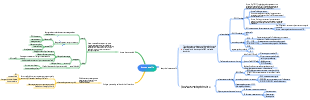
adaptive immune response
cellular immunity
Specific recognition of Ag by T cells
APC submission to Ag
Mutual recognition and interaction between APC and T cells
Non-specific binding of APC to T cells
Adhesion molecules and co-stimulatory molecules on the APC membrane reversibly bind to the corresponding ligand molecules on the initial T cells to mediate adhesion and prepare for the next step of specific binding.
TCR-mediated Ag-specific binding (dual recognition)
TCR recognizes pMHC, conducts signals through CD3, and enhances the expression abundance and affinity of adhesion molecules on the membrane.
CD4/CD8 recognize and bind to APC/target cell surface MHC-II/MHC-class I molecules respectively
Activation, proliferation and differentiation of T cells
Membrane signaling molecules essential for T cell activation
Ag signal of T cell activation (first signal)
Recognition and binding of TCR-CD3 complex and antigen peptide/MHC complex
CD4/CD8 bind to MHC-Ⅱ/MHC-Ⅰ class molecules respectively (MHC-restricted)
Costimulatory signal for T cell activation (second signal)
Many co-stimulatory molecules on APC bind to corresponding co-receptors on T cells
Cytokine signaling for T cell activation (“third signal”)
Cytokines promote full activation of T cells
Intracellular signaling pathways for T cell activation
CD3, CD4/8, CD28
Clonal proliferation and differentiation of T cells after activation
IL-2: the most important cytokine related to T cell proliferation and differentiation
CD4⁺T cells bind to the antigen peptide-MHC-class II molecule complex on APC and can be activated and differentiated into Th cells.
CD8⁺T cells bind to the antigen peptide-MHC-class I molecule complex on APC and can be activated and differentiated into CTL cells.
T cell subsets and their immune effects
Th cells
Th1 cells
1. Mediates cellular immunity; 2. Secretes cytokines to activate, induce and recruit macrophages; 3. Produces IL-2 and other cytokines to promote the activation and proliferation of Th1, Th2, CTL and other cells; 4. Secretes IFN-γ to promote the production of B cells with opsonization The acting Ab further enhances the phagocytosis of pathogens by macrophages; 5 can activate neutrophils and prompt them to kill pathogens
Th2 cells
1. Assists humoral immune response; 2. Participates in hypersensitivity inflammation, participates in hypersensitivity reactions and anti-parasitic infection; 3. Secretes cytokines to participate in B cell activation and differentiation, regulates the type conversion of immunoglobulins, and produces different types of Ab.
Th17 cells
1. Secrete cytokines to participate in inflammatory reactions, autoimmune diseases and infectious diseases; 2. Chemotaxis stimulates neutrophils and monocytes; 3. Enhances the inflammatory response of vascular endothelial cells and induces local inflammatory responses.
CTL cells
Specific recognition of killing
Continuity of Killing
Killing mechanism pathway
FasL/Fas pathway
Irreversible damage to target cell membrane
perforin/granzyme pathway
Activate related enzyme systems to mediate target cell apoptosis
memory T cells
The basis of immune memory substances; short-term Ag stimulation induces central memory cells, and longer-term Ag stimulation induces effector memory cells
Humoral immunity
B cell response to TD-Ag antigen
Specific recognition of Ag by B cells
V zone of BCR
Provides antigen signal for B cell activation (first signal)
B cells internalize and process the bound antigen to form pMHC-II, which promotes Th activation and provides costimulatory signals (second signal) required for B cell activation.
Dual signaling mechanism of B cell activation
The first signal of B cell activation
B cells provide BCR specific recognition of antigens, and Igα/Igβ transmit signals
B cell co-receptor CD19/CD21/CD81 signals
Second signal of B cell activation
CD40 on the surface of B cells binds to CD40L on the surface of activated Th cells
Proliferation and differentiation of B cells
T cell zones and germinal centers of peripheral lymphoid organs
Germinal Centers and B Cell Differentiation
somatic high frequency mutations
Create B cells with various affinities, leading to BCR diversity and diversity of Ig production
Ab affinity maturation
The body's immune system gradually produces high-affinity antibodies
High-frequency mutations in somatic cells → create B cells with different affinity BCRs
Follicular dendritic cells → Screen B cells with high affinity BCR
Class conversion of Ig
The antigen recognition specificity of the antibody remains unchanged, but the type of antibody changes
Generation of memory B cells
Enters the blood and participates in lymphocyte recirculation
B cell primary immune response and secondary immune response
primary immune response
The antigen concentration is high, the incubation period is long, and the antibodies are mainly IgM.
immune response again
The antigen concentration is low, the incubation period is short, and the antibodies are mainly IgG.
B cell response to TI-Ag antigen
B cell response to TI-1 antigen
Antigen characteristics: mitogen characteristics; recognition characteristics: BCR, mitogen receptor; no recall reaction; production of low-affinity IgM
B cell response to TI-2 antigen
Antigen characteristics: high repetitive structure; recognition characteristics: BCR; no recall reaction; production of low affinity IgM