 Wondershare EdrawMind
MindMap Gallery Chapter 11 Educational Research and Methods Mind Map
- 26
Chapter 11 Educational Research and Methods Mind Map
About the 11th chapter of pedagogy, a mind map of educational research and its methods, including educational teaching methods, an overview of educational research, etc.
Edited at 2023-11-19 21:21:59
- bacteria
This is a mind map about bacteria, and its main contents include: overview, morphology, types, structure, reproduction, distribution, application, and expansion. The summary is comprehensive and meticulous, suitable as review materials.
- Plant asexual reproduction
This is a mind map about plant asexual reproduction, and its main contents include: concept, spore reproduction, vegetative reproduction, tissue culture, and buds. The summary is comprehensive and meticulous, suitable as review materials.
- Reproductive development of animals
This is a mind map about the reproductive development of animals, and its main contents include: insects, frogs, birds, sexual reproduction, and asexual reproduction. The summary is comprehensive and meticulous, suitable as review materials.
Chapter 11 Educational Research and Methods Mind Map
- bacteria
This is a mind map about bacteria, and its main contents include: overview, morphology, types, structure, reproduction, distribution, application, and expansion. The summary is comprehensive and meticulous, suitable as review materials.
- Plant asexual reproduction
This is a mind map about plant asexual reproduction, and its main contents include: concept, spore reproduction, vegetative reproduction, tissue culture, and buds. The summary is comprehensive and meticulous, suitable as review materials.
- Reproductive development of animals
This is a mind map about the reproductive development of animals, and its main contents include: insects, frogs, birds, sexual reproduction, and asexual reproduction. The summary is comprehensive and meticulous, suitable as review materials.
- Recommended to you
- Outline


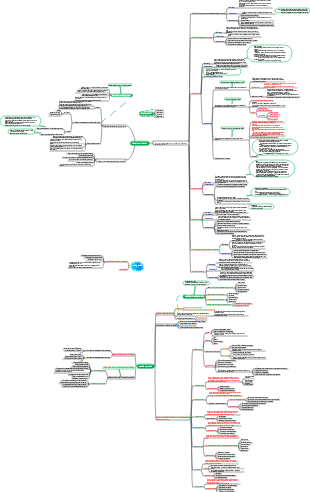
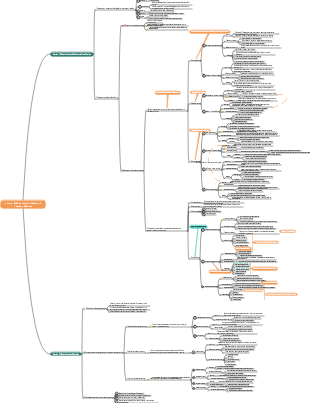
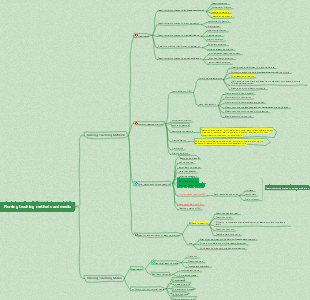
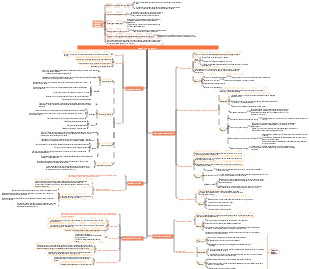
Chapter 11 Educational research and its methods
Educational Research Overview
educational Research the concept of
object
Education issues
result
Discover and summarize educational laws
nature
awareness activities
A cognitive activity that takes educational issues as the object and uses methods to discover and summarize educational laws.
educational research elements and features
elements
1. Scientific theory 2. Objective facts and phenomena 3. Methods and techniques
Features
Objectivity, scientificity, systematicness, comprehensiveness, verifiability Innovative, popular, effective, public, and testable principles The mass character is a distinctive feature of primary and secondary education research and is the condition and foundation for the development and prosperity of educational research.
Educational Research Principles
1. Principle of objectivity: seek truth from facts, based on objective facts
2. Link theory with practice 3. Principle of innovation
4. Ethical principles: respect the rights of the research subjects and avoid adverse effects on the research subjects.
Types of Educational Research
Depending on the research purpose
1. Basic research (science)
Characterized by abstractness and generality
2. Applied Research (Technology)
Be specific, special and special
3. Development and research (promotion)
Different analytical methodologies
1. Quantitative research (Quantitative Study)
definition
Analysis and research on the quantity of things
design method
Survey method, correlation method, experimental method
2. Qualitative research (exploratory research) (Qualitative research)
definition
Analysis and research on the qualitative aspects of things
design method
Interview method, observation method, case study method
According to the method of understanding objective things and changing objective things included in the research
1. Descriptive research 2. Interventional research
The main functions of theoretical research in educational science
1. Deepen the understanding of education and reveal the laws of education 2. Improve and develop the original educational theoretical system and construct new theories 3. Provide logical proof of research results
The basic process of educational research
1. Topic selection (Determine the topic) (primary link)
Choosing and determining research topics is the starting point for educational research and is also a critical step.
basic requirements
1. Novel and valuable 2. Scientific theoretical basis and factual basis 3. Be specific and clear 4. Feasibility
2. Literature search
Classification
According to the degree of processing
Zero times literature
form
letters, papers, manuscripts, Notes, experiment records, meeting minutes
primary document (strong reference)
form
Monographs, papers, survey reports, archival materials, etc. Original documents based on the author's practice
secondary literature (Processing of primary document form)
form
Title, bibliography, index, abstract, abstract
tertiary documents (Processing of primary document content)
form
Dynamic review, special review, progress report Data manuals, annual encyclopedias, special research reports
Features
Comprehensive, concentrated, reference
According to the literature function
factual documents
Documents providing factual evidence
instrumental literature
Search the consulted literature
theoretical literature (rational understanding)
Documents that provide rational understanding
policy literature
Documents that provide policy basis
empirical literature (perceptual knowledge)
Documents that provide perceptual knowledge
basic process
Analysis and preparation stage, search stage, processing stage
Search method
Sequential search method: time from far to near Reverse search method: time from near to far Citation search method: also called tracking method, search based on clues Comprehensive search method: a combination of various methods
basic requirements
1. The review must be comprehensive, that is, comprehensive 2. Simplicity must be careful and meticulous, that is, accuracy 3. Diligence and accumulation 4. Good at thinking
effect
1. Comprehensively and correctly grasp the situation of the research problem and help researchers select research topics and determine the direction of the topic. 2. Provide scientific theoretical basis and research methods for educational research 3. Avoid duplication of work and improve the effectiveness of scientific research
3. Propose research hypotheses
Notice
The scientific nature, speculativeness, clarity, testability and indirectness of the hypothesis
Classification
According to nature and complexity
explanatory hypothesis (qualitative)
Predictive assumptions (forecast development trends)
Formation based on hypothesis
inductive hypothesis (from top to bottom, individual to general)
Generalizations based on observations
deductive hypothesis (from top to bottom, general to individual)
Derive new conclusions from general theories
Research hypothesis
Describe the difference between two variables
4. Formulate research plans and design research programs
Basic requirements for sample selection
1. Clearly define the overall 2. Ensure randomness of sampling 3. Make the sampling representative 4. Determine a reasonable sample size
Factors affecting sample size
1. The objective conditions of the subject itself 2. Research content 3. Research methods 4. Basic principles of statistical sampling
Basic methods of sampling
1. Simple random sampling 2. Systematic random sampling 3. Stratified random sampling 4. Cluster random sampling
5. Collect, organize and analyze data
Analytical method
Qualitative analysis
Quantitative Topics (An important sign that educational research is becoming mature)
Collecting information is the main task and foundation of research
6. Draw conclusions
7. Write the full text
Teacher as researcher
Teachers’ strengths and qualities in conducting educational research
Advantage
1. Teachers work in real education and teaching situations, understand the difficulties, problems and needs of teaching best, and can clearly perceive the existence of problems in a timely manner. 2. The mutual interaction between teachers and students constitutes the teacher’s educational and teaching life. Teachers can accurately understand their teaching effectiveness from students’ learning and understand the aspects that need improvement in teacher-student interaction. Being able to obtain first-hand information from various student materials in the education and teaching field provides good conditions for research. 3. Practicality is an important quality in education and teaching research.
Literacy
1. Have enthusiasm for the improvement of education and teaching, and have awareness of research on education and teaching issues 2. Have the habit of lifelong learning and thinking, and promptly understand and grasp new trends and new knowledge in the reform and development of education and teaching. 3. Have the ability to self-reflect and criticize. 4. Master the basic methods of education and teaching research so that education and teaching research can reflect the true characteristics of objective science. 5. Have independent research spirit.
The significance of teacher education research
1. Teachers’ educational research is conducive to solving practical problems in education and teaching. 2. Teachers’ educational research can truly integrate curriculum, teaching and teachers. 3. Teacher education research is also a need for the development of educational science. 4. Teacher education research can promote teachers’ continuous professional growth and development.
New progress in teachers’ educational research
school-based research
concept
School-based research is the abbreviation of school-based teaching research, which is based on the school’s own conditions. With school principals and teachers as the main force, planned research activities are carried out to address practical problems in schools.
Features
1. School-based research is a kind of practical research. 2. School-based research is based on the school. (For the school, in the school, based on the school (the main force of school development is the principal and teachers).)
Basic elements
1. Self-reflection (core factors, foundation and premise) 2. Peer-to-peer mutual assistance (basic form: dialogue, collaboration, help) 3. Professional guidance
Educational teaching methods
concept
A method of conducting educational research and constructing educational theories in an organized, planned and systematic manner according to a certain approach
Educational research methods are the general term for the steps, means and methods used by people in conducting educational research.
Commonly used educational research methods
observational research method
concept
According to certain purposes and plans, researchers Conduct systematic and continuous observations of research objects under natural conditions, and keep accurate, specific and detailed records, A research method in order to fully and accurately grasp the situation to be studied.
status
most widely used
Classification
Whether to control and change the environment
Observation in natural situations Observations during the experiment
Whether to use instruments and equipment
direct observation indirect observation
Whether to directly participate in the activities of the person being observed
Participant observation (without revealing the true identity of the researcher) Non-participant observation (bystander)
Observation methods
Structural observation (strict) Unstructured observation (flexible)
Advantages and Disadvantages
advantage
1. Can directly obtain a lot of reliable first-hand information 2. Can understand the development process of things under natural conditions 3. The same observation object can be tracked and studied for a long time.
shortcoming
1. Small sampling 2. The materials obtained are superficial 3. Observation of lack of control, Unable to explain cause and effect of observed phenomena
survey research method
concept
Using questionnaires, interviews, etc. Purposefully and plannedly collect relevant information about the research object, Organize and analyze the first-hand information obtained, thereby revealing the nature and laws of things, Research methods that seek solutions to practical problems.
Classification
The selection range is different
General observation (comprehensive observation) Sampling observation Case observation
Different purposes
descriptive survey exploratory investigation Predictive Survey evaluative survey
The specific methods are different
Questionnaire method, interview method, prediction method Test method, case method, projective method
The content of the investigation is different
Investigation Related investigations development survey Forecast Survey
Different methods and means
Questionnaire interview survey survey method questionnaire method
Advantages and Disadvantages
advantage
1. Flexible and simple 2. Collect data quickly 3. Wide application, no time and location restrictions
shortcoming
1. It is difficult to determine causality 2. More subject to research objects, Requires a good cooperative attitude from research subjects 3. The reliability of the survey is limited
experimental research method
concept
According to the research purpose, the researcher Reasonably control or create certain conditions, Artificially influence the research object, A research method to test hypotheses and explore causal relationships between conditions and educational objects.
Features
1. Based on scientific assumptions 2. The experimental process is subject to strict and proactive control. 3. Explore the causal relationship between variables 4. Repeatable 5. Active transformation
condition
There are theoretical hypotheses, there is causation, there is control, there is change.
Advantages and Disadvantages
advantage
1. Be able to determine cause and effect relationships and understand the nature and laws of things. 2. The research results are objective, accurate and reliable 3. Ability to control variables and improve the reliability of research 4. Can provide evidence and explanation for the construction of theory 5. Ability to separate the effects of experimental variables from other variables 6. Strict logic
shortcoming
1. Limited application scope, Some problems are difficult to solve experimentally. 2. There may be traces of man-made artifacts. The results of the experiment are not necessarily the actual results. Lack of ecological effects, etc.
action research method
concept
Teachers conduct reflective exploration on their own in real education and teaching situations, And with the main purpose of solving specific practical problems in work situations, Emphasize the integration of research and activities, Enable teachers to learn to think, try and solve problems from the work process.
step
Kemis
Plan - Act (Core) - Observe - Reflect
Features
1. Research for research action 2. Research by education activists 3. Research in educational action
Advantages and Disadvantages
advantage
advantage
1. Flexible and able to make timely feedback and adjustments. 2. Able to combine theoretical research with practical problems 3. Ability to solve practical problems
shortcoming
1. The research process is loose and haphazard, which affects the reliability of the research. 2. The research sample is limited by specific scenarios and lacks control, which affects the representativeness of the research.
case study method
concept
Only conduct continuous investigations on a certain individual, a certain group or a certain organization over a long period of time, A research method to study the entire process of behavioral development and changes.
step
1. Determine the research object 2. Collect research data 3. Diagnosis and hypothesis 4. Analysis and guidance 5. Form a conclusion
Advantages and Disadvantages
advantage
vivid description process Visual display cases
shortcoming
1. Research conclusions are highly subjective 2. Ethical and moral issues are often encountered 3. The generalizability of research results is limited
educational narrative research method
concept
Educational research conducted through narrative and storytelling methods
step
1. Observe and ask questions 2. Record and describe events 3. Reflection and analysis 4. Summary and improvement 5. Communication and evaluation
Advantages and Disadvantages
advantage
1. Easy to operate 2. Close to daily life and way of thinking 3. Ability to creatively reproduce event scenes and processes 4. Humanistic atmosphere 5. Easy to understand and thought-provoking
shortcoming
1. It is easy to miss important information in the incident 2. The collected information is not easily consistent with the clues of the story 3. It is difficult to immerse readers in the situation
comparative research method historical research method Educational experience summary method
Methods of collecting research data for teacher education research
1. Collection of literature materials 2. Collection of actual data
Methods for expressing research results in teacher education research
1. Research reports (mainly investigation reports) 2. Summary of education and teaching experience 3. Education and teaching cases
Teacher education research and educational action research
Characteristics of Teacher Education Research
1. Research on improving education and research on describing and explaining education 2. Educational research within one’s own education and educational research outside one’s own education 3. Research for and about education
Action research and educational action research
Wenler's advocacy and practice of the concept of action research broke the long-standing separation between research and action.
concept
Teachers’ educational research aims to directly promote the improvement of practical education and teaching work. The greatest practical significance lies in allowing teachers to "understand" The meaning of multiple elements that are intrinsically linked in his practice, This makes his practice more rational.
significance
For research on education and teaching Research through education and teaching Research in education and teaching
Educational action research can also be understood as a new form of teaching practice and a new form of educational research. It’s called “research-based teaching” and “research-based teaching.”
The process of educational action research
1. Determine the research topic (first step)
2. Literature search
Document type
According to the degree of processing
Zero times literature
content
Letters, papers, manuscripts, notes, Experiment records, meeting minutes.
primary document
content
Monographs, papers, investigative reports and archival materials Original documents based on the author's own practice
secondary literature
content
Title, bibliography, index, title, abstract
Formal processing of a document
tertiary documents
content
Dynamic reviews, topical reviews, progress reports, data sheets Annual encyclopedia, special research reports.
Content processing of primary documents
According to the literature function
1. Factual documents
provide factual evidence
2. Instrumental literature
Search consultation
3. Theoretical documents
provide theoretical understanding
4. Policy documents
Provide policy basis
5. Empirical literature
Provide perceptual knowledge
Search method
1. Follow-up method
According to time range, from far to recent, from old to new
2. Reverse search method
From near to far, from new to old
3. Citation search method (Tracking method)
Find clues to find
4. Comprehensive search method
A combination of methods
3. Propose research hypotheses
According to nature and complexity
descriptive hypothesis explanatory hypothesis Predictive assumptions
Formation based on hypothesis
inductive hypothesis deductive hypothesis Research hypothesis
4. Formulate research plans and design research programs
5. Collect, organize and analyze data
Analysis method
Quantitative analysis Qualitative analysis
6. Draw conclusions
7. Write a written document