 Wondershare EdrawMind
MindMap Gallery Mind map of teaching principles and teaching methods
- 42
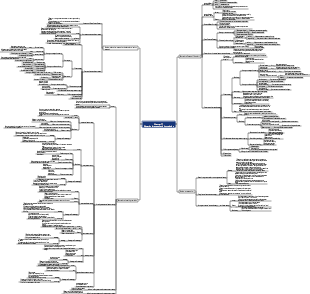
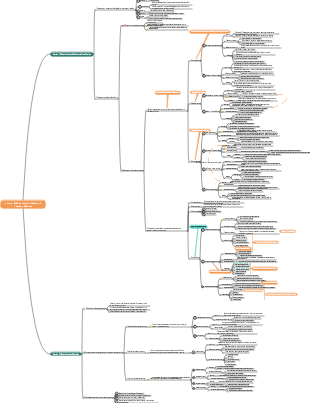
Mind map of teaching principles and teaching methods
This is a mind map about teaching principles and teaching methods. It is introduced in detail and described comprehensively. I hope it will be helpful to interested friends!
Edited at 2023-12-01 20:40:55
- bacteria
This is a mind map about bacteria, and its main contents include: overview, morphology, types, structure, reproduction, distribution, application, and expansion. The summary is comprehensive and meticulous, suitable as review materials.
- Plant asexual reproduction
This is a mind map about plant asexual reproduction, and its main contents include: concept, spore reproduction, vegetative reproduction, tissue culture, and buds. The summary is comprehensive and meticulous, suitable as review materials.
- Reproductive development of animals
This is a mind map about the reproductive development of animals, and its main contents include: insects, frogs, birds, sexual reproduction, and asexual reproduction. The summary is comprehensive and meticulous, suitable as review materials.
Mind map of teaching principles and teaching methods
- bacteria
This is a mind map about bacteria, and its main contents include: overview, morphology, types, structure, reproduction, distribution, application, and expansion. The summary is comprehensive and meticulous, suitable as review materials.
- Plant asexual reproduction
This is a mind map about plant asexual reproduction, and its main contents include: concept, spore reproduction, vegetative reproduction, tissue culture, and buds. The summary is comprehensive and meticulous, suitable as review materials.
- Reproductive development of animals
This is a mind map about the reproductive development of animals, and its main contents include: insects, frogs, birds, sexual reproduction, and asexual reproduction. The summary is comprehensive and meticulous, suitable as review materials.
- Recommended to you
- Outline



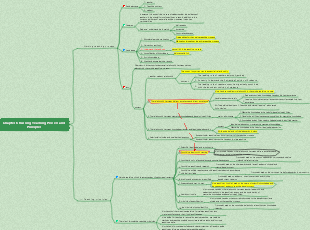
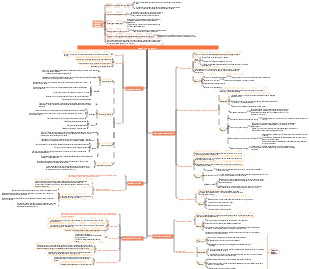
Teaching principles
Commonly used teaching principles in primary and secondary schools
The principle of unifying scientific nature and educational nature (artistic nature)
Basic meaning
It means that in teaching, teachers should impart knowledge that truly reflects the truth of objective things to students. Make the teaching content rigorous and scientific; combined with the transfer of knowledge, Provide ideological and moral education to students to make teaching educational.
The law of reflection
The relationship between imparting knowledge and ideological and moral education
Case: In geography class, the teacher describes geographical terminology. Describe geographical phenomena and explain geographical laws, When describing geographical things, the language must be correct.
basic requirements
Adhere to the scientific nature of teaching
Fully explore the ideological nature of the teaching material content and educate students Ideological Education
Scientific and educational aspects should be integrated throughout the entire process of classroom teaching
Teachers must constantly improve their professional level and ideological quality
The principle of integrating theory with practice
Basic meaning
In teaching, teachers should guide students to combine theory and practice Understand knowledge through combination and use knowledge to analyze and solve Solve practical problems and achieve a combination of learning, understanding and application.
The law of reflection
The relationship between indirect knowledge and direct knowledge, theory and practice
basic requirements
Strengthen the teaching of basic knowledge and basic skills
Teaching according to subject characteristics and students’ foundation
Strengthen the practical aspects of classroom teaching
Properly supplement local teaching materials
heuristic principle
Basic meaning
In teaching, teachers should fully mobilize their leading role and maximize students' subjective awareness (enthusiasm and consciousness) of learning, Stimulate students' positive thinking, actively explore knowledge, and cultivate students' ability to independently analyze and solve problems.
Explain the concept: Subjective awareness—learning motivation (intrinsic motivation, extrinsic motivation): Ø Learning interest, enthusiasm, initiative, curiosity, thirst for knowledge, imagination The desire for good scores, wanting to be affirmed and praised by teachers, and realizing lofty ideals, etc. Ø Note: Internal factors play a decisive role. However, internal factors are not spontaneous, but the result of inspiration and mobilization. Positive thinking, cultivating students’ ability to analyze and solve problems (thinking ability) Independent thinking, positive thinking, good at thinking
The law of reflection
The leading role of teachers and the law of unifying the main body of students The relationship between imparting knowledge and developing intelligence
Historical Thoughts on the Heuristic Principle
Confucius "If you are not angry, you will not be enlightened; if you are not angry, you will not be angry." Distohui "A bad teacher teaches the truth, A good teacher teaches people to discover the truth.” Socrates "Midwifery"
basic requirements
Strengthen learning purpose and motivation education to stimulate students’ intrinsic motivation for learning
The primary issue in implementing the heuristic principle
Influencing factors: Such as students' curiosity, interests, hobbies, thirst for knowledge, desire to obtain excellent results, or receive praise and rewards, and to realize a certain lofty ideal, etc.
Role (importance)
Einstein (1949): “I engage in scientific research entirely out of an irrepressible desire to explore the mysteries of nature.” Hua Luogeng: Those who devote themselves to mathematics are primarily interested in and convenient.
Method (how to mobilize?)
a Inspiring questions – arouse students’ interest and suspense b Indicate the relationship between new knowledge and practical problem solving - to stimulate students' desire for knowledge c Use interesting stories to influence students’ emotions d. Enable students to gain the joy of success in solving problems and conduct further exploration. e Arouse students’ sense of responsibility and encourage them to study hard
Inspire students to think independently and actively, and cultivate students' active exploration spirit and logical thinking ability
Key to Heuristic Teaching Principles
Thinking: Concepts, Thought Processes and Forms
importance: Einstein: It is much harder to ask a question than to solve it Current Situation: Learning without using your brain and teachers don’t give you a chance
Require
discovery education
Good at teaching and learning
Common ways
Question inspiration
Metaphorical inspiration
situational elicitation
Activity inspiration
Adhere to teaching democracy and establish a good teacher-student relationship
Important conditions for heuristic teaching principles
Good teacher-student relationship: respecting teachers and loving students, democracy and equality, mutual learning through teaching
importance: •Establishing a good teacher-student relationship is to create a good educational and teaching atmosphere and strive to guide students into the teaching process. •Only in a democratic teaching atmosphere can students think freely and speak freely; Only then can you establish your own cognitive style and strategies based on your own opinions; only then can you dare to question and explore. •Question: Can teachers create a relaxed and democratic atmosphere so that students can do whatever they want?
Note: While teaching democracy, strict requirements should be
How to do it
•Establish a democratic and equal teacher-student relationship, create a democratic and harmonious teaching atmosphere, Encourage students to express different opinions, allow students to question teachers, Allow equal dialogue and reasonable conflict between teachers and students in classroom teaching, and then have the courage to challenge authority. •Don’t say: stupid, childish, etc. •The research found: "The poverty of educational democracy." •Question: How much freedom does the teacher give to the students (how much freedom does the teacher give to the teacher), Our management spends 90% of its energy on how to restrict students.
Fully respect students’ individuality
intuitiveness principle
Basic meaning
During teaching, teachers use certain methods to guide students to directly perceive the teaching content, enrich their perceptual experience, and obtain vivid representations. And on this basis, we can carry out thinking activities, combine the intuition of life with abstract thinking, master the essence of knowledge and skills, and form scientific essential activities.
Case: •Talking about "mountains and rivers meet each other, high mountains and deep valleys" in the Hengduan Mountains in southwest China in geography class When looking at the topographic characteristics of the terrain, it is difficult for students to understand it due to lack of perceptual knowledge. • Teachers can describe it in the following language: “Go up the mountain and go straight into the clouds, go down the mountain to the river, and look at the two people facing the mountain. It can be seen that a round trip takes several days. "Through this description, students will have a deep understanding of its geographical characteristics. • Therefore, intuitive teaching language can often stimulate students' perceptual thinking and form realistic perceptual materials. Receive twice the result with half the effort in teaching.
The law of reflection
The relationship between rational knowledge and perceptual knowledge
basic requirements
Clarify the purpose of teaching and pay attention to practical results
Choose carefully and pay attention to typicality (Appropriately select intuitive methods based on the characteristics and reality of the subject)
Three types of intuitive means Intuitive physical objects: various physical objects, specimens, experiments, and visits; Intuitive modeling: various pictures, charts, models, slides, TV, Video tapes, movies, multimedia and the Internet, etc.; Intuitive language: the teacher’s vivid, concrete and vivid language description.
Correctly use intuitive teaching aids to enhance the scientific nature of intuitive teaching
step by step principle
Basic meaning
In teaching, teachers should follow the logical system of teaching materials and students’ cognitive rules, Proceed in a planned and step-by-step manner so that students can master systematic and complete scientific knowledge. Develop rigorous logical thinking skills. Also known as the systemic principle.
Two sequences: 1. Logical system of teaching materials (knowledge) 2. Students’ cognitive rules
historical expression
"Learn without waiting" "Do without showing restraint"
The law of reflection
Correctly handle the contradictory relationship between the logical system of scientific knowledge and the cognitive sequence of mastering the development of knowledge and intelligence.
basic requirements
Teach according to the logical sequence of the textbook
Organize teaching activities according to students’ understanding sequence
Skill training must also be done step by step
The explanation of teaching content should highlight the key points and difficulties, Solve the main contradiction
Cultivate students’ good habits of down-to-earth and systematic study
Check for deficiencies in a timely manner
Principle of teaching students in accordance with their aptitude
Basic meaning
Meaning 1: It means that in teaching, it is necessary to face all students and put forward unified requirements; at the same time, it is necessary to adapt to the individual differences of students. Treat students differently to promote each student's progress and development based on his or her original abilities.
Meaning 2: It means that in teaching, teachers should not only pay attention to the common characteristics of students, but also take care of individual differences. Starting from the students' actual situation, teaching is carried out in a targeted manner so that each student can be fully developed.
basic requirements
Understand students deeply and teach in a targeted manner.
Face the whole, take care of both ends, and take into account the individual.
Handle the relationship between all-round development and personal strengths
Be good at discovering and cultivating students with special talents, and take effective measures to enable talented students to fully develop.
the principle of consolidability
Basic meaning
Meaning 1: In teaching, teachers should enable students to firmly grasp knowledge and skills on the basis of understanding, maintain them for a long time, and use them skillfully to solve practical problems.
Meaning 2: It means that teaching should not only enable students to understand and master knowledge, but also firmly store it in memory to ensure that it can be retrieved at any time when needed.
The law of reflection
Correctly handle the contradictory relationship between learning new knowledge and consolidating already learned knowledge
basic requirements
Do a good job in classroom teaching (teachers should teach knowledge clearly and profoundly to ensure that students understand and master the knowledge they have learned), and guide students to consolidate knowledge on the basis of understanding.
Students should be organized in a timely manner to conduct systematic review
Guide students to master the rules and methods of memory
Basis for formulating teaching principles
Based on the understanding of the objective laws of teaching
Constrained by teaching purposes
Should be in line with students’ physical and mental development rules
Rely on the accumulation of practical teaching experience
To adapt to the development of society
Inherit the educational principles of ancient and modern Chinese and foreign educators
Overview of teaching principles
concept
Formulated according to certain teaching purposes and teaching rules, teachers and students observe and deal with teaching problems, The basic requirements (guiding ideas) that must be followed to effectively carry out teaching work are the general principles that guide teaching work.
It not only guides teachers' teaching, but also guides students' learning, and should be implemented in all aspects and throughout the teaching process.
The relationship between teaching principles and teaching rules
the difference
concept
necessary and inevitable
Subjective and objective
connect
Teaching rules are the basis for formulating teaching principles
The law of teaching is the essential connection and inevitable trend in the development and change process of teaching and its components; It is an inner thing that cannot be grasped by human senses, but can only be grasped by thinking. Teaching laws are things that exist objectively outside our consciousness, whether we understand them clearly or not, Whether you are willing to follow it or not, it exists objectively.
Teaching principles are a reflection of teaching rules
Teaching principles reflect people’s subjective initiative, With strong purpose or practicality. Basic requirements that must be followed.
The role of teaching principles
Establish correct teaching guiding ideology and follow Marxist materialism Observe and deal with teaching issues from a dialectical perspective
Consciously follow teaching rules to organize teaching activities, and correctly solve teaching problems A series of theoretical and practical issues such as content and teaching methods
Ensure the orderly progress of the teaching process and the smooth realization of teaching purposes and tasks
Teaching principles are also an important yardstick for inspecting and evaluating teaching quality.
teaching method
Lecture (Teacher): Improve teachers’ teaching level
– The language is accurate, concise and scientific
– The language is fluent, clear and logical
– The language is lively and inspiring
– Language, gestures, and writing on the blackboard are organically combined, or supplemented by other non- The use of language means deepens the connotation of language and fully demonstrates Bring out the artistry of teaching (infectiousness and fun)
Inspire (students)
Classification of teaching methods
from the teaching process The relationship between teacher-student activities and Classification of methods of information exchange
A method that mainly uses language to convey information
Teaching method
conversation method
discussion method
Self-study tutoring method
reading guide method
A method based on direct perception
demonstration method
Visit method
A method based on practical training
Experimental Method
Internship method
Practice method
Teaching methods focusing on cultivating sentiments
Situational approach (foreign language)
Appreciation method (music, art)
teaching method
Overview of teaching methods
concept:
Teachers’ teaching methods and means
The ways and means for students to learn under the guidance of teachers
The role of teaching methods: as an intermediary and bridge between teachers and students and their course content.
Students actively participate in teaching activities, achieve course goals, and complete teaching tasks. Improving teaching efficiency and quality and reducing students' learning burden are of great significance.
Guiding ideology of teaching methods
Implement "heuristics"
Abolition of "injection"
Classification of teaching methods
A method that mainly uses language to convey information
A method based on direct perception
A method based on practical training
Teaching methods focusing on cultivating sentiments
Commonly used teaching methods in primary and secondary schools in my country
Teaching method
concept
The subject of using language---teacher
Category of language used---Spoken language
The function of methods---teaching new knowledge, forming opinions, and cultivating thinking skills
basic way
Tell
explain
Lecture and reading
Lecture
Advantages and Disadvantages
advantage
Able to give full play to the leading role of teachers
Teaching plan proceeds as planned
Enable teaching to acquire more systematic and coherent knowledge in a shorter period of time
shortcoming
It is easy to ignore the main role of students
Not conducive to mobilizing students’ enthusiasm
Teachers’ teaching is mainly based on books, which easily creates a disconnect between theory and practice.
basic requirements
(1) Scientifically organize teaching content
(2) Pay attention to language art
(3) Inspire students to think positively
(4) Proper use of writing on the blackboard
(5) Supplement with other teaching methods and methods to make up for the shortcomings of the teaching method
a. The teaching content must ensure scientific, systematic and ideological unity.
b. Lectures should be inspiring
c. Pay attention to language arts
d. Learn from each other’s strengths and offset weaknesses
conversation method
Concept: A teaching method in which teachers guide students to use their existing knowledge and experience to answer questions raised, so as to obtain new knowledge, or to check, review and consolidate the knowledge they have learned. It is also called the answering method.
impart new knowledge conversation
Review, consolidate, check knowledge conversation
concluding remarks
basic requirements
Ask questions carefully
Pay attention to questioning skills
To organize classroom teaching well
demonstration method
Concept: Teachers demonstrate relevant objects and teaching aids to students, or conduct demonstration experiments to students, A method for students to acquire perceptual knowledge through observation.
Classification of teaching demonstrations
According to teaching requirements
Demonstration of single things and phenomena
Demonstration of the occurrence and development of things or phenomena
Demonstration experiments on related things or phenomena
Press teaching aids
Demonstration of physical objects, specimens and models
Picture, drawing and map presentations
Experimental demonstration
Experimental demonstration
discussion method
Concept: Under the guidance of teachers, a teaching method is used to gain knowledge through whole-class or group discussions on teaching content, expressing opinions, conducting debates, and drawing conclusions.
basic requirements
Be well prepared
Involve all students in discussion
Make a good summary of the discussion
Experimental Method
Concept: Teachers guide students to use certain instruments and equipment to perform independent operations under controlled conditions in order to obtain A teaching method for knowledge and verification of knowledge.
basic requirements
To write an experimental plan
Make preparations for experiments
To provide good experimental guidance
To write a good experimental report
Practice method
Concept: Under the guidance of teachers, students apply the knowledge they have learned to practice in order to digest and consolidate knowledge and form skills.
Commonly used practice methods in primary and secondary school teaching
speaking practice
Problem solving exercises
book writing practice
drawing practice
Drawing practice
action exercises
basic requirements
Make students’ goals clear
Let students review first and then practice
Maintain systematic and regular practice
Comment on practice results
Visit method
Concept: It is a teaching method that organizes students to observe natural phenomena and social phenomena outside the school according to the teaching purpose, thereby acquiring knowledge.
effect
Can strengthen the connection between students and society
Helps students acquire rich perceptual knowledge and expand students’ horizons
Promote intellectual development and enable students to receive lively ideological and moral education.
basic requirements
Be prepared
Let students devote themselves wholeheartedly
To make a good summary
Internship method
Concept: According to the requirements of the teaching syllabus, teachers organize students to participate in practical activities inside and outside the school, and transfer books to A teaching method that applies knowledge to practice.
basic requirements
Need guidance from theoretical knowledge
Need guidance from teachers
There must be a purpose and a plan
Assessment of internship assignments
Selection and application of teaching methods
There is a method for teaching, but there is no fixed method for teaching.
Choice of teaching methods
1. The purpose and tasks of teaching
2. Teaching rules and principles
3. Teaching content and characteristics
4. Characteristics of the class, age characteristics and learning level of students
5. The teacher’s own conditions, including professional level, practical experience, and personality characteristics
6. Characteristics of the teaching method itself
7. Teaching time and space conditions
8. Modernization of teaching methods
Application of teaching methods
1. Give full play to the overall function of teaching methods
2. We must adhere to the guiding ideology of heuristic teaching
3. Comprehensive application of various teaching methods
4. Adhere to flexibility and permeate educational wisdom
Several new methods worth studying
New methods that have emerged in China in recent years
Six-step teaching method - Wei Shusheng
Guided teaching method—Qiu Xuehua
...
New methods that have emerged abroad in recent years
Discovery Method - Bruner
Suggestion teaching method - Lozanov
"Outline Signal" Graphical Teaching Method
...
first group member
Duan Ruiqing
Jiang Mengru
Hu Yuhong
Wang Yusha
Basic rules of the teaching process
Several inevitable connections in the teaching process
The law of unification of indirect experience and direct experience (law of particularity)
The law of unity between mastering knowledge and developing intelligence (The law of mutual promotion between teaching and development)
Grasp the laws of unity of knowledge and ideological education (Teaching always has educational rules)
The law of dialectical unity between the leading role of teachers and the main role of students (The subject-object relationship between teachers and students)